Who bears responsibility when middle school students in Shenzhen ride electric bikes illegally? The legal risks behind Guangming traffic police's first lesson of the school season.
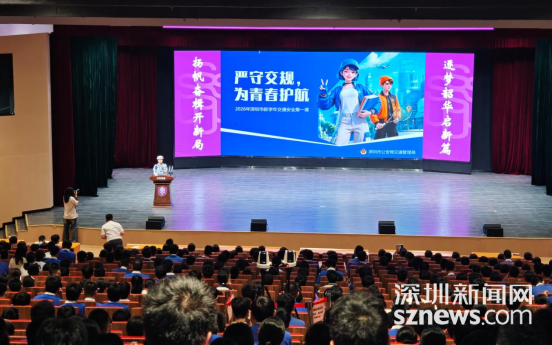
In September 2026, at the start of the school season, traffic police from Shenzhen Guangming District visited primary and secondary schools and kindergartens within their jurisdiction to deliver a series of vivid "First Lesson of the New Semester" sessions on traffic safety. From safety lectures on walking, cycling, and riding in vehicles for middle school students, to immersive scenario-based classrooms designed for young children, the traffic police transformed regulations such as "No one under the age of 16 may ride an electric bicycle on the road" and "Wear a safety helmet" into language that students could understand and remember. At first glance, this news may seem like just a routine campus outreach activity, but as a lawyer who has long handled traffic accident cases and tort cases involving minors, what I see is a series of legal issues underlying it: if a minor causes an accident while riding illegally, who bears the responsibility? Does a school's delivery of safety education exempt it from management liability? And what legal obligations do parents bear regarding their children's traffic safety? This article will, from a legal practice perspective and in light of provisions in the Road Traffic Safety Law and the Civil Code, sort out the legal risks and response strategies for parents, schools, and students in Shenzhen.
Riding an electric bicycle under the age of 16: a legal red line that must not be crossed.
In the event, Guangming traffic police specifically emphasized that "no one under the age of 16 may ride an electric bicycle on the road." This is not just a slogan but a clear provision under Article 72 of the Regulations for the Implementation of the Road Traffic Safety Law of the People's Republic of China. The clause explicitly states that individuals must be at least 16 years old to drive electric bicycles and motorized wheelchairs for the disabled. The law stipulates this because minors are not yet fully developed physically and mentally, lacking sufficient judgment regarding speed and distance. When faced with sudden situations, they often struggle to respond correctly, making traffic accidents highly likely.
In Shenzhen, a city with a massive number of electric bicycles, this regulation carries even greater practical significance. I have handled multiple cases involving minors riding electric bikes. Some children, for the convenience of commuting to school, secretly rode their parents' electric bikes and ended up in collisions with motor vehicles at intersections, resulting in serious injuries. In these cases, when the traffic police determined liability for the accidents, they would first examine the age qualifications of the riders. Riding an electric bike under the age of 16 is itself an illegal act, and even if the rider was not the actively at-fault party in the accident, they may still bear corresponding responsibility for being illegally on the road.
Beyond the age requirement, riding electric bikes also requires complying with basic rules such as wearing a safety helmet, not running red lights, and not riding against traffic. The "ghost probe," "dooring," and blind spots of large vehicles mentioned by Guangming traffic police in their presentations are the most common scenarios where dangers occur in daily riding. Legally, once these behaviors cause an accident, the rider will have their liability proportion determined based on the degree of fault, and may even face administrative penalties for traffic violations. For minors under the age of 16, although they are not subject to administrative penalties according to law, their guardians will face consequences such as criticism and education or being ordered to strictly discipline the minors.
When a minor causes an accident, their guardians cannot escape liability for compensation.
Many parents may believe that when a child has a cycling accident, it is an "accident" unrelated to the family. However, from a legal perspective, the responsibility of guardians is clear. According to Article 1188 of the Civil Code, if a person without capacity for civil conduct or a person with limited capacity for civil conduct causes harm to others, the guardian shall bear the tort liability. If the guardian has fulfilled their guardianship duties, their tort liability may be reduced. If a person without capacity for civil conduct or a person with limited capacity for civil conduct who has property causes harm to others, the compensation expenses shall be paid from their own property; any shortfall shall be compensated by the guardian.
Specifically, in cases where a student riding an electric bike injures a pedestrian or damages another person's vehicle, the student at fault is considered a person with limited civil capacity (typically aged 8 to 18). Their tort liability is first paid from their own property, such as lucky money or scholarships, and any shortfall is fully covered by their parents or other guardians. The scope of compensation includes actual losses such as medical expenses, nursing fees, transportation costs, and lost wages. If the incident results in disability, disability compensation is also involved. Shenzhen's compensation standards are among the highest nationwide, and in the event of a serious accident, compensation amounts can easily reach hundreds of thousands of yuan, placing a heavy burden on ordinary families.
In judicial practice, courts also examine whether guardians have fulfilled their custodial duties. If parents knowingly allow a child under 16 to ride an electric bike, or fail to properly secure the vehicle keys, leading to the child riding without permission, courts typically find the guardians clearly at fault and will hardly reduce their liability for compensation. Conversely, if parents have consistently provided adequate safety education and supervision, courts may酌情 reduce some liability, but the reduction is limited. Therefore, parents must not harbor any侥幸 mentality—they should strictly safeguard their vehicles and prevent minors from illegally riding at the source.
School safety education: The legal significance of fulfilling management responsibilities.
The "First Lesson of the Semester" initiative by Guangming Traffic Police also reflects the collaboration between police and schools in coordinated education. As an educational institution, schools bear the responsibility of educating and managing students. According to Article 1200 of the Civil Code, if a person with limited capacity for civil conduct suffers personal injury during study or daily life at a school or other educational institution, and the school or institution fails to fulfill its educational and managerial duties, it shall bear tort liability. Although this provision specifies the school's responsibility toward students, interpreting it in reverse, schools actively carrying out traffic safety education and improving safety facilities around campus are precisely a manifestation of fulfilling their legal obligations.
If a school fails to provide necessary safety education or neglects to manage students' traffic rule violations during school hours, parents may argue that the school is at fault and demand it bear corresponding liability in the event of an accident. Of course, school liability is typically premised on "failure to fulfill educational and supervisory duties," and must be causally linked to the resulting harm. By bringing traffic safety lessons into schools this time, Guangming traffic police not only safeguarded students' well-being but also helped schools improve their safety education practices, reducing potential legal risks.
For students, safety education at school is not an optional "soft task." If students disregard the traffic rules repeatedly emphasized by the school and cause accidents by riding illegally on their way to or from school, the school can typically be exempted from liability in subsequent responsibility determination or compensation lawsuits, provided it can prove that it has fulfilled its educational obligations adequately. This also reminds schools to keep records, photos, sign-in sheets, and other materials of safety education activities on file, in case they are needed in the future.
Parents, schools, and traffic police: a trinity safeguarding travel safety.
The "First Lesson of the New Semester" by Guangming Traffic Police carries a deeper significance in building a traffic safety protection network involving families, schools, traffic police, and even the entire society. From a lawyer's perspective, this network is not merely a moral initiative but is also backed by tangible legal support.
As the primary guardians of minors, parents should earnestly fulfill their guardianship duties. Beyond daily reminders, they must lead by example and strictly obey traffic regulations. Do not allow children under the age of 16 to ride electric bikes to and from school for the sake of convenience. For students who are 16 or older and genuinely need to ride electric bikes, parents should ensure the vehicle is legal and compliant, urge their children to wear helmets, use non-motorized lanes, and purchase necessary insurance to mitigate risks.
Schools should incorporate traffic safety education into their regular curriculum, rather than holding a one-off activity only at the start of each semester. They can invite traffic police to campus or organize students to visit traffic safety education bases, using scenario simulations and case-based teaching to truly instill safety awareness in students' minds. At the same time, schools should strengthen order maintenance around campus during peak pick-up and drop-off times, and where conditions permit, collaborate with parent volunteers to establish "school guard posts."
The traffic police department's ongoing efforts in road safety publicity represent proactive fulfillment of their legal duties and accident prevention. However, the ultimate purpose of the law is not punishment, but protection. Every road user—whether driving a motor vehicle or riding a non-motorized vehicle—should respect the rules and cherish life. In the unfortunate event of a traffic accident, promptly reporting to the police, preserving evidence, cooperating with investigations, and consulting a professional lawyer are the proper ways to safeguard your legitimate rights and interests.
Guangdong Zhiming Law Firm has long focused on the fields of transportation and the protection of minors, offering professional services such as legal consultation, accident handling, and litigation representation for schools and parents. We believe that when the rigor of law is combined with the warmth of education, the paths for children will be safer and brighter.