Behind the Renovation of 22 Roads in Longgang, Shenzhen: Legal Supervision and Pathways for Residents' Rights Protection in Livelihood Projects
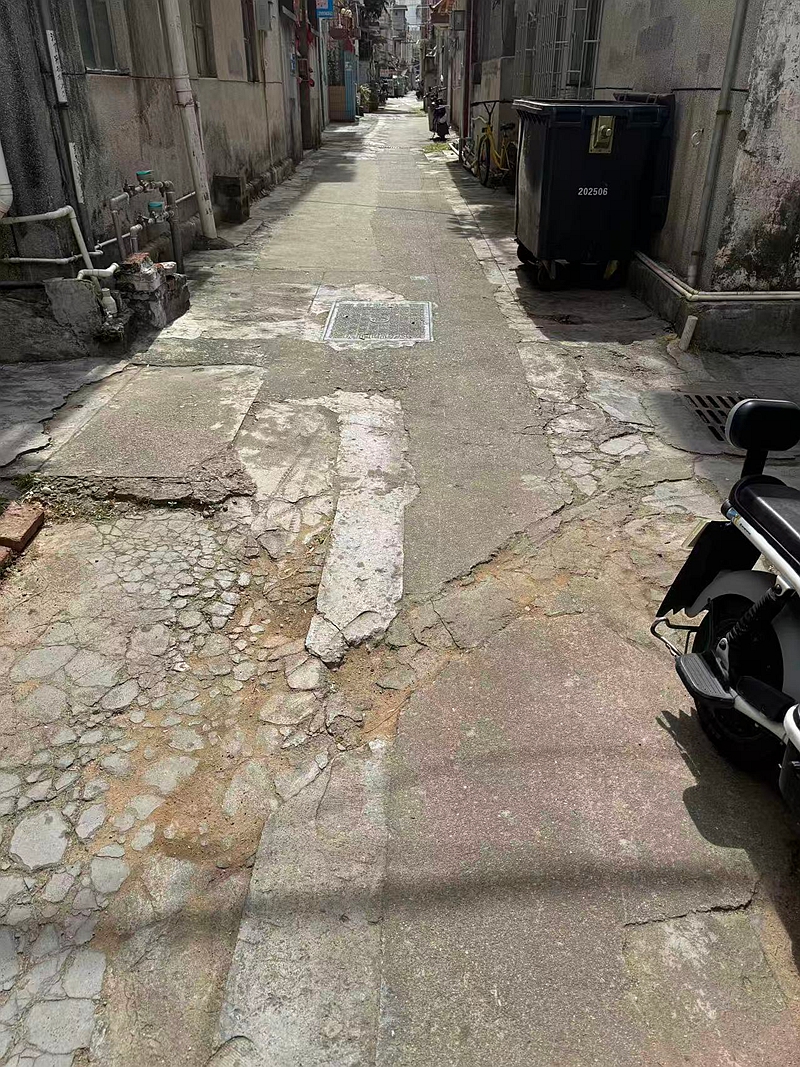
In September 2026, 22 "troublesome roads" in Longgang Subdistrict, Shenzhen, were fully repaired. From damaged, potholed surfaces and illegal parking that blocked traffic to smooth, unobstructed passage, residents' travel conditions improved significantly. This livelihood project was led and supervised by the Subdistrict Discipline Inspection Working Committee, which joined forces with urban construction, public services, and other departments to carry out five special inspections, rectify 22 problems, and resolve more than 250 public complaints. From a legal perspective, this is not only an achievement in urban governance but also involves multiple legal issues, including project quality supervision, accountability for administrative inaction, and compensation for residents' damages.
Administrative Legal Supervision in Road Repair: The Role and Legal Basis of the Discipline Inspection Working Committee
The Longgang Subdistrict Discipline Inspection Working Committee included the repair of 22 roads as a practical matter for the town and subdistrict, closely monitoring key links such as the implementation of responsibilities, project progress, and the use of funds. Its legal basis mainly comes from the relevant provisions of the Supervision Law of the People's Republic of China and the Administrative Supervision Law of the People's Republic of China. Article 11 of the Supervision Law clearly stipulates that supervisory committees shall supervise public officials' performance of duties in accordance with the law, and may issue supervisory recommendations to those who fail to perform or incorrectly perform their duties. In this road repair work, the Discipline Inspection Working Committee's five special supervision and inspections and its urging of rectification of 22 issues are precisely a concrete practice of supervisory oversight in the field of grassroots livelihood.
From the perspective of administrative law, roads are public facilities, and the government bears the responsibility for their maintenance and management. Article 35 of the Highway Law of the People's Republic of China stipulates that highway management agencies shall maintain highways in accordance with technical specifications and operating procedures to ensure that highways remain in good technical condition at all times. Urban roads are governed by Article 21 of the Regulations on the Administration of Urban Roads, which provides that the competent administrative department of municipal engineering is responsible for the maintenance and repair of urban roads that it organizes the construction and management of. If damage to a road is not repaired in a timely manner and causes harm to pedestrians or vehicles, the relevant administrative department may constitute administrative inaction, and the victim may apply for administrative compensation in accordance with Articles 3 and 4 of the State Compensation Law of the People's Republic of China.
In practice, when residents encounter long-standing road damage and their complaints yield no results, they may submit a written application for performance of duties to the subdistrict office or the district-level municipal department, requesting repairs within a specified time limit. If the administrative organ fails to respond within the statutory time limit or refuses to perform its duties, an administrative lawsuit may be filed in accordance with Article 12 of the Administrative Procedure Law of the People's Republic of China, requesting the court to order it to perform its statutory duties. When handling such cases, lawyers from Guangdong Zhiming Law Firm typically first assist the parties in securing evidence, such as taking photographs, recording videos, and preserving complaint records, and then initiate administrative complaint or litigation procedures as appropriate.
Illegal Parking Obstructing the Road and Traffic Accidents: How Is Tort Liability Determined?
Among the 13 roads targeted in this round of rectification by Longgang Subdistrict, illegal parking occupying road space is a particularly prominent problem. Roads such as those around the Wayaosi Road industrial area have long been occupied by vehicles, which not only affects traffic flow but also creates hidden accident risks. From the perspective of tort liability, Article 1165 of the Civil Code of the People's Republic of China stipulates that a person who through fault infringes upon the civil-law rights and interests of another person and causes damage shall bear tort liability. If illegally parked vehicles lead to traffic accidents, the drivers who parked illegally may need to bear corresponding liability.
Specifically, if an illegally parked vehicle obstructs the line of sight and causes a collision involving other vehicles or pedestrians, the driver of the illegally parked vehicle is at fault for violating Article 56 of the Road Traffic Safety Law of the People's Republic of China, which stipulates that motor vehicles shall be parked at designated locations, and shall bear compensation liability in proportion to their fault. At the same time, according to Article 1208 of the Civil Code, if a motor vehicle causes damage in a traffic accident, compensation liability shall be borne in accordance with the relevant provisions of road traffic safety laws and this Law. In practice, the accident determination letter issued by the traffic police department is key evidence for determining liability.
In addition, if the road management authority fails to promptly clear illegally parked vehicles or set up warning signs, it may also bear partial liability. Article 9 of the Supreme People's Court Interpretation on Several Issues Concerning the Application of Law in the Trial of Cases of Compensation for Damages in Road Traffic Accidents clearly stipulates that if damage is caused by a motor vehicle traffic accident due to defects in road management and maintenance, the road manager shall bear corresponding compensation liability, unless it can prove that it has fulfilled its obligations such as safety protection and warnings. Therefore, if residents have accidents due to road damage or illegal parking, they can list both the illegally parked driver and the road manager as defendants and claim losses such as medical expenses, lost wages, and disability compensation.
Practical Guide to Residents' Rights Protection: The Complete Path from Complaint to Litigation
For ordinary residents encountering issues such as road damage or illegal parking obstructing roads, they can first report to the community workstation or subdistrict office and request inclusion in the livelihood micro-practical projects. The "big communal pot" mechanism in Longgang Subdistrict is a typical example of the masses "ordering dishes" and the government "cooking," where residents can submit their demands through community application channels. If administrative agencies delay or pass the buck, one can call the 12345 government service hotline to complain, or report inaction to the subdistrict supervision group dispatched by the district supervisory commission.
If you suffer personal injury or property damage due to road problems, you should call the police and seek medical treatment immediately, and preserve evidence such as on-site photos, medical records, and accident determination reports. You may then send a lawyer's letter to the road administrator or the infringer to demand compensation through negotiation. If negotiation fails, you may file a tort lawsuit with the people's court within the three-year statute of limitations. According to Article 1,179 of the Civil Code, anyone who infringes upon another person and causes personal injury shall compensate for reasonable expenses such as medical expenses, nursing expenses, transportation expenses, nutrition expenses, and hospital food subsidies, as well as lost income due to missed work. If disability is caused, compensation shall also be paid for assistive device expenses and disability compensation.
If an enterprise suffers damage to goods in transit or inconvenience to customers due to road damage, it may assert liability for breach of contract under Article 577 of the Civil Code (if it has a contract with the logistics company), or claim compensation from the road management authority based on tort liability. Guangdong Zhiming Law Firm recommends that enterprises clearly specify road condition risk allocation clauses when signing transportation contracts and purchase corresponding property insurance to reduce potential losses.
Lawyer's Advice: Legal Risk Prevention in Public Welfare Projects
The success of repairing 22 roads in Longgang Subdistrict would not have been possible without the full-process supervision of the Discipline Inspection Working Committee and the active participation of residents. However, from the perspective of legal risk prevention, several points still warrant attention. First, disputes over neighboring relations during construction, such as construction noise and road occupation by enclosures affecting shop operations, allow merchants to assert neighboring rights under Article 294 of the Civil Code, requiring the construction party to reasonably arrange the construction schedule and reduce interference. Second, defect liability during the project quality warranty period: under Article 40 of the Regulations on the Quality Management of Construction Projects, for infrastructure projects, foundation base works, and main structure works of building construction, the warranty period is the reasonable service life specified in the design documents; if quality problems arise within the warranty period, the construction unit shall be responsible for repair.
For residents, after road repairs, they should pay attention to follow-up maintenance and promptly report new damage through the community or the 12345 hotline. If accidents occur again due to inadequate maintenance, the responsible authorities can still be held accountable. For businesses, especially those around industrial zones, they can jointly submit suggestions to the subdistrict office for optimizing traffic order and, when necessary, push for legislative or policy improvements through people's congress representatives or CPPCC members.
Guangdong Zhiming Law Firm has been deeply engaged in legal services in Shenzhen for many years, accumulating rich practical experience in areas such as administrative complaints, tort compensation, and contract disputes. Whether you are an individual resident or a business, if you encounter legal issues involving road management, traffic accidents, or administrative inaction, you may seek help from professional lawyers to safeguard your lawful rights and interests through legal channels. Livelihood projects benefit countless households, and legal protection runs through every stage. Only through lawful oversight and lawful rights protection can every "road of comfort" truly be built into the hearts of the people.