Behind the 210 million visits to parks during the 2026 National Day holiday: Shenzhen lawyers dissect the boundaries between scenic area safety responsibilities and tourist rights protection
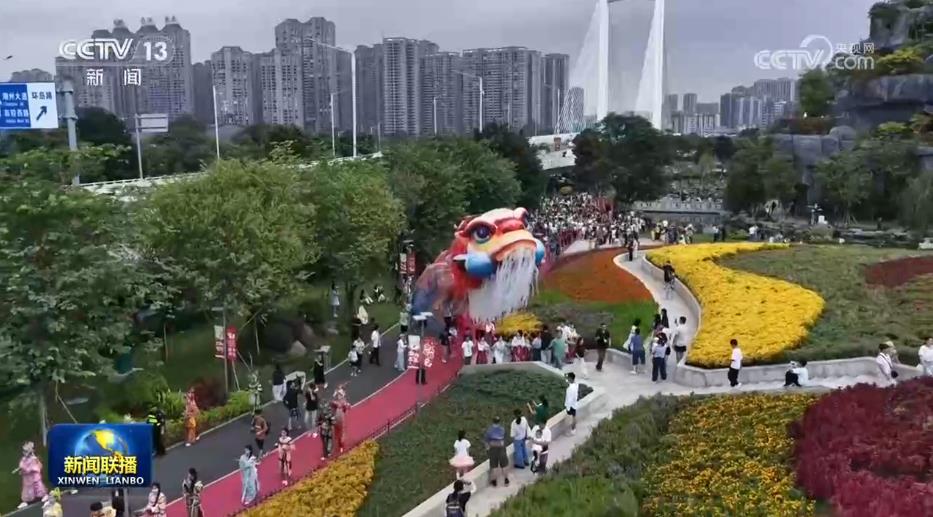
During the National Day holiday in 2026, parks across the country will receive over 210 million visitors, and major urban parks, theme parks, and suburban greenways will experience peak foot traffic. The number reported by CCTV reflects the vitality of the holiday economy and brings an old problem back to the forefront: in crowded parks, who is responsible for accidents such as falls, stampedes, facility injuries, lost children, and even more serious incidents? Can tourists claim compensation? Should the park management compensate? As Shenzhen lawyers who handle personal injury compensation and compliance for cultural and tourism enterprises for a long time, what we see is not excitement, but a list of potential legal risks.
1、 What kind of responsibility do park managers bear behind the 210 million visitors
Many people think that parks are open for free and can only accept their misfortune if something happens. This understanding is not accurate. Article 1198 of the Civil Code clearly stipulates that operators, managers, or organizers of public places such as hotels, shopping malls, banks, stations, airports, sports venues, entertainment venues, etc. who fail to fulfill their safety protection obligations and cause harm to others shall bear tort liability. Parks are typical public places, and managers have the obligation to ensure safety, which is not automatically exempted due to free admission tickets.
The key lies in the four words' reasonable limits'. In judicial practice, courts usually judge whether a park is responsible from several dimensions: whether the traffic restriction plan is activated during peak holidays, whether clear warning signs are set up in dangerous areas, whether amusement facilities are regularly inspected and maintained, whether wet and slippery roads are cleaned up and anti slip facilities are laid in a timely manner, and whether necessary security and emergency forces are equipped. During the National Day holiday in 2026, there will be heavy rainfall in many areas. If the park does not set up warnings on flooded and slippery roads or timely close dangerous areas, it will be difficult for managers to claim that they have fulfilled their obligations if tourists slip and break their bones.
The local court in Shenzhen has formed a relatively stable judgment approach in similar cases: park managers bear fault liability, not unlimited liability. Tourists need to prove that the damage occurred within the scope of park management, that the manager was at fault, and that there is a causal relationship between the fault and the damage. However, tourists often overlook that evidence such as park monitoring, inspection records, and facility maintenance records are in the hands of the management. In litigation, the court may require them to provide them, and refusing to provide them may result in adverse consequences. That's also why we recommend that the parties involved report their injuries to the police or request the park to provide accident records as soon as possible, rather than simply taking a photo and leaving.
2、 Tourists' own duty of care and 'self acceptance of risks', which claims will be rejected
The park management has a safety guarantee obligation, which does not mean that tourists can be completely exempted from responsibility. Tourists, as individuals with full capacity for civil conduct, have a reasonable duty of care for their own safety. Article 1173 of the Civil Code stipulates that if the infringed party is at fault for the occurrence or expansion of the same damage, the liability of the infringer may be reduced. Article 1174 further stipulates that if the damage is intentionally caused by the victim, the perpetrator shall not be held responsible.
There are several types of controversial scenarios that often arise in practice. One type is when tourists climb over guardrails, climb rockeries, or enter water areas or construction areas clearly marked as "no entry" and get injured. Courts usually find that tourists have committed major faults, greatly reducing or even exempting the park from liability. Another type is when tourists are injured while participating in projects with certain risks, such as cycling, rock climbing, and water sports. If the park has fully informed the risks and tourists voluntarily participate, the self acceptance risk rule of Article 1176 of the Civil Code may apply. Other participants are not responsible, and the manager is only responsible within the scope of failing to fulfill their safety protection obligations.
There is another type that is easily overlooked: injuries caused by crowded pushing and shoving among tourists. In this case, the direct infringer is the pusher, and the park only assumes corresponding supplementary responsibilities when it fails to fulfill its obligations of maintaining order and limiting flow. Article 1198, Paragraph 2 of the Civil Code stipulates that if the actions of a third party cause harm to others, the third party shall bear tort liability; If the manager fails to fulfill their security obligations, they shall bear corresponding supplementary responsibilities. Supplementary liability means that the park will only bear the responsibility within the scope of the third party's inability to compensate, according to the degree of their fault, rather than providing a full guarantee. Many tourists demand full compensation from the park as soon as they arrive, which is legally untenable.
3、 Lost children and injured elderly, Shenzhen lawyer suggests fixing evidence in this way
The two most frequent types of requests for help in holiday parks are lost children and elderly people who have fallen. The legal handling paths for these two types of events are completely different.
The loss of a child itself generally does not constitute a tort liability issue, but if the loss lasts for a long time or causes secondary injuries due to the lack of park security, blind spots in surveillance, or chaotic management of entrances and exits, the management may be held responsible for failing to fulfill their safety protection obligations. Parents should immediately seek help from the park's broadcast, retrieve surveillance footage, and report to the police for record keeping. It should be noted that monitoring in public places involves personal information of other tourists, and retrieval must be done through the park management or public security organs. Individuals have no right to demand access to all recordings.
If an elderly person falls, it directly points to compensation for personal injury. The compensation items usually include medical expenses, nursing expenses, transportation expenses, nutrition expenses, hospital meal allowances, and disability compensation, disability assistive device fees, and mental distress compensation. The per capita disposable income of urban residents in Shenzhen is relatively high, and the corresponding disability compensation calculation base is also relatively high. This is also why the compensation amount for personal injury cases in Shenzhen is often higher than that in mainland cities.
The golden time for fixed evidence is within 24 hours after the incident. We suggest that the parties or their families do four things: first, take photos and videos on site to record the ground conditions, the presence of warning signs, and lighting conditions; Secondly, the park is required to provide a written explanation of the accident situation or report it to the police for handling, forming an official record; Thirdly, retain all medical receipts, diagnosis certificates, and medical records; Fourth, consult a professional lawyer as soon as possible to determine whether disability assessment is necessary and when to initiate the assessment. Missing the evidence window period will make the subsequent rights protection very passive.
4、 Compliance insights for parks and cultural tourism enterprises: Holiday plans are not just a formality
From the perspective of corporate compliance, the 210 million foot traffic is a stress test for the park management. Among the Shenzhen cultural and tourism enterprises we have served, many will prepare safety plans before the holiday, but not many can truly withstand the test of litigation. An effective compliance plan should at least include: passenger flow monitoring and graded flow restriction mechanism, dynamic inspection records of hazardous areas, facility and equipment inspection and maintenance ledger, emergency response process for sudden incidents, and linkage plan with local public security and emergency departments.
More importantly, leaving traces. Whether the obligation of security is fulfilled ultimately depends on evidence. Inspection records, broadcast records, monitoring and storage, photos of warning signs, employee training attendance sheets, these seemingly trivial materials often determine the direction of cases in court. We have seen cases where the management clearly implemented flow restrictions but failed to provide any written records, ultimately being deemed as failing to fulfill their obligations.
The popularity of the holiday economy will continue, and the legal risks of parks as public spaces will not automatically disappear. For tourists, it is important to pay extra attention while playing and obtain evidence quickly in case of accidents; For the management, translating the security plan from paper to ledger. When encountering specific disputes over personal injury compensation, scenic area liability allocation, and insurance claims, it is recommended to entrust professional lawyers to intervene as soon as possible. Guangdong Zhiming Law Firm has been handling such disputes for a long time and can provide full process support from evidence fixation to litigation representation.