

Scholar's Interpretation of the Fourth Plenary Session of the 18th CPC Central Committee: A Brief Discussion on the Reform of Separation of Trial and Enforcement
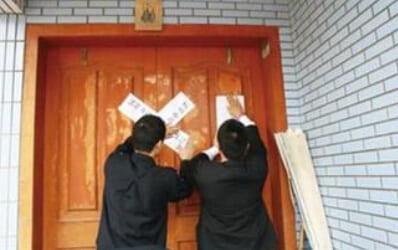
To address the problem of "difficulty in enforcement," the communique of the Fourth Plenary Session proposed optimizing the allocation of judicial powers and advancing pilot reforms to separate judicial power from enforcement power. Scholars interviewed believe that enforcement power could be stripped from the courts.
[2] Separation of adjudication and enforcement originally means separating adjudication and enforcement within the court, with judges handling adjudication and enforcement officers handling enforcement. The current separation of adjudication and enforcement powers is clearly stated in relevant laws. Article 40 of the Organic Law of the People's Courts stipulates that local people's courts at all levels shall have enforcement officers to handle enforcement matters of civil case judgments and rulings, as well as enforcement matters related to property parts in criminal case judgments and rulings. Article 228 of the Civil Procedure Law stipulates that enforcement work shall be carried out by enforcement officers. People's courts may establish enforcement agencies as needed.
In recent years, judicial enforcement has been widely criticized, and the "difficulty in enforcement" has become a chronic problem plaguing the courts. The Supreme People's Court once summarized five difficulties in judicial enforcement: "it is difficult to locate the person subject to enforcement, difficult to find enforceable property, difficult to obtain assistance in enforcement, difficult to dispose of property that should be enforced, and difficult to touch special subjects." Although there is internal separation of powers and checks among case filing, adjudication, and enforcement within the courts, judicial unfairness still occurs. Because the courts have relatively broad decision-making and discretionary powers during the enforcement process, corruption among judges in court enforcement divisions is frequent.
Enforcement is administrative in nature, and the courts responsible for enforcement are mostly basic-level courts. According to relevant sources, courts have also complained about and expressed dissatisfaction with enforcement difficulties, believing that enforcement work has a negative impact on the authority of the courts and judicial credibility. "The Supreme People's Court once proposed separating the enforcement power, but in the end nothing came of it." Multiple scholars have stated: "The separation of judicial power and enforcement power may involve stripping enforcement power from the courts and transferring it to another department for administration; or establishing a separate specialized enforcement agency."
Chen Hangping, associate professor at the University of International Business and Economics School of Law, believes that the separation of adjudication and enforcement may require the Enforcement Law to be enacted as standalone legislation: “Because many of the current provisions on enforcement in the Civil Procedure Law are relatively rudimentary, and many areas are not sufficiently refined. The promulgation of the Enforcement Law is also highly anticipated.”
However, whether the separation of adjudication and enforcement can serve as a “miracle cure” for “enforcement difficulties” remains to be seen, according to several scholars. “Because other litigation issues may arise during the enforcement process.” Zhang Weiping, a civil procedure law scholar and professor at Tsinghua University Law School, believes that the separation of adjudication and enforcement must be approached with caution. Before the enforcement agency is separated out, if the person subject to enforcement files a lawsuit due to an objection, they can directly file it with the court; after the separation, how the court and the subsequent enforcement authority will communicate is a matter worth considering.
Zhang Weiping believes that the costs of reform must be taken into account. If separation were truly implemented, the court’s enforcement personnel and real estate, among other things, would require substantial adjustments. The courts are the beneficiaries, and it remains unclear whether existing enforcement officers are willing to leave the courts. “The pilot program is not a major future trend, nor is it a fundamental solution to the difficulty of enforcement.” Zhang Weiping holds that the root cause of the “difficulty of enforcement” is that the relevant authorities have not truly respected the law, resulting in a lack of authority in the implementation of the law.
(Caixin Net)



