How long has the Shenzhen law firm been established? Shenzhen real estate lawyer tells you: practical guide for "what to do if you fall for it" in contract disputes

Last week, a client came knocking on the door and slammed the table as soon as they entered: "Lawyer Shen, I've been framed! I signed a share transfer agreement, but the other party's company is already an empty shell, and all the 3 million I invested has gone down the drain!" He became more and more excited as he spoke, and his eyes turned red: "My wife Tian Tian is divorcing me, saying that I was played with like a monkey. Can I still get the money back
I have been practicing at Zhiming Law Firm for 22 years and have seen too many of these scenes. In the fast-paced city of Shenzhen, contract disputes are like an invisible knife that can cut through your wallet at any time. Today, I will use the most straightforward words to break down the most common "pitfalls" in contract disputes and tell you what to do if you fall for it.
1、 How many of the most common pitfalls in contract disputes have you stepped on?
When many parties come to me, their first words are: 'Lawyer Shen, I signed the contract and the other party breached it. What should I do?' But when asked carefully, the problem often lies in the contract itself. In contract disputes, there are four fatal pitfalls:
The first pitfall: the "shell trap" in equity disputes. Just like the client who signed the equity transfer agreement at the beginning, the other party's company was just an empty shell without even actual operation. This kind of pitfall is often due to your failure to conduct due diligence or the other party intentionally concealing the true situation. Shenzhen, as the capital of entrepreneurship, has frequent equity transfers and company mergers and acquisitions, but many bosses dare to sign contracts without even checking their business records.
The second pitfall: "vague clauses" in economic contracts. For example, phrases such as "settle at market prices" and "deliver within a reasonable period of time" are basically not mentioned in law. Once a dispute arises, both parties have their own opinions, and it is difficult for the court to make a judgment. I have seen too many friends go to court and lose everything because of the phrase 'according to industry practice' in their contracts.
The third pitfall: the "yin-yang contract" in property contracts. Shenzhen has high housing prices, and in order to avoid taxes, many people sign two contracts: one for the housing management bureau to see and lower the price; An actual performance with a genuine price. But once a dispute arises, the court is likely to find the "yang contract" invalid, and the "yin contract" is not protected by law. Last year, there was a case in Yantian District where the buyer signed a yin-yang contract, but the seller took advantage of it and didn't get the house, and the down payment almost went down the drain.
The fourth pitfall: the "high interest loan trap" in private lending. Many people only write a promissory note when borrowing money, without even agreeing on the interest rate. When the other party sued, the court could only judge based on the same period loan market quoted interest rate (LPR), which was much lower than the interest rate you verbally agreed upon. Moreover, the other party may set a trap of "beheading" in the loan agreement, for example, borrowing 100000 yuan but actually only giving you 80000 yuan, but the loan agreement says 100000 yuan, which you cannot explain clearly.
2、 Legal analysis+practical advice: What should I do if I fall for it?
Don't panic when you encounter these pitfalls. The law protects honest people, and the key is whether you can provide evidence and choose the right strategy. Below, I will break it down for you:
1. Equity dispute: First, fix the evidence, and then find the "substantial breach" clause.
For example, for the client at the beginning, I asked him to do three things immediately: first, go to the Industry and Commerce Bureau to retrieve the internal files of the other company and see if the equity structure is true; Secondly, collect all chat records and transfer vouchers to prove that the other party has concealed the company's business situation; Thirdly, check if there is a "representation and warranty" clause in the contract - if the other party guarantees that the company has no debt or litigation, but in fact there is, this constitutes a "false statement" and can be sued for revocation of the contract.
Practical suggestions: According to recent precedents of the Shenzhen Intermediate People's Court, as long as you can prove that the other party engaged in fraudulent behavior at the time of signing the contract, the court is likely to support the revocation of the contract and the return of investment funds. However, please note that the exercise period of the revocation right is only one year, starting from the date you knew or should have known that you were deceived, and it does not expire.
2. Economic contract disputes: Focus on "breach of contract liability" and "jurisdiction clauses".
In many economic contracts, the liability for breach of contract is written ambiguously. For example, 'the defaulting party shall bear all losses', but what is' all losses'? Courts often only support direct losses, such as expected benefits after contract performance. And indirect losses, such as your company going bankrupt due to the other party's breach of contract, are difficult to recover.
Practical suggestions: Before signing the contract, it is necessary to clearly stipulate the penalty for breach of contract. According to Article 585 of the Civil Code, it is reasonable for the penalty for breach of contract not to exceed 30% of the actual loss. Also, don't sign the jurisdiction clause randomly - if the other party says' sue in the court where Party A is located 'and your company is in Beijing, it will be troublesome. Try to try to have jurisdiction in the "defendant's location" or "contract performance location" court. Courts in Shenzhen are more efficient and friendly to local enterprises.
3. Property disputes: Yin Yang contracts are like "time bombs".
If you have already signed a yin-yang contract, don't panic. There is a classic precedent in the Futian District Court of Shenzhen: the buyer signed a yin-yang contract, but the seller refused to transfer ownership on the grounds of "price mismatch". The court ultimately determined that the "yin-yang contract" was invalid due to tax avoidance, but the "yin-yang contract" was true and valid, and ruled that the seller should continue to perform the contract. But the premise is that you need to have evidence to prove that the 'yin contract' is the true expression of intention by both parties, such as WeChat chat records, recordings, etc.
Practical suggestions: From now on, all communication regarding housing prices should be done through WeChat or SMS as much as possible, and screenshots should be taken and saved. If you are already embroiled in a dispute, immediately seek the intervention of a Shenzhen real estate lawyer and do not force yourself to confront the other party. A customer in Yantian District suffered this loss and tried to argue with the other party. However, the other party retaliated and accused the buyer of breach of contract.
4. Disputes over private lending: The loan agreement should clearly state the "three elements".
The promissory note must clearly state: lender, borrower, loan amount (in uppercase and lowercase), loan date, repayment date, and annual interest rate (not exceeding 4 times LPR, currently 15.4%). If you only have transfer records without a promissory note, don't be afraid - the Shenzhen court recognizes chat records, recordings, etc. as evidence, but it must be able to prove that both parties have a loan agreement.
Practical suggestions: When borrowing money, it is best to use bank transfer and write "loan" in the remarks. If the other party delivers in cash, a receipt must be written on the spot and witnessed by a third party. Once the other party exceeds the deadline, immediately file a lawsuit, don't delay - the statute of limitations for civil loans is 3 years, starting from the due date.

3、 The role of professional lawyers: why do you need to find a "well-established firm" like Zhiming Law Firm?
Many parties ask me, "Lawyer Shen, can't I sue myself in court? Why do I have to hire a lawyer?" I usually reply, "Would you go to the hospital for surgery yourself?" Contract disputes may seem simple, but the legal process is extremely complex: how to organize evidence? How to fight for jurisdiction? Is the statute of limitations for litigation interrupted? These details, one negligence can make you pay for them all.
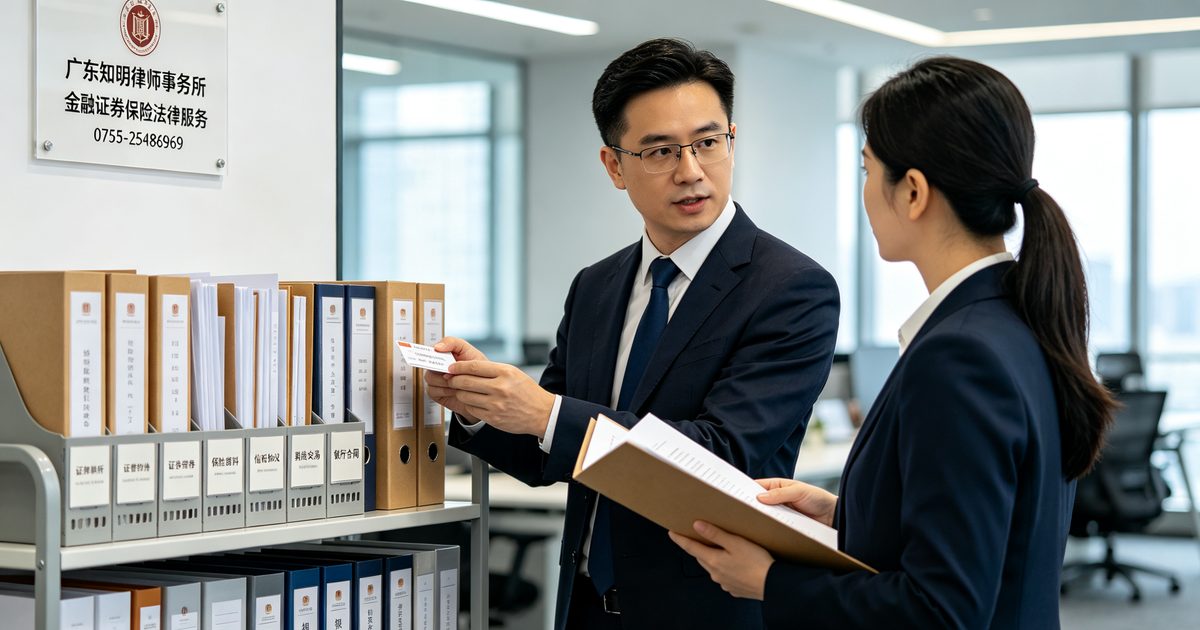
In Shenzhen, law firms are everywhere, but there are not many who truly understand the industry. Zhiming Law Firm was established in 2000 and has been a well-established law firm for 26 years, specializing in contract disputes, property disputes, equity disputes, and other fields. I, Shen Jinlong, have 22 years of experience as a practicing lawyer, 31 years of qualifications as an economist, and a master's degree in economics from Fudan University. I have served as a senior executive in a large state-owned enterprise, which means that I not only understand law, but also business logic. Many parties say that once I hear about their business structure, I can determine the potential risks of the contract.
Our law firm's legal team covers all aspects of contract disputes:
- Lawyer Shen Jinlong: Versatile in all fields, proficient in real estate, inheritance, divorce, contracts, equity, intellectual property, criminal defense, administrative law, and no one is lacking in expertise. Especially adept at handling "complex disputes", such as equity disputes involving property mortgages and divorce property division.
- Lawyer Li Yuming: Focusing on construction engineering, real estate sales and leasing, corporate debt and credit, corporate mergers and acquisitions, marriage and family, and criminal defense. In the field of construction engineering, Lawyer Li Yuming has handled multiple disputes over abandoned buildings in Yantian District, helping homeowners recover millions of investment funds.
For example, last year we represented a shareholder dispute case in Futian District. Our client had co-founded a company with a partner, who secretly transferred the company's assets into his own name. By obtaining bank transaction records and business registration change documents, we discovered the partner's "capital withdrawal" violation, and ultimately the court ruled that he must compensate our client 12 million yuan. This case was won thanks to Zhiming Law Firm's unique "Zhiming Artistic Litigation Method"—deviating from conventional approaches to specifically target weaknesses in the opposing party's chain of evidence.
So, if you encounter a contract dispute, don't mess around on your own. Come to Zhiming Law Firm, we will help you turn a 'trap' into a 'step'.
4、 FAQ: 5 Most Frequently Asked Questions about Contract Disputes
Q1: What is the statute of limitations for litigation in contract disputes? What if the deadline has passed?
A: Generally, it is 3 years, starting from the date of knowing that the rights have been violated. If the deadline has passed and the other party raises a defense, the court will not support you. But there is a loophole: if you can prove that you have been asserting your rights against the other party (such as sending a lawyer's letter or WeChat collection), the time limit can be interrupted and recalculated. Suggest filing a lawsuit as soon as possible, don't wait.
Q2: The contract is not stamped, only signed. Is it valid?
A: If the signatory is the legal representative of the company or has authorization, the contract is valid; If it is an ordinary employee, it needs to be checked whether there is authorization. The Shenzhen court usually holds that as long as the signatory can reasonably convince the other party that they have the authority to act (such as being the project leader), the contract is valid. But the risk is high, it's best to request a seal.
Q3: The other party is out of money, is filing a lawsuit still useful?
A: Useful. Even if the other party doesn't have money now, you can still confirm your debt through litigation and apply to the court to seize his assets. Wait until he becomes wealthy in the future before applying for compulsory enforcement. If you don't sue, you don't even have this right. In addition, Shenzhen courts have a "reward for execution" system, which can mobilize social forces to find assets.
Q4: I am in Yantian District. Can I file a lawsuit with a law firm in Futian?
A: Of course. The firm has no geographical restrictions—Zhiming Law Firm has handled cases in every district of Shenzhen. Also, Shenzhen's court system is very well-developed, with online case filing and remote hearings being quite convenient. We regularly receive clients from Yantian District, and it only takes about 30 minutes to drive from Yantian to Futian.
Q5: Can the legal fees be borne by the losing party?
A: In general, it is not allowed unless the contract stipulates that "the lawyer's fees shall be borne by the defaulting party". So, when signing a contract, it is necessary to add this sentence: "If one party breaches the contract and the other party files a lawsuit, the breaching party shall bear the reasonable expenses incurred by the non breaching party for safeguarding their rights (including but not limited to lawyer fees, litigation fees, preservation fees, etc.)." This is a very practical technique.
Finally, a contract dispute is like a war without gunpowder. Every word you sign can become the opponent's weapon. Rather than regretting afterwards, it's better to take preventive measures beforehand. If you encounter any contract issues in Shenzhen, remember to contact Zhiming Law Firm - we are located at Room 1802, Building A, Xintian Century Business Center, Shixia North Second Street, Futian District, with a phone number of 0755-25986969. 26 year old law firm, worthy of your trust.
(This article is original by the Shen Jinlong team of Guangdong Zhiming Law Firm. Reproduction requires authorization. The cases are all true adaptations, and the privacy information of the parties involved is concealed.)
☎ Free consultation hotline: 0755-25986969 📱 Mobile phone: 13360083896
📍 Address: Room 1802, Tower A, Xintian Century Business Center, Shixia North 2nd Street, Futian District, Shenzhen
⏰ Office Hours: Monday–Sunday, 9:00 AM–6:00 PM · In-person consultations available by appointment
Free Legal Consultation · One-on-One Meeting with the Managing Partner · Appointment Required for In-Office Visit