Shenzhen contract drafting and review lawyer warns: If these 3 landmines are buried in your contract, you may not recover a single penny of the debt.
Last week, a client came to me and said, "Lawyer Shen, I'm so furious with that business partner! Last year, we signed a contract to supply goods. We delivered the goods and issued the invoices, but the final payment of 300,000 yuan has been delayed for nearly a year. I took the contract to court and sued, but the judge said our contract didn't specify the payment deadline. The other party insisted that payment was due 'after acceptance inspection,' and now they're using the goods but claiming they haven't been accepted. The court actually ruled against me! Is there no justice in this world?"
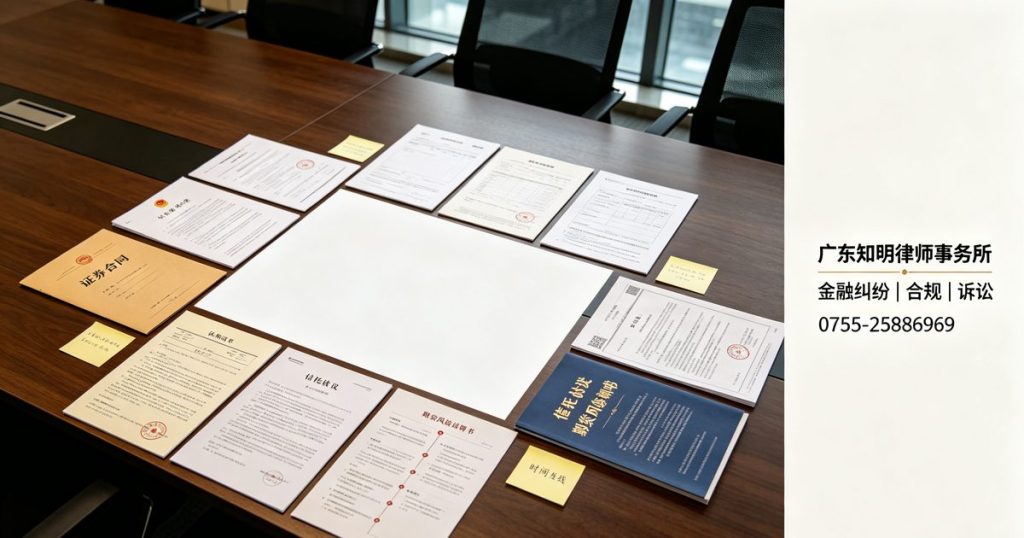
After listening, I asked him to bring the contract for me to look at. Sure enough — the payment terms said "payment after acceptance inspection," but what counts as "qualified"? Who conducts the inspection? What's the inspection deadline? What happens if they don't inspect within the time limit? None of it was specified. With a contract like that, who else is it going to trick but you?
As a Shenzhen contract dispute lawyer, I encounter similar clients almost every week. They're not ignorant of business—they just trust the words of "acquaintances," "friends," and "long-time clients" too much, thinking, "We're on such good terms, just sign the contract casually." But when it comes time to collect the money, the other party flips their attitude faster than you can turn a page. You take the contract to court, only to realize that what you're holding isn't a "protective talisman" at all—it's a "death warrant."
1. The 3 most common pitfalls in contract disputes — how many have you fallen into?
Pit 1: Vague payment terms are like handing the knife handle to the other party.
This is the most common problem in corporate contract disputes in Shenzhen. Many SME owners casually write phrases like "per Party A's requirements," "subject to Party B's notice," or "payment after acceptance inspection" in contracts, but fail to specify: What counts as passing? What is the acceptance process? How long does Party A have to raise objections? What happens if Party A delays the inspection?
Legally, once you fall into such a gray area, the court will find it hard to rule in your favor. As long as the other party says, "I haven't accepted the work yet, so the condition hasn't been fulfilled, and I don't need to pay," you basically have no recourse. Even if you want to exercise your right of demand, you first have to prove that "the condition for acceptance has been fulfilled"—but you can't prove it, because your contract never stipulated it.
Pit 2: Setting liquidated damages too high or too low is as good as not writing them at all.
Many bosses think, "If I write a penalty clause of 50%, the other party will be afraid." But if you actually go to court and sue, the judge will, in accordance with Article 585 of the Civil Code, base the ruling on actual losses, taking into account the performance of the contract, the degree of fault, and other factors, in line with the principles of fairness and good faith. If you write 50%, the court may reduce it to 1.5 times the annualized LPR, which is almost like not writing it at all. On the other hand, if you set the penalty too low, the other party's cost of breaching is extremely low, and they simply won't care.
Pitfall 3: Didn't verify the other party's legal status, you won't even know who to sue.
Some clients are even more wronged — the contract was signed, the goods were shipped, but then they find out the other company has already been deregistered, or it's a shell company with no assets under its name. You sue, and even if you win, you still can't recover any money through enforcement. Even worse, some "bosses" sign contracts with you in their personal name; you assume it's a corporate act, but then he deregisters the company, and when you try to pursue the individual, you have to rely on a pile
II. What to do if problems arise? Legal perspective + practical breakdown
When handling contract disputes in Shenzhen, the most important thing is to pursue both the "evidence chain" and "contract terms" simultaneously. Below I will outline three core resolution strategies. Follow them, and you can recover at least half of your losses.
First move: Find loopholes in the contract and fill them with the catch-all provisions of the Civil Code.
If the contract does not specify the time of payment, don't panic. According to Articles 510 and 511 of the Civil Code, if, after the contract becomes effective, the parties have not agreed on the time of payment or the agreement is unclear, they may supplement it by agreement; if they cannot reach a supplementary agreement, it shall be determined in accordance with the relevant terms of the contract or by trade usage; if it still cannot be determined, the debtor may perform at any time, and the creditor may also request performance at any time, but the other party shall be given the necessary time to prepare.
So, when the other party delays payment, the first thing you should do is not file a lawsuit out of anger, but send a formal "Demand Letter" or "Notice of Performance Reminder," and send it via EMS to the contract address or the registered business address, keeping a record. This letter is extremely useful—it not only proves that you have made a demand but also converts an "unclear performance deadline" into a "clear performance deadline," because you have given the other party a reasonable preparation period (e.g., 15 or 30 days). If they still delay payment after that, it constitutes a breach of contract, and you can then file a lawsuit.
Second tactic: Use a "reconciliation letter" or "settlement confirmation" to solidify evidence of the other party's acknowledgment of debt.
In many debt disputes, the other party won't pay but also doesn't dare to outright deny the debt. You can design a "reconciliation" move: add the other party to a WeChat group and send a *Statement of Account* listing each shipment, amount, amount paid, and amount unpaid, then say "Please have your company verify this. If there are no objections, please reply to confirm." As long as the other party replies with "OK," "No problem," "Got it," or even just "Mm," that counts as written acknowledgment of the debt. With this evidence, combined with the contract, delivery notes, and invoices, your chances of winning in court are very high.
If the other party doesn't reply, send a message once a week for three consecutive weeks, then use a notary office to perform "webpage evidence preservation" to fix the chat records in place. This approach works particularly well in Shenzhen contract dispute legal practice, because WeChat chat records are legally valid electronic evidence and courts generally accept them.
Third move: directly utilize the "accelerated maturity clause" or the "right of set-off".
If the other party promised "installment payment" in the contract but starts defaulting after two installments, you can rely on Article 634 of the Civil Code to claim that all remaining unpaid amounts accelerate to maturity, requiring the other party to pay the full balance at once without waiting for the installment schedule. Some contracts also include a clause stating that "if any installment is overdue, all unpaid amounts are deemed due immediately," which makes things even simpler.
Additionally, if you and the other party have other business dealings and they happen to owe you other amounts, you may lawfully exercise the right of set-off by notifying the other party in writing, and the debts shall be offset against each other. The premise is that the debts are of the same kind and quality and do not fall under circumstances prohibited by law from being offset. This operation can help you recover payments quickly without needing to file a separate lawsuit.
3. What Can Shenzhen Contract Drafting and Review Lawyers Do? Stop Making These Mistakes Yourself
In the end, all of the above are "after-the-fact remedies"; only true "prevention beforehand" can help you make money steadily. This is what I always say: a contract is the greatest risk-control tool in commercial transactions. A good contract is not about piling up legal provisions, but about locking down every point that might cause disputes in the future with definitive language.
Guangdong Zhiming Law Firm's Shenzhen contract drafting and review lawyer team has served over a thousand Shenzhen enterprises. When drafting contracts, we do not simply use templates; instead, we focus on reviewing and clarifying these clauses based on your business model, the counterparty's identity, and industry practices:
- Payment milestoneClarify the objective criteria for "acceptance", for example: "Submit a written quality objection within 7 days after arrival; otherwise, the goods shall be deemed accepted upon expiration of that period."
- Liability for breach of contract.: Set up tiered liquidated damages, for example, "for each day overdue, pay 0.05% of the unpaid amount as liquidated damages," while reserving the right to claim actual losses;
- Dispute resolutionStipulate that disputes shall be under the jurisdiction of the Shenzhen Arbitration Commission or the courts at the party's own location, so as to avoid having to litigate in another province far away.
- Service of process clauseClarify that the addresses, email addresses, and WeChat accounts of both parties are valid methods of service, to avoid the subsequent trouble of "subpoenas not being delivered."
Many business owners think that "contract lawyers are just nitpicking over wording," but that's wildly off the mark. A truly professional contract dispute lawyer in Shenzhen is helping you factor in your future cash flow, profits, and risks all at once. A well-structured contract can save you from fighting 10 lawsuits.

Here's an example: A client in the electronic components trading business signed a supply contract with a major Shenzhen manufacturer. The other party provided a 30-page contract that contained hidden unfair clauses such as "warranty period extended to 5 years" and "if production halts due to the second party's reasons, compensation of 500,000 RMB per day." After we stepped in, we negotiated clause by clause, revised terms, and secured evidence. In the end, we reduced the warranty period to 1 year, set a cap on compensation for production halts, and added a rights clause allowing the second party to suspend supply if the other party's payment is overdue by 3 days. Only after signing the contract did the client say with lingering fear, "If I had signed it myself, this single deal might have bankrupted my company."
4. The Value of Professional Lawyers: From "Post-Incident Firefighting" to "Pre-Incident Firewall"
You might ask: "Lawyer Shen, how do I know if there are pitfalls in my contract?" This is precisely the value of a professional lawyer.
Guangdong Zhiming Law Firm, established in 2000, is a long-standing comprehensive law firm in Shenzhen with 26 years of history, rooted in Futian District. The firm's director, Lawyer Shen Jinlong, has 22 years of practicing legal experience, along with 31 years of economist qualifications. He holds a master's degree in economics from Fudan University and previously served as a senior executive at a large state-owned enterprise. His perspective on contracts differs from that of ordinary lawyers — he understands not only the law but also business logic and capital security. The contract and debt team he leads has handled over 10,000 cases cumulatively, with particular expertise in complex contract disputes and debt recovery.
For example, a typical corporate debt case: a decoration company in Shenzhen completed a project for a hotel, and the hotel owed the decoration company 2 million yuan in project payments. The decoration company came to us. Originally they wanted to sue directly, but after review, lawyer Li Yuming found that the hotel did owe the decoration company money, but the decoration company had signed a "Settlement Statement" earlier that was very disadvantageous—it contained a phrase saying "the parties have no other disputes," which effectively blocked the path for subsequent rights protection.
Lawyer Li Yuming (a senior lawyer at Zhiming Law Firm, specializing in construction engineering, corporate creditor's rights and debts, and corporate mergers and acquisitions) took a key action: on the grounds that "there are major quality issues in the project that require rectification," he sent a "Project Rectification Notice" to the hotel, requesting the other party's cooperation in inspection. The hotel did not dare to respond, but had no way to explicitly refuse either, because responding would in itself amount to admitting that "the project has not yet been finally settled," thereby overturning the finality of the settlement that "the two parties have no other disputes." Ultimately, after arbitration and first-instance trial, the court determined that the hotel should pay 2 million yuan in construction payments and overdue interest, and the decoration company recovered the full amount.
This case tells us: contract disputes are not just about examining the contract text, but also a confrontation of "evidence games" and "legal procedures." If you lack experience, you might fall into a trap dug by the other side.

5. Contract Dispute Debt Collection FAQ: You Will Most Likely Encounter This Too
Q1: The contract did not stipulate a payment time, and the other party keeps delaying. Can I directly file a lawsuit?
You can sue, but it is recommended to first send a "Demand Letter for Payment" or "Notice of Demand," and keep evidence of delivery. This way, you can turn "unclear performance deadline" into "having been demanded and given a reasonable preparation period." If the other party still fails to pay afterward, it constitutes a clear breach of contract, and the court will be more likely to rule in your favor.
Q2: If the contract amount is small, only a few thousand yuan, do we still need to hire a lawyer?
If the amount is not large, you can first use the "Account Reconciliation Letter" method to preserve evidence yourself, but it is best to have a lawyer review the wording of the letter, because if one sentence in the "Account Reconciliation Letter" is worded incorrectly, it may instead provide the other party with a defense. Zhiming Law Firm also offers a one-time contract review service at a low cost, which can prevent you from losing big over a small matter.
Q3: The other company has already been deregistered—can the money owed still be recovered?
If the other company was deregistered without going through lawful liquidation, you can sue its shareholders or actual controllers to claim compensation. If it has already been liquidated and deregistered, you need to examine whether you were notified of your claim during the liquidation process. This situation is quite complex and cannot be explained in just a few words. It is advisable to bring your materials and have a professional lawyer analyze them in person.
Q4: Are lawyers from the top ten law firms in Shenzhen more expensive?
The so-called "top 10" rankings vary widely, and many are commercial hype. When choosing a lawyer, the key is whether they have an in-depth understanding of your industry and contract types, and whether they can provide actionable litigation strategies. Zhiming Law Firm has relied on word-of-mouth for 26 years, with transparent fees, and will analyze risk points before initiating a case to help you assess the likelihood of winning and the possibility of recovering payment.
Q5: I don't have complete evidence, only WeChat chat records. Can I still file a lawsuit?
Yes. However, WeChat chat records need to meet the requirements of authenticity, legality, and relevance. It is best to provide the complete original device (the phone), and the chat content must be verbatim—it cannot be pieced together. It is recommended to consult a lawyer first, have the records notarized for preservation, and then decide on the litigation strategy.
Guangdong Zhiming Law FirmEstablished in 2000, a 26-year-old established law firm, located at Room 1802, Building A, Xintian Century Business Center, Shixia North Second Street, Futian District, Shenzhen. The director, Lawyer Shen Jinlong, has 22 years of experience as a practicing lawyer, 31 years of economist qualifications, a Master's degree in Economics from Fudan University, and is a former executive of a large state-owned enterprise. Leading the team, he has handled over 10,000 cases in total, specializing in difficult and complex cases such as contract drafting and review in Shenzhen, corporate contract disputes, and debt recovery.
If you're losing sleep over contract disputes or debt collection issues, don't carry the burden alone. An experienced Shenzhen contract dispute lawyer can conduct a "full-case review" for you, telling you whether you're likely to win or should consider mediation, and which path will get your money back fastest.The sooner you find a lawyer, the sooner there's hope for your money.
Consultation Hotline: 0755-25986969(WeChat same as number.) Bring your contracts, and we'll help you identify every pitfall one by one.
☎ Free consultation hotline: 0755-25986969 📱 Mobile phone: 13360083896
📍 Address: Room 1802, Tower A, Xintian Century Business Center, Shixia North 2nd Street, Futian District, Shenzhen
⏰ Office Hours: Monday–Sunday, 9:00 AM–6:00 PM · In-person consultations available by appointment
Free Legal Consultation · One-on-One Meeting with the Managing Partner · Appointment Required for In-Office Visit