Shenzhen Financial Securities Dispute Resolution Guide: Comprehensive Solutions for Financial Leasing, Trust Defaults, and Bank Lending Difficulties
In March 2025, when a private equity firm in Futian District, Shenzhen, suspended its payouts, investor Mr. Zhang walked into Guangdong Zhiming Law Firm with a product contract worth 3 million yuan. Only 14 months had passed since he signed the agreement, yet the invested company had already vacated its premises. Consultation scenarios like this occur at Zhiming Law Firm almost every week—financial contract disputes have long ceased to be merely cold judgments on paper, but rather the tangible anxiety of ordinary investors' hard-earned money.
The scale of financial and securities contract disputes is expanding in Shenzhen. The Shenzhen Intermediate Court and district courts receive over 30,000 financial dispute cases each year, of which high-net-worth cases with subject amounts exceeding 10 million yuan account for approximately 37%, with an average trial period ranging from 8 to 14 months. The financial tribunals of the grassroots courts in Futian, Nanshan, and Longhua districts are almost fully booked every day with cases involving financial leasing contracts, trust beneficiaries suing trustees, and private fund investors seeking recovery of principal. Behind the staggering figures lies the reality that a large number of investors, when faced with complex financial product structures, can hardly even understand the contract terms.
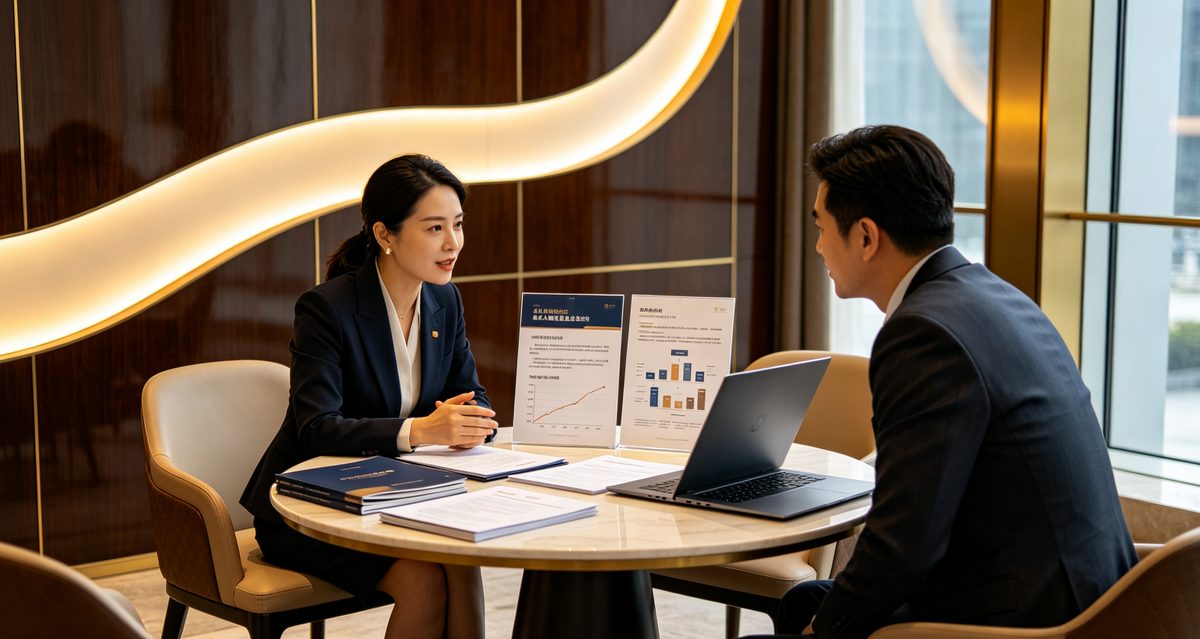
In financial and securities disputes, where is the most difficult key point to handle? Looking solely at financial leasing business, many financial leasing companies in Shenzhen will split cases into "actions for contract rescission" and "actions for rent recovery," using the litigation cycle to prolong debtors' repayment time. Trust defaults are more concealed—trustees often commingle the underlying assets of the project with their own property, making it difficult for investors to carve out executable assets even if they win the lawsuit. Bank loan disputes are relatively standardized, but details such as floating interest rate conversion, compound interest calculation, and pre-deducted interest still put a large number of borrowers at a disadvantage in mediation. All three areas point to one common pain point: the professional threshold of financial contracts is far higher than that of ordinary civil contracts, and when parties handle matters on their own, they can easily lose the initiative in the stage of preserving evidence.
The legal basis is the underlying framework for handling financial disputes. Article 577 of the Civil Code stipulates that if a party fails to perform its contractual obligations or performs them in a manner inconsistent with the agreement, it shall bear liability for breach of contract, such as continuing to perform, taking remedial measures, or compensating for losses. With respect to trust defaults, Article 22 of the Trust Law clarifies that if a trustee disposes of trust property contrary to the purpose of the trust, or is at fault in managing, using, or disposing of trust property, causing losses to the trust property, the settlor has the right to apply to the people's court to revoke such disposal and require the trustee to restore the property to its original state or compensate for the losses. As for financial leasing contracts, Article 735 and Article 745 of the Civil Code apply, under which the lessor owns the leased property, but without registration, such ownership may not be asserted against
Question: The trust product I purchased cannot be redeemed. Is reporting to the police helpful, or should I file a lawsuit directly?
Answer: Reporting to the authorities and filing a lawsuit are not mutually exclusive choices. If illegal absorption of public deposits is suspected, the court may rule to suspend civil proceedings after the police file a case, yet the enforceability of a civil judgment is often superior to criminal asset recovery. In practice, the optimal path is to advance both simultaneously: complete evidence organization and file the lawsuit within 15 working days, while simultaneously reporting the illegal sales conduct to the Shenzhen Securities Regulatory Bureau or the China Banking and Insurance Regulatory Commission, using the administrative investigation letter to compel the trustee to cooperate with asset liquidation.
The practical path for handling such disputes typically follows four steps at Zhiming Law Firm. The first step is evidence preservation: the redemption application, risk disclosure statement, bank transfer receipt, and product net value screenshots published by the manager must all be scanned page by page. For financing lease contracts, time-point records such as vehicle GPS movement logs and device lock notifications should also be retained. The second step is property preservation: before filing a lawsuit, apply to the Futian District or Nanshan District Court to freeze the opposing party's accounts. Where cases involve guarantees from subsidiaries of listed companies, their margin pools may also be frozen. The third step is jurisdiction selection: cases with arbitration clauses are handled in accordance with the agreement; where no arbitration clause exists, priority is given to filing suit in the court of the defendant's domicile or the place of contract performance. The Shenzhen Intermediate Court has first-instance jurisdiction over financial cases with a subject amount of 50 million yuan or more. The fourth step is coordinating settlement and execution: under the auspices of the judge, enter into a conditional settlement agreement with the opposing party, specifying an acceleration clause for liquidated damages upon overdue payment.
In 2024, a private equity fund dispute case handled by Zhi Ming Law Firm was exemplary. Mr. Zhang (pseudonym), an investor from Nanshan District, Shenzhen, subscribed to an "XX Equity Investment Private Equity Fund" product issued by a fund manager, investing 5 million yuan. Upon maturity, the manager refused to redeem on the grounds of losses in the underlying project and had ceased disclosing net asset values for three consecutive months. After accepting the case, Zhi Ming Law Firm retrieved the fund filing information and discovered that the manager, without the consent of all investors, had diverted fund property to real estate projects under affiliated companies, seriously violating the fiduciary duties under the Securities Investment Fund Law and the Trust Law. Lead attorney Shen Jinlong's team immediately applied to the Shenzhen Intermediate People's Court for property preservation, freezing the funds in the manager's bank accounts. In the first-instance trial, the court ruled that the manager repay the investment principal and penalty interest totaling 5.376 million yuan; the second-instance trial upheld the original judgment, and the execution phase recovered the full amount within a total timeframe of 13 months.
You can sue, but the outcome depends on the specific circumstances. In a financing lease contract, the leasing company typically retains ownership of the vehicle during the lease term, and the contract often includes clauses allowing repossession upon default. However, the lessor must follow legal procedures—such as notifying you or obtaining a court judgment—and cannot simply seize the vehicle by force at will. If the direct repossession violates contractual provisions or infringes on your lawful rights (for example, resorting to violent or coercive means, or failing to reasonably handle the vehicle's disposal after repossession), you have the right to file a lawsuit to demand that the company bear liability for breach of contract or compensate for losses. It is recommended that you preserve evidence such as the lease contract, repossession notices, and records of the towing, and consult a professional lawyer to clarify the effectiveness of the relevant clauses before deciding on litigation.
Answer: You can sue, but only if you carefully check whether the contract contains clauses on "locking the machine" or "towing the vehicle." If the leasehold ownership has not been registered, the act of towing the vehicle constitutes infringement, and you may claim return of the vehicle or compensation for losses, while also using Article 745 of the Civil Code to defend against the other party's ownership claim. If it has already been registered, it is advised not to unilaterally hide the vehicle, otherwise you may be counter-sued for unlawful possession.
Bank loan disputes are likewise a high-frequency practice area for contract lawyers. A manufacturing enterprise in Bao'an District once triggered cross-default due to a maturity mismatch in the "revolving loan" under its corporate lending. By sorting through 12 loan contracts, letters of guarantee, and supplementary agreements, Zhiming Law Firm successfully argued that the portion of the bank's settlement interest exceeding four times the LPR was invalid, reducing the enterprise's interest burden by RMB 876,000. The core of such cases lies in verifying the interest calculation base transaction by transaction; where the creditor unilaterally adjusts the repayment order, invoking Article 561 of the Civil Code on the rules of allocation for debt repayment often yields a breakthrough.
The number and complexity of financial disputes in Shenzhen continue to rise. In 2024, the Longhua District Court saw a 16.8% year-on-year increase in financial case filings, with disputes involving financial leasing and factoring contracts accounting for over 40%. Whether you are an institutional investor or an individual cardholder, keeping every original contract, transfer record, and collection notice, and consulting a professional lawyer promptly upon encountering redemption risks, is more important than any post-hoc remedy. Guangdong Zhiming Law Firm has been deeply rooted in Shenzhen for 26 years, led by Chief Lawyer Shen Jinlong, and has handled over 10,000 cases cumulatively, building comprehensive expertise from evidence organization to asset disposal in securities disputes, financial leasing, trust defaults, and bank lending. If you are caught in a financial contract dispute, you may bring relevant materials to Room 1802, Building A, Xintian Century Business Center, Shixia North Second Street, Futian District, Shenzhen, or call 0755-25986969 to obtain targeted solutions.
Need professional legal help?
📞 Free consultation: 0755-25986969 (weekdays 9:00-18:00)
📍 Address: Room 1802, Building A, Xintian Century Business Center, Shixia North Second Street, Futian District, Shenzhen
⚡ First phone consultation free