7 million private equity fund overdue for redemption, can Shenzhen clients still get their money back? Zhiming Lawyer explains three key points for recovery
In April 2023, Mr. Zhang, who runs an electronics components business in Nanshan, Shenzhen, sat down in the consultation room of Guangdong Zhiming Law Firm with a stack of documents. The private equity fund contract he had signed in September 2021 had been expired for seven months, and his 7 million yuan in principal had yielded no returns at all—he could not even get the principal back. At first, the wealth manager he had dealt with still replied to WeChat messages, but by the end of March, he went completely off the grid. The fund company's office in Chegongmiao, Futian, was also deserted. Mr. Zhang's predicament at the time was a very typical sample of financial securities disputes in Shenzhen
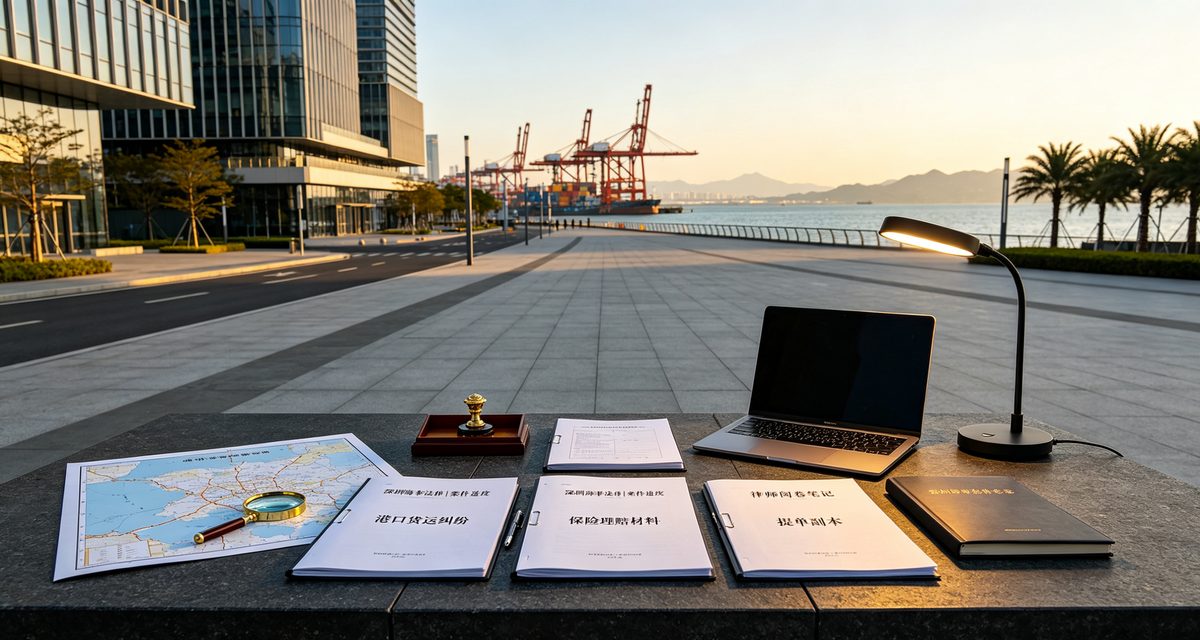
Zhang signed a contract for an "XX No. 2 Private Equity Investment Fund" with an investment term of 18 months and a performance benchmark of 9.5% annualized. The contract terms were densely packed. He looked into the background of the fund management company—the filing information was still there, but the manager's office had already moved. What's more suspicious is that the Pre-IPO project the fund invested in—a company making new energy battery materials—Zhang went to visit in person at the site, and the factory building was indeed there, but the production line had never been put into operation. He felt something was off and checked with the Asset Management Association of China, only to find that this manager had already been listed as an abnormal operating institution. Seeing his 7 million about to go down the drain, he couldn't sleep well every night.
The core difficulty of this type of case lies in the fact that the fund contract is written extremely unfavorably to investors. The contract that Mr. Zhang signed back then contained a clause stating: "The fund manager makes no promises or guarantees regarding the investment returns of the fund assets or the recovery of principal." Taken literally, losses are borne by the investor alone—this is almost the "stumbling block" in all private fund disputes. However, during our review of the materials, we discovered a detail: the fund distributor used a different set of rhetoric during the sales pitch. In the WeChat chat records, the financial manager explicitly said, "This project is solid, a two-year exit is no problem," and also said, "All products our team has managed over the past three years have been redeemed on schedule." These gaps torn open between the verbal promises and the written contract are precisely the breakthrough point for recovering the funds.
Question: If the contract states "no guarantee of principal or interest," can the investor still sue to recover the principal?
Answer: Yes, but it is necessary to find evidence that the manager's "name does not match reality." In recent years, when hearing disputes over financial entrusted wealth management contracts, Shenzhen courts have strictly reviewed whether the manager fulfilled the obligations of honesty, good faith, prudence, and diligence. If the manager exaggerated publicity during the fundraising stage, concealed true risks, or even misappropriated funds, even if the contract contains a risk-bearing clause, Article 148 of the Civil Code can still help you exercise the right of revocation — for a civil juristic act performed due to fraud, the defrauded party has the right to request a people's court or arbitration institution to revoke it. Once the contract is revoked, it has no legal binding force from the very beginning.
We conducted a look-through review of Mr. Zhang's 7 million yuan investment. The bank statements he provided show that on September 17, 2021, he transferred 7 million yuan to the account designated in the contract. Two days later, the funds were transferred to a consulting company, and upon further tracing, the money then flowed to a trading company affiliated with the legal representative of the fund manager. Combining the front and back statements, there are 27 transfer records in total, of which 13 transfers are completely unrelated to the project stipulated in the contract. This is a typical case of "using fund assets in ways not agreed upon," constituting a material breach of contract.
Shenzhen handles over 30,000 financial cases annually, among which private equity funds, financial leasing, trust defaults, and bank lending disputes account for a considerable proportion. The funds involved often reach tens of millions, and the legal relationships involved are complex and intertwined. Take Mr. Zhang's case as an example: we developed a "three-step" plan for him. First, immediately apply to the Shenzhen Futian District People's Court for pre-litigation property preservation to freeze the fund manager's and its affiliated companies' bank accounts and fund shares. Second, based on Articles 148 and 563 of the Civil Code, simultaneously claim for contract rescission and contract termination to give the court room for choice. Third, on the grounds of damage to fund property, name both the fund manager and the fund custodian as co-defendants to expand the scope of liable parties.
Preservation measures are the key to determining success or failure. We filed the preservation application at the same time as filing the case, providing clues to the administrator's accounts at the two banks, Futian and Longhua. After the court ruled to freeze the accounts, the administrator's attitude changed immediately. The other party proactively proposed a settlement, and ultimately both sides signed an agreement in which the administrator refunded Mr. Zhang's principal of 5.35 million yuan in three installments within two months, with the remaining 1.65 million yuan converted into claims against the project, backed by a joint and several liability guarantee from the legal representative of the affiliated company. All told, Mr. Zhang recovered 76.4% of his investment, not including the portion that may still be realized from the subsequent claims.
The day Zhang received his first refund, he breathed a sigh of relief. But it's worth noting that not every case is so fortunate. In financial leasing disputes, many lessees have their vehicles remotely locked or equipment towed away by the lessor directly due to overdue rent for three or four installments. When lessees come asking what to do, the legal provisions are actually clear—Article 745 of the Civil Code allows the lessor to repossess the leased property when the lessee defaults, but the lessee has the right to claim that the majority of the rent already paid be offset against the losses. Many people suffer losses in silence because they don't understand this rule.
Question: If a trust product is overdue, should we file a lawsuit directly or go through arbitration? What is the difference between the two?
Answer: First, review the contract. The vast majority of trust contracts stipulate that the dispute resolution method is "submit to a certain arbitration commission for arbitration," and such a stipulation excludes court jurisdiction. If you directly file a lawsuit in court, the court will dismiss the case. Arbitration and litigation follow different procedural paths, but both are protected by law. The key is to check whether the contract includes credit enhancement documents such as shortfall coverage clauses or liquidity support letters, as these directly affect the recovery rate.
The approaches to handling securities disputes and trust defaults are essentially the same: first lock down asset leads, then conduct legal characterization, and finally consider preservation measures as leverage. The fact that Mr. Zhang's case was settled within two months owes much to the timeliness of the preservation freeze, as well as to the penetrating analysis of the manager's internal governance structure and related-party transactions. If only a few lawyer's letters had been sent at the outset, the case would probably still be stuck in the other side's rhetoric of "the redemption process is ongoing."
Guangdong Zhiming Law Firm has been rooted in Shenzhen for 26 years. Lead attorney Shen Jinlong has been practicing for over 26 years, holds a master's degree from Fudan University, and previously served as a senior executive at a state-owned enterprise. His独创 "Zhiming Art Litigation" system has won dual innovation awards from both the provincial and municipal bar associations. The firm is located at Room 1802, Building A, Xintiandi Century Business Center, Shixia North Second Street, Futian District, and has handled more than 10,000 cases of various types cumulatively. If you are facing financial or securities-related disputes—whether involving stock financing, private equity funds, trust defaults, or bank lending and financial leasing disputes—you can call 0755-25986969 to discuss the details of your contract with the handling attorneys. Don't let silence turn a recoverable loss into a settled outcome.
Need professional legal help?
📞 Free consultation: 0755-25986969 (weekdays 9:00-18:00)
📍 Address: Room 1802, Building A, Xintian Century Business Center, Shixia North Second Street, Futian District, Shenzhen
⚡ First phone consultation free