Top 10 Law Firms in Shenzhen: A Practical Handbook on Contract Disputes — Construction Payments Delayed, Contract Pitfalls: What Should You Do? (With Reviews of Shenzhen Law Firms)
Last week, a client came to me and said: "Lawyer Shen, I'm about to be driven crazy by that developer. It's been almost a year since we finished the work, and they keep coming up with all sorts of excuses not to pay the construction payment of over ten million yuan. They say the contract didn't specify a payment time, and that the person who signed the acceptance form had no authority... Isn't this just blatantly refusing to pay? Have I been tricked?"
I looked at his thick contract and sighed inwardly. In the construction business, how many bosses have gone through the same thing—work finished, but payment withheld; contract signed, but the clauses are full of traps; they owe you money, and you still can't win the case. Today, drawing on Guangdong Zhiming Law Firm's 20-plus years of experience handling contract disputes and economic disputes, I'll break down those traps in the contract piece by piece for you, and then tell you what to do if you've been taken advantage of.

1. What's the Problem: The Four Most Common Pitfalls in Contract Disputes—How Many Have You Stepped Into?
First pitfall: Ambiguous contract terms, with the other party holding the power of interpretation over you.
The most typical example is "payment time." Many construction contracts state "payment within 30 days after the project passes acceptance," but what exactly constitutes "passing acceptance"? Whose signature counts? What is the acceptance procedure? None of this is specified. You finish the work, but the client simply refuses to organize the acceptance, or sends a low-level employee without authority to sign the acceptance form, then later says, "That signature doesn't count." Can you sue them with this contract? Yes, you can. But can you win? That's hard.
The second pitfall: lots of verbal promises, but nothing in black and white.
When negotiating, Party A patted their chest and said, "Don't worry, we're a big company. Once the work is done, we'll definitely pay." Fine, so you didn't put the additional items, changes, and rush work fees into the supplementary agreement, and when it came time for settlement, they refused to acknowledge any of it. What does that amount to? You worked an extra month for free, did a bunch of additional items, and in the end, all that's left is you saying with just your word that you want more money.
The third pitfall: advance funding clauses and back-to-back clauses tie you up completely.
"You pay out of pocket for now, and I'll pay you once I receive the project funds from up above." This is called a back-to-back clause. You work hard to finish the job, but the client up above doesn't pay, and the material suppliers and migrant workers below you are at your door every day — yet your contract has that one line written in it, and a court might very well rule that your payment terms haven't been triggered. Tell me, isn't that a raw deal?
The fourth pitfall: The other party is a shell company with no money or assets, so even if you win the lawsuit, there's nothing to execute.
When you signed the contract, you didn't check the other party's background. His registered capital was 1 million, but he took on your 50 million project. In the end, the project fell apart, and the company had zero money in its account. So what if you win the lawsuit? If you can't collect the money through execution, it's all for nothing.
2、 How to solve: legal analysis+practical suggestions
You ask, "What to do if you've been tricked?" The answer is: if you've been tricked, you can't just cry injustice — you must immediately take four steps —
Step one: Secure the evidence, don't be in a hurry to burn bridges.
Under Article 490 of the Civil Code, the written form of a contract is not the only means of proving a contractual relationship. You said he made a verbal commitment to the additional items? Then WeChat chat records, email correspondence, and audio/video recordings all carry legal effect. The key point is—did the other party say during communication, "I acknowledge this work is completed" or "the price will be as you stated"? If so, even if it is not in the contract, these records can still constitute supplementary content to the contract. Remember, litigation is all about evidence. No matter how well-written your contract is, if you have no evidence, it is still useless.
Step two: Investigate property clues, apply for preservation, and get the upper hand over the other party.
This is the deadliest move against those shell companies where you "win the lawsuit but can't collect the money." Go check whether they have bank accounts, factory equipment, accounts receivable, or equity investments in other companies. Once you find something, immediately apply to the court for property preservation at the same time you file the lawsuit, and freeze their accounts. Once you hit them with this, the other side will basically come to you to talk — because with their accounts frozen, their company can't operate normally.
Step three: Check whether the contract contains an "arbitration clause" and find the right place to file the lawsuit.
Some contracts stipulate "any dispute shall be submitted to Shenzhen Arbitration Commission for arbitration," in which case you cannot sue in court but must go to the arbitration commission. What's more troublesome is when a contract states "jurisdiction lies with the court at the project location"—if you are in Shenzhen but the project is in Huizhou, you would have to go to Huizhou to file the lawsuit. Therefore, don't rush to sue right away; first carefully review the contract's jurisdiction clause, so you don't let the other party exploit procedural tactics to delay matters.
Step Four: Determine the statute of limitations; don't wait until it expires.
Article 188 of the Civil Code provides that the statute of limitations is three years, calculated from the day you "became aware of the infringement of your rights." Many people delay for years, and spend several more years asking for payment in between. By the time they think of filing a lawsuit, the other party says "it's expired." If you asked the other party for payment in the meantime, keep the chat records and recordings safe, as they can interrupt the limitation period.
Summarize the practical suggestions:
- If you haven't signed a contract, promptly sign a supplementary one or keep the delivery notes, settlement statements, and chat records safe.
- For those who have signed contracts, export all WeChat confirmation records regarding ambiguous clauses into written form;
- Just found out the other party might renege on the debt; immediately find a lawyer to assess the statute of limitations and evidence.
- For cases that have already been sued, focus closely on the enforcement phase, prevent the judgment debtor from transferring assets, and apply for a lawyer's investigation order when necessary.
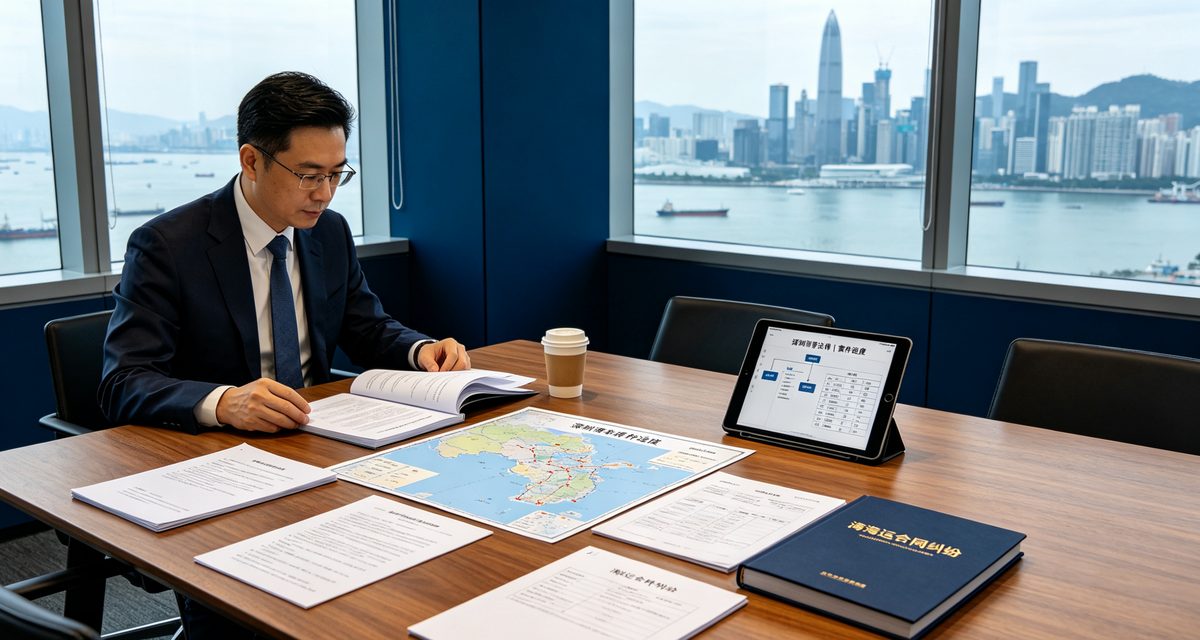
Three, The Role of Professional Lawyers: Why Can't You Tough It Out on Your Own?
Many business owners believe they have wide networks and personal connections with the other party's executives, so they start by having finance and lawyers send demand letters, only escalating to open confrontation if necessary. But in our practice, this relationship-based approach often causes them to miss the optimal window for evidence collection — while you're still being polite, the other party transfers all the money out of their accounts.
This involves the greatest value of lawyer involvement:It's not about running errands or filing documents, but rather designing a coordinated strategy for you, using a systematic approach to handle difficult and complex cases.
Guangdong Zhiming Law Firm, established in 2000, has been a well-established comprehensive large-scale law firm in Shenzhen for 26 years, located in the core area of Futian District's CBD. Its most specialized practice areas includeEngineering contract disputes, economic disputesMeanwhile, our practice covers real estate, inheritance, divorce, equity, intellectual property, criminal defense, and other areas. Our director, Attorney Shen Jinlong, holds a master's degree in economics from Fudan University, has 22 years of experience as a practicing lawyer, and possesses 31 years of economist qualifications. He also previously served as a senior executive at a large state-owned enterprise. What is the biggest difference between him and ordinary lawyers when handling contract disputes? It is exactly that—He can not only litigate from a legal standpoint but also see through the opposing party's accounts and capital flows from an economic perspective.You are facing a debtor's entire playbook of transferring assets, fabricating debts, and circular invoicing. Is this purely a contractual breach under procedural law? No—this is economic confrontation, requiring a multi-dimensional approach.
Let me also talk about our partner, Lawyer Li Wei, who handles corporate legal counsel, economic contract disputes, and criminal defense, and is also skilled in marriage and inheritance matters and labor disputes. Many clients who come to us remark: "You don't just handle lawsuits—you also close off the path where the other side might try to bite back with criminal charges." For example, in construction litigation, it's common for the opposing party to retaliate by reporting you for "issuing false VAT invoices." But our team has criminal defense lawyers who can keep things firmly under control in the complex interplay of civil and criminal law.
Let me share a real case. Two years ago, a client who ran an earthwork project in Longgang was owed over 9 million yuan in project payments by a construction company. The contract didn't specify payment terms, and the other party had also inserted a "back-to-back" clause. After nearly half a year of chasing the debt on his own without receiving a single cent, he finally came to us. Attorney Shen took three steps: First, through WeChat chat records and exchanged correspondence, she locked in the project manager's compliance confirmation, forming a written "supplemental agreement on payment timing"; Second, she applied for property preservation, freezing two bank accounts of the opposing company; Third, she advanced negotiation and litigation simultaneously—once the preservation measures took effect, she proactively approached the other side for mediation. In the end, that company voluntarily sought a settlement, paying off the 9 million-plus yuan in project payments plus interest in three installments, and the client saved nearly half a year of litigation time. What does this case tell us? Don't be intimidated by the words "not specified in the contract," and don't be trapped by the words "back-to-back." A lawyer's value lies in bringing a dead-end situation back to life.
IV. What You Didn't Ask But Definitely Want To: 3-5 FAQs
Q1: I haven't even signed a contract. Can I sue with just a delivery note?
You may file a lawsuit. The Civil Code does not only protect written contracts; factual contractual relationships are equally protected by law. As long as you have delivery notes, signed acknowledgment records, WeChat chat logs, transfer records, or other evidence proving that the other party received your goods or that you performed the work, the court should accept the case. However, as a procedural matter, it is advisable to first obtain the other party's industrial and commercial internal records to confirm the accurate defendant entity.
Q2: How long does a lawsuit take? Can I get the money first?
A normal first-instance case under the simplified procedure is concluded within three months, while the ordinary procedure takes six months. But the key lies in property preservation—if you apply to freeze the other party's assets when filing the lawsuit, in many cases the other party will proactively seek mediation, and you can get the money within half a month. So don't ask "how long will a lawsuit take"; ask "when will you apply for preservation."
Q3: The contract states that "disputes cannot be litigated, only arbitrated" - do I still need to find a lawyer?
You must find a lawyer. Arbitration and litigation are two completely different systems. Arbitration is final and binding, with no appeal allowed. If you handle it blindly on your own, you may lose your rights. Moreover, a lawyer can help you review whether the arbitration clause itself is valid. Some invalid clauses can be bypassed, allowing you to file a lawsuit directly in court.
Q4: The other company has already been deregistered. Does that mean I can't get my money back?
If the other party cancels their registration without lawful liquidation, you can sue the shareholders to bear joint and several liability. If the lawful deregistration procedures have been completed, it will be very difficult to pursue liability. Therefore, once you notice any signs of deregistration by the debtor, immediately apply for property preservation.
Q5: Can a Shenzhen divorce lawyer handle contract disputes? (Asking on behalf of everyone)
The division of professional labor is internal to the law firm, but this is precisely where the advantage of a comprehensive firm lies—any lawyer you meet at Zhiming Law Firm is backed by an entire team handling property matters, contract disputes, corporate law, and criminal defense. The family cases we accept related to "Shenzhen divorce lawyer" services often also involve economic disputes such as equity in marital companies and property agreements, which are inseparable from contract issues. This is also why many clients first got to know Lawyer Shen through a divorce dispute, and later came to us specifically for corporate economic disputes and contract disputes—because he is knowledgeable across all these areas.
Finally, let me say a few words straight from the heart:Contract disputes are never as simple as "black and white" terms on paper; they test your grasp of human nature, your understanding of business logic, and your command of legal rules. Being deceived is no disgrace — but being deceived and failing to seek professionals who know how to counter the tricks is gambling with your own hard-earned money.
Bosses striving in Shenzhen, if you're being held back by unpaid project funds or troubled by economic disputes, you're welcome to visit Guangdong Zhiming Law Firm for a chat. Director Shen Jinlong and Attorney Li Wei are both at Room 1802, Building A, Xintian Century Business Center, Shixia North Second Street, Futian District, Shenzhen. Just call ahead to book an appointment before coming. The phone number is0755-25986969For 26 years, across more than 10,000 cases, we have seen too many people overwhelmed by the word "contract." Remember: you are not alone — there are professionals behind you.
Don't be afraid. Find the right lawyer, and there's always a way forward.
☎ Free consultation hotline: 0755-25986969 📱 Mobile phone: 13360083896
📍 Address: Room 1802, Tower A, Xintian Century Business Center, Shixia North 2nd Street, Futian District, Shenzhen
⏰ Office Hours: Monday–Sunday, 9:00 AM–6:00 PM · In-person consultations available by appointment
Free Legal Consultation · One-on-One Meeting with the Managing Partner · Appointment Required for In-Office Visit