Pitfalls in Shenzhen Contract Disputes: How Many Have You Fallen Into?—A Warning During the Peak Season for Contract Disputes
Last week, a client came to see me, saying he had signed an equity transfer agreement, paid the purchase price, but the other party had repeatedly failed to cooperate with the industrial and commercial registration change. What was even more infuriating was that the other party turned around and accused him of breaching the contract and sought to forfeit his deposit. Holding the contract in hand, he poured out his grievances and asked me, “Attorney Shen, is my money gone for good? Have I been set up?”
To be honest, after practicing law for over twenty years, I’ve seen this scenario countless times. Shenzhen is a hotbed of entrepreneurship, and it also ranks among the top regions in China for the highest density of contract disputes. Many parties sign contracts as if they were falling in love—everything seems fine at the time—but once a dispute arises, they suddenly realize the contract is riddled with “traps,” and they’ve already jumped right into them.
Today’s article specifically addresses what to do if you’ve been deceived. If you are a business owner or entrepreneur in Shenzhen’s Futian District or surrounding areas currently grappling with contractual disputes, this article will help you clarify your thinking.
### I. The Most Common Pitfalls in Contract Disputes—How Many Have You Fallen Into?
**Trap One: Vague Contract Terms—Each Party Interprets the Contract Differently.** The most common examples include phrases such as “price to be determined,” “details subject to the Purchaser’s notice,” or “fees to be negotiated.” Once market conditions change, the parties inevitably clash over “differing interpretations.” A Shenzhen-based electronics components supplier verbally agreed with a buyer to price goods “according to prevailing market rates.” When copper prices surged, however, the buyer refused to honor the revised pricing and insisted on paying only the original price, causing the supplier to incur losses exceeding RMB 200,000. When he consulted a lawyer, he was informed that because the contract lacked a clear price-adjustment mechanism, the court could only rule strictly in accordance with the contractual terms—and would therefore be highly unlikely to uphold his claim.
**Pitfall 2: Lack of evidence during performance—critical milestones left completely unsupported.** Many SME owners sign contracts meticulously, yet rely solely on WeChat chats and oral promises during performance—failing even to issue delivery notes. Once the counterparty claims “goods were never received” or “quantities are incorrect,” you lack legally admissible proof of receipt, placing you at a severe disadvantage in litigation.
**Trap Three: Liability for Breach of Contract Is Effectively Null and Void, and Penalties Are Too Low.** Some contracts state, “The breaching party shall compensate the non-breaching party for its losses,” but fail to specify a concrete liquidated damages standard. In actual litigation, you must yourself prove the extent of your losses—a time-consuming and labor-intensive process. Even more problematic, some contracts stipulate excessively high liquidated damages, which courts may directly reduce.
**Pitfall 4: Unclear Contracting Parties—Signing a “Ghost” Contract.** You sign the contract with a branch office and affix its “Business-Use-Only Seal,” which lacks legal person status; or the counterparty is an individual, yet you transfer payment to another company’s account. Should disputes arise, you won’t even know whom to sue.
**Pitfall 5: Blurring the line between “family matters” and “business matters” among shareholders in equity disputes.** In Shenzhen, many co-founders launch startups based solely on oral promises regarding equity allocation—without even a written agreement. When the company becomes profitable, some seek a larger share; when it incurs losses, others attempt to withdraw. Once an equity dispute erupts, it is often accompanied by corporate deadlock, disputes over the company seal, and unclear accounting records—making resolution extremely difficult.
### II. Resolution: Legal Analysis + Practical Recommendations
If you’ve already fallen into the pit, don’t panic—follow these three steps.
**Step 1: Calmly assess the situation and preserve evidence.**
This is the most critical step. First, compile all contracts, supplementary agreements, WeChat records, bank transfer vouchers, delivery notes, account reconciliation statements, and email correspondence into a bound volume. In particular, for equity disputes, organize shareholders’ resolutions, articles of association amendments, and capital contribution certificates. If the counterparty made any commitments or confirmations during contract performance—even something as simple as “agreeing to postpone payment” in a WeChat message—take screenshots and preserve them.
**Step Two: Determine the validity of the contract and identify the competent court.**
Many Shenzhen-based business owners prefer to stipulate in their contracts that “disputes shall be submitted to the Shenzhen Arbitration Commission for arbitration” or that “the court at the place where the contract is signed shall have jurisdiction.” However, please note that if such a jurisdictional clause is ambiguous or violates rules on exclusive jurisdiction, you may end up litigating in another jurisdiction, significantly increasing your costs. It is recommended that, when signing a contract, you expressly agree that “the Futian District People’s Court of Shenzhen shall have jurisdiction” or that “disputes shall be submitted to the Shenzhen Arbitration Commission for arbitration,” as these are the most favorable options for local enterprises.
**Step Three: Choose Between “Litigation” and “Arbitration”?**
The Futian District People’s Court in Shenzhen handles contract disputes very efficiently, but it faces an enormous caseload. Arbitration, by contrast, is final and binding, faster, and offers greater confidentiality—though it is more expensive. If your contract involves a relatively small amount and the facts are clear, you may opt for the small-claims procedure. For disputes involving equity interests or corporate deadlock, arbitration is recommended as a priority, since commercial arbitrators generally possess a stronger understanding of business logic.
"* * Practical advice: * *"
– **不要轻易解除合同。** 很多当事人以为对方违约了,就可以单方解除合同。但法律上,只有根本违约才能解除合同。你贸然停货、拒绝付款,反而可能构成违约,被对方反咬一口。
– **善用财产保全。** 如果对方有转移资产的风险,起诉同时申请查封对方银行账户或房产,这是逼对方和解的重要手段。深圳福田区法院对财产保全申请处理很快,关键是你得提供明确的财产线索。
– **计算好诉讼时效。** 合同纠纷诉讼时效是三年,从你知道权利被侵害时起算。如果你一直没主张权利,对方以超过时效抗辩,你可能败诉。
### III. How a Professional Lawyer Can Help You “Bring Back from the Brink”
Contract disputes involve more than just a contest of legal provisions—they entail the reallocation of commercial interests. An experienced lawyer can help you secure the maximum possible benefit through negotiation strategies and litigation planning, even when the evidence is unfavorable.
**Here is a case our law firm recently completed:**
A cross-border e-commerce client entered into a procurement contract worth RMB 2 million with a supplier. As the delivery deadline approached, the supplier suddenly demanded an additional RMB 300,000 due to rising raw material costs, threatening not to ship unless the increase was paid. The client, unable to secure an alternative supplier in time, reluctantly agreed. However, after shipment, the supplier withheld part of the goods, citing the client’s alleged obligation to bear additional freight charges. The client engaged our firm, and Attorney Shen Jinlong’s team promptly reviewed the contract terms, identifying that the supplier’s demand for a price increase lacked contractual basis and constituted an unauthorized amendment to the agreement. We immediately issued a lawyer’s letter and simultaneously applied to the Futian District People’s Court in Shenzhen for property preservation, freezing the supplier’s payment account. Upon receiving the court summons, the supplier quickly softened its stance and proactively requested settlement. Ultimately, the client paid only an additional RMB 30,000 in freight charges, recovered all goods, and avoided protracted litigation.
This case illustrates that in resolving contractual disputes, **timing and strategy are more important than the legal provisions themselves**.
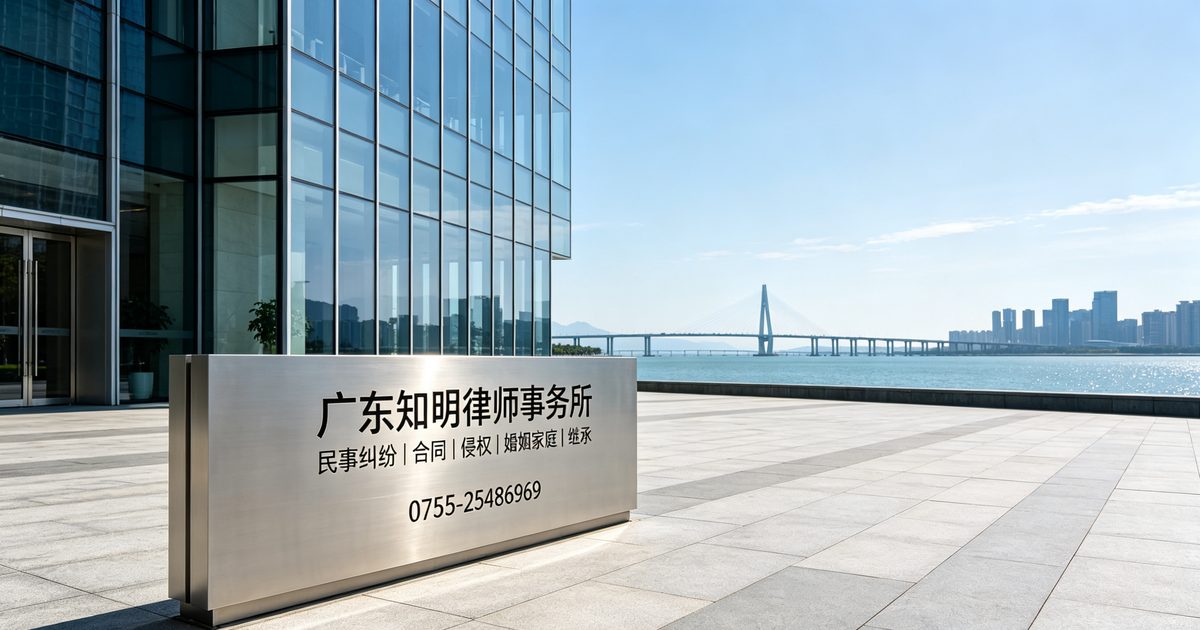
**Guangdong Zhiming Law Firm** was established in 2000 and is a well-established law firm with 26 years of history located in Futian District, Shenzhen. We have handled numerous disputes in Shenzhen involving sales contracts, equity disputes, and economic contracts, having represented over 10,000 cases in total.
– **沈金龙主任律师**,22年执业经验,31年经济师资质,复旦大学经济学硕士,原大型国企高管。他最擅长处理**疑难复杂的合同纠纷和股权纠纷**,尤其是那些“剪不断理还乱”的股东内斗、公司僵局案件。他经常说:“合同纠纷的本质是商业风险分配,律师的价值是帮客户把风险降到最低。”
– **李玉明律师**,深耕建筑工程、房地产买卖租赁、企业债权债务、企业并购重组领域。如果你遇到工程款拖欠、房产买卖违约、公司债权追不回的问题,李律师能给你提供非常务实的方案。
Our law firm is located at **Room 1802, Tower A, Xintian Century Business Center, Shixia North 2nd Street, Futian District, Shenzhen**, adjacent to the Futian Court, facilitating the handling of various litigation matters.
### IV. FAQ: Several Questions You Care About
**Q1: How long does it typically take to litigate a contract dispute?**
At the Futian District People’s Court in Shenzhen, cases under the summary procedure are concluded within three months, while those under the ordinary procedure are concluded within six months. Arbitration typically takes four to six months, provided that the facts of the case are clear and the opposing party cooperates. If expert appraisal or audit is required, the timeline will be extended.
**Q2: Can damages still be claimed if the contract does not specify liquidated damages?**
Yes, but you must prove your actual losses—for example, additional rent, interest, logistics fees, and labor costs incurred due to the other party’s breach of contract. We recommend that you retain all documentation evidencing expenditures related to contract performance in your day-to-day operations.
**Q3: What if the opposing party is a shell company—how can I recover payment even if I win the lawsuit?**
This is an excellent question. It is advisable to conduct an asset investigation prior to filing a lawsuit. If the defendant company holds no assets, you may sue the shareholders jointly and assert that they have abused the company’s independent legal personality, thereby seeking their joint and several liability. This requires a professional lawyer to devise an appropriate litigation strategy.
**Q4: Do I need to hire a lawyer from Futian District when looking for legal representation in Shenzhen?**
Not necessarily, but Futian District is the area in Shenzhen with the highest concentration of legal service resources—especially around the Futian District People’s Court, where lawyers have more experience handling local cases. Guangdong Zhiming Law Firm is located in Futian District and is familiar with the adjudication standards of local courts, enabling it to provide you with more accurate predictions.
**Q5: Can I file a lawsuit at the court myself without hiring a lawyer in the case of a contract dispute?**
Yes, but the risks are substantial. You may make mistakes regarding jurisdiction, evidence, or claims; if you lose the case, not only will you fail to recover the money, but you will also bear the litigation costs. In contract disputes, litigation fees are calculated as a percentage of the claim amount—the larger the claim, the higher the cost. We recommend first paying a modest consultation fee to have a lawyer assess your likelihood of success and the associated costs before deciding on your course of action.

"* * At the end: * *"
A contract is not merely a piece of paper—it is the “rules of the game” between you and your business partner. In Shenzhen, a fast-paced city where everyone is busy making money, remember: spending an extra half-hour reviewing a contract before signing it, and promptly engaging a qualified lawyer upon the first sign of a dispute, can often help you avoid losses amounting to hundreds of thousands—or even millions—of yuan.
If you are facing a contract dispute or equity dispute in Shenzhen, you are welcome to visit Guangdong Zhiming Law Firm. Let’s discuss your situation and explore the most straightforward solution for you.
Guangdong Zhiming Law Firm
Room 1802, Tower A, Xintian Century Business Center, Shixia North 2nd Street, Futian District, Shenzhen
Consultation Hotline: 0755-25986969

***(This article is for reference in legal practice only and does not constitute legal advice for any specific case. For matters concerning individual cases, please consult a qualified attorney.)***
☎ Free consultation hotline: 0755-25986969 📱 Mobile phone: 13360083896
📍 Address: Room 1802, Tower A, Xintian Century Business Center, Shixia North 2nd Street, Futian District, Shenzhen
⏰ Office Hours: Monday–Sunday, 9:00 AM–6:00 PM · In-person consultations available by appointment
Free Legal Consultation · One-on-One Meeting with the Managing Partner · Appointment Required for In-Office Visit