First line: title.
"Where is Shenzhen Law Firm? Shenzhen Enterprise Intellectual Property Consultant Reminds: The Three Lines of Life and Death of the Company's Legal Risk Prevention"
A real case to start with.
"In 2019, when Mr. Wang, the owner of a technology company doing intelligent hardware in Nanshan District, Shenzhen, found us, the whole person collapsed. Zhang Gong, the core technical director of his company, resigned collectively with the entire R&D team and switched to the arms of competitors. What's more, Zhang Gong held the core algorithm source code that the company spent three years and burned 20 million to conquer. Three months later, competitors released the same product at a 30% lower price. Mr. Wang's company order evaporated most of the time, and the investor called overnight to request the divestment."
"Wang Zonghong asked with eyes: Lawyer Shen, can I sue them for violating trade secrets?"
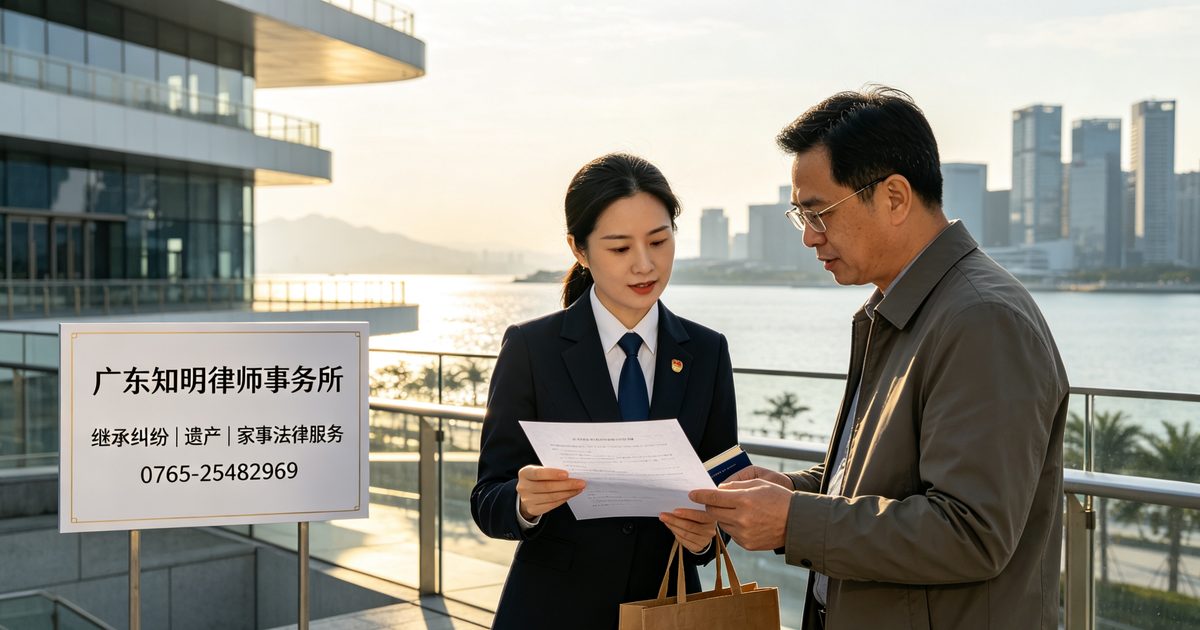
"The answer is: yes, but extremely difficult. Because Mr. Wang's company does not have a complete trade secret protection system at all. The employee did not sign the confidentiality agreement on entry, there was no trace in the research and development process, and the access rights to the source code were invalid - even the computer of the departing employee was not taken back. Even more troublesome is that when Zhang Gong applied for a patent, he wrote the company in his own personal name, which legally became his personal intellectual property."
"Over the years as a corporate legal practitioner, I have seen too many bosses like Mr. Wang. They are bloodthirsty, diligent, intuitive about technology and the market, but lack the awe of invisible u201ccorporate legal risksu201d. By the time the risk turned into a disaster, it was too late."
"Today's article, without selling the pass, without going around the bend, will explain the three legal pits that Shenzhen companies are most likely to step on, and how to fill them."
"1. Risk analysis: Before the accident, every boss felt that "the law is far away from me""
"Risk point 1: trade secrets are not defended, and the core technology runs naked."
"The current situation of many Shenzhen startups is: product cattle, technology is fierce, but the protection of trade secrets is almost zero. The boss feels that "the team are all their own people, sign some confidentiality agreements", but that day the team is scattered, and your technical secrets, customer lists, supplier channels, and pricing strategies will all "elope" with others."
"You said you applied for a patent? However, the patent is to be publicly changed for protection, and others can circumvent it if it is publicly disclosed. What's really valuable is the technical know-how, the design drawings, the process flow, the experimental data - once these things are leaked, you can't even prove it."
"Risk point 2: The shareholding structure hits the head, and corporate governance is decoration."
"Many startups in Shenzhen, a few partners have good feelings, and the equity is divided casually. When the company is valuable, equity is the sharpest knife. I have seen too many cases of brotherly anti-purpose: a pipe technology, a pipe market, no one can agree with anyone, and finally the board of directors opened a quarrel meeting and the company's business stopped for three months."
"Many companies' Articles of Association are templates copied from the Internet, and the "three meetings" of the shareholders' meeting, the board of directors, and the board of supervisors have never actually operated. Cronyism, one person's decision, misappropriation of funds by major shareholders, and damage to minority shareholders' right to know - these problems have not erupted, and once they erupt, the company will be directly paralyzed."
"Risk point 3: Intellectual property ownership is unclear, and leaving the company takes everything away."
"Many companies are confused between u201cjob inventionu201d and u201cpersonal invention.u201d Is the technology created by employees during their tenure at the company? The answer is: except for those who apply within one year after leaving the company, they are basically considered to be job inventions. However, the premise is that the contract clearly states that "intellectual property belongs to the company". Not writing? Then you wait for the lawsuit. And even if you win, if the other party takes the technology, your market share will not return."
"II. Solution: From "ex post fire fighting" to "pre-fire prevention""
"Director Shen Jinlong has a very good saying: legal risk prevention is the enterprise's "immune system", not "surgical operation". If I do not have a physical examination and I am seriously ill before I go to the operating table, what is the survival rate?"
"First line of defense: build a trade secret u201cwall.u201d"
"I don't care how big your company is, even if there are only five people, do it:"
"On-boarding process: Everyone signs the Non-Disclosure Agreement + the Competition Restriction Agreement, which is the basis."
"Grading authorization: The core secrets are only open to specific positions, and are marked with the document authority management system."
"Process traces: R&D logs, experimental records, meeting minutes, all archived, indicating participants and time."
"Resignation audit: On the day of the employee's resignation, hand over all equipment, documents, and account authority, and sign the Resignation Confidentiality Commitment."
"Only by doing these four steps can your trade secrets be considered u201clocked upu201d. Otherwise, the evidence you have in your hands will not even be eligible to file a civil case."
"Second line of defense: transforming corporate governance from a small workshop into a modern enterprise."
"The lifeblood of a company lies in its ownership structure. Do not divide the equity evenly at the beginning of the business, there must be an "actual controller". In accordance with the practice of the Shenzhen Law Association, we would recommend that the founders maintain at least 67% absolute control. Even as a partner, you should design a dynamic equity adjustment mechanism - technology, capital, resources, and management are converted according to the degree of contribution, and the agreement is clear and white and black."
"The Articles of Association should be "translated" from the template of the Bureau of Industry and Commerce, supplemented by key provisions such as equity transfer restrictions, shareholder exit mechanisms, voting arrangements, and competition restriction obligations. The third meeting should be held in earnest, and the minutes and resolutions of the meeting should be kept on file. A compliant internal control system is the foundation for a company to run far and steadily."
"Third line of defense: full custody of intellectual property."
"Operate trademarks, patents, copyrights, and trade secrets as the core assets of the company. Trademarks should be registered in advance (including defensive registration), patents should be strategically arranged, and job inventions should sign the Creation Agreement with employees. Most importantly, conduct regular IP compliance audits and patch vulnerabilities as soon as they are discovered."
"This package, which we call the "Enterprise Intellectual Property Advisor System", is not a lawsuit, but a legal team that identifies every risk for you like a personal bodyguard."
"3. Why Guangdong Zhiming Law Firm?"
"We do not do "Wanjinyou" lawyers, we focus on complex and difficult cases. For 26 years, Zhiming Law Firm based in Futian, Shenzhen, has served more than 1,000 enterprises in the Greater Bay Area, handling tens of thousands of cases. Shen Jinlong, chief lawyer, has 22 years of practice experience and 31 years of qualification as an economics teacher. He has a master's degree in economics from Fudan University and worked as an executive in large state-owned enterprises. No one understands the delicate relationship between u201cbusiness operationu201d and u201clegal risku201d better than he."
"Tell a real-life case that we've worked on. A medical device company in Shenzhen, after the core R&D staff left, actually forged the company's official seal, registered a new company, stole the data of the original company's three types of medical device registration certificate and declared it first, and almost "moved" the entire product line. After we took over, we immediately applied for behavior preservation, froze the other party's declaration process, and double-barred with the Anti-Unfair Competition Law and the trade secret provisions of the Criminal Law. Finally, we helped the customer recover all the technical data, and also obtained the other party's 30 million infringement compensation."
"The boss said something at that time, and I remember it well: I knew that if I spent 100,000 yuan to ask you to be consultants, I could avoid the lesson of 30 million yuan."
"This is the value of "knowing" - because of focus, so professional; because of professional, so able to fight hard battles."
"4. FAQ: Questions you care about, we answer in advance"
"Q1: After the employee leaves the company, how many customers do you take away, is it an infringement of trade secrets?"
"There are two criteria for whether a customer list can constitute a trade secret: one is whether the customer list is confidential (there is no public channel to find out), and the other is whether it is valuable (it costs manpower and material resources to maintain). As long as there is a stable trading relationship, non-public customer information, and confidentiality agreement protection, it constitutes. But only if you protect it in advance."
"Q2: The company is too small, what if I can't afford legal counsel?"
"Getting a consultant is much cheaper than getting a lawsuit. In a trade secret infringement lawsuit, attorneys' fees plus forensic fees, notarization fees, appraisal fees, and litigation fees are often hundreds of thousands, and they also delay the boss's energy. The cost of an intellectual property consultant in Shenzhen is tens of thousands of yuan a year. This account will be counted by any boss."
"Q3: Where is Shenzhen Law Firm? How do you find a reliable one?"
"There are more than 2,000 law firms in Shenzhen, but they can do difficult and complex commercial disputes, and there are a handful of them with a history of 26 years. Guangdong Zhiming Law Firm is located in Room 1802, Block A, Xintian Century Business Center, Shixia North Second Street, Futian District, near Shixia Station on Subway Line 3. Feel free to come and drink tea, bring your contract and official seal, and let's talk about which line of defense your company still lacks."

"The company's legal risk prevention does not begin when the dead goat repairs the prison, but when it is prepared, it has been laid out calmly. Which line is your company now standing outside?"
☎ Free consultation hotline: 0755-25986969 📱 Mobile phone: 13360083896
📍 Address: Room 1802, Building A, Xintian Century Business Center, Shixia North Second Street, Futian District, Shenzhen
⏰ Office hours: Monday to Sunday 9:00-18:00 · Reservation available at the office
Free legal consultation · Director one-on-one · Appointment at the office