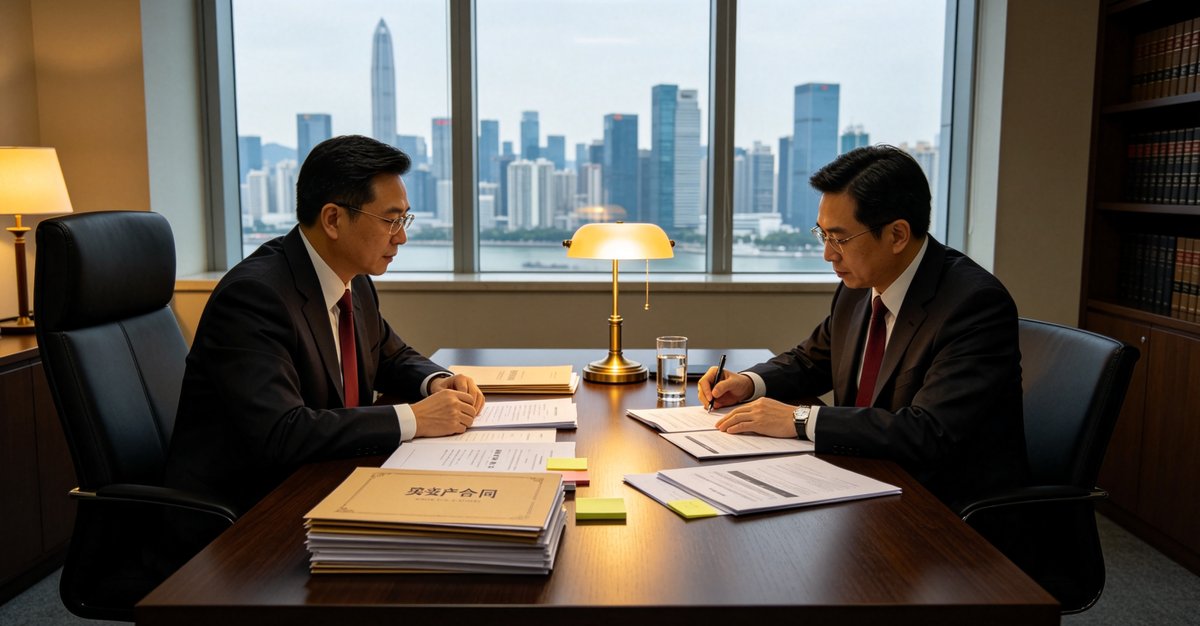
Cross-border trade disputes are on the rise—how should international arbitration be chosen? A Shenzhen lawyer offers in-depth analysis.
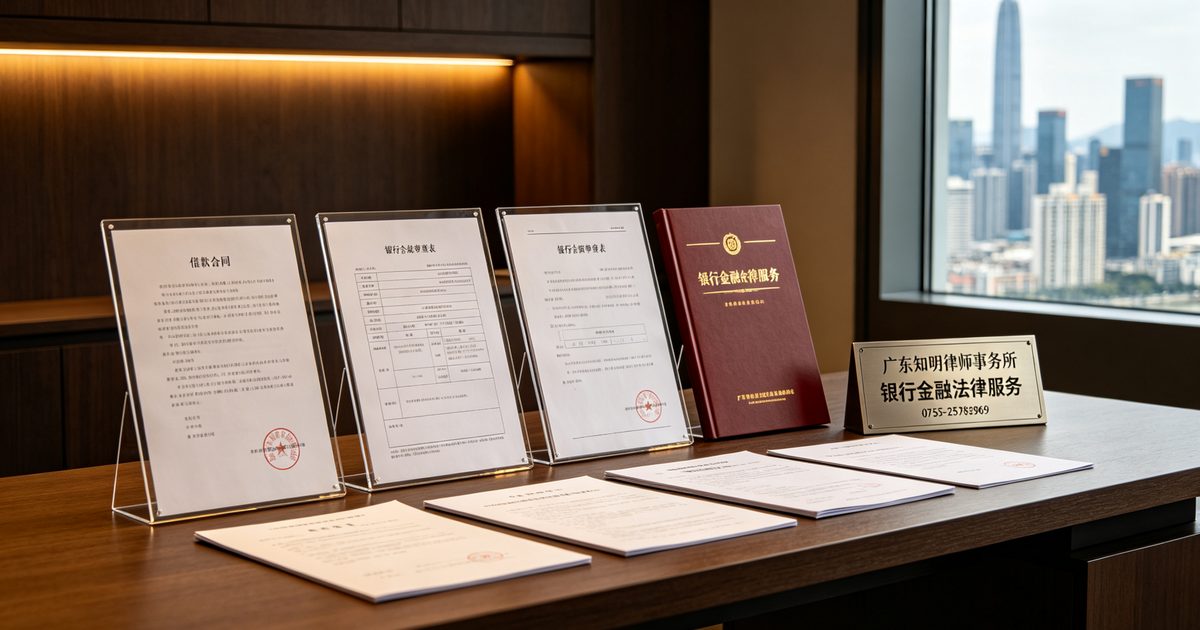
In March this year, Mr. Wang, the head of an electronic components manufacturing company in Longhua, Shenzhen, came to us. His partner in Hong Kong owed him 3.2 million yuan in payment for goods, and the dispute resolution clause in their contract stipulated "submit to arbitration at the Hong Kong International Arbitration Centre." Mr. Wang was very anxious: How does international arbitration actually work? Can it be initiated from Shenzhen? What are the approximate costs? These are common concerns shared by many business owners in Shenzhen engaged in cross-border trade.
When parties encounter disputes involving Hong Kong, Macau, Taiwan, or cross-border trade, they typically face three options: litigation in mainland China courts, litigation in Hong Kong courts, or arbitration by international arbitration institutions. Upon evaluation and comparison, international arbitration stands out with advantages across four dimensions:
"With 172 States parties to the New York Convention, arbitral awards are much easier to enforce offshore than court decisions. The Shenzhen Qianhai Court has seen an average annual increase of 30% in foreign-related cases in the past three years, but the recognition procedure of Hong Kong-related judgments in Hong Kong courts still requires additional litigation, which takes 6-12 months. The HKIAC (Hong Kong International Arbitration Centre) award can be directly applied for in Shenzhen in accordance with the Supreme People's Court's Arrangement on the Mutual Enforcement of Arbitral Awards between the Mainland and the Hong Kong Special Administrative Region, shortening the period to about 3 months."
"The composition, language and applicable law of the arbitral tribunal may be agreed upon. If you choose Shenzhen Arbitration Commission or HKIAC for Hong Kong-related cases, you can use bilingual procedures in Chinese and English, which will lower the cost of docking with Hong Kong lawyers."
"Arbitration is not open to the public and has little impact on commercial reputation. A semiconductor company in Nanshan, Shenzhen, was once sued for a contract dispute. If the court procedure is followed, the customer relationship is damaged, and eventually arbitration is chosen to resolve it in a low-key manner."
"The arbitrators are mostly senior lawyers and industry experts. They have a deeper understanding of cross-border trade practices, and the reasoning of the referees is more in line with business logic."
**Q:** Does international arbitration have to be held in Hong Kong or Singapore? Are the fees particularly high?
Answer: Not necessarily. Now both HKIAC and SIAC (Singapore International Arbitration Centre) support remote video hearings in Shenzhen. This year we have already handled two HKIAC cases conducted entirely online, taking about 40% less time than offline hearings. In terms of costs, for a case with a subject matter of around 5 million yuan, the arbitration fees are approximately 200,000 to 400,000 yuan, which is slightly higher than litigation fees in mainland courts, but far more cost-effective than the travel and time costs of parties traveling back and forth to Hong Kong.
.
The legal basis is Article 277 of the Civil Procedure Law, under which domestic arbitration institutions may apply for property preservation. However, for Hong Kong-related arbitration, the level of cooperation from mainland courts currently varies. In practice, we generally advise clients to stipulate in the arbitration agreement that "the seat of arbitration is Hong Kong and the place of hearings is Shenzhen." This approach can secure both the discovery procedures under Hong Kong common law and preservation support from mainland courts.
"The financial information of Hong Kong-funded enterprises in the mainland is scattered in Shenzhen, Dongguan and Huizhou, and the certification process is cumbersome."
**Q:** If a Hong Kong-funded enterprise files a lawsuit in mainland China, will the court treat them differently?
**Answer:** In the cross-border loan dispute case we represented for a Hong Kong-funded enterprise with a subject amount of 28 million yuan, the Shenzhen Intermediate Court ruled in 2024 to fully support the principal and the agreed annual interest rate of 8.5%, based on Article 680 of the Civil Code regarding the prohibition of usury, stipulating that an annual interest rate not exceeding four times the LPR at the time of contract formation is protected. Hong Kong-funded enterprises and mainland enterprises are equal in status; the key is that the evidence must form a complete chain.
In 2022, a Hong Kong-funded trading company, due to cash flow needs, borrowed 28 million yuan from an investment company in Futian, Shenzhen, with an agreed annual interest rate of 8.5% and a repayment term of 18 months. Later, due to defects in the guarantee provided by a related company, the other party refused to repay. When the Hong Kong-funded enterprise came to us, they only had nine remittance slips and a loan agreement without witnesses.
Focus of Dispute: The loan agreement was signed in Hong Kong — should Hong Kong law or Mainland law apply?
We achieved a complete victory through three operations: first, assisting the client in handling notarization of a declaration at the
"In Hong Kong-related cases, HKIAC or the Shenzhen International Arbitration Court were prioritized, and the implementation efficiency was nearly 10 times."
". The Hong Kong guarantee requires a legal opinion from the Hong Kong lawyer, otherwise the validity of the guarantee may be overturned."
"WeChat chat records and email exchanges suggest that blockchain certificates be deposited within 30 days after signing the contract, and the cost is about 800 yuan/case, which is far lower than the notarization fee in the later period."
International arbitration is not an unattainable extraterritorial system. With the right strategy, Shenzhen companies can completely resolve cross-border disputes at low cost. If you are currently facing similar trade disputes involving Hong Kong, Macau, or Taiwan, please call 0755-25986969. The team led by Director Lawyer Shen Jinlong of Guangdong Zhiming Law Firm will develop a customized arbitration plan for you. With 26 years of experience and the capability of handling over 3,000 foreign-related cases, we better understand the legal needs of Shenzhen companies going global.
Need professional legal help?
📞 Free consultation: 0755-25986969 (weekdays 9:00-18:00)
📍 Address: Room 1802, Tower A, Xintian Century Business Center, Shixia North 2nd Street, Futian District, Shenzhen
⚡ First phone consultation free