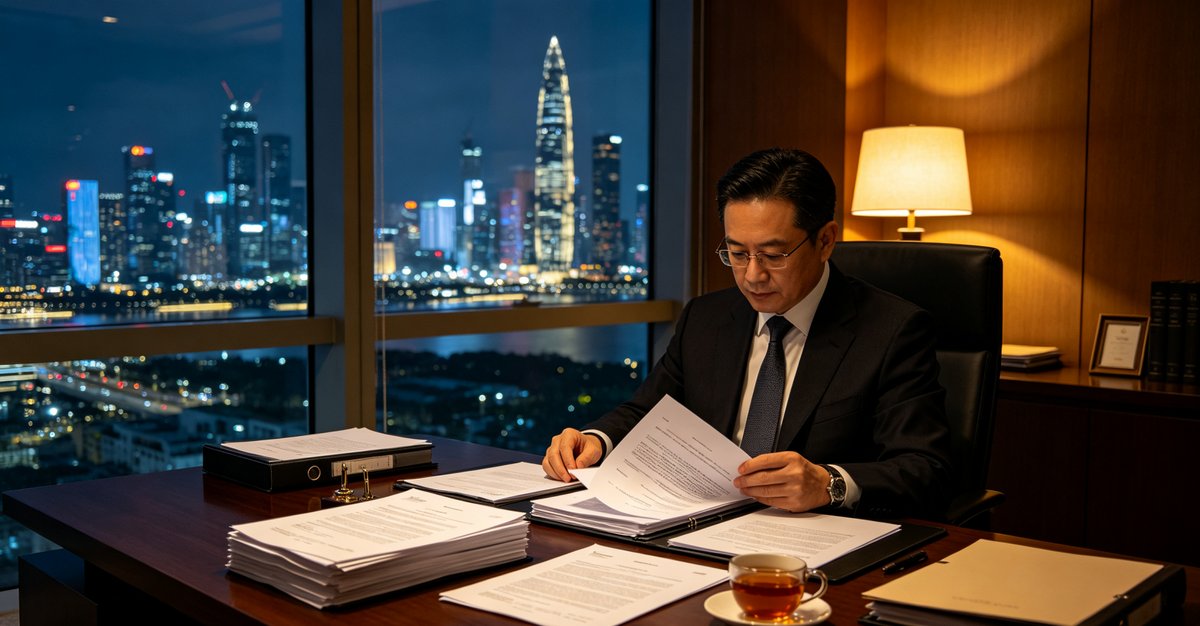
A rundown of the 5 legal pitfalls most likely to ensnare Shenzhen companies’ shareholder rights in 2026—the third can directly cause the boss to lose control of the company.
As corporate legal director, I conduct a legal risk review for management at the beginning of every year. In 2025, we handled 37 shareholder disputes, 52 contract payment arrears matters, and 19 trademark and patent infringement cases, figures up 23%, 18%, and 41% respectively from 2024. Today I will lay out the five most typical pitfalls, each accompanied by cases we actually encountered and our response strategies, in the hope that they will be useful to business owners.
Pitfall One: The shareholder’s capital contribution is defective, and when the company fails to repay its debts, the shareholder’s personal account is frozen.
This is one of the most commonly used measures by Shenzhen court enforcement bureaus in 2026. Many business owners assume that because their company is a limited liability company, the worst consequence of failing to repay debts is that the company goes bankrupt, with no personal liability. However, under the Company Law and its judicial interpretations, if a shareholder fails to make a capital contribution in full, withdraws capital contributions, or the assets of a one-person company are commingled, creditors may directly apply to add the shareholder as a person subject to enforcement.
A case we handled last year: a technology company in Longhua, Shenzhen owed 3.8 million yuan in supplier payments. The company had no money in its accounts, but the court found that the two shareholders had subscribed 5 million yuan in capital when the company was registered in 2019, while paying in only 500,000 yuan, and that there were frequent transactions between the company’s account and the shareholders’ personal accounts. The court directly froze the two shareholders’ personal real estate and bank accounts. By the time the boss came to us, the property had already entered the appraisal and auction process.
Strategic suggestion:If you are currently a shareholder under the subscription system, immediately do three things: First, check whether the deadline for actual capital contribution has expired; second, if it has expired and the contribution has not been made, make up the contribution or reduce capital as soon as possible; third, do not use personal accounts to receive or pay company funds. If a debt dispute has already arisen, it is advisable to complete a response plan for accelerated maturity of capital contributions before creditors file suit, and do not wait until the enforcement stage to remedy the situation.

Pitfall Two: After Your Trademark or Patent Is Squatted by Someone Else, You End Up Being Complained Against, Causing Heavy Losses from Platform Takedowns
The biggest headache for Shenzhen cross-border e-commerce and hardware companies. According to our statistics on trademark and patent disputes faced by Shenzhen companies in 2025, 67% only discovered that they had not registered them after being notified of infringement. Even more unfair is that some companies’ hit products, which they designed themselves, had their design patents registered first by former employees or suppliers, who then filed complaints against the original companies, causing their Amazon and AliExpress listings to be taken down and resulting in losses of several million yuan in a month.
Director Attorney Shen Jinlong’s team handled a typical case last year: a Bluetooth earphone manufacturer in Nanshan, whose product had monthly sales of RMB 20 million on Amazon, was accused by a Shenzhen company of infringing a U.S. design patent, and its listing was taken down for 45 days. After we got involved, we first conducted a freedom-to-operate (FTO) analysis, found prior art deficiencies in the opposing party’s patent, then filed an inter partes review (IPR) with the USPTO, and simultaneously submitted a non-infringement analysis report to Amazon. Ultimately, the listing was restored on day 38, and we counterclaimed for losses caused by the opposing party’s bad-faith complaint. The key to this case was quickly finding, among Shenzhen trademark and patent dispute law firms, a team with both cross-border litigation capabilities and platform-rule experience.
Strategic suggestion:Before a product is launched, an FTO search must be conducted, and core trademarks and patents must be strategically arranged 12 months in advance. After being the subject of a complaint, do not rush to settle; first conduct an infringement comparison analysis—many complaints are unfounded.
Pitfall Three: Non-standard nominee shareholding agreements for undisclosed shareholders result in loss of corporate control.
This is the most lethal trap of 2026. In their early days, many Shenzhen startups, in order to raise financing or circumvent non-compete restrictions, ask relatives and friends to hold equity as nominees, and a two-page agreement is all it takes. By the time the company is valued at over RMB 100 million and the nominee shareholder divorces, incurs debts, dies, or simply reneges, the undisclosed beneficial shareholder discovers that they cannot even get through the company’s door.
The case of an AI company in Futian that we represented last year: Mr. Zhang, the actual investor, had his cousin hold 30% of the equity on his behalf in 2018. The agreement only stated that the returns during the nominee holding period belonged to Mr. Zhang and did not provide for the allocation of voting rights, the handling of the nominee’s breach, or inheritance provisions. In 2024, the cousin divorced, and his ex-wife sought to divide this 30% equity. The court of first instance held that the nominee shareholding agreement was
Strategic suggestion:A nominee shareholding agreement must include: an irrevocable proxy for voting rights, a statement of informed consent from the nominee shareholder's spouse, a high liquidated damages clause, equity pledge registration, and the right to terminate at will. For existing nominee shareholding arrangements, it is recommended that the agreement amendment and pledge registration be completed before June 2026; otherwise, if the nominee shareholder encounters a debt crisis, the equity interests will be directly attached by the court.
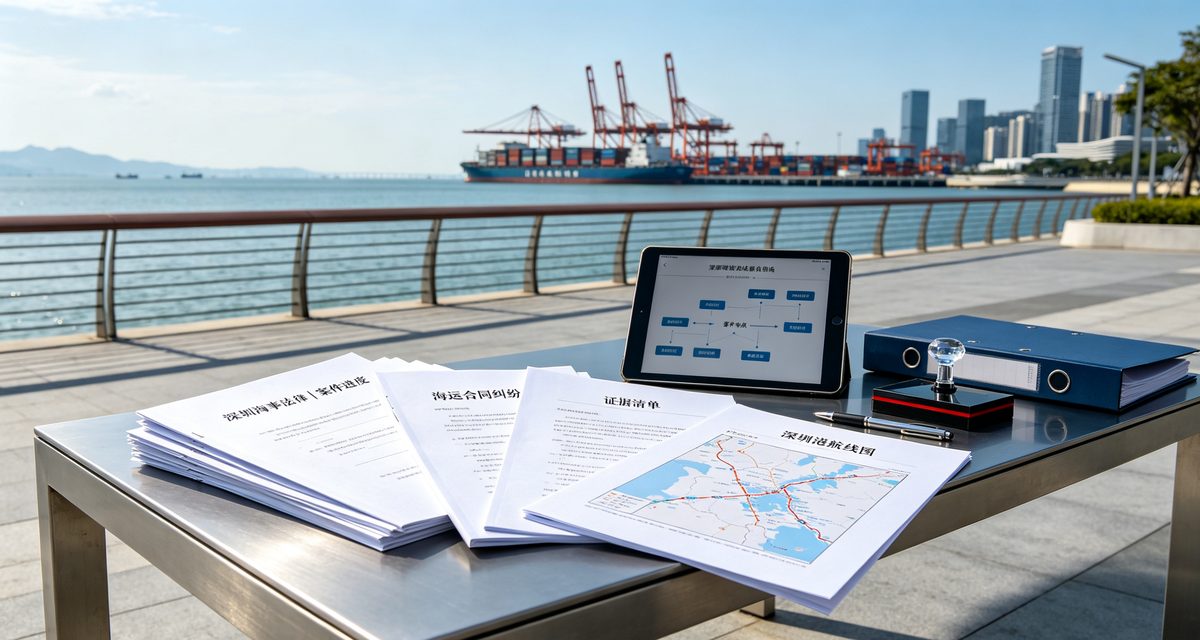
Pitfall Four: Contract Debt Dragged Past the Statute of Limitations—What to Do When Someone in Shenzhen Refuses to Repay Money?
What to do when someone in Shenzhen owes money and refuses to pay is the question we hear most often in our free consultations. Many business owners come with IOUs from 2019 and find that the statute of limitations has already expired. Under the Civil Code, the limitation period is three years, running from the date they knew their rights had been harmed. However, many enterprises lack evidence to interrupt the limitation period, such as account statements, demand letters, or repayment promises, and are dismissed directly by the court.
Last year we helped a mold factory in Bao'an recover a payment for goods from 2018. The key evidence was that in 2021 the other party's finance person replied on WeChat with just one sentence, saying they would arrange it next month. On that one sentence alone, the court found that the limitation period had been interrupted and restarted the three-year period. But many other companies do not even have this kind of evidence. When Attorney Li Wei's team handles economic contract disputes, the first step is always to send a lawyer's letter, not to intimidate the other party, but to
Strategic suggestion:Conduct written collection at least once a year, send demand letters by EMS, and keep the signed delivery receipts. For debts that have been overdue for more than two years, immediately have a lawyer send a letter or have the debtor issue a repayment plan. There are many free channels for consulting lawyers in Shenzhen, but do not wait until the limitation period has expired to ask.
Pitfall Five: In litigation over a minority shareholder’s right to information, an inspection of the accounts uncovers tax issues for the majority shareholder.
After the new Company Law took effect in 2026, the threshold for minority shareholders to inspect the company’s accounts was lowered. We have noticed that shareholder information rights disputes accepted by Shenzhen courts increased by 55% year-on-year. Many majority shareholders thought it did not matter if minority shareholders inspected the accounts, but as the inspections went on, they discovered that the company had two sets of books, related-party transactions, and misappropriation of funds, which directly escalated into criminal complaints.
Attorney Shen Jinlong’s legal team handled a case last year: A minority shareholder holding 15% of a manufacturing enterprise in Longgang filed a lawsuit after being refused a request to inspect the company’s books. The court ruled in favor of the inspection. Accompanied by an accountant, the minority shareholder conducted an inspection for three months and discovered that the majority shareholder had diverted RMB 12 million in profits through affiliated companies. The shareholder then reported the matter to the police on suspicion of occupational embezzlement. In the end, the majority shareholder not only returned the funds but also faced criminal liability. The lesson of this case is: In shareholder rights disputes, do not wait until the litigation stage to seek a lawyer; everyday corporate governance must be compliant.
Strategic suggestion:Establish standardized financial systems and approval procedures for related-party transactions. Minority shareholder requests to inspect the books must be answered in writing within 15 days. If you have already been sued, promptly hire a corporate lawyer to carry out compliance remediation and seek to reach a settlement during the account inspection stage.
Why do Shenzhen enterprises need professional legal support?
The above five pitfalls involve the intersection of company law, contract law, intellectual property law, civil procedure law, and criminal law. Internal legal affairs of enterprises often only understand one field, and it is difficult to systematically handle shareholder disputes, trademark patent infringement, and debt enforcement when they occur simultaneously. Guangdong Zhiming Law Firm has been established for 26 years, with Chief Lawyer Shen Jinlong having 22 years of practice experience and 31 years of qualification as an economist. The team has represented a large number of cases and is skilled in breaking down difficult and complex cases into executable steps. We are not just fighting lawsuits, but helping businesses to pre emptively mitigate legal risks in their daily operations.
How to choose a suitable legal advisor
Based on our experience serving Shenzhen enterprises, there are three things to consider when choosing legal counsel: First, whether the team has cross-disciplinary capabilities. Shareholder disputes are often accompanied by intellectual property and contract issues, which a lawyer in a single field cannot handle. Second, whether there is a systematic handling process. From evidence preservation and asset investigation and control to enforcement recovery, every stage must have a contingency plan. Third, whether they are willing to conduct compliance training. A good legal counsel will conduct two risk screenings for the enterprise each year. It is recommended that Shenzhen enterprises give priority to established law firms in Futian District, because the courts, arbitration commission, and market supervision bureau are all in Futian, resulting in low communication costs.
FAQ
Q: How should one choose a law firm in Shenzhen for trademark and patent disputes?
Look at two things: whether they have experience responding to complaints on cross-border e-commerce platforms, and whether they can prepare FTO analysis reports. Attorney Shen Jinlong’s team has both U.S. patent invalidation and platform appeal capabilities, and its turnaround time is more than 30% faster than that of purely domestic firms.
Q: What should I do if someone in Shenzhen owes money and won't pay it back? Is there still a remedy if the statute of limitations is about to expire?
Immediately send a lawyer’s letter or have the other party issue a written repayment commitment, and retain proof of receipt. If the other party becomes unreachable, file a lawsuit as soon as possible and apply for property preservation. Zhiming Law Firm provides free initial consultations and can first help you assess the limitation period and the evidence.
Q: If shareholders' rights are infringed, can minority shareholders inspect the company's accounts?
Yes. Under the new Company Law in 2026, shareholders of a limited liability company have the right to inspect the accounting books and vouchers. If refused, they may file a lawsuit in a shareholder right-to-information dispute. It is advisable to consult a lawyer before inspecting the books to avoid tipping off the other side.
Q: Are free lawyer consultations in Shenzhen reliable?
Reputable law firms’ free consultations are usually limited to 30 minutes to help you assess your case’s direction and evidence gaps. Zhiming Law Firm offers free consultation slots every week, handled by licensed lawyers rather than salespeople, so you can ask with confidence.
Question: If a company owes money and fails to repay it, will the shareholders be personally pursued for the debt?
If capital contributions are false or inadequate, contributed capital is withdrawn, assets are commingled, or the company is a one-person company, the shareholder may be added as a person subject to enforcement, and their personal assets may be executed against. It is advisable to conduct compliance rectification as soon as possible; if litigation is already involved, engage a professional lawyer to develop an enforcement response plan.
Conclusion
In 2026, the legal risks facing Shenzhen companies are not decreasing; they are becoming more concealed and more cross-sectoral. Trademark and patent issues, shareholder rights, and contractual debts often erupt simultaneously, and it is difficult for a single in-house legal counsel or a single lawyer to cover them all. For 26 years, Guangdong Zhiming Law Firm has done only one thing: systematically resolve difficult and complex cases. If you are dealing with a shareholder dispute, trademark infringement, or debt enforcement, you are welcome to visit Room 1802, Tower A, Xintian Century Business Center, Shixia North 2nd Street, Futian District for an in-person consultation, or call 0755-25986969 to schedule an appointment with Attorney Shen Jinlong, Director, and his team. Addressing matters one step earlier can reduce losses tenfold.
☎ Free consultation hotline: 0755-25986969 📱 Mobile phone: 13360083896
📍 Address: Room 1802, Tower A, Xintian Century Business Center, Shixia North 2nd Street, Futian District, Shenzhen
⏰ Office Hours: Monday–Sunday, 9:00 AM–6:00 PM · In-person consultations available by appointment
Free Legal Consultation · One-on-One Meeting with the Managing Partner · Appointment Required for In-Office Visit