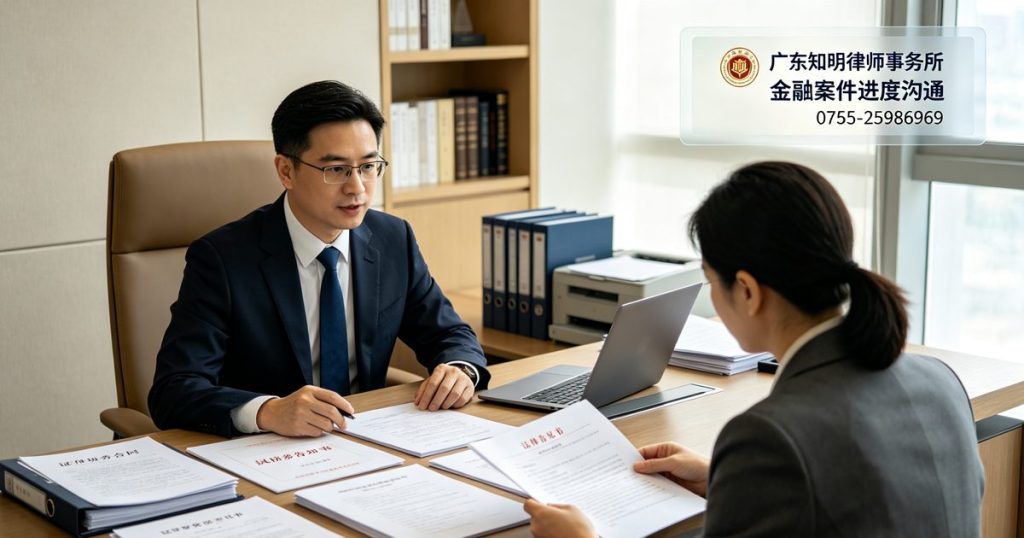

When Shenzhen shareholder capital contribution disputes meet company control disputes, why can a hidden shareholder ultimately not even get through the company's door?
Let us begin with a real-life case.
Last year, a cross-border e-commerce technology company in Nanshan, Shenzhen, had three partners who brought their dispute to our law firm. The majority shareholder, Lao Zhang, held 51% and was in charge of operations; the second shareholder, Lao Wang, held 30% and was responsible for supply chain; the minority shareholder, Lao Li, held 19% and only contributed capital without working. The company had been running for three years, and its valuation had climbed to 80 million. The problem lay with Lao Li — of his initial subscribed capital contribution of 1.9 million, he had only actually paid in 600,000, and had been delaying the remaining 1.3 million. Lao Zhang and Lao Wang wanted to remove him from the company, but discovered that the company's articles of association did not clearly set out provisions for handling capital contribution defaults, and the shareholders' meeting resolution also had procedural defects. What was worse, Lao Li countersued the company, alleging that Lao Zhang had unauthorized transferred the company's core customer data to another company of his own, infringing trade secrets. A shareholder capital contribution dispute had been forced into a company control dispute plus a trade secret infringement dispute. The company's business was suspended for half a year, and its valuation was cut in half.
Although the case was eventually settled through mediation, the problems it exposed are present in almost every startup in Shenzhen.
I. Risk Analysis: Three Minefields, Stepping on Just One Is Enough to Wreck You
The first minefield: "hollow shareholders" under the subscription system. Since Shenzhen implemented the registered capital subscription system in 2014, many bosses have thought, "Anyway, I don't have to pay the money right away," and set their registered capital sky-high—easily 10 million or 50 million. But once the company seeks financing, undergoes mergers and acquisitions, or faces shareholder infighting, the unpaid capital contributions become a ticking time bomb. Under the Company Law and relevant judicial interpretations, if a shareholder fails to fulfill their capital contribution obligations, the company can demand payment, other shareholders can pursue liability for breach of contract, and creditors can even require them to assume supplementary compensation liability within the scope of the unpaid capital plus interest. In Old Li's situation, if the company goes bankrupt or is subject to compulsory enforcement, he would have to cover the shortfall personally.
The second minefield: treating the articles of association as a template, leaving control provisions blank. Ninety percent of startups in Shenzhen download their articles of association from the internet as templates, changing only the company name and registered capital. What is the result? How the shareholders' meeting is convened, how voting rights are exercised, how board seats are allocated, who serves as the legal representative, and who manages the company seal are all left unspecified. Once shareholders fall out, who gets to decide? By default, the law allocates power according to capital contribution ratios. But what if the capital contributions have not actually been paid in? Can voting rights be restricted? Article 42 of the Company Law provides room for this—the articles of association may provide otherwise. If you do not make such provisions, you are digging a pit for yourself. In Old Zhang’s case, if the articles of association had stated that “for shareholders who have not actually paid in their capital contributions, voting rights shall be calculated in proportion to actual paid-in capital,” Old Li would not have been able to stir up any trouble at all.
The third minefield: trade secrets and non-compete agreements—a verbal understanding is as good as no understanding at all. Shenzhen has many tech companies, and their core assets are customer lists, source code, and algorithm models. Many bosses think, "We're all brothers, there's no need to sign anything that detailed." But once a shareholder who is also an executive leaves or strikes out on their own, taking customer data and poaching the technical team, you can't even get a case on the docket. The elements that constitute a trade secret are: "not known to the public, having commercial value, and corresponding confidentiality measures having been taken." If you haven't even signed a confidentiality agreement, how is a court supposed to find that you took confidentiality measures? Old Zhang says Old Li infringed on trade secrets, but Old Li fires back, "I had this stuff on my computer all along—the company never said it was a secret." This is the classic case of "no precautions beforehand, nothing but a helpless stare afterward."
2. Solutions: Four Firewalls That Can Still Be Built in Time
First: The capital contribution agreement and the articles of association must be "tailored." The high-incidence area for shareholder capital contribution disputes in Shenzhen is the subscription period and liability for breach. It is advisable to specify clearly in the articles of association: each shareholder's contribution amount, contribution deadline, the method for calculating liquidated damages for late contribution (for example, five ten-thousandths per day), and that if contribution is overdue beyond a certain period (for example, 90 days) and remains unpaid after demand, the shareholders' meeting has the right to restrict voting rights and dividend rights, and even initiate removal procedures. Note that the removal procedure must strictly comply with Article 17 of the Interpretation III of the Company Law - first demand, then hold a meeting, and then pass a resolution, not a single step may be omitted.
Second: Control structure—design it in advance. Common control disputes in Shenzhen companies look like this: the second-largest shareholder teams up with minority shareholders to remove the largest shareholder, or the largest shareholder uses the company seal and business license to drain the company's assets. There are three preventive measures: First, a dual-class share structure (different voting rights for the same shares), stipulating in the articles of association that the founder team has multiple voting rights per share; Second, locking down board seats, for example, providing in the articles that "the board shall have 5 directors, with the founder team nominating 3"; Third, a segregated custody system for the company seal, financial seal, and business license—don't let one person hold all of them. When our Zhiming Law Firm served as counsel for a Shenzhen hardware company, we helped them write into their articles of association that "the legal representative shall be the founder, but any use of the company seal exceeding 500,000 yuan must be approved by two-thirds of the board of directors." Later, when the second-largest shareholder tried to provide external guarantees without authorization, they were stopped immediately.
Third measure: Confidentiality and non-compete agreements, signed and sealed. All shareholders, executives, and technical personnel who have access to core trade secrets must sign three documents upon onboarding or becoming a shareholder: a Non-Disclosure Agreement, a Non-Compete Agreement, and an Intellectual Property Ownership Agreement. The Non-Disclosure Agreement must clearly define the scope of confidential information (customer lists, quotation sheets, source code, algorithms, etc.), the confidentiality period (2-3 years after departure), and liquidated damages (recommended no less than 500,000 RMB). The Non-Compete Agreement must specify the non-compete period (maximum 2 years), the scope of non-compete (prohibition from engaging in the same type of business), and the compensation standard (in Shenzhen judicial practice, generally paid monthly at 30%-50% of the average monthly salary for the 12 months prior to departure). Note that non-compete clauses without compensation may be deemed invalid by the court.
Fourth: Shareholder exit mechanisms—set clear rules upfront to avoid later disputes. In Shenzhen shareholder disputes, the biggest fear is "easy to invite the god in, hard to send the god away." It is advisable to provide in the articles of association or shareholders' agreement that under circumstances such as a shareholder resigning, retiring, losing the capacity to work, breaching non-compete obligations, or seriously harming the company's interests, the company or other shareholders have the right to repurchase their equity at an agreed price (for example, a discount to net assets or a discount to the valuation of the most recent financing round). The calculation method for the repurchase price must be clearly written to avoid disputes later. We represented a logistics company in Bao'an, Shenzhen, where two shareholders fell out precisely because the articles of association stated that "upon exit, repurchase shall be based on the audited net assets of the previous year." As a result, one party claimed the audit report was untrue, while the other insisted it must be followed, and they ended up litigating for two years.
III. Advantages of Zhiming Law Firm: A 26-year veteran, specializing in tackling the toughest cases
Guangdong Zhiming Law Firm was established in 2000 and has been rooted in Futian, Shenzhen for 26 years, representing a large number of cases. Chief lawyer Shen Jinlong, with 22 years of practice experience, 31 years of economist qualification, and a master's degree in economics from Fudan University, has worked as a senior executive in a large state-owned enterprise and understands both law and business. Many law firms in Shenzhen only know how to handle shareholder capital disputes and company control disputes through litigation, but we are more familiar with the systematic approach of "prevention in advance, control in the process, and relief after the fact".
Take a recent case as an example: at a smart hardware company in Longhua, Shenzhen, three shareholders fell out over capital contributions and control. The majority shareholder froze the company's bank accounts, the second-largest shareholder took the technical team, and the minority shareholder reported the company for tax evasion. After we stepped in, we first obtained the company's account books through a shareholder right-to-information lawsuit, then confirmed the invalidity of the board resolution through a lawsuit over the validity of corporate resolutions, and finally helped the client recover the source code that had been taken through a trade secret infringement lawsuit. With three lines of action advancing in parallel, the case was concluded in a year and a half. The client regained control of the company, and its valuation rebounded from rock bottom to 120 million yuan. If this case had been fought on only one front, the problem could not have been solved at all.
IV. FAQ
Q: In a Shenzhen shareholder capital contribution dispute, does a shareholder who has not paid in capital still have voting rights?
Answer: Check the articles of association. If the articles are silent, the default is that they do exist. It is advisable to include in the articles of association that "voting rights shall be exercised in proportion to the actually paid-in capital contributions."
Q: In a Shenzhen company control dispute, how can minority shareholders protect themselves?
Answer: Three actions—inspecting the account books (shareholder's right to information), proposing to convene a shareholders' meeting, and, if necessary, applying to a court for dissolution of the company or a compulsory buyback.
Q: If trade secrets are taken away by a shareholder, should I call the police or file a lawsuit?
Answer: First, preserve the evidence (through notarization or timestamps), then send a lawyer's letter, and finally file a criminal report or pursue a civil claim. The threshold for criminal case filing is high, so civil claims are more practical.
Question: Among the top ten law firms in Shenzhen, where does Zhiming Law Firm rank?
Answer: We do not participate in business rankings, but the foundation of 26 years, a large number of cases, and Director Shen Jinlong's 22 years of practice+31 years of economist qualification is solid.
Q: How does Zhiming Law Firm charge for serving as a corporate legal counsel?
Answer: Customized based on company size, business complexity, and scope of services. Room 1802, Tower A, Xintian Century Business Center, Shixia North 2nd Street, Futian District, Shenzhen. Telephone: 0755-25986969. Let's discuss your needs first, then we'll provide a quote.
In Shenzhen, eight out of ten startups die because of "brotherhood." Shareholder capital contribution disputes and corporate control disputes are essentially not legal problems—they are problems of human nature. The law cannot solve human nature, but it can help you lock the evil of human nature into the cage of institutions. Don't wait until the day you can't even get through the company door to think about finding a lawyer.

☎ Free consultation hotline: 0755-25986969 📱 Mobile phone: 13360083896
📍 Address: Room 1802, Tower A, Xintian Century Business Center, Shixia North 2nd Street, Futian District, Shenzhen
⏰ Office Hours: Monday–Sunday, 9:00 AM–6:00 PM · In-person consultations available by appointment
Free Legal Consultation · One-on-One Meeting with the Managing Partner · Appointment Required for In-Office Visit