Shenzhen Corporate M&A Due Diligence and Bankruptcy Liquidation: A Pitfall Avoidance Guide for Non-Litigation Specialized Legal Services
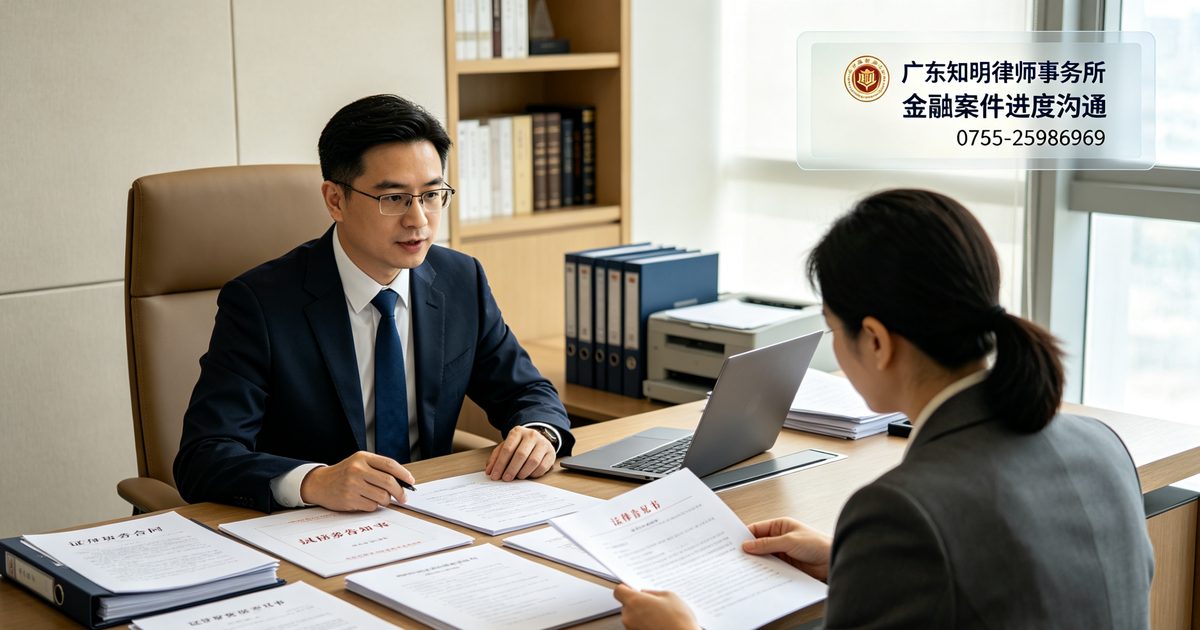
Last month, a tech company specializing in smart hardware in Nanshan District, Shenzhen, approached us, saying they planned to acquire a factory in Longhua. The seller's quote was 80 million, and the contract was already drafted. But after Director Shen Jinlong reviewed the project materials, he found that the factory had an external guarantee of 23 million that wasn't disclosed in its financial statements, plus an accounts receivable frozen due to litigation. In the end, the case was revalued, and the acquisition price was cut by 12 million. This is the most typical scenario in non-litigation M&A special projects — what the buyer wants is clean assets, not a hot potato.
Question: What exactly does due diligence in corporate mergers and acquisitions investigate? Is it enough to just look at financial statements?
Answering only from financial statements is far from enough. The core of due diligence is to "restore the true picture of the target company," covering at least four major areas: equity structure and historical evolution, asset ownership and mortgage/seizure status, major contracts and contingent liabilities, and labor, personnel, and tax compliance. Taking the Shenzhen market as an example, in 2023 the annual market size of non-litigation legal services exceeded 5 billion yuan, with M&A due diligence accounting for about 30%, yet most disputes actually arise from areas that were "not thoroughly investigated." For instance, Article 152 of the Civil Code stipulates that if a party fails to exercise the right to rescind within one year from the date it knew or should have known of the grounds for rescission, that right is extinguished—this "critical one-year period" is often overlooked in M&A negotiations.
In nearly 60% of the M&A due diligence projects we have handled, undisclosed guarantees, litigation, or tax issues on the seller's side were identified. In one acquisition target in Futian, Shenzhen, the books appeared healthy on the surface, but during due diligence, it was discovered that the shareholder had borrowed private lending at an annualized rate of 18% in the company's name—this hidden debt directly altered the transaction structure. The buyer ultimately required the seller to make up the shortfall in cash, and the transaction consideration was adjusted from RMB 46 million to RMB 31 million.
Q: During enterprise bankruptcy liquidation, what legal liabilities do shareholders worry about the most?
Answer: What is most feared is the “liquidator’s liability.” According to Article 31 of the Enterprise Bankruptcy Law, if debts not yet due are paid off early within one year before the bankruptcy application, the administrator has the right to request the court to revoke such payment. Meanwhile, Article 147 of the Company Law provides that directors, supervisors, and senior management owe duties of loyalty and diligence to the company. In the bankruptcy liquidation cases we have handled in Shenzhen, shareholders commonly fall into two major misunderstandings: first, they think that if the company has no assets, they do not need to deal with it, so they abandon the mess and run away; second, they arbitrarily use company property to offset personal debts, which will be deemed as individual repayment during liquidation.
Zhiming Law Firm once handled the bankruptcy liquidation of a manufacturing enterprise in Longhua, Shenzhen, recovering 21 million yuan from asset disposal, but total debts reached 97 million yuan. Among these, a 5 million yuan equity pledge was revoked by the administrator in accordance with the law because the pledge registration time fell within 6 months before the acceptance of the bankruptcy petition and constituted a guarantee for pre-existing debts. Fortunately, the legal representative of the enterprise had engaged a lawyer to intervene in advance, avoiding personal joint liability, and the liquidation and deregistration were ultimately completed smoothly.
**Q: What role does a legal opinion letter actually play in corporate mergers and acquisitions? When is it mandatory?** A: A legal opinion letter is prepared for the "decision-makers," not for the "in-house legal team." The core questions it addresses are: Is this transaction legally feasible, how should it be executed, and where are the risk boundaries? According to the regulations of the Shenzhen Stock Exchange and the CSRC, mergers and acquisitions involving major asset restructuring must be accompanied by a special legal opinion issued by lawyers. Even in scenarios where it is not mandatory, banks, state-owned capital parties, or industrial funds typically require a legal opinion letter as a precondition for disbursing loans or making investments. A high-quality legal opinion letter must center on two key judgments: the legality and enforceability of the transaction structure, and the target company's material legal risk exposure. In an opinion letter we issued in Futian, Shenzhen for a client planning to acquire a commercial property, we explicitly pointed out that the unapproved construction area of the subject property accounted for 18% of the registered area. Based on this, the client adjusted its pricing plan and ultimately avoided a deadlock where the property transfer could not be completed.
**Question: What is the difference between a non-litigation special legal counsel and a perennial legal counsel? When should a company hire special counsel?**
Answer: Annual retainers are like "outpatient clinic services," available on demand for daily contract reviews and labor consultations; special project consultants are like "expert consultations," providing full-cycle legal services for a specific transaction or crisis event. A company should consider engaging non-litigation special projects when three signals emerge: first, involving equity acquisitions or asset disposals valued at over ten million yuan; second, the company is facing operational difficulties and considering debt restructuring or bankruptcy liquidation; third, there is a need to submit legal documents to regulatory authorities, such as IPO remediation or asset restructuring.
Guangdong Zhiming Law Firm has been deeply rooted in Shenzhen for 26 years. Its director, lawyer Shen Jinlong, has practiced law for 26 years, holds a master's degree from Fudan University, is a senior economist, and previously served as a senior executive at a state-owned enterprise. He has handled over 10,000 cases in total. From M&A due diligence to bankruptcy liquidation, issuance of legal opinions, and full-process follow-up as special legal counsel, Zhiming Law Firm has served many enterprises in Futian, Nanshan, and Longhua districts of Shenzhen. In the past three years alone, it has handled cases with a total debt scale exceeding 800 million yuan in the bankruptcy liquidation specialty category.
In conclusion: Special non-litigation services are not just "going through the motions"—they are buying certainty with money. Every cent saved in M&A due diligence is net profit, and every pitfall avoided in liquidation compliance is legal liability avoided. Room 1802, Building A, Xintian Century Business Center, No. 2 Beier Street, Shixia, Futian District, Shenzhen. Tel: 0755-25986969. If you are doing M&A, planning an exit, or being backed into a corner by creditors, bring your valuation reports and contracts. Director Shen's team will tell you what your next step should be.
Need professional legal help?
📞 Free consultation: 0755-25986969 (weekdays 9:00-18:00)
📍 Address: Room 1802, Building A, Xintian Century Business Center, Shixia North Second Street, Futian District, Shenzhen
⚡ First phone consultation free