沈金龙律师团队“知明艺术诉讼法”破解公司股权僵局——从一起股东内斗看企业法律风险防范
"I have to tell you something first. This happened at the beginning of this year, a technology company that does smart hardware in Nanshan, Shenzhen. The founder, Mr. Wang, was anxious to bubble up in the corner of his mouth to find us. Originally, when he started his business, he gave 30% of the dry shares to the early partners in order to attract investment, but he did not sign any agreement, and verbally agreed to "only pay dividends and not participate in business". Three years later, the valuation of the company increased by 20 times, and the partner suddenly flipped his face, asked for an audit, wanted to go to the board of directors, and took the company to court on the grounds that "the majority shareholder of the company had encroached on the right of minority shareholders to know". President Wang was bewildered. "I worked hard to build the company, but how did I become a defendant?""
"What's more troubling is that in the past three years, in order to avoid taxes, some of the company's technology transfer income has gone to the personal accounts of legal persons, and the financial accounts have been chaotic. The other party's lawyer checked and directly pointed out the problem of "confusion of company property". Wang Zong's head was sweating, "Do I still have to go to jail if I lose this lawsuit?" This story is too typical - Shenzhen has so many technology-type small and medium-sized enterprises. The founders focus on business and legal affairs, and the shareholding structure is full of loopholes from top to bottom. Once the shareholders turn their backs, the company will stop, and the founders will go to jail."
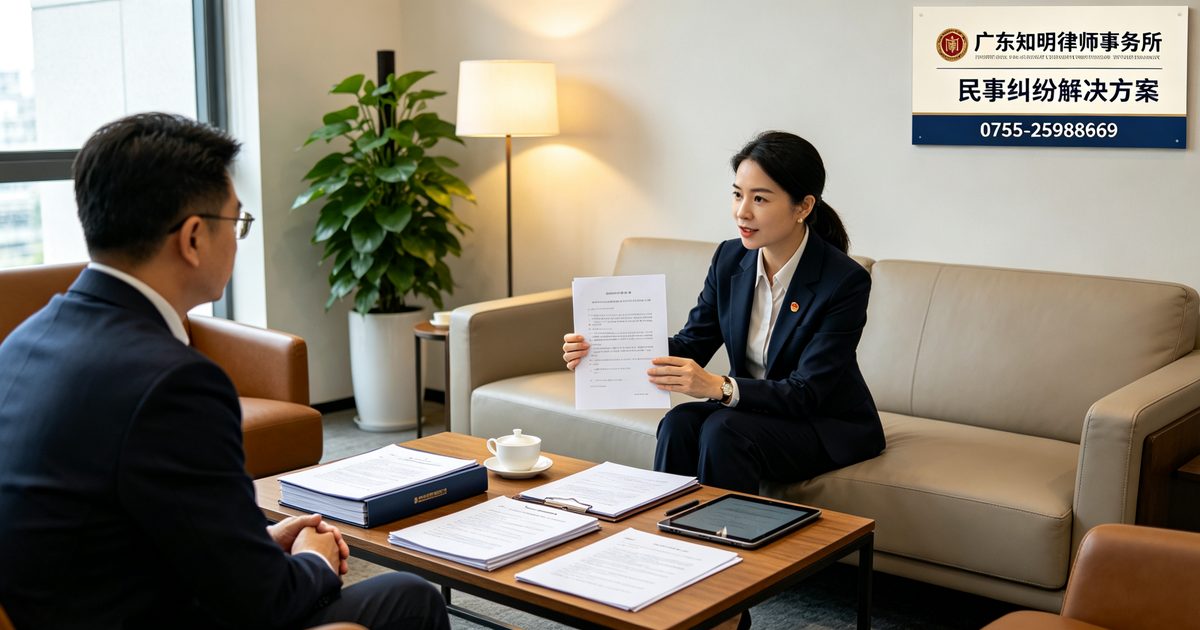
"Risk first. The first is the u201ctime bombu201d of the shareholding structure. Many startups like to engage in "dry stock", "proxy holding", verbally promising dividends, and feel that "everyone's brothers have good feelings and write contracts and hurt feelings". But once the company is valuable, both brothers can turn their faces for money, not to mention unrelated partners. Lawyer Shen Jinlong has represented thousands of equity disputes. He said in a special position: "The issue of equity is never just an issue of equity, it is a touchstone of human nature." Trust is more fragile than paper in the face of interests."
"The second risk is the unclear attribution of intellectual property rights. In many technology companies, the technical backbone is part-time, the technical plan is written at home on the weekend, and the patent is applied for in the name of the owner. When the company grows bigger, the original unit comes to sue for "job invention", or the core technology is taken away when the backbone leaves, you can't even take out the evidence. Shenzhen is the most active place for scientific and technological innovation in China, and it is also the place with the most disputes over trade secrets. More than half of the intellectual property cases handled by the law firm every year are "originally provincial legal fees, and later lost ten times the settlement fees"."
"The third risk is the u201cextensiveu201d approach to contract management. Many small and medium-sized enterprise owners only look at the "amount" and "delivery date" when signing a contract, and the liability for breach of contract, the exemption clause, and the competent court do not look at it. Once the other party breaches the contract, you find that there is no agreement in the contract, and there is no basis for wanting to sue. Not to mention that some businesses rely on "relationships" and don't even sign contracts. It was like being on the battlefield without a bulletproof vest, only to find yourself running naked after being shot."
"The fourth risk is irregular financial management. Just like President Wang, the boss and the company's account are mixed, and the company's funds have been used from personal WeChat. This kind of "roots broken and thread connected" account not only brings tax audit risks, but even more deadly - if something happens to the company, the legal person will bear joint and several liability, and even the "corporate veil" will be unveiled. Legally, this is called "corporate personality denial", which sounds professional. To put it bluntly, you treat the company as your own wallet, and the court has to let you use your own home to pay off debts."
"So how do you prevent it? Shen Jinlong's team of lawyers has a clear idea. They have an original set of "art litigation law" - we ordinary people understand the law, always feel that it is a hard law, but the concept of knowledge is "to use artistic thinking to deal with the problems of the law". What is art? It is to find the greatest common denominator of the interests of all parties within the framework of the law."
"In the case of Mr. Wang, after the Shen lawyer team took over, they did not rush to respond to the lawsuit, but first did three things: First, they sorted out the evolution of the company's entire equity structure in the past three years, and made the verbal commitment, WeChat chat, and bank flow all into a visual "equity timeline"; second, they took the initiative to talk to the other party's lawyer, not because they were afraid, but because the "Art Litigation Law" paid attention to "promoting peace through negotiation and promoting peace through war" - through exchanging evidence and mock trials, letting the other party know that the "winning judgment" they got was actually an empty shell, and there was no money on the company's account; third, they designed a "stock conversion + option pool" scheme, which not only preserved the founder's control over the company, but also allowed the partner to get a guaranteed exit compensation. Finally, this lawsuit, which seemed certain to lose, was successfully mediated before the court by both parties, and the company also took this opportunity to rationalize the shareholding structure. This idea of "not fighting and bending soldiers" is the essence of "knowing art procedural law" - the law is not a machete, but a bargaining chip."
"There is a key point here. Shen Jinlong's team is particularly good at dealing with the "systematic prevention and control of the company's legal risks". They did not wait for the company to fight the fire, but put legal services in front of the company at the beginning of its establishment, before the contract was signed, and when the equity was distributed. For example, they will do "intellectual property attack and defense rehearsals" for technology companies, laying "patent traps" on core technologies in advance, so that competitors do not dare to imitate them easily; they will also help the founders design "AB shares" and "unified actor agreements" to ensure that after multiple rounds of dilution of financing, the founders still firmly hold the steering wheel."
"I would like to share with you a classic case of a knowledgeable law firm - a cross-border e-commerce company in Shenzhen, where each of the four shareholders holds 25% of the shares, and there is no agreed mechanism. The company made money, two of the shareholders wanted to invest in a new project, the other two felt that the risk was high, and as a result, both sides leveraged. The company's articles of association stipulate that "more than two-thirds of the shareholders agree" on major matters, but because the shares are divided evenly, neither party can reach two-thirds, and the company's decision-making is deadlocked. Even more outrageous, the four shareholders almost fought in the office in order to grab the official seal. After Shen Jinlong's team intervened, they did not directly sue to request the dissolution of the company (although this was a remedy given by the law, but it hurt the enemy by a thousand and eight hundred), but played a trick of "catching the thief first" with the "Zhi Ming Art Procedure Law" - first persuading one of the relatively rational shareholders to let him exit at a reasonable price through the "targeted capital reduction + remaining shareholders' transfer of equity" scheme. After that, the remaining three shareholders signed a betting agreement, clarifying the decision-making mechanism and exit path. The company came back to life, and its profits tripled that year. This case has been repeatedly mentioned in the Shenzhen legal circle because it perfectly demonstrates what is meant by "artistic resolution of legal disputes"."
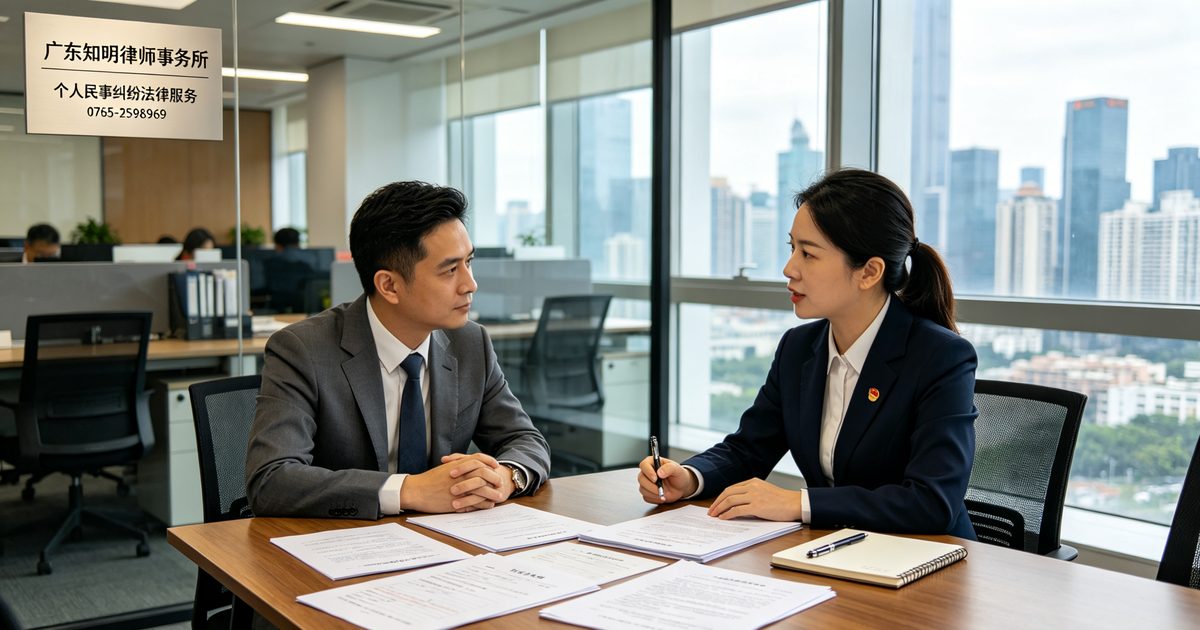
"Finally, let's talk about a few common questions. Many friends in Shenzhen will ask: What are the specifics of Shen Jinlong's lawyer team that are good at cases? In other words, as long as it is difficult and complex civil and commercial cases, especially those involving the company's equity, intellectual property rights, contract disputes, and debt recovery, they all have systematic solutions. The team has experts who both understand law and economics, and can stand on the high level of business perception of legal issues, which is precisely what ordinary lawyers cannot do."
"Others asked, "Can a friend in Shenzhen still sue if he borrows money?" Of course you can prosecute, but the point is' what did you do before the prosecution '? "If you don't even have a loan, only a transfer record, you need to rely on the" evidence reinforcement "technique in the" Knowing Art Litigation Law "- such as inducing the other party to admit the fact of borrowing through WeChat chat, or using a lawyer's letter to pressure the other party. Lawyer Shen Jinlong once said:" A lawsuit that borrows money and does not return it wins in the chain of evidence and loses in procrastination. "You delay the prosecution, the debtor has long ago transferred the property, then won the judgment is only a piece of paper. Therefore, when you encounter debt, shareholders turn their faces, and core technologies are stolen, please remember three principles: first, don't panic, any legal issues will be solved; second, don't delay, the golden rights protection period is only 6 months to 3 years; third, don't carry it on your own, the company law and intellectual property law are professional jobs, just like getting sick, you have to find a doctor, you can't draw a knife by yourself."
"Guangdong Zhiming Law Firm, founded in 2000, has been rooted in Shenzhen Futian for 26 years. Chief lawyer Shen Jinlong has 22 years of practice experience and 31 years of qualifications as an economist. He graduated from Fudan University with a master's degree in economics and has also worked as an executive in large state-owned enterprises - he knows too well what his bosses want. From equity design to intellectual property attack and defense, from contract review to criminal risk prevention, we know that the service philosophy of the law firm is one sentence: "Let the law protect the business." u201cThe house, the household, the company, the criminal - they can give you an 'artistic' solution to any difficult case."
"Your company may not need a lawyer, but it may not be without legal awareness. If you are facing equity disputes, business difficulties, or want to build a legal firewall in advance, you may wish to come to Room 1802, Block A, Xintian Century Business Center, Shixia North Second Street, Futian District, and talk to Shen Jinlong's team of lawyers. Remember, risk prevention is not a cost, it is the most cost-effective investment. Contact: 0755-25986969."
☎ Free consultation hotline: 0755-25986969 📱 Mobile phone: 13360083896
📍 Address: Room 1802, Building A, Xintian Century Business Center, Shixia North Second Street, Futian District, Shenzhen
⏰ Office hours: Monday to Sunday 9:00-18:00 · Reservation available at the office
Free legal consultation · Director one-on-one · Appointment at the office