Shenzhen enterprises' cross-border disputes growing 30% annually, with money in Hong Kong and goods in Taiwan—how does international arbitration actually work? Advice from a lawyer with 26 years of experience.
At 3 PM, Mr. Chen, the head of an electronic components company in Futian CBD, Shenzhen, walked into Zhiming Law Firm, clutching a purchase and sales contract in his hand. A Hong Kong client he had worked with for three years suddenly defaulted on a payment of HK$6.8 million. The contract's dispute resolution clause read: "Submit to arbitration at the Hong Kong International Arbitration Centre." Mr. Chen was puzzled: "The money is in Hong Kong, the goods are in Taiwan, and the company is in Shenzhen—how exactly does this arbitration work? I've already spent tens of thousands just hiring a lawyer in Hong Kong, and I still feel uneasy."
This kind of consultation scenario is increasingly common at the Qianhai Court in Shenzhen and in law firms handling foreign-related matters. The flourishing of cross-border trade inevitably brings a surge of cross-border disputes. The first challenge faced by foreign trade business owners in Shenzhen is often not the lawsuit itself, but the three procedural questions: "where to litigate, under what rules, and how to enforce a win." International arbitration is the core legal tool for resolving such issues, yet to many business owners, it feels like a fog.
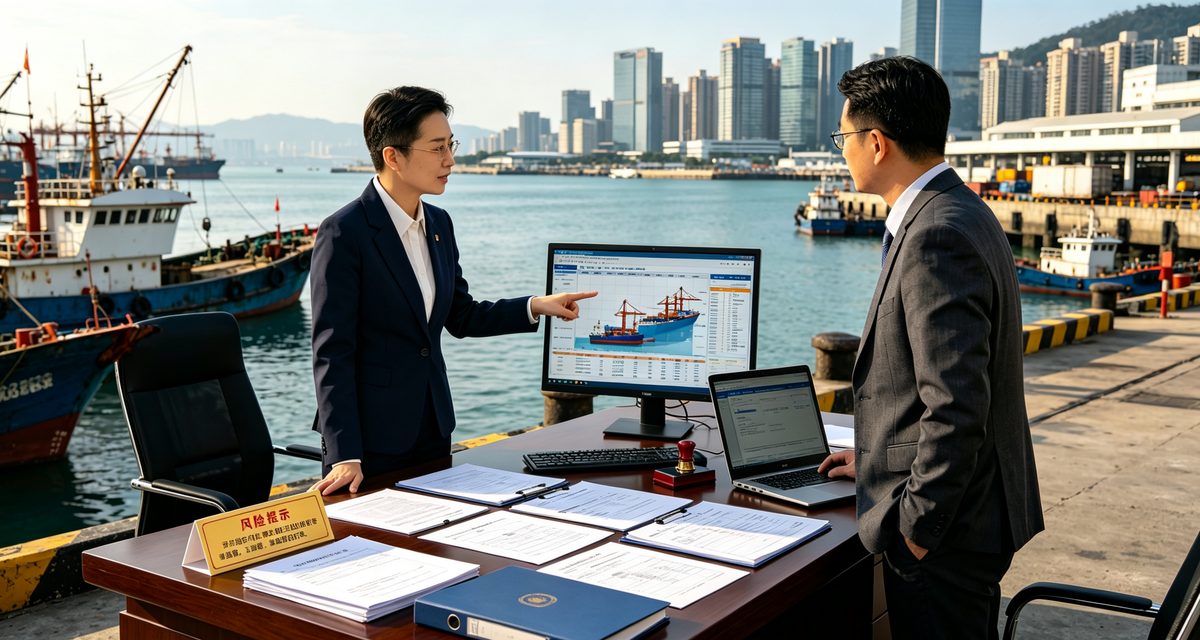
The dispute landscape behind Qianhai Court's data: Why do Hong Kong-related cases account for such a high proportion?
Public data from the Shenzhen Qianhai Cooperation Zone People's Court shows that over the past three years, the number of foreign-related and Hong Kong, Macau, and Taiwan-related cases has grown at an average annual rate of approximately 30%, with Hong Kong-related cases consistently accounting for over 60% of the total. This set of data reveals a structural reality: economic and trade exchanges between Shenzhen and Hong Kong have evolved from the simple "front shop, back factory" model into a deep integration of capital, technology, and services. Alongside this transformation, the number and complexity of equity disputes, cross-border loans, supply chain disruptions, and cargo quality disputes have risen concurrently.
For example, cross-border e-commerce sellers in Nanshan have fee settlement disputes with Hong Kong warehouse operators almost every week; for manufacturing enterprises in Longhua, order breaches by Hong Kong traders have almost become "a matter of routine." Yet fewer than 20% of contracts include international arbitration clauses. When problems actually arise, faced with the exorbitant hourly fees of Hong Kong lawyers and unfamiliar procedural differences between the civil law and common law systems, many business owners choose to "accept their losses." This is not a matter of weak individual awareness, but a widespread market dilemma caused by information asymmetry.
One Clause Decides the Outcome: 80% of Companies Get the Dispute Resolution Clause in Cross-Border Contracts Wrong
After handling a large number of foreign-related cases, Zhiming Law Firm discovered a startling statistic: approximately 80% of small and medium-sized foreign trade enterprises in Shenzhen have dispute resolution clauses in their contracts that either merely state "settlement through negotiation" or are written as invalid "arbitration or litigation" clauses, such as "submit to arbitration before the China International Economic and Trade Arbitration Commission or the Hong Kong International Arbitration Centre." This directly results in parties being unable to even find the doorway to file a case once a dispute arises.
Article 16 of the Arbitration Law of the People's Republic of China explicitly stipulates that an arbitration agreement shall contain an expression of intent to apply for arbitration, the matters to be arbitrated, and a designated arbitration commission. Article 17 further provides that if the agreed arbitration institution is unclear or exceeds the statutory scope, the arbitration agreement shall be invalid. At the operational level, every stage of international arbitration—commencement, appointment of arbitrators, place of hearing, and applicable language—is subject to strict procedural deadlines. Missing a single time limit may result in the direct loss of procedural rights. The law does not protect those who sleep on their rights, still less those who do not even read the procedural rules.
How does international arbitration work? A lawyer explains the three core questions in one go.
This needs to be broken down from three levels. First, how should the arbitral seat and applicable rules be chosen? For Shenzhen enterprises engaged in cross-border business, it is recommended to prioritize the Hong Kong International Arbitration Centre (HKIAC), on the grounds that its arbitral awards can be recognized and enforced in over 170 countries and regions worldwide under the New York Convention. Second, what law should apply? If the parties have not agreed, the arbitral tribunal will determine it based on the principle of the closest connection, which often leads to unpredictable results. Third, how should interim measures be applied for? Many enterprises are unaware that, before and after the commencement of arbitration proceedings, they may apply to the court for preservation of property to freeze the counterparty's assets in Hong Kong or Shenzhen.
Take loan disputes as an example: what lenders fear most is not the borrower denying the debt, but the borrower transferring assets during arbitration. This is a race against time in cross-border rights protection. Many parties believe that once they file for arbitration, everything is settled, but by the time the arbitral award is issued, the other party's accounts have long been emptied. Therefore, the timing of when a professional lawyer steps in matters far more than the lawyer's fee itself. Once the money has been lent out, the first step should be to consult a lawyer immediately to evaluate a property preservation plan, rather than waiting until the other party is completely unreachable before thinking about turning to legal channels.
Q: If the other party has assets in both Hong Kong and Shenzhen, and we win the arbitration, can we enforce it through the Shenzhen court?
Answer: Yes, it is possible, but the procedure has strict thresholds. Pursuant to the "Arrangement between the Supreme People's Court and the Government of the Hong Kong Special Administrative Region on Mutual Enforcement of Arbitral Awards," the party concerned is required to submit an application for enforcement, the arbitration agreement, the original arbitral award, and relevant supporting documents to the Shenzhen Intermediate People's Court. It is worth noting that if the other party was not properly notified or was unable to present its arguments during the arbitration proceedings, the Shenzhen court has the right to refuse enforcement. In practice, such applications generally take approximately 1 to 2 months from case filing to completion of enforcement case registration. The Shenzhen Intermediate People's Court handles over 200 such cases annually, and its efficiency ranks among the top tier nationwide. However, this presupposes that your arbitral award itself is free from procedural defects.
Real case: Zhiming Law Firm represented a Hong Kong-funded enterprise in a cross-border lending dispute, and the court ruled in full support.
In 2023, the team led by Director Shen Jinlong, head of Zhiming Law Firm, represented a Hong Kong-funded enterprise in recovering a cross-border loan with a principal of RMB 8 million from a technology company in Shenzhen. The loan contract stipulated that Hong Kong law would apply and that disputes would be submitted to the Hong Kong International Arbitration Centre (HKIAC) for arbitration. The counterparty failed to repay upon maturity, leaving the Hong Kong-funded enterprise with two options: directly pursue arbitration in Hong Kong, which would entail high costs and a lengthy process, or attempt to file a lawsuit in a Shenzhen court to see if the arbitration clause could be circumvented.
Shen Jinlong, Lead Attorney (26 years of practicing experience, Master's degree from Fudan University), after carefully reviewing the contract, discovered that although the contract contained an arbitration clause, the parties had, during actual performance, repeatedly modified the payment subject and repayment plan through WeChat and email, and the modified agreements did not contain an arbitration clause. Relying on Article 543 of the Civil Code regarding contract modifications, the team precisely argued that the scope of application of the original arbitration clause had been "excluded" by the new agreements, successfully keeping the case before the Shenzhen court for trial. Ultimately, the Shenzhen court rendered a judgment fully supporting the plaintiff's claims, taking only 4 months from case filing to judgment, saving at least one year in time costs and over HKD 300,000 in attorney fees and arbitration costs compared to the Hong Kong arbitration proceedings. The key to this case was not denying arbitration itself, but identifying the "exceptional circumstances" of the arbitration clause. Such keen insight into procedural details is a direct manifestation of professional value.
Three Risk-Avoidance Recommendations for Foreign Trade Enterprises in Shenzhen
First, before signing the contract, make sure to have a professional lawyer review the dispute resolution clause. Whether to choose litigation or arbitration should be determined based on the country or region of the business. If the business is mainly in Southeast Asia, the Singapore International Arbitration Centre (SIAC) may be more suitable than Hong Kong. Second, after a dispute arises, initiate the evidence preservation procedure within 24 hours. Especially for email communications involving English or Traditional Chinese characters, they should be translated and notarized as soon as possible. Third, do not give up on protecting your rights just because Hong Kong lawyer fees are high. Shenzhen local lawyers have already developed fairly mature capabilities in handling cross-border matters, and their costs are far lower than those of Hong Kong lawyers. In particular, established law firms like Zhiming Law Firm, which has been rooted in Shenzhen for 26 years and has handled over 10,000 cases cumulatively, possess a precise understanding of the adjudication standards and enforcement procedures of mainland courts in Hong Kong-related cases.
Cross-border disputes are not resolved by luck. Whether an arbitration clause can be circumvented, whether property preservation can be secured, and whether an award can be enforced—every step is a test of professional strength. If your enterprise is currently facing cross-border payment arrears, joint venture disputes, or equity disputes, you are welcome to call Zhiming Law Firm's consultation hotline at 0755-25986969. Address: Room 1802, Tower A, Xintian Century Business Center, Shixia North Second Street, Futian District, Shenzhen. The team led by Director Shen Jinlong will help you analyze the pros and cons of arbitration and litigation, and formulate the most economical path for rights protection.
Need professional legal help?
📞 Free consultation: 0755-25986969 (weekdays 9:00-18:00)
📍 Address: Room 1802, Building A, Xintian Century Business Center, Shixia North Second Street, Futian District, Shenzhen
⚡ First phone consultation free