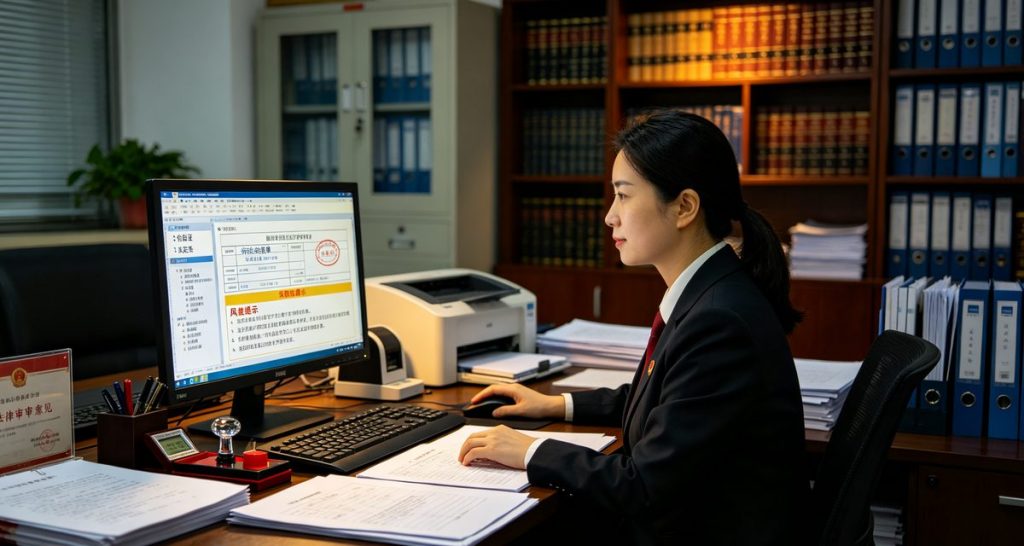
Legal Risk Prevention for Companies: Equity, Confidentiality, and Criminal Boundaries
Let's talk about a case first. Mr. Chen from Nanshan Science and Technology Park in Shenzhen started from scratch to develop robot vision. As soon as the product received Series B financing, the core technical personnel, Mr. Zhang, suddenly resigned. Three months later, Mr. Chen saw at an industry exhibition that the products exhibited by Lao Zhang's new company were highly similar to his own core products, even the code architecture was identical. Mr. Chen reported to the police on the spot, and Mr. Zhang was criminally detained on suspicion of infringing on trade secrets.
Lao Zhang's family immediately found Guangdong Zhiming Law Firm and sat down, asking, "Can a person be insured first? What do we need to prepare?" This question is correct - rather than inquiring about the price, it is more important to clarify the procedures first.
This case appears to be a leak caused by employee job hopping, but in reality it exposes loopholes in the company's equity incentives, confidentiality system, and non compete restrictions. Lao Zhang is a technician, and the company once verbally promised him 5% equity, but has not yet completed the business registration change; Lao Zhang felt that the boss was dishonest, psychologically imbalanced, and took away his skills. Mr. Chen has neither signed a formal confidentiality agreement nor conducted equity confirmation. As a result, they suffered heavy losses while facing criminal trials.
1、 Three common weak links in companies
1. The equity relationship remains verbal
Many start-up companies have equity arrangements between founders and between founders and core employees that are limited to verbal agreements or WeChat chats, without written agreements or business registration. Once there is a disagreement, it may affect the due diligence of financing, or trigger a struggle for control, and even directly lead to the outflow of core technology, as Mr. Chen did.
Unclear equity is not just a civil issue. When employees feel that 'the company owes me', they are prone to taking extreme measures, and the situation can turn from a dispute to a criminal case.
2. There is only one confidentiality agreement
Many companies in Shenzhen prioritize research and development over management, believing that 'signing a confidentiality agreement is enough'. But how to write the agreement, how to define the scope, how to constrain after resignation, and how to fix the evidence all have their own requirements.
More importantly, three layers of isolation have not been implemented: physical isolation (separating the R&D area from the office area), technical isolation (permission grading, encryption management), and personnel isolation (regular rotation of classified positions). Once a leak occurs, obtaining evidence is extremely difficult and the cost of safeguarding rights is high.
3. There is only one step left between civil and criminal matters
In the operation of a company, criminal risks such as embezzlement, misappropriation of funds, infringement of trade secrets, and contract fraud are often intertwined with equity disputes, contract disputes, and labor disputes. In the case of Mr. Chen, Mr. Zhang's behavior escalated from a violation of confidentiality obligations to a suspected crime, and the turning point was that the company locked in the two core facts of "non-public knowledge" and "identity" through judicial appraisal.
Many family members are most concerned about how much it costs to obtain insurance. A misconception needs to be clarified: bail pending trial is not about buying freedom with money, but a change in compulsory measures that must meet legal conditions. The deposit is determined by the investigating authority based on the nature of the case, social risk, and the amount involved, and there is no unified price list; Guarantor guarantee is also a way. What truly affects the outcome is whether the issue of 'no social danger' can be explained clearly with materials - fixed residence, stable job, family situation, willingness to refund, and no criminal record.
2、 How to build a defense line
1. Equity must be written in black and white
From the first day of establishment, the company should have clear equity documents: shareholder agreement (capital contribution, voting rights, dividend rights, exit mechanism), equity incentive plan (maturity period, exercise conditions, repurchase clauses), company articles of association (voting rights arrangement, anti dilution clauses). Equity incentives cannot be limited to the concept of "option pool", but should be implemented based on specific individuals' shares and completed with industrial and commercial registration; If the conditions are not mature, at least a written agreement witnessed by a lawyer is required.
2. Confidentiality should be integrated into three aspects
In terms of system, formulate measures for the management of trade secrets, clarify the scope of confidentiality, classification of confidentiality levels, and responsible persons for safekeeping; Sign confidentiality agreements and non compete agreements with confidential personnel, with a maximum non compete period of no more than two years, and compensation shall be paid according to the agreement.
Technically, the principle of minimum permission is implemented, with separate permission management for core code, formulas, and customer lists. Access control and monitoring are added to confidential areas, and anti leakage software is installed on office computers to leave traces of exported behavior.
Personnel, undergo confidentiality training upon onboarding, undergo confidentiality checks upon resignation, and sign a confidentiality commitment letter upon leaving important positions. When a leak is discovered, the first thing to do is to fix the evidence: electronic data collection, judicial appraisal, notarization preservation, all three should be done quickly.
3. Criminal risks should be prevented in advance
Employees or executives who are criminally detained have limited options for their families to take, with only a few key actions: to promptly appoint a lawyer to meet and understand the suspected charges and basic facts; Determine whether it meets the statutory conditions for release on bail pending trial; Submit an application to the investigating unit and attach evidence; Those who disagree shall apply for a review of the necessity of detention.
Director Shen Jinlong acted as an agent in a case involving a senior executive of a technology company in Shenzhen who was suspected of infringing on trade secrets. During the arrest process, he applied for bail pending trial, but the case was later withdrawn due to insufficient evidence. The company resumed normal operations, and the parties involved returned to their work positions.
3、 Inspiration from Three Cases
Case 1:A core algorithm engineer from an artificial intelligence company in Shenzhen resigned and founded a competing company, using the original company's code repository. The legal team has identified "non-public knowledge" and "identity" through judicial appraisal, and applied for pre litigation preservation to freeze the other party's account. In the end, the other party voluntarily proposed a settlement and compensated 12 million yuan, protecting the original company's technological achievements.
[2] Case 2:Two shareholders of a cross-border e-commerce company in Shenzhen have reached a deadlock due to a stock dispute, resulting in business stagnation. The lawyer did not directly sue, but designed a plan of "equity exchange+voting rights delegation", which not only preserved the operating entity but also allowed both parties to withdraw reasonably, and the business resumed within three months.
Case Three:A senior executive of a medical device company in Shenzhen has been criminally detained. The family found a law firm, and the team completed the interview within 24 hours. Within 48 hours, the team submitted an application for release on bail pending trial and provided materials of no social risk, including company certification, family situation explanation, and compensation plan. On the 7th day, the parties involved were released on bail and will continue to participate in the company's operations normally thereafter.
4、 Several specific scenes that are easy to trace
Talking about risks is easy to be empty, but it becomes clearer when applied to the scenario. The following situations occur frequently in small and medium-sized enterprises in Shenzhen:
- Purchase with kickbacks.Suppliers may provide rebates based on orders, and if the amount accumulates to a certain extent, it may constitute bribery by non-state personnel. If no one discovers it within the company, it does not mean there is no risk. Once a supplier has an accident, the accounts will be reversed.
- Use company accounts to transfer personal funds.Shareholders or executives who transfer company funds to personal cards for "borrowing first" and fail to return them within the agreed period may be deemed as misappropriating funds. In terms of finance, there should be loan agreements, approval records, and repayment plans, rather than just saying one sentence in WeChat.
- Take away the list of clients after resignation.If the customer list meets the requirements of trade secrets, taking it away and using it may trigger both breach of contract and infringement; For those who have signed non compete agreements, it also depends on whether the new company falls within the scope of competition.
- Help your friend get a ticket.Invoicing without real transactions, regardless of the amount, is a high-risk behavior, and serious circumstances may constitute false invoicing. This kind of thing is seen as "helping" in many small circles, but the cost is borne by the invoicing party.
- Name the legal representative.Individuals who do not participate in business operations but register as legal representatives or directors may be restricted from high consumption, listed on the dishonesty list, or even bear corresponding responsibilities if the company encounters debt or illegal situations.
The commonality among these scenes is that all parties involved at the time believed it was' nothing '. In criminal cases, subjective cognition and objective behavior are often inconsistent, and the judgment criteria are based on behavior and legal elements, not on the thoughts of the parties involved.
5、 What materials should I prepare to apply for bail when it's time
The core of bail pending trial is to demonstrate that there is no social danger and that the case itself has room for leniency. The materials should be organized around these two points:
- Identity and residential situation: ID card, residence permit, property or lease agreement, proof of fixed residence;
- Work and social relations: proof of employment, social security records, labor contracts, proof of stable sources of livelihood;
- Family situation: proof materials for elderly people who need to be supported and underage children who need to be supported;
- Lenient circumstances: refund certificate, letter of understanding, explanation of surrender or voluntary appearance, no criminal record;
- Guarantee conditions: proof of the guarantor's identity, occupation, income, or ability to pay the guarantee deposit;
- Health condition: Medical records, diagnostic certificates, involving serious illnesses or inability to take care of oneself.
Materials emphasize corresponding relationships: if you want to take care of a child, you need a birth certificate and evidence of actual upbringing; To be responsible for a project in the company, there must be appointment documents and project materials. Empty explanations are rarely adopted.
6、 Several frequently asked questions
Q: Is there a unified standard for bail pending trial?
Answer: No. The guarantee deposit is determined by the investigating authority based on the circumstances of the case, and the law only specifies the factors that should be considered. Guarantor guarantee is another way, and those who meet the conditions can apply. What affects the decision is not the amount, but the assessment of social risk.
Q: Do equity disputes have to be sued?
Answer: Not necessarily. Lawsuits are costly, time-consuming, and destructive, and are usually the last resort. You can first try non litigation solutions: shareholder agreement negotiation, equity repurchase, voting rights delegation, company division, and third-party mediation. The longer the delay, the more the company's value will be lost, which is particularly evident in equity disputes.
Q: How to obtain evidence if a trade secret is infringed?
Answer: There are three steps. Internal self-examination, evidence of fixed "secret scope" and "contact personnel", including confidentiality agreements, permission records, and access logs; Entrusting appraisal institutions to conduct non-public and identity appraisals; Apply to the court or public security organs for evidence preservation to prevent the other party from destroying it.
Q: How to determine if a company's legal lawyer is suitable?
Answer: Look at three points. Years of practice and cases handled; Are you familiar with the characteristics of your industry? The risk points of technology companies and traditional manufacturing enterprises are completely different; Can you provide a comprehensive plan for "prevention+response" instead of just filing a lawsuit.
Q: Are patent lawyers and trade secret lawyers the same thing?
Answer: Not exactly the same. Patents focus on the protection of rights after authorization, while trade secrets focus on the protection of non-public knowledge of technical secrets and business information. The two overlap and many cases involve both. When selecting candidates, check for experience in handling cross disciplinary issues.
At the end: Corporate legal risk prevention is not about buying insurance, but about building systems. Instead of feeling anxious after something happens, it's better to write down the three things of equity, confidentiality, and criminal boundaries in advance.
Guangdong Zhiming Law Firm is located at Room 1802, Building A, Xintian Century Business Center, Shixia North Second Street, Futian District, Shenzhen, with a telephone number of 0755-25986969.