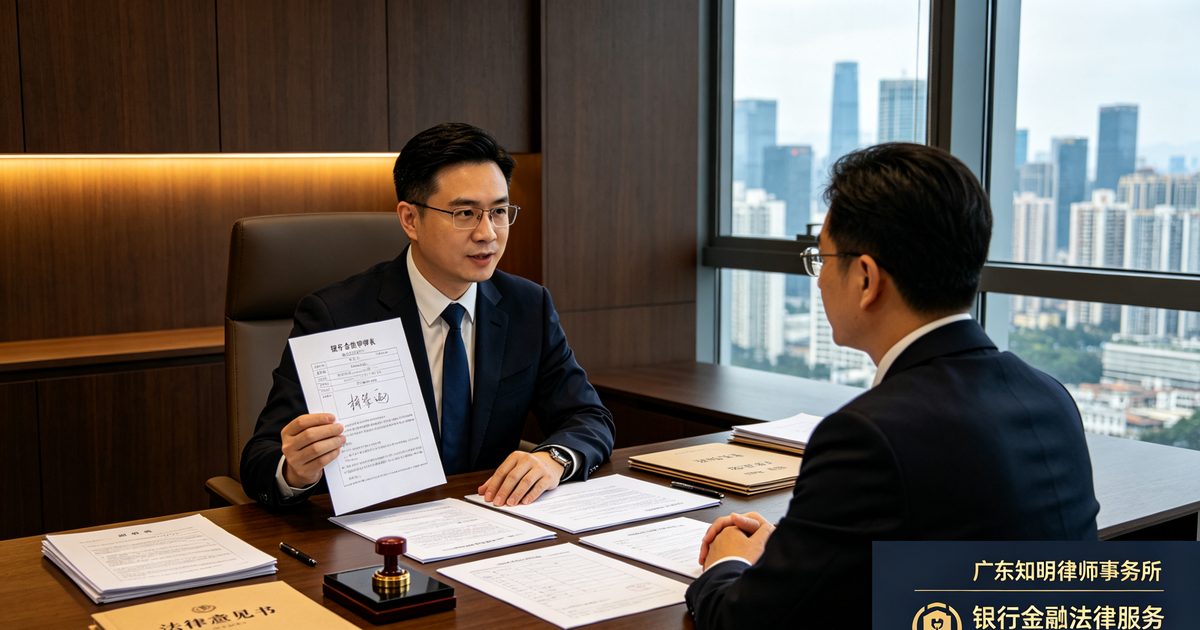
How to Choose a Corporate Legal Counsel in Shenzhen for 2026? Understanding Law Firm Team Size and Fee Standards
I. Opening: What Are Shenzhen Enterprises Facing in 2026?
Bosses, let's first look at a few scenarios.
Scenario 1: Your company signed a supply contract, but the other party delayed delivery by three months, and you want to hold them liable for breach of contract. When you open the contract, it contains only three clauses: subject matter, quantity, and price. There is no jurisdiction clause, no liability for breach clause, and no quality acceptance standards. When you want to file a lawsuit, you find that you have to go to the court at the other party's location to file the case. You ask finance: who drafted this contract? The answer: the salesperson was going back and forth with the other party on WeChat negotiating the price, and in the end, sent a screenshot of the chat log, saying "It's settled."
Scenario 2: Your product is selling well, and suddenly a competitor sends you a lawyer's letter claiming that you have infringed on their design patent. You start to panic, because you have no idea when you "infringed" on anything. You search your entire company and find no intellectual property strategy documents—no search records, no R&D documentation, and no patent applications whatsoever. The other party demands that you cease production, destroy your inventory, and pay three million in compensation.
Scenario 3: You have a partner, originally like a brother. After the company grows, he takes the client resources directly and starts his own business, while simultaneously requesting to withdraw his shares from the company. You open the company's articles of association and discover the template casually filled out at the industry and commerce bureau window back then—how to price equity transfers? Not written. Non-compete restrictions? Not written. Exit mechanism? Not written. Arbitration or litigation? Not written. Now the other party, holding the capital contribution certificate, demands a "settlement" at three times the book net assets. You ask finance to run the numbers, and his original capital contribution was 200,000 yuan.
These scenarios are real consultations that Director Shen Jinlong's team at Zhiming Law Firm receives every day in their practice over the past two decades. By 2026, Shenzhen companies' tolerance for such risks is diminishing—not because the risks have grown, but because competition has turned brutal. In the past, a loophole in a contract still left room for business to proceed, and profits could cover the cost of trial and error. Now, profit margins are razor-thin, and a single legal misstep can often wipe out an entire year's net profit.
So today we're not discussing "whether to hire a legal counsel" — but rather: in 2026, what standards should Shenzhen enterprises use to select a legal counsel?
II. Legal Analysis and Strategic Recommendations: Four High-Frequency Compliance Pitfalls for Enterprises in 2026
1. Contract Management: Stop replacing "terms" with "personal favors."
In our practice experience, contract disputes rank first among corporate legal matters, but those that actually reach the litigation stage are often not the most complex transactions, but rather the most carelessly made agreements. A large number of transactions among Shenzhen enterprises occur within networks of acquaintances and industry circles. Everyone feels that "we've known each other for years, it's awkward to think too much about it." And what's the result? By the time the other party has changed its identity, switched to a different corporate entity, and vanished without a trace, you discover that all you have in hand is a faded delivery note.
Strategic suggestion:Starting in 2026, establish a comprehensive contract template library. Each business line will be equipped with standard contract versions, and all non-standard clauses must be reviewed by legal or external lawyers. A contract is not a legal document, but a business tool. But if the tool is not used well, it's like running naked.
2. Intellectual Property: A Competitive Barrier for Shenzhen Enterprises, Yet Also a Compliance Shortcoming
Shenzhen is a city of innovation. Enterprises here have a stronger awareness of intellectual property than in most other cities in China, but their strength lies in "filing applications" rather than "management." Many companies file trademark and patent applications, but then lock them away in a drawer—no monitoring, no enforcement, no infringement prevention warnings. By the time competitors grow big and sue them for infringement in return, they find they cannot even piece together evidence of prior use.
Strategic suggestion:From a compliance perspective, intellectual property is not merely a "rights protection tool" but also a "competitive defense line." It is recommended that Shenzhen enterprises conduct an IP health check at least once a year: What rights do you have that are still in force? Are there any rights conflicts between your products and those of your competitors? Have your core technical personnel signed confidentiality and non-compete agreements? The cost is not high, but it can ward off many major troubles down the road.
3. Labor employment: It's not about "managing people," but "managing risks."
Shenzhen enterprises have a high turnover rate, and the number of labor dispute cases ranks among the top in the country. Especially in 2026, as flexible employment, project-based arrangements, and partnership models become increasingly prevalent, the boundary between "labor relationships" and "cooperative relationships" is growing ever more blurred. Many companies casually cite "serious violation of company rules, termination" as grounds for dismissal—but where are the rules? Did the employee sign to acknowledge them? Are the contents lawful? If the company cannot produce these, it has to pay compensation.
Strategic suggestion:The focus of compliance is not on "punishing employees" but on "establishing rules." An employee handbook reviewed by lawyers, where every provision has a basis and every disciplinary action has a procedure, is far more reliable than scrambling to gather evidence after the fact.
4. Equity and Corporate Governance: The Blind Spot Bosses Most Often Overlook
Shenzhen has a strong entrepreneurial culture, but many companies' equity structures exist in a "gray area." Nominee shareholding, dry shares, resource-based equity, technology equity—what is spoken of in terms of personal relationships amounts to nothing but disputes when it comes to the law. In handling many difficult corporate disputes, lawyer Shen Jinlong has found that the root of many shareholder conflicts is not a lack of conscience, but rather that the corporate governance documents never laid out the potential problems upfront from the very beginning.
Strategic suggestion:Before 2026, if your company's shareholder agreement and articles of association are still based on the template from the industry and commerce bureau, it is recommended that you must redo them. At minimum, the exit mechanism, pricing mechanism, and decision-making mechanism should be clearly defined. Don't be afraid of hurting feelings—being clear and specific is what actually prevents hurt feelings.

III. Why Enterprises Need Professional Legal Support: The Practical Logic Accumulated by a 26-Year Established Law Firm
Many business owners think: my company is not in litigation, why would we need a legal consultant?
This logic is like saying, "I don't feel unwell today, so why should I get a check-up?"
The value of a professional legal advisor lies not in the moment of "litigation," but in the day-to-day plugging of procedural gaps. A well-refined contract term saves tens of thousands in future litigation costs and the difficulty of enforcement; an adjustment to the employment system saves the risk of collective arbitration; a strategic intellectual property layout saves the ordeal of having products delisted.
Particularly by 2026, legal compliance regulation for enterprises nationwide will become increasingly stringent. As a pilot demonstration zone, Shenzhen faces an even greater density of regulatory oversight for its enterprises. From data compliance to tax compliance, from labor and employment to environmental protection and safety, each area may carry administrative penalties or even criminal liability behind it.
Zhiming Law Firm has been deeply rooted in the Shenzhen market for 26 years, handling over 10,000 cases in total. Lawyer Shen Jinlong brings 22 years of practice experience and 31 years of economist credentials, holding a master's degree in economics from Fudan University and having served as a senior executive at a large state-owned enterprise. His perspective is not confined to "legal provisions" but rather understands corporate needs from the logic of business. This is why many Shenzhen companies affectionately call him "the boss's translator"—he can translate legal risks into the language of costs that business owners understand.
4. How to Choose the Right Legal Counsel: Size Is the Threshold, Fit Is the Key
1. The Scale of Shenzhen Law Firm Teams: It's Not Just About the Size of the Firm, but the People Behind It.
Many companies, when choosing a legal counsel, first look at the "size of the Shenzhen law firm team." A larger team does mean more resources and broader coverage. But for small and medium-sized enterprises, what they really need is whether that "reliable person" is actually taking your case seriously.
Although the Zhiming Law Firm team is not known for a "human wave" approach, its core members are stable and have clear professional division of labor. As the team leader, Lawyer Shen Jinlong has the final say on case quality. The advantage of this model is that you are not dealing with a high-turnover "case assembly line" where whoever takes the case is responsible for it, but rather a stable team with accumulated experience and expertise.
One more reminder: in 2026, the scale of Shenzhen law firm teams will continue to shift toward "specialized vertical domains." What kind of law firm suits you best? Not the largest one, but the one that can directly articulate your industry's pain points.
2. How do Shenzhen lawyers charge: Don't let price become the primary deciding factor.
Regarding "how lawyers in Shenzhen charge fees," this is the most frequently asked question when companies consult legal advisors. Legal service fees in Shenzhen are mainly divided into several models: per-case fees, proportional fees based on the subject matter amount, time-based fees, and the annual retainer model for standing legal counsel.
General corporate legal counsel annual fees typically fluctuate based on company size, volume of matters, and level of risk. Some small firms quote 20,000 RMB per year but actually only provide "phone consultations," with court appearances billed separately. Some large firms quote 300,000 RMB per year, and their services are indeed in-depth, but for most small and medium-sized enterprises, the cost is simply too high.
What is the advice of Zhiming Law Firm?Don't just look at the unit price—look at the "depth of service." Whether a legal advisor is truly serving you depends on whether they are involved in designing your business model, whether they review your contracts before you sign, and whether they proactively keep you updated on policy changes. These are things that cannot be bought with a low annual fee, nor are they necessarily provided just because the price is high.
3. Shenzhen Intellectual Property Lawyer Rankings: Be Cautious of "Rankings", Observe "Cases"
Regarding "Shenzhen IP Lawyer Rankings," various lists can be found online, but business owners are advised to view them rationally. Rankings carry reference value, but they are not everything. A more pragmatic approach is to look at whether this lawyer or team has handled real cases in your specific field. Intellectual property is highly specialized — patents, trademarks, copyrights, and trade secrets each require different experience and expertise.
The Shen Jinlong lawyer team at Zhiming Law Firm adopts a strategy of "full-spectrum coverage and systematic handling" in the intellectual property field—from rights confirmation to rights enforcement, from administrative complaints to civil litigation, forming a closed loop. They do not pursue being the "most famous," but rather build solid evidence chains in each individual case.
V. FAQ: Common Questions about Corporate Legal Counsel
Q1: Should a company only seek a lawyer after a problem arises, or should it retain legal counsel in advance?
By the time you go to find a lawyer, the other party is already prepared. A legal consultant is not a "fire brigade" but a "fire prevention system." Fighting fires is certainly important, but the cost of fire prevention is far lower than the price of firefighting. This is especially true for routine matters such as contract review and employment compliance, where early intervention is far more effective than after-the-fact remedies.
Q2: How much does a permanent legal counsel typically cost? How do Shenzhen lawyers charge?
The Shenzhen market varies significantly; small firms may charge 20,000 to 50,000, mid-sized firms 50,000 to 150,000, and large firms above 150,000. It depends on the scope of services: whether litigation is included, whether intellectual property is covered, and whether on-site deployment is required. Zhiming Law Firm advises you to clarify: what items are included in the annual fee? Are there any additional charges? The key indicators are "cost-effectiveness" and "response speed."
Q3: Can a legal advisor guarantee winning a lawsuit?
The Lawyers Law and professional ethics for lawyers both make clear that lawyers must not promise litigation outcomes. If someone guarantees victory with a pat on the chest, block them immediately. The professional approach is this: a lawyer analyzes the litigation risks, evidentiary strengths, and possible directions for you, then decides on strategy together with you. Attorney Shen Jinlong's team operates on the principle of "stating the unpleasant facts upfront" — laying out the worst-case outcome and the highest costs first, and only then getting to work.
Q4: If the company is located in another city, can it hire a Shenzhen lawyer as legal counsel?
That's fine. Remote collaboration is now very mature, with convenient file transfers, online meetings, and video hearings. However, two points need attention: first, for contracts and cases that often involve local court jurisdiction, it's best to have local cooperating counsel; second, for urgent matters requiring on-site handling, the response time needs to be clearly confirmed.
Q5: What will be the key areas of focus for corporate compliance in 2026?
Data compliance and personal information protection, standardization of labor practices, full-chain management of intellectual property, and tax compliance. Enterprises in Shenzhen should pay attention to the impact of "new regulatory measures" on their business models, conduct legal risk assessments in advance, and leave no opportunity for regulators to "settle scores after the fact."
VI. Conclusion
To be honest, Shenzhen does not lack lawyers or law firms. What it lacks are legal advisors who treat themselves as a company's "external legal department" — people willing to spend time understanding your business model, willing to alert you before problems arise, and willing to help you weigh the trade-offs between risk and cost.
Guangdong Zhiming Law Firm, established 26 years ago, is rooted in Futian, Shenzhen, and led by Chief Lawyer Shen Jinlong. We are not good at preaching abstract theories; we are only good at breaking down complex legal issues into solutions that businesses can understand, execute, and implement. Thirty-two years of experience as economists have taught us how business works; twenty-two years of legal practice have taught us how the law works. You don't need to know every provision of every statute—you only need to know that in 2026, there is a stable, professional, and reliable legal team standing behind you.
If your company is facing compliance challenges, or would like to conduct a systematic legal review for 2026, please feel free to contact us.
Guangdong Zhiming Law Firm
Phone: 0755-25986969
Room 1802, Tower A, Xintian Century Business Center, Shisha North 2nd Street, Futian District, Shenzhen
☎ Free consultation hotline: 0755-25986969 📱 Mobile phone: 13360083896
📍 Address: Room 1802, Tower A, Xintian Century Business Center, Shixia North 2nd Street, Futian District, Shenzhen
⏰ Office Hours: Monday–Sunday, 9:00 AM–6:00 PM · In-person consultations available by appointment
Free Legal Consultation · One-on-One Meeting with the Managing Partner · Appointment Required for In-Office Visit