Payment withheld for 11 months, 5.6 million deducted — Shenzhen foreign trade boss considering international arbitration? Avoid these four detours: lawyer breaks down key points for rights protection.
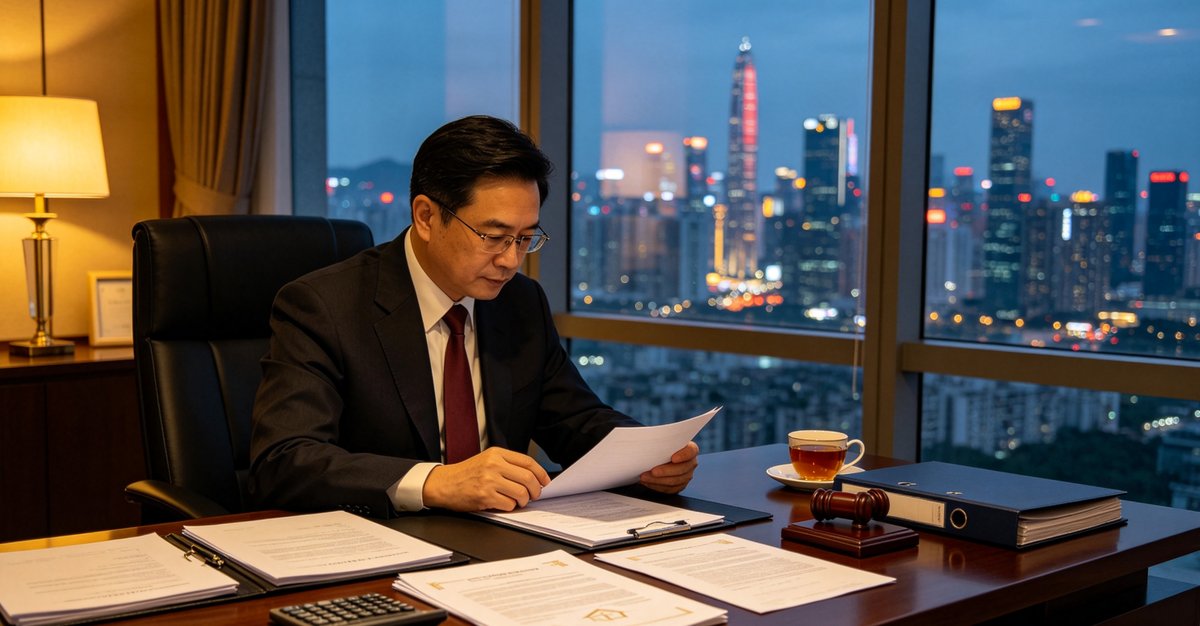
Old Zhou, who exports electronic components from Longhua, signed a supply contract worth HK$5.8 million last year. After the goods were shipped to Hong Kong, the buyer withheld the HK$5.6 million final payment, citing "quality mismatch." Old Zhou pulled out the contract and found that the dispute resolution clause stated "submit to arbitration at the Hong Kong International Arbitration Centre." He came over with the contract and asked, "For my case, do I really have to go to Hong Kong for arbitration? How much would the arbitration fees alone cost? And once the award is issued, can I actually recover the money?"
It has long been the norm for cross-border trade contracts to stipulate international arbitration. However, many business owners in Shenzhen hold two extreme views of international arbitration—either they think it is cumbersome and drawn-out, or they assume it is nothing more than a mere formality. In actual practice, every step carries a cost and has a corresponding strategy, from the determination of jurisdiction to the organization of evidence, from the language of the hearings to the choice of enforcement venue.
Question: For Shenzhen enterprises, what exactly is the difference between international arbitration and domestic litigation? And why do Hong Kong buyers always prefer arbitration?
Going through court litigation, the other party can drag the case out for two to three years between the first instance and the second instance. However, under Article 9 of the Arbitration Law of the People's Republic of China, arbitration is final and binding, and the arbitral award becomes legally effective from the date it is made; there is no second instance. In recent years, the annual growth rate of foreign-related cases accepted by the Shenzhen Qianhai Court has remained at around 30%, with Hong Kong-related cases accounting for the highest proportion. This also reflects that commercial entities are more inclined to use arbitration to quickly secure results. But note that **final arbitration means that once you lose, there is no opportunity to appeal or correct errors**, so early-stage evidence preservation and the design of arbitration claims must be done correctly on the first try.
The first hurdle in international arbitration is determining whether the arbitration agreement is valid. Under Article 16 of the Arbitration Law, an arbitration agreement must clearly state the intention to arbitrate, the matters to be arbitrated, and the arbitration commission selected. Many Shenzhen business owners simply download a Chinese-English template from the internet and get the institution's name wrong—for example, agreeing on the "Shenzhen Sub-Commission of the China International Economic and Trade Arbitration Commission," when the institution's actual name is the "South China Sub-Commission." Such a defect can render the arbitration agreement invalid, wasting months of effort in the early stages.
Question: If the other party is overseas and stalling for time, for instance by failing to appoint an arbitrator, what recourse does the Shenzhen company have?
Answer: International arbitration institution rules generally have response mechanisms. Taking the Hong Kong International Arbitration Centre as an example, if the respondent fails to appoint an arbitrator within 30 days of receiving the arbitration notice, the arbitration centre may directly appoint one on its behalf, preventing the proceedings from being indefinitely stalled. In a recent cross-border loan dispute involving a Hong Kong-funded enterprise handled by Zhiming Law Firm, the borrower was located in Nanshan, Shenzhen, while the lender was registered in Hong Kong, and the contract stipulated the application of the UNCITRAL Arbitration Rules. To delay the proceedings, the opposing party first raised an objection to jurisdiction and then refused to pay the advance on arbitration costs. On our part, we applied to the arbitral tribunal for a procedural order clarifying the consequences of default, and simultaneously collected a total of 47 pieces of evidence, including bank statements, demand letters, and WeChat records, to establish the fact that the opposing party had substantively participated in the negotiations. In the end, the arbitral tribunal rendered an award within 188 days, granting the lender's claim in full for the principal and interest of RMB 7 million, and enforcement was confirmed by an order of the Shenzhen Intermediate People's Court. This case demonstrates that international arbitration is not unmanageable; the key lies in proactively advancing the procedural milestones.
Question: What are the specific procedures and approximate costs for initiating international arbitration?
Answer: The process consists of four steps: submitting a notice of arbitration, constituting the arbitral tribunal, holding hearings, and rendering the award. The costs comprise institutional administrative fees and arbitrator remuneration. Taking an ordinary Hong Kong-related case with a subject matter of RMB 5 million as an example, arbitration fees generally range from RMB 100,000 to 300,000, which is higher than domestic litigation, but the prevailing party may request the losing party to bear such costs in accordance with the rules. In terms of timeline, approximately 80% of ordinary cases at the Hong Kong International Arbitration Centre currently result in an award within 9 months. If Shenzhen enterprises wish to expedite the process, they may suggest that both parties agree to apply the summary procedure with a sole arbitrator, which entails significantly lower coordination costs than a three-member tribunal. Additionally, attention should be paid to specifying the **arbitration language** clearly in the contract. If Chinese is agreed upon, there will be no additional translation costs; if English is the default, translation costs range from RMB 500 to 1,500 per page, and for cases with a large volume of evidence, translation fees can easily amount to tens of thousands of yuan.
Q: After obtaining a foreign arbitration award, how can it be enforced in Shenzhen? What if the other party refuses to cooperate?
Answer: The enforcement path is clear. Arbitration awards from Hong Kong and Macau may, pursuant to the Supreme People's Court's Arrangement Concerning Mutual Enforcement of Arbitral Awards Between the Mainland and the Hong Kong Special Administrative Region and the Arrangement Concerning Mutual Recognition and Enforcement of Arbitral Awards Between the Mainland and the Macau Special Administrative Region, be applied directly to the Shenzhen Intermediate People's Court for recognition and enforcement. Awards involving other countries or regions are governed by the Convention on the Recognition and Enforcement of Foreign Arbitral Awards (i.e., the New York Convention). As China is a contracting state, the Shenzhen Intermediate People's Court will generally review and issue an enforcement order within six months, provided the award does not violate public policy or other statutory grounds. When applying for enforcement, materials such as the original award and a copy of the arbitration agreement must be submitted, along with notarization and legalization. If the opposing party has factories, bank deposits, or accounts receivable in Shenzhen, it is advisable to apply for property preservation simultaneously with the enforcement application to prevent asset transfer. Zhiming Law Firm is located in Futian District and has encountered many non-local business owners who fell into this trap—they obtained the award, but the counterparty's core assets had long been transferred to third parties, rendering enforcement fruitless. Therefore, from the contract drafting stage of international arbitration, consideration should be given to the clues of assets at the place of future enforcement.
Cross-border trade cases in Shenzhen are heavily concentrated in three areas: Futian, Nanshan, and Longhua. The electronics foreign trade merchants in Futian, the tech startups in Nanshan, and the manufacturing factories in Longhua each face different arbitration risks. But there is one thing in common: **international arbitration is not a last-resort button to press when relations fall apart, but rather an offensive and defensive tool that should be thought through clearly at the contract drafting stage**. Each of the five elements—seat of arbitration, arbitration rules, governing law, language, and method of arbitrator appointment—determines whether you will be in an active or passive position when a real dispute arises.
For Lao Zhou's case, we ultimately helped him reorganize the delivery receipts and quality inspection reports, and found that the other party's alleged "quality non-conformity" lacked the basis of the inspection period stipulated in the contract. Through the document disclosure system in the arbitration proceedings, we established the fact that the other party had already resold part of the goods, and ultimately successfully recovered the payment of 4.7 million RMB plus interest, with the case concluded within 7 months. Lao Zhou said that if he had known, he should have sent the arbitration clause to a lawyer for review when signing the contract, so as to avoid the anxiety and worry afterward.
If your contract also includes international arbitration clauses, or you are facing cross-border debt disputes, do not bear the burden alone. The data from Qianhai Court grows higher each year, and the subject matter amounts in arbitration cases are also rising annually. The cost difference between early intervention and late intervention is far more than just a trivial amount.
Consultation hotline: 0755-25986969. Guangdong Zhiming Law Firm, located at Room 1802, Block A, Xintian Century Business Center, Shixia North Second Street, Futian District, Shenzhen. A well-established law firm with 26 years of history. Director Lawyer Shen Jinlong has been practicing law for 26 years, holds a master's degree from Fudan University, is a senior economist, and formerly served as a senior executive at a state-owned enterprise. Having handled over 10,000 cases cumulatively, the firm has dealt with numerous cross-border commercial disputes. You are welcome to come in for a consultation with your contracts and transaction records.
Need professional legal help?
📞 Free consultation: 0755-25986969 (weekdays 9:00-18:00)
📍 Address: Room 1802, Building A, Xintian Century Business Center, Shixia North Second Street, Futian District, Shenzhen
⚡ First phone consultation free