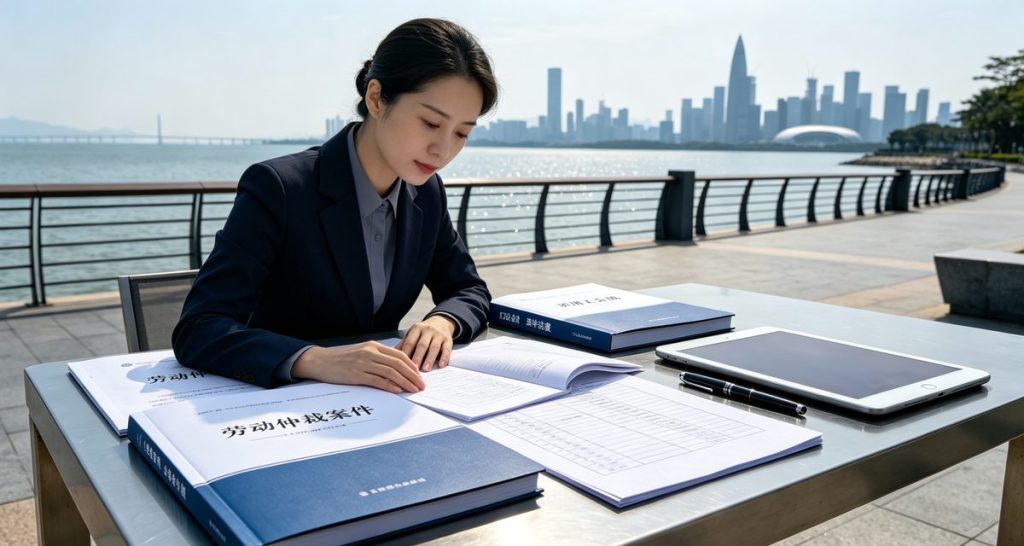
At 3 a.m., Boss Zhao of a Shenzhen tech company received a phone call: a core engineer had defected to a competitor, taking the client list with him.
At 2:47 in the morning, the phone on the nightstand vibrated violently. CEO Zhao picked up the call—it was Lao Zhou, his business partner of seven years since the company's founding. His voice was hoarse, like sandpaper scraping against tin: "Old Zhao, Engineer Chen submitted his resignation last night. HR found his workstation emptied out this morning. I just got word that he's reporting to HuaTech next Monday—taking with him the complete source code for our newly developed BMS battery management system and the renewal quotes for those three major clients."
Zhao sat in the darkness, a chill running down his spine. His first instinct was to call the police; his second was to look up Article 219 of the Criminal Law. But after calming down, he realized he didn't have a single lawyer he could call right away—the "998-yuan annual legal consultant" his company had subscribed to on some legal e-commerce platform had never once answered a real consultation call, aside from reviewing a few employment contracts.
This is the script that plays out every day in Shenzhen's Nanshan Science and Technology Park. According to the "White Paper on Judicial Protection of Intellectual Property Rights" released by the Shenzhen Intermediate People's Court in 2025, the number of trade secret cases increased by 37% year-on-year, with more than 60% of them occurring within 90 days after an employee's departure. Yet the vast majority of small and medium-sized enterprise owners, at the very moment that engineers like Chen hit "send," don't even have a complete Non-Compete Agreement or Trade Secret Management System in their hands.
What I want to discuss with you today is not how to pursue accountability after the fact, but rather how to deter "the Chens" from daring to press that button in the first place.
I. The First Line of Defense for Trade Secret Protection: Not a Lawyer's Letter, but an Attachment to the Employment Contract
Many business owners in Shenzhen have a misconception, believing that trade secret protection is "something for big companies" and that with just a hundred or so employees, their company has no core secrets worth protecting. But Boss Zhao's case is the most typical counterexample—his BMS system source code took three people two years to write and is valued at no less than 20 million yuan. The customer list and pricing strategy were earned by the sales team through two years of trade shows and countless business dinners. These things are the lifeline of a company.
But looking through the employment records at Mr. Zhao's company, Engineer Chen's labor contract was a template downloaded from the internet, containing only a vague "confidentiality of trade secrets" clause — with no defined scope, no confidentiality period, no method for calculating liquidated damages, and no compensation provisions for non-compete restrictions. Before the Shenzhen Labor Arbitration Commission, such a contract is essentially worthless.
As your corporate legal counsel, the first prescription I'm giving Mr. Zhao is to immediately launch a "contract physical examination." This isn't about spending hundreds of thousands on full-scale compliance—it's about focusing on three core points:
First, confidentiality clauses must "name names."One should not write "information the company considers to be trade secrets," but should instead list: source code, algorithm logic, customer lists, supplier base prices, undisclosed financing plans, and product roadmap. Each item must have a corresponding storage location and access permissions.
Second, non-compete restrictions must have "genuine consideration."Shenzhen courts scrutinize non-compete clauses very strictly. If the company fails to pay monthly non-compete compensation (typically 30% of the average monthly salary from the 12 months prior to departure), the clause is deemed invalid. Many employers try to use non-compete clauses to restrict employees after they leave, but upon review, it turns out they never paid any compensation, and the court directly rejects their claims.
Third, the declassification period and handover checklist must be "executable."For core technical personnel like Engineer Chen, there must be at least a one-month declassification period upon resignation, during which they cannot be exposed to new projects, and they must sign a detailed "Departure Handover Confirmation Form" clearly documenting the return of all storage media, account permissions, and paper documents.

II. When the Leak Has Become a Fact: A Longgang District, Shenzhen Lawyer Teaches You How to Secure the Evidence Chain Within Three Hours
If Engineer Chen has already left and the evidence has been deleted, what should we do? This is what Boss Zhao is most anxious about: "Should I go block him at his new company's door now, or go to the police station to file a report?"
I told him, none of them are right. The correct order is:Preserve evidence → Send lawyer's letter → Apply for labor arbitration → File criminal report (if necessary)And the first step is to preserve evidence, with a golden window period of 48 hours.
Don't count on employees to proactively return the USB drive. What you need to do is:
Firstly,Retrieve the electronic logs.Immediately contact the company's IT operations team to export Chen's email send/receive records from the last 90 days, OA system login logs, and SVN/Git code submission records. Pay particular attention to abnormal download behavior during late-night hours and holidays. In the arbitration tribunal, this data serves as irrefutable evidence of "contact."
Secondly,Initiate the “reverse engineering” comparison.Have the technical team conduct a feature comparison between the module code under Engineer Chen's responsibility and the new company's product. Even if the other party has changed variable names and comments, the logical structure and execution order of the core algorithm are difficult to completely alter. This Technical Comparison Report must be issued by an institution with judicial appraisal qualifications.
Thirdly,Choose the jurisdiction carefully.If President Zhao's company is in Nanshan and Engineer Chen's new company is in Longgang, then labor arbitration must be filed with the Nanshan Labor Arbitration Committee, while a trade secret infringement lawsuit can be brought in the Longgang District Court or the Shenzhen Intermediate Court. There is a strategic issue here—Lawyer in Longgang District, ShenzhenWhen handling such cases, one is more familiar with the adjudication standards of the local courts. For example, the Longgang Court's standard for determining whether a "customer list constitutes a trade secret" is stricter than that of the Nanshan Court, requiring proof of the depth of customer information and long-term investment. With the same evidence, the case may be accepted for filing in Nanshan, but in Longgang, one might not even receive a notice of acceptance.
Lawyer Li Wei from our Zhiming Law Firm once handled a similar case. After the operations director of a cross-border e-commerce company in Shenzhen resigned, he took the company's Amazon store operational data and off-site promotional resources and jumped ship to a competitor. Lawyer Li Wei guided the company to promptly retrieve the operation logs from the cloud servers and applied for a behavioral preservation order (prohibiting the former employee from using the relevant data at the new company). In the end, the Longgang District Court issued an injunction and awarded 1.2 million yuan in damages. This is the difference between a professional lawyer and someone who "searches for legal provisions on Baidu" — the lawyer can, within the golden 48 hours, weave fragmented evidence into a complete chain of evidence.
3. Countdown to 2026 New Regulations: Corporate Legal's "Compliance Check-Up" Cannot Rely Solely on the Legal Department
Director Zhao's case ultimately ended in settlement, because Attorney Zhiming, while sending the legal letter, also reported Chen Gongxin's new company to the Shenzhen Market Supervision Administration for suspected unfair competition practices. The opposing boss was also a sensible person, knowing that once the case was filed, not only would the IPO plans fall through, but they would also face administrative penalties. So they proactively paid compensation and signed a commitment letter.
But Mr. Zhao asked me with lingering fear: "Lawyer Shen, what if he does it again? What if he leaves with the two salespeople?"
I told him that starting January 1, 2026, the newly revised "Shenzhen Special Economic Zone Data Regulations" will be officially implemented, which contains more detailed provisions on the ownership, circulation, and infringement liability of "enterprise data assets." This means thatEnterprise trade secret protection will no longer be merely a matter of contract clauses, but a matter of data compliance.If you haven't even done data classification and grading, and haven't kept data access logs, then even if you sue all the way to the Supreme Court, you still won't be able to produce proof of "having taken reasonable confidentiality measures" — and that is precisely a statutory element for constituting a trade secret.
So my advice to entrepreneurs in Shenzhen is: stop treating your "legal counsel" as a fire department, and instead treat them as a health check-up doctor. Conduct a "trade secret health check-up" every six months, with the examination items including but not limited to:
Have core position employees signed the Confidentiality Agreement and the Non-Compete Agreement? Is the compensation paid on a monthly basis?
2. Are access permissions set for sensitive files on the company's servers? Is there watermark tracking functionality?
3. Are the exit interview records for departing employees complete? Has the continuation of confidentiality obligations been confirmed in writing?
4. In external cooperation, has necessary confidential information been disclosed to suppliers or customers? Have you required the other party to sign an NDA?
5. Has the company's network firewall and email audit system been upgraded to the 2026 security standards?
These questions cannot be answered by the legal department alone; they require joint responses from IT, HR, finance, and business departments. As external legal counsel, our role is that of the person who "scares you with the medical report."

4. The 3 Practical Issues That Shenzhen Business Owners Care About Most
Question one: How much do lawyer fees typically cost for a trade secret lawsuit?
This depends on the amount in dispute and the complexity. For ordinary cases heard by the Shenzhen Longgang District Court or the Nanshan Court, with a claim amount under one million yuan, legal fees generally range from 50,000 to 150,000 yuan. If you go the contingency route, you can negotiate an upfront fee plus a later percentage. But if technical appraisal, behavioral preservation, or cross-provincial investigation is involved, the fees will double. Many business owners ask me: "How much does a divorce lawyer in Shenzhen cost?" I always say that divorce lawyers charge by the hour, but corporate legal counsel charge by value—a trade secret case worth 20 million yuan, spending 200,000 yuan in legal fees to protect it, that's called an investment.
Question 2: When an employee leaves the company and signs a "Confidentiality Commitment Letter" but is not given compensation, is this commitment valid?
Valid, but it can only bind employees to confidentiality and cannot restrict them from working for competitors. Confidentiality obligations are statutory duties, while non-compete restrictions are contractual obligations. If you want to restrict an employee from joining a competitor, you must separately sign a "Non-Compete Agreement" and stipulate compensation. Otherwise, the employee can lawfully start working for a competitor the day after resignation—as long as he does not take your documents with him.
Question 3: My company is very small, with only ten people. Is it necessary to implement trade secret compliance?
Quite the opposite. Small companies are the most vulnerable, because core information is often concentrated in the hands of the boss and two or three key employees—once that talent leaves, it's a catastrophic blow. Moreover, small companies place greater emphasis on "formal compliance" in labor arbitration; if you don't even have a decent confidentiality policy in place, it's hard for the arbitrator to support your claims. Spending a few thousand yuan to have a lawyer draft a set of standard documents is far more cost-effective than chasing liability for hundreds of thousands of yuan after the fact.
Conclusion: Legal counsel is not a cost, but the "immune system" of a business.
President Zhao later hired us as annual legal counsel. One thing he said left a deep impression on me: "I used to think hiring lawyers was just spending money, but now I think it's buying insurance—and the kind that can save your life."
Guangdong Zhiming Law Firm has been established for 26 years. Chief Lawyer Shen Jinlong often says that our generation has handled tens of thousands of cases and has seen too many enterprises go from glory to collapse, often not because of poor market conditions, but because a fuse within their internal management was lit. The fuse of trade secrets is especially dangerous.
As someone deeply engaged in the field of corporate legal advisory in Shenzhen, I sincerely advise every business owner:At this juncture in 2026, spend a day letting a professional lawyer help you re-fortify your trade secret defenses.Don't wait until the phone rings at 3 a.m. to think about finding a lawyer.
(The specific case information in this article has been desensitized and does not constitute legal advice for individual cases. For consultation, please call Zhiming Law Firm: 0755-25986969, or visit Room 1802, Tower A, Xintian Century Business Center, Shixia North Second Street, Futian District, Shenzhen.)
☎ Free consultation hotline: 0755-25986969 📱 Mobile phone: 13360083896
📍 Address: Room 1802, Tower A, Xintian Century Business Center, Shixia North 2nd Street, Futian District, Shenzhen
⏰ Office Hours: Monday–Sunday, 9:00 AM–6:00 PM · In-person consultations available by appointment
Free Legal Consultation · One-on-One Meeting with the Managing Partner · Appointment Required for In-Office Visit