

An Employee in Shenzhen Jumped Ship and Took the Client List—Why Did the Company Lose the Lawsuit? How Can Trade Secrets Be Effectively Protected?
Let’s begin with a real-life case: A Shenzhen Nanshan-based company specializing in cross-border e-commerce software recruited Li Qiang (a pseudonym), a technology director, three years ago at a high salary—initiated by the company’s CEO, Mr. Wang. After joining, Li Qiang gained access to the source code of the company’s core algorithms and cultivated private relationships with key personnel at several major clients. Last December, Li Qiang abruptly resigned. Three months later, Mr. Wang discovered a sharp decline in order volumes from several of the company’s major clients.Only upon investigation did they discover that Li Qiang had left to start his own company using the very set of source code he had taken with him—and that the clients he contacted were all among Wang Zong’s company’s most profitable accounts.
Mr. Wang was so furious that he slammed the table and immediately engaged a lawyer to sue Li Qiang for trade secret infringement, seeking RMB 8 million in damages. What was the outcome? He lost at first instance—and again on appeal. The judge’s reasoning was straightforward:Mr. Wang failed to produce evidence proving that the “source code” and “customer list” qualify as trade secrets under the law, nor did he provide any evidence demonstrating that Li Qiang engaged in acts of “disclosure or use.”
When Mr. Wang approached Guangdong Zhiming Law Firm, the first thing he said was: “Lawyer, I’ve already lost this case twice—can it still be salvaged?” After reviewing the judgment, I frankly told him: “It’s not that Li Qiang didn’t steal; rather, Mr. Wang himself failed to properly ‘lock the door.’”
Today’s article begins with this case and discusses the most common issues faced by enterprises in Shenzhen.Vulnerabilities in Trade Secret Protection and Blind Spots in Corporate Legal AffairsIf you’re struggling with issues such as “key employees leaving and taking company resources with them” or “corporate trade secrets rendered effectively meaningless,” be sure to read on.
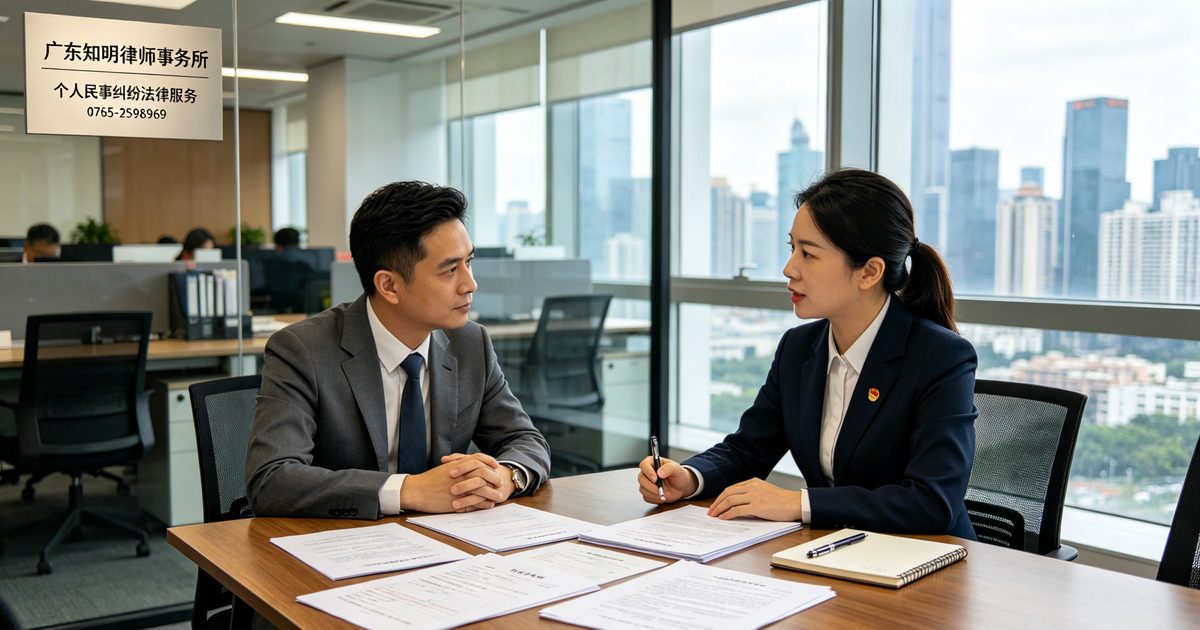
I. Three Fatal Flaws Leading to Shenzhen Companies’ Losses in Litigation: Your Trade Secrets May Not Be Legally Recognized at All
Many Shenzhen business owners wonder: “Our company has internal confidentiality policies, and employees sign confidentiality agreements upon hiring—so why aren’t our trade secrets legally recognized as such?”Incorrect! Legally defined trade secrets must satisfy all three essential criteria—“secrecy,” “commercial value,” and “confidentiality”—and the absence of any one of these elements disqualifies the information from being recognized as a trade secret.Mr. Wang’s case was doomed by these three characters.
Risk Point 1: Secrecy—Your “secret” has long been widely disseminated.
Li Qiang’s attorney pointed out in court that certain open-source code on GitHub bears a high degree of similarity to the source code of Wang Zong’s company; moreover, many contacts listed in the client list publicly display their job titles and email addresses on LinkedIn.The judge determined that this information is publicly accessible and therefore does not constitute technical or business information “not known to the public.”
Risk Point 2: Confidentiality—Signing an agreement does not equate to implementing confidentiality measures.
Indeed, Mr. Wang had Li Qiang sign a “Confidentiality Agreement,” but the agreement merely states in general terms that he must keep “the Company’s technical and business information confidential.”No classification of confidentiality levels, no restriction on access scope, no encryption permissions set, and no declassification period upon resignation.Even more critically, when Li Qiang resigned, the company failed to provide any formal reminder or conduct a handover confirmation—no “Resignation Commitment Letter” was even signed.
Risk Point 3: Difficulty in Producing Evidence—Winning the Argument, Losing the Case Due to Insufficient Evidence
Even if Mr. Wang claims that Li Qiang “used” his client list, the court requires him to provide proof.“Li Qiang’s company actually conducted transactions with the clients listed on the roster, and such transactions bear a direct causal relationship to General Manager Wang’s trade secrets.”Mr. Wang only provided data on the loss of his own clients but did not supply any sales records from Mr. Li Qiang’s company—how, then, can this be proven?
"In a nutshell:"The employer considers it “theft,” while the judge deems it a “normal job transition.”This is the fundamental reason why many companies in Shenzhen lose trade secret litigation.
II. Solution: The “Three-Lock” System of Shenzhen Corporate Legal Counsel
Mr. Wang asked us whether there was still a chance to turn things around. Senior Partner Attorney Shen Jinlong (22 years of legal practice experience; former senior executive at a major state-owned enterprise) responded: “Whether you win the lawsuit depends on evidence; whether your company can effectively safeguard its interests depends on its systems.” We advised Mr. Wang to forgo the retrial and instead rebuild his company’s trade secret protection system—a system we call the“The Three Locks”and also share it with all Shenzhen business owners.
First Lock: Institutional Safeguard—Transforming “Confidentiality Slogans” into “Tiered Control and Management”
Do not rely solely on a generic “Confidentiality Agreement.” Documents we draft for our client-advisory entities must include:
- Confidential Information Classification Table:Classify source code, customer lists, pricing strategies, and procurement channels into three confidentiality levels—“Top Secret,” “Confidential,” and “Secret”—with corresponding access rights for each level.
- Traceability Mechanism for Contact:The backend system must maintain log records specifying who accessed confidential documents, when they did so, and on which device.
- Physical Isolation Measures:Core source code is stored on an offline server; USB ports on employees’ computers are disabled; and confidential areas are under full video surveillance.
Second Lock: Behavioral Control—Transforming “Onboarding Signatures” into “End-to-End Oversight”
Signing a confidentiality agreement upon employee onboarding is merely the starting point. We require enterprises to do the following:
- Employment Notification:Clearly inform employees which information is classified as the Company’s “Top Secret” and must not be disclosed to any third party, including a new employer.
- Exit Interviews and Audits:Prior to an employee’s departure, Legal or HR personnel must conduct a one-on-one reminder session with the employee and obtain their signed “Departure Information Confirmation Form,” which lists all confidential information known to the employee.
- Consideration for Non-Compete Obligations:For senior executives and core technical personnel, a non-compete agreement must be signed, stipulating that non-compete compensation shall be paid monthly during employment (in Shenzhen, the standard is 50% of the employee’s average monthly salary over the 12 months preceding termination).Note: The agreement shall be null and void if payment is not made.
Third Lock: Evidence Lock — Transforming “Post-incident Remediation” into “Real-time Evidence Preservation”
Once a data breach occurs, what evidence will you rely on to file a lawsuit? We recommend that enterprises useBlockchain Evidence Preservation Platform, hash values of core documents are fixed. When an employee like Li Qiang takes away a document, you can prove that “the company possessed a document with identical content at a specific date and time (e.g., year-month-day-hour-minute-second),” thereby securing the chain of evidence.
After implementing this system, Mr. Wang restructured the company’s organizational framework. Although the RMB 8 million loss was not recovered, at least the remaining major clients were retained. More importantly, he gained confidence and clarity when hiring and terminating employees thereafter.

III. Why Shenzhen Business Owners Choose Zhiming Law Firm as Their “Corporate Legal Counsel”
Mr. Wang’s case is not an isolated incident. Our Guangdong Zhiming Law Firm (established 26 years ago and located in Futian District, Shenzhen) has handled numerous similar cases.Director Lawyer Shen JinlongIt is often said: “The value of a corporate legal counsel lies not in how many lawsuits they help you win, but in how many lawsuits they help you avoid.”
Why Choose Zhiming Law Firm as Your Shenzhen Corporate Legal Counsel?
- Lawyers Who Understand Business:Director Shen holds a Master’s degree in Economics from Fudan University and formerly served as a senior executive at a major state-owned enterprise. He understands the subtext behind your “business model”—not merely applying legal provisions mechanically.
- Systematic Processing:We don’t just review contracts—we build comprehensive legal firewalls for you across four critical dimensions: equity structure, labor and employment, intellectual property, and data compliance. Having handled over 10,000 cases, we’ve witnessed countless dramas—from “brothers turning against each other” to “senior executives defecting”—and know exactly where the pitfalls lie.
- Dare to Speak Frankly:Some lawyers, eager to earn consulting fees, simply echo whatever their clients say. We, however, will tell you directly: “This business action carries an ‘A-level’ legal risk—cease it immediately.” The message may sound blunt, but it helps you avoid pitfalls.
IV. FAQs: Your Top Questions About Trade Secrets and Corporate Legal Counsel
Q1: An employee caused no actual loss—can I still sue him?
Yes, you can file a lawsuit, but don’t expect substantial compensation.Courts determine compensation based on the plaintiff’s actual losses or the infringer’s unlawful gains. If no actual loss has occurred, the court may order only cessation of infringement and award nominal damages—typically several ten-thousand RMB—which often falls short of covering legal fees. Therefore,Taking confidentiality measures in advance is more important than holding parties accountable after a breach occurs.
Q2: What should I do if someone in Shenzhen refuses to repay a debt? Is this related to trade secrets?
Failure to repay a debt constitutes a contractual dispute, which is entirely distinct from the protection of trade secrets. However, there is one point of intersection:If a client defaults on payment and you suspect that they have disclosed your confidential business information to competitors, you may assert both claims concurrently in your lawsuit.We have handled numerous cases involving “dual claims in a single case,” provided that the evidence is solid.
Q3: Our company is small and cannot afford a full-time in-house legal counsel. What should we do?
Legal counsel fees for Shenzhen-based companies range from tens of thousands to hundreds of thousands of RMB—indeed, this poses a financial burden for small enterprises. Our law firm offers…“Specialized Consultation + Annual Health Checkup”Our service allows you to have all three core documents—the Confidentiality Agreement, the Non-Compete Agreement, and the Employee Handbook—comprehensively reviewed and revised for just RMB 10,000–20,000.This amount is even less than a fraction of the attorney’s fees you’d pay for a single lawsuit in the future.
Q4: What are the complaint channels available in Shenzhen if I have a dispute or conflict with my consulting lawyer?
If you are dissatisfied with the legal services provided, you may lodge your concerns through the following official channels:Shenzhen Lawyers Association (Complaint Hotline: 0755-83025555), orLawyers and Public Notaries Division, Futian District Judicial BureauZhiming Law Firm, a well-established firm with 26 years of experience, consistently places client satisfaction at the top of its priorities. Should you have any questions regarding our services, you may contact Managing Partner Attorney Shen Jinlong directly (Tel: 0755-25986969), who personally guarantees…“The managing partner personally participates in designing strategies for all complex cases.”.
Lastly, one final remark: Later, Mr. Wang engaged us as his company’s annual legal counsel. He said something that left a deep impression on me:“If I’d known spending 50,000 RMB annually could have prevented this issue, why would I have spent 800,000 RMB on a lawsuit doomed to fail?”
Trade secrets are not mere slogans posted on a wall—they are the lifeline of your business. If you operate a company in Shenzhen and are facing legal challenges such as the departure of key personnel, unauthorized disclosure of proprietary technology, or shareholder disputes, we invite you to visit Guangdong Zhiming Law Firm (Address: Room 1802, Tower A, Xintian Century Business Center, Shisha North 2nd Street, Futian District, Shenzhen). Let’s sit down over a cup of tea—and help you defuse those legal landmines.
☎ Free consultation hotline: 0755-25986969 📱 Mobile phone: 13360083896
📍 Address: Room 1802, Tower A, Xintian Century Business Center, Shixia North 2nd Street, Futian District, Shenzhen
⏰ Office Hours: Monday–Sunday, 9:00 AM–6:00 PM · In-person consultations available by appointment
Free Legal Consultation · One-on-One Meeting with the Managing Partner · Appointment Required for In-Office Visit