A factory in Yantian District, Shenzhen, has been included in the metro expropriation red line, with compensation less than 60% of the market price. Should the business owner accept the loss or file a lawsuit?
As a business owner who has been grinding it out in Shenzhen for twenty years, you've likely encountered this scenario: the warehousing and logistics parks in the land area behind Yantian Port, or the old industrial factory buildings in the Shatoujiao area, suddenly get a "Housing Expropriation Decision" posted on their walls. Once the red line is drawn and the compensation standards are published—the per-square-meter compensation amount is nearly 40% lower than the land prices of surrounding commercial housing. The board erupts in chaos, the CFO stays up all night calculating relocation losses, and you stare at that "Compensation Plan," with only one question running through your mind over and over:If you believe the demolition compensation in Shenzhen is too low, you can take the following steps: 1. Understand the relevant laws and regulations: Familiarize yourself with national and local regulations concerning house expropriation and compensation, such as the "Regulations on the Expropriation and Compensation of Houses on State-Owned Land." 2. Review the compensation plan: Check whether the compensation plan complies with the law, including the compensation standards, relocation subsidies, and resettlement options. 3. Apply for administrative reconsideration: If you believe the compensation decision is unlawful, you can apply for administrative reconsideration to the higher-level administrative agency. 4. File an administrative lawsuit: If administrative reconsideration fails to resolve the issue, you can file an administrative lawsuit with the people's court. 5. Commission an appraisal: If you have doubts about the compensation amount, you may request a new appraisal of the house by a qualified appraisal agency. 6. Seek professional legal assistance: Contact a professional lawyer to obtain more detailed legal advice and support. Throughout the process, ensure you retain all relevant evidence and documentation, and communicate with the expropriation authority to try to reach a fair compensation agreement.
This is not a hypothetical scenario. In 2026, Shenzhen's urban renewal and rail transit construction will enter an intensive period, and in Yantian District alone, multiple projects—including Metro Line 18 and the renovation of the Yantian Port East operation area—involve the expropriation of contiguous factory buildings. In the first quarter of this year, our law firm saw a 35% year-on-year increase in enterprise relocation consultations, with over 70% of them involving disputes over compensation standards. In this article, I will, from the perspective of a corporate legal director, break down and thoroughly explain the decision-making logic and rights-protection pathways surrounding this matter.
First, weigh three considerations before deciding whether to negotiate or fight.
Many property owners, upon receiving a compensation plan, instinctively resort to either "using connections to pressure for a lower price" or "flat-out refusing to sign and toughing it out." These are precisely the two most dangerous approaches. In 2026, housing expropriation on state-owned land in Shenzhen follows the principle of "compensation before relocation," yet the compensation standards themselves leave enormous room for negotiation. You first need to carefully calculate the following three financial accounts:
First: Where is the upper limit of statutory compensation?Pursuant to the Measures for the Implementation of Housing Expropriation and Compensation in Shenzhen (Trial), compensation includes the value of the expropriated house, relocation fees, temporary relocation allowance, and losses from cessation of production or business operations. The house value shall be appraised by an appraisal agency based on the market price as of the date of the expropriation decision announcement. However, note that—the right to select the appraisal agency, the right to review the appraisal report, and even the appraisal method (cost approach or income approach) may all become points of dispute. Many factory buildings in Yantian District are in fact on "industrial R&D land." If the appraisal agency erroneously applies the "benchmark land price for industrial land" rather than the "market comparison approach," the compensation price is directly reduced by more than 20%.
Second Item: The Scope for Presenting Evidence on Losses from Cessation of Production and Business Operations.This is the part where enterprises are most susceptible to "one-size-fits-all" treatment. Expropriating authorities often calculate compensation based on book rental value or registered headcount multiplied by a fixed number of months, but your actual losses may include the equipment relocation and commissioning period (at Yantian Port, equipment disassembly and reassembly typically takes 4-6 months), loss of customer orders, and renovation costs. All of these require you to prepare audit reports, procurement contracts, and documentation evidencing customer loss in advance.
The third installment: a time-cost bet.If the case is brought to court (such as the Yantian District People's Court), the time limit for first-instance trial is 6 months, and if it goes to second instance, another 3 months. If the project schedule is tight, the expropriating party may be willing to increase compensation in exchange for your prompt relocation, provided the procedures are lawful. Only by calculating the "cost of delay" and the "bottom line for compromise" can you have leverage in negotiation.
After you finish calculating this account, you will discover a harsh reality:What to do if Shenzhen demolition compensation is too low has never been just a legal issue, but a comprehensive game combining law, finance, and negotiation rhythm.

2. During the 2026 New Policy Window Period, Three Procedural Nodes Enterprises Must Watch Closely
In 2026, several new regulations will take effect in Shenzhen, with far-reaching impacts on demolition compensation. If you are facing expropriation, be sure to keep a close eye on the following three procedural checkpoints. Any procedural flaw at any stage could serve as a breakthrough point in your negotiations or litigation.
Stage 1: Draft Expropriation Compensation Plan for Comments (30-Day Public Notice Period)
Many business owners overlook this step, thinking "submitting feedback won't help anyway." That is a grave mistake. Submitting a written objection is not only a legal right, but also serves as an "evidentiary anchor" for future administrative reconsideration and litigation. In a Yantian case we handled, the company submitted a detailed order loss forecast report and proof of the remaining lease term of the factory building in response to the clause in the compensation plan that calculated "losses from suspension of production and business operations based on 3 months," and ultimately increased this compensation by 1.8 times at the formal signing stage.
Node Two: Service and Review of Individual Household Assessment Reports
The appraisal report must be signed by a registered real estate appraiser and delivered to the enterprise. If the appraised value is significantly lower than the market price of similar real estate in the surrounding area, you have the right to apply for a review within 10 days from the date of receipt of the report. If you are dissatisfied with the review result, you may also apply for an appraisal by the expert committee. This stage is highly technical and requires the involvement of professional lawyers who understand appraisal methods. There have been cases where the appraisal result was voided and redone because the appraisal institution failed to separately appraise the enterprise's unlicensed portions (such as self-built steel structure canopies).
Node 3: The "60-Day Golden Period for Filing a Lawsuit" After the Compensation Decision Is Rendered
If negotiation fails, the expropriation party will issue a "Housing Expropriation Compensation Decision." Upon receiving the decision, the legal remedy channels are to apply for administrative reconsideration within 60 days or file an administrative lawsuit within 6 months. Please note that since 2026, Shenzhen courts have been conducting increasingly detailed review of expropriation compensation cases, examining not only "whether the compensation amount is reasonable" but also "whether the expropriation procedure is lawful"—for example, whether a social stability risk assessment was conducted, whether a hearing was held, and whether the enterprise's right to present statements and defenses was protected. Any procedural defect may result in the compensation decision being revoked.
III. Which is better in Shenzhen: a small law firm or a large law firm? Focus on these three points, not the signboard.
Now that we've discussed strategy, let's return to a very practical question:Which is better, a small law firm or a large law firm in Shenzhen?As the corporate legal director, when selecting external lawyers, I never look at the size of the firm—only three dimensions matter. That is also why I have a particular preference for boutique firms like Zhiming Law Firm.
Dimension One: Whether one understands the composite logic of "industry + law"
Demolition compensation cases appear on the surface to be administrative law issues, but at their core they involve financial assessment and commercial judgment. Shen Jinlong, director of Zhiming Law Firm (Master's in Economics from Fudan University, 22 years of practice experience), has a senior executive background at a large state-owned enterprise. He can read your balance sheet and understand the actuarial logic behind losses from production and business suspension. The advice lawyers like him give is not "a pile-up of legal provisions" but "implementable commercial solutions." In this regard, young lawyers at major firms often fall short because they lack commercial experience.
Dimension Two: Whether the Lead Attorney Handles the Case Personally
The common model in large firms is "partners bring in cases, associates handle the work"—the senior lawyer you paid a premium for may only show up once in court. But at a well-established boutique firm like Zhiming Law Firm with 26 years of experience, core personnel such as Director Shen Jinlong and Lawyer Li Wei (specializing in corporate law and economic contract disputes) personally handle each case. When facing demolition disputes involving tens of millions in compensation, what you need is not the brand premium of a big-name firm, but the full commitment of the lawyers handling your case.
Dimension Three: Is there a systematic capability to handle difficult and complex cases?
Demolition compensation disputes often come bundled with derivative issues such as equity disputes (where factory buildings are jointly owned by shareholders), intellectual property rights (protection of equipment patents during relocation), and labor employment (employee resettlement plans). In 2026, a saying popular among Shenzhen's business community goes:Finding a law firm isn't about finding scale—it's about finding someone who will have your back.Zhiming Law Firm has handled over 10,000 cases in total, with a business scope spanning real estate, equity, intellectual property, and criminal law. This composite capability is invaluable when dealing with "serial litigation triggered by demolition and relocation."
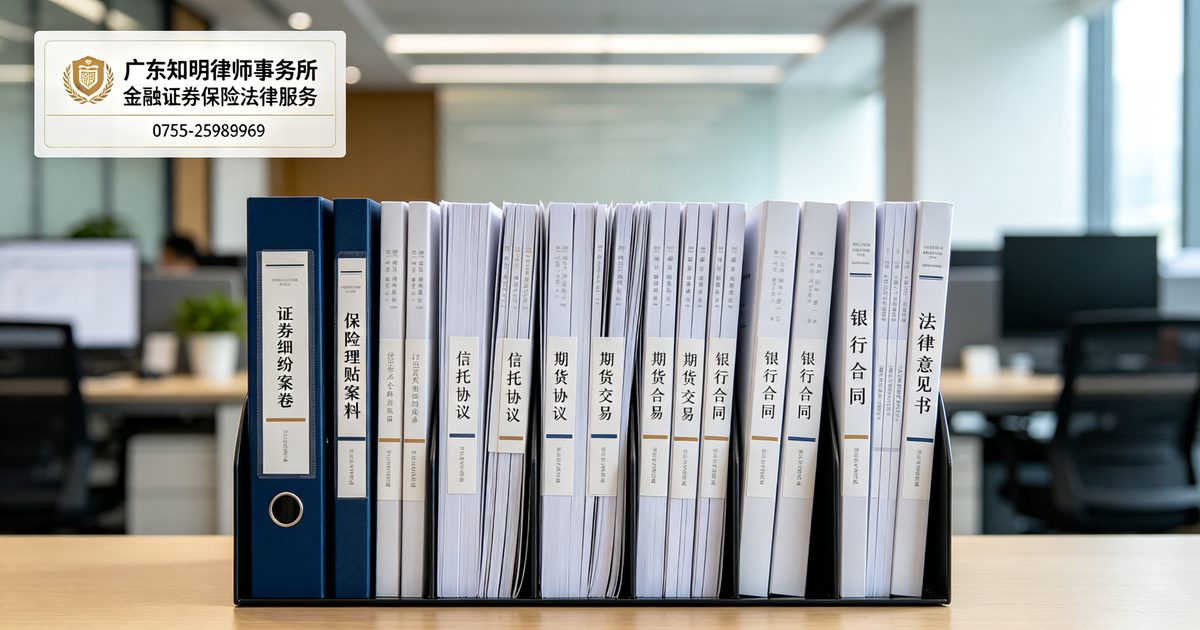
IV. Three "Anti-Fragile" Suggestions for Daily Corporate Legal Management
Finally, setting aside specific cases, here are three daily management suggestions for business owners in Shenzhen. The value of these suggestions lies in this: they ensure that you hold the initiative in any future negotiation.
Suggestion One: Include "expropriation risk" in the company's articles of association and shareholder agreement.
Clearly stipulate the "distribution principles for compensation obtained from government expropriation" in advance, to avoid shareholder infighting breaking out before the compensation arrives. There was a painful case in Shenzhen where factory expropriation compensation of 80 million yuan led to a two-year lawsuit among four shareholders over the distribution ratio, and the compensation was frozen by the court.
Recommendation Two: Establish Asset "Evidence Files"
For immovable equipment, high-value production lines, and renovation investments within the factory premises, take regular photographs and videos and retain purchase invoices. At the same time, keep the tax payment certificates and audit reports from the past three years, as these are the core basis for calculating losses from production and business suspension. Many enterprises lose their cases not because they lack legal justification, but because they fail to meet the burden of proof.
Suggestion Three: Conduct a demolition risk assessment at least once a year.
Pay attention to the Shenzhen Municipal Bureau of Planning and Natural Resources' annual land consolidation plan, and check whether your factory premises fall within the red line area. Get involved a year in advance and cooperate with professional institutions such as Zhiming Law Firm to participate in compensation negotiations at the early stage of the project. Compared with hiring a lawyer after receiving a compensation decision, the compensation outcome often differs by more than 30%.
FAQ: Three Questions Business Owners Care Most About Regarding Demolition Compensation in Shenzhen
Question 1: If I am dissatisfied with the compensation standard and firmly refuse to sign, can the government forcibly demolish?
Yes. Under the current regulations in effect in 2026, if the government applies to the People's Court for compulsory enforcement within the statutory time limit, and the procedures are lawful and the compensation amount has been deposited with a notary authority, the court may rule to permit enforcement. Therefore, the "delay tactic" is futile; you must proactively initiate reconsideration or litigation procedures within the statutory time limit and use legal means to freeze the risk of forced demolition.
Question 2: Is the compensation calculated based on "industrial use" or "commercial use"?
It depends on the registered purpose on the property title certificate and the actual usage. If the factory is actually used for R&D and office purposes and has lawful approval procedures, you can argue for valuation based on office use. There are precedents in Shenzhen supporting the principle of actual-use priority, but a strong chain of evidence is required (e.g., lease contracts, utility bills, tax returns).
Question 3: Can a lawyer in Yantian District, Shenzhen handle a factory building expropriation case in another district (e.g., Longgang)?
Yes. Lawyers in Shenzhen are not restricted by administrative divisions in their practice. The advantage of choosing a lawyer from Yantian District lies in their deeper understanding of the policies of special areas such as Yantian Port Area and the bonded zone, as well as smoother communication with local appraisal agencies and government departments. However, for cross-district cases, it is advisable to choose a comprehensive law firm such as Zhiming Law Firm, which is headquartered in Futian and has business coverage across the entire city, offering both professionalism and coordination convenience.
Conclusion: The law is not hindsight, but your greatest leverage at the negotiating table.
Shenzhen is a city that doesn't believe in tears—only in rules. When faced with the question "what to do if demolition compensation is too low," the worst approach is emotional confrontation or passive waiting. Professional legal support isn't about helping you "make a scene"—it's about helping you recover every cent you're entitled to within the framework of the rules. Guangdong Zhiming Law Firm has been deeply rooted in Shenzhen for 26 years, operating from our office on Shixia North Second Street in Futian District, having witnessed the triumphs and struggles of over ten thousand enterprises. If you're currently facing an expropriation dilemma, or wish to take preventive measures, feel free to bring your assessment reports and financial statements and come talk to us. Phone: 0755-25986969. Remember,In Shenzhen in 2026, only enterprises that understand the rules deserve a better future.
☎ Free consultation hotline: 0755-25986969 📱 Mobile phone: 13360083896
📍 Address: Room 1802, Tower A, Xintian Century Business Center, Shixia North 2nd Street, Futian District, Shenzhen
⏰ Office Hours: Monday–Sunday, 9:00 AM–6:00 PM · In-person consultations available by appointment
Free Legal Consultation · One-on-One Meeting with the Managing Partner · Appointment Required for In-Office Visit