U.S. design patent applications and infringement analysis: Attorney Shen Jinlong says which two capabilities Shenzhen companies should focus on, and can an infringement analysis report serve as a basis for a complaint?
To answer the question in the title directly: a U.S. design patent infringement analysis report can be submitted as a basis for a complaint through Amazon's and similar platforms' complaint channels, but whether the platform accepts it and whether it results in a takedown depends on whether the form and content of the report meet the platform's review standards—not merely on the word "infringement" appearing in the report. As for which two capabilities Shenzhen enterprises should focus on: first, whether they can obtain a stable U.S. design patent; and second, whether they can conduct an infringement comparison to a degree that is enforceable, complaint-ready, and litigation-ready. Without either of these two capabilities, a patent is nothing more than a certificate on the wall.
U.S. Design Patents Are Not "Valid Upon Registration"—the Examination Threshold Is Higher Than Many People Think
Many Shenzhen enterprises are accustomed to the speed of design patent grants in China and assume the U.S. works the same way—file drawings and get a patent. U.S. design patents are examined by the United States Patent and Trademark Office (USPTO) under 35 U.S.C. §171, which protects the ornamental appearance of an "article of manufacture." It is true that utility is not examined, but novelty and non-obviousness are, and examiners will compare the application against prior designs. In practice, many first-time applicants receive an Office Action rather than a Notice of Allowance. Common issues include unclear line drawings, improper use of solid and broken lines, or excessive similarity to prior patents. The response deadline is generally three months from the mailing date, extendable with extension fees that accumulate monthly. We typically advise clients to think through "the design feature they intend to assert" at the filing stage, rather than casually filing a product image just to hold a place.
Infringement Comparison Turns on the "Ordinary Observer," Not a Point-by-Point Parameter Match
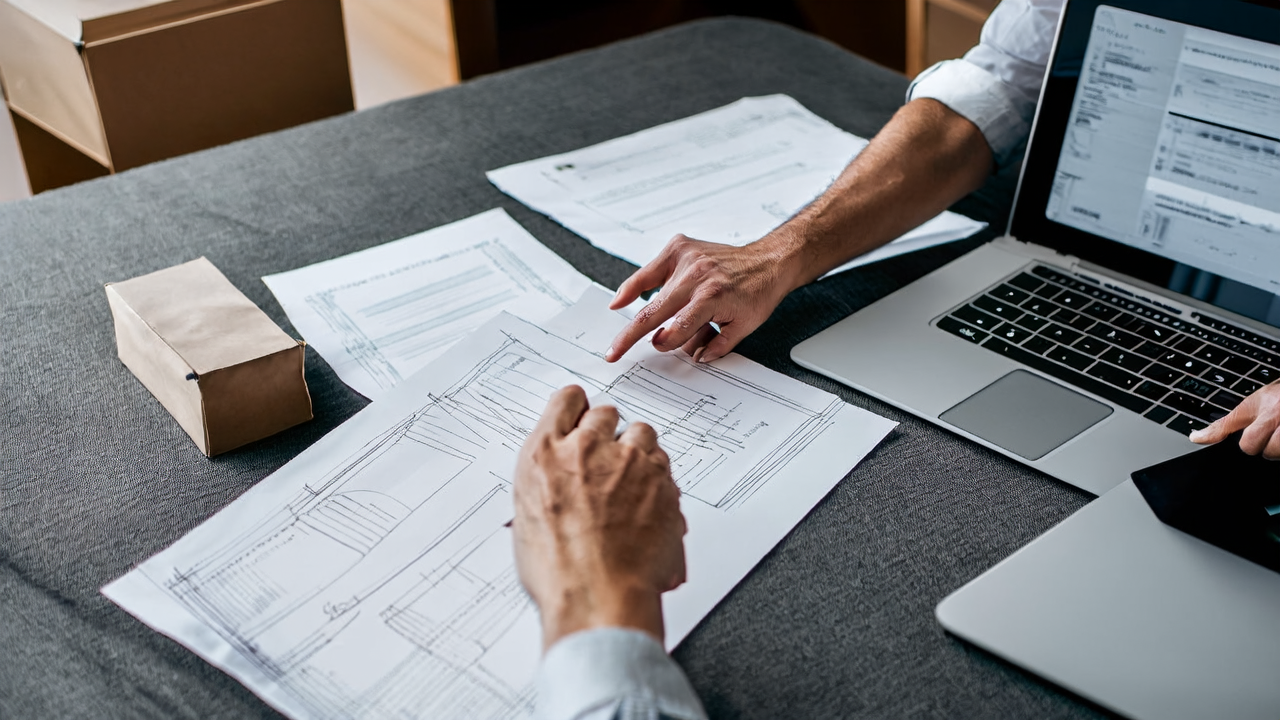
For U.S. design patent infringement, the Court of Appeals for the Federal Circuit (CAFC) established the "ordinary observer test," which looks at whether the overall visual impression is substantially the same—not a feature-by-feature technical comparison as with utility patents. What does this mean? It means that if your infringement analysis report merely lists parameters, dimensions, and material differences, its persuasive force is very weak. A truly compelling report will place the accused product side by side with the patent drawings for visual comparison, identifying which design points have been copied in their entirety and which differences are "ornamental and do not change the overall impression." This is also why, for the same product, analysis reports written by different attorneys can have vastly different platform approval rates. For clients in cross-border e-commerce, when a platform complaint is rejected, nine times out of ten this is the reason.
Can an Infringement Analysis Report Serve as a Basis for a Complaint, and What Exactly Do Platforms Look At?
Yes, but with conditions. Complaint channels on platforms like Amazon, Temu, and TikTok Shop typically require submission of the patent certificate, claims or design drawings, the accused infringing links, and a comparison statement. Platforms are not courts; they review "formal completeness" and "whether the prima facie evidence holds up." A qualified U.S. design patent infringement analysis report should at minimum include: the patent number and current legal status (whether maintenance fees have been paid—design patents have three payment windows at 3.5, 7.5, and 11.5 years, and failure to pay results in lapse), an item-by-item visual comparison between the accused product and the patent drawings, and a conclusion. If the patent has lapsed due to non-payment, no matter how well-written the report is, it is useless. We generally recommend that clients conduct a status check before filing a complaint—it takes little time but can prevent a complaint from being met with a counterclaim for abuse.
Why Many Complaints End Up Backfiring on the Complainant
The platform complaint mechanism is a double-edged sword. When you file a complaint, the other party can submit a counter-notice, initiate an inter partes review (IPR) before the USPTO or an ex parte reexamination for design patents, or even countersue you for unfair competition. The U.S. has a low tolerance for bad-faith complaints; false or misleading statements under 15 U.S.C. §1125(a), as well as state unfair competition laws, may all be invoked. In practice, we have seen clients file complaints based on design patents they themselves considered weak, only to receive a letter from opposing counsel and end up owing damages. Therefore, an infringement analysis report is not just for the platform—it also serves as your own risk-control working paper. If you cannot even write "substantially the same overall visual impression" in the report yourself, then do not file.
The First Capability Shenzhen Companies Should Assess: Obtaining a Patent That "Packs a Punch"
"Packs a punch" means design features are accurately captured, drawing quality is up to standard, and the scope of rights covers the products actually being sold. A U.S. design patent only protects the appearance "as shown in the drawings"—however the drawings are rendered, that defines the scope of rights. Many companies, to save money, file with product photos or renderings, only to be required during examination to convert them into line drawings, and in doing so lose details. We generally recommend: file standalone applications for flagship models, and use solid and broken lines to distinguish protection priorities in series models—solid lines for core design points, broken lines for non-core elements. Additionally, U.S. design patents can take as little as a few months or more than a year from filing to grant; if the product's peak season is approaching, the timeline must be calculated in advance. For those pursuing simultaneous protection in both the U.S. and EU markets, scheduling can be coordinated by referencing the process descriptions in U.S. and EU intellectual property legal services to avoid inconsistent drawings on both sides leading to conflicting scopes of protection.
The Second Capability: Turning Infringement Analysis into an "Executable Document"
This is not as simple as drafting a legal opinion. Enforceable means the report can directly support three actions: platform complaints, cease and desist letters, and litigation if necessary. These three actions impose different requirements on the report—platforms require procedural completeness, cease and desist letters require stable rights, and litigation requires the ability to withstand invalidity challenges. Therefore, the report typically needs to include the patent's legal status, maintenance fee records, patent family information, and conclusions from prior design searches. If you are only targeting the U.S. market, the report's depth is sufficient; if your product is also sold in Europe and Japan, we recommend incorporating the local design regimes covered under Intellectual Property Legal Services in Other Countries, because the infringement standards for the same product can differ across jurisdictions. We generally advise clients to treat infringement analysis as an annual exercise rather than something done only after a problem arises, especially for product categories with fast SKU turnover.
Response deadlines, fee payment deadlines—miss these dates and all prior efforts are wasted.
During the US design patent application stage, the response period for an office action is usually 3 months and may be extended, with extension fees increasing monthly. After grant, maintenance fees are paid in three stages: 3.5 years, 7.5 years, and 11.5 years from the grant date, with a 6-month grace period for late payment subject to a surcharge; if the grace period is exceeded, the patent lapses directly. If an infringement analysis report fails to clearly state these time nodes, a platform or opposing counsel can check and find that the patent has already lapsed, and the entire basis for the complaint is gone. Many clients overlook this when they first encounter it, assuming that once the certificate is issued, everything is settled once and for all. For enterprises pursuing overseas portfolios, it is advisable to incorporate patent annuity payments into internal calendar management or entrust a representative agency with unified monitoring. For the overall framework of maintaining overseas rights, please refer to the explanation on overseas intellectual property.
In 2026, cross-border sellers should focus more on "whether the report is usable" rather than "whether a report exists."
In the past two years, platforms have noticeably tightened their review of IP complaints, and templated analysis reports increasingly fail to pass. This trend will not reverse in 2026. For Shenzhen companies, the truly cost-saving path is not finding the cheapest template, but treating design filings and infringement analysis as a coordinated set of actions: think about how to assert your rights at the filing stage, and use the filing-stage drawings in your analysis. For a specific assessment, you may contact the corresponding international team listed on our attorneys introduction page. For filing practices along the U.S. and EU track, please seeU.S. and EU Intellectual Property Legal Services.
This article was written by Attorney Shen Jinlong of Guangdong Zhiming Law Firm. Attorney Shen Jinlong has long handled U.S. and EU trademark, patent, and copyright matters, providing U.S. design patent filing, infringement analysis, and platform complaint support for Shenzhen and Greater Bay Area companies expanding overseas. Consultation hotline: 0755-25986969.
Disclaimer: The content of this article is a general sharing of legal information and does not constitute legal advice for any specific case. The application strategy for U.S. design patents, infringement determination, and platform complaint outcomes depend on the specific product, patent documents, and prior rights, and individual cases vary significantly. Readers should obtain separate professional legal advice regarding their own circumstances before taking actions such as filing complaints, sending demand letters, or initiating litigation. Guangdong Zhiming Law Firm and the author of this article assume no liability for the consequences of decisions made based on the content of this article.
Frequently Asked Questions
Will Amazon directly accept a US design patent infringement analysis report?
The platform will review it, but the mere existence of a report does not guarantee takedown. The report must include the patent number, current legal status (whether maintenance fees have been paid in full), and a visual comparison between the accused product and the patent drawings. Reports that are formally complete and clearly compared have a noticeably higher pass rate; reports that merely list parameter differences are usually rejected.
How long does it take to obtain a US design patent?
There is no fixed time; it can take as little as a few months or more than a year. If an office action is received, the response period is usually 3 months, extendable for a fee. If the product's peak season is approaching, it is advisable to plan the application pace in advance to avoid the grant missing the sales window.
When are maintenance fees for a US design patent paid?
They are paid in three stages: 3.5 years, 7.5 years, and 11.5 years from the grant date. Late payment has a 6-month grace period but requires a surcharge; if payment is not made within the grace period, the patent lapses directly. If it is used for an infringement complaint after lapse, the basis no longer exists.
What should I do if the other party counterclaims against me for malicious complaint regarding a US design patent?
The United States imposes constraints on malicious complaints, and 15 U.S.C. §1125(a) as well as state unfair competition laws may be invoked. Before filing a complaint, one should confirm that the patent is valid and that the comparison conclusion is defensible. If one even feels that the overall visual impression does not constitute substantial similarity, it is not advisable to initiate a complaint.
What are the most common pitfalls for Shenzhen enterprises obtaining US design patents?
Drawing quality. Using product photos or renderings to apply can result in a request to convert to line drawings during examination, and details are easily lost. It is recommended to use solid lines for core design points and dashed lines for non-core elements, and to file the main model separately. How the drawings are drawn defines the scope of the rights.