How should three siblings divide the real estate left by their parents in Shenzhen? When the will is challenged as invalid, a lawyer explains 4 key points in a 20-million-yuan inheritance dispute.
Last Friday, a woman surnamed Zhou from Futian, Shenzhen came to us. The moment she sat down, her eyes reddened: "Lawyer, my dad said before he passed that the house was for me, but he didn't leave a will. My two older brothers are now both fighting over this school-district apartment in Nanshan, worth about 8 million yuan. The three of us have been arguing for almost 5 months now, and we even nearly tore up the household register. How exactly should this house be divided?"
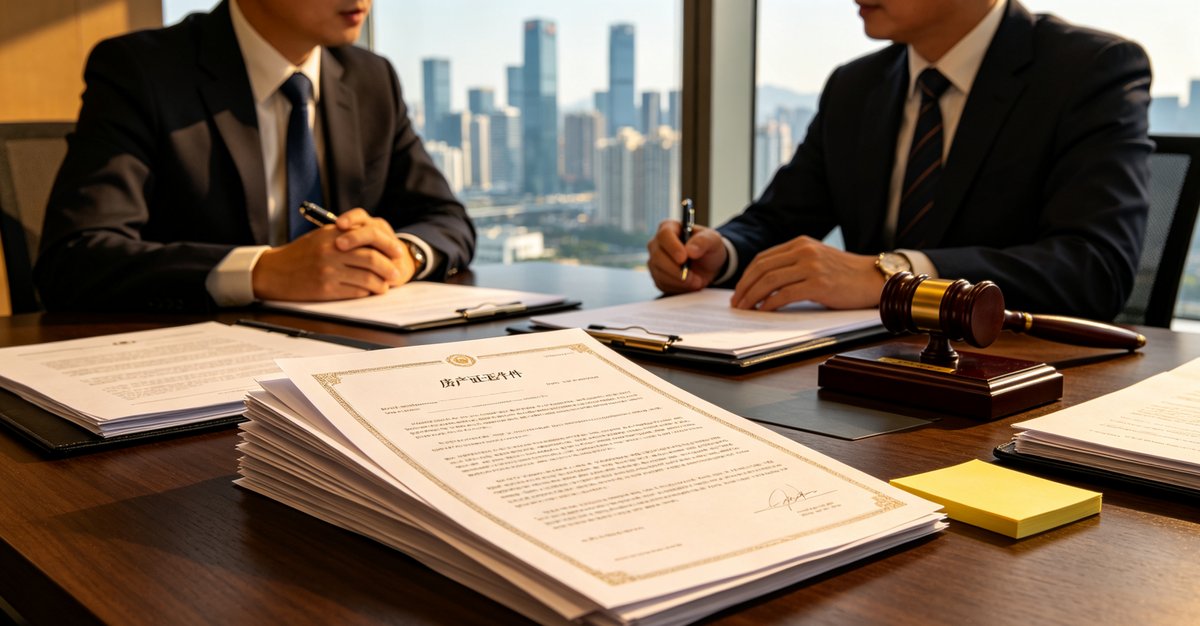
Ms. Zhou's predicament is not uncommon in Shenzhen. According to data released by the Shenzhen court system, the number of inheritance dispute cases in Shenzhen has increased at a rate of 15% per year over the past three years, with more than 70% of these cases involving property division. Especially in an immigrant city like Shenzhen, a single property often carries the savings of several generations, and may even involve family relations in Hong Kong or overseas. When it comes to the property left by their parents, how exactly should siblings divide it? And how should the validity of a will be determined? This article draws on real cases handled by Guangdong Zhiming Law Firm (a well-established Shenzhen firm with 26 years of experience and over 10,000 cumulative cases) to thoroughly address these issues once and for all.
Q1: If the parents did not leave a will, must the Shenzhen property be divided equally per capita?
Question: Lawyer, my parents passed away without leaving a will, leaving a commercial residential property in Longhua, Shenzhen. There are three siblings in our family. Is it mandatory for each of us to get one-third?
Answer: Not necessarily. This is the most common misconception. Article 1130 of the Civil Code clearly stipulates that inheritance is distributed in the following order: the first order consists of spouse, children, and parents. Shares of inheritance among heirs of the same order shall generally be equal. However, heirs who have primarily fulfilled the obligation to support the decedent or who lived with the decedent may receive a larger share when the estate is distributed. Heirs who have the ability and the means to support the decedent but fail to fulfill their support obligation shall receive no share or a smaller share when the estate is distributed.
In Shenzhen practice, we have seen many cases: children who have long-term residence in their parents' home, provide daily care, and accompany them to medical appointments have ultimately secured a 60%-70% share through evidence (such as payment records, neighbor testimony, and medical records). Conversely, if a child has shown no concern for their parents for years, the court will also reduce their distribution share at its discretion. So, don't rush to calculate per capita; first sort out who has undertaken the primary support obligation.
Q2: The parents handwrote a will without notarization, and the other siblings say it is invalid. How does the court rule?
Q: My father wrote a will by hand himself, leaving the house in Nanshan District to me, but it wasn't notarized. Now my younger brother says the handwriting doesn't look right, refuses to acknowledge it, and says it should be divided according to statutory succession. Does this will still hold?
Answer: A handwritten will is valid as long as it meets the statutory formal requirements, even if it is not notarized. Under Article 1134 of the Civil Code, a handwritten will must be written personally by the testator, signed, and dated with the year, month, and day. If these three requirements are satisfied, it is legally effective. In judicial practice, if the other party challenges the handwriting, the court will initiate a handwriting appraisal procedure. However, there is a key point here: if the content of the will involves real estate but disposes of the portion belonging to the spouse, or if there are alterations in the writing and no separate signature was made at the altered locations, disputes are likely to arise.
Our firm, Zhiming Law Firm, handled a case in Bao'an District, Shenzhen in 2023: the deceased left a two-page holographic will leaving a property valued at 6 million RMB to his youngest daughter, but the second page bore no signature. The opposing party seized on this flaw to argue that the will was invalid. By retrieving the elderly man's past bank signature records and medical record signatures, and combining these with the testimony of the nanny who witnessed at the time, the court ultimately determined that the two pages of the will constituted a single integrated document and affirmed the will's validity. Therefore, a holographic will is by no means "a mere scrap of paper" — the key lies in whether the details are complete.
Q3: The house was bought by the parents after marriage, but only the father's name was registered. After the mother passes away, how is her share calculated?
Q: The house in Shenzhen Futian was bought together by my parents after they got married, but only my father's name is on the property certificate. My mother passed away the year before last. Now my father wants to transfer the house to me, but my older sister disagrees, saying she has a share in it. How should the ownership of this house be determined?
Answer: First clarify the joint marital property, then discuss inheritance. According to Article 1062 of the Civil Code, property acquired by the spouses during the marriage is joint marital property. Therefore, even if only the father's name appears on the property certificate, the house still belongs to the joint marital property of the parents. After the mother's death, 50% of the share belongs to the father as his personal property, and the other 50% enters the inheritance proceedings as the mother's estate.
If the mother did not leave a will, then that 50% is jointly inherited by the father, you, your sister, and other first-order heirs (such as grandparents). Generally speaking, the father can inherit a portion of it, and ultimately the father's share will reach 60%-70%. How this property is divided depends on family negotiation or a court ruling based on statutory proportions. In Shenzhen, many families choose to have the father purchase the shares of the other heirs, thereby preserving the integrity of the property.
Q4: How long does an inheritance lawsuit take? I heard that Shenzhen courts are particularly slow in handling such cases?
Question: Our family negotiations have broken down, and we are preparing to file a lawsuit in court. How long does an inheritance lawsuit in Shenzhen generally take? Is the lawyer's fee worth spending?
Answer: The trial period for first-instance inheritance disputes in Shenzhen is typically 6 months, but where property appraisals, handwriting identification, or cross-border service of process are involved, it is common for cases to drag on for 12 to 18 months. Many parties choose to represent themselves to save tens of thousands in attorney fees, only to miss critical evidence during the submission phase, resulting in an unfavorable first-instance judgment, with retrials that are both time-consuming and costly.
Director of Guangdong Zhiming Law Firm, Lawyer Shen Jinlong (a 26-year practicing lawyer, master's degree from Fudan University, senior economist, and former executive of a state-owned enterprise), has a unique approach in the field of inheritance. His original "Zhiming Artistic Litigation Method" system (which won dual innovation awards from both the provincial and municipal lawyers associations) excels at finding breakthrough points in highly tense family conflicts. Last year, in a Futian District estate inheritance case we handled, the client faced joint pressure from two brothers, who claimed that the will was forged. Director Shen reviewed the elderly man's medical records and nursing logs from the past three years and conducted visits with neighbors, forming a complete chain of evidence. In the end, the court ruled in the first instance that the will was valid, and the client successfully inherited all real estate shares with a market value of 20 million RMB. It took only 4 months from case filing to judgment, shortening the process by 60% compared to the average duration for similar cases.
If you are facing a similar inheritance dilemma, whether it involves disputes over the validity of a will or the distribution of statutory inheritance shares, it is advisable to consult a professional lawyer as soon as possible. In Shenzhen, property values often reach millions or even tens of millions of yuan, and a single oversight in details could result in losses of hundreds of thousands or even millions. Guangdong Zhiming Law Firm is located at Room 1802, Tower A, Xintian Century Business Center, Shixia North Second Street, Futian District, Shenzhen. You are welcome to visit in person for a face-to-face consultation. You may also call the consultation hotline directly at 0755-25986969. Organize the materials in your possession in advance so that the lawyer can help you analyze where the weaknesses in the evidence lie.
The property left by parents was meant to be a haven for the family—don't let inheritance disputes shatter the bonds of kinship. The law can help you clarify your rights and obligations, but repairing relationships requires wisdom and rationality. If negotiation truly reaches an impasse, then use the law as your weapon to protect the share that is rightfully yours.
Need professional legal help?
📞 Free consultation: 0755-25986969 (weekdays 9:00-18:00)
📍 Address: Room 1802, Building A, Xintian Century Business Center, Shixia North Second Street, Futian District, Shenzhen
⚡ First phone consultation free