In Longhua, Shenzhen, 32 homeowners were cheated for a decade over small property rights housing. A lawyer used this approach to successfully confirm property rights for all of them.
In the spring of 2019, I received an aunt who had come all the way from Longhua at Zhiming Law Firm. She was holding a thick stack of receipts and a "Cooperative Housing Construction Agreement," her hands trembling slightly. She said, "Lawyer Shen, our community of 32 households paid the money back in 2012, and we've been living in the houses for seven or eight years now. But last month, the developer suddenly said they want to take the houses back, claiming the agreements we signed are invalid. Are we going to end up sleeping on the streets?"
I have a vague impression of the place she mentioned. In the Longhua Dalang area, there is a cluster of residential buildings that were built in the early years through a partnership between village collectives and developers. Because they couldn't obtain proper pre-sale permits, they have always been sold under the guise of "cooperative housing." This type of property is commonly known in Shenzhen as "small property rights housing," which exists in a legal gray area. For her particular development, each household paid roughly 400,000 yuan on average, and with 32 households involved, the total amount in question exceeds 13 million yuan. For any family, that is money that cuts to the bone.

The conflict escalated quickly. The developer hired lawyers and sent a letter with a tough stance, stating that according to the "Shenzhen Special Economic Zone Land Use Right Transfer Regulations," houses on such land cannot be transferred to non-village residents, so the agreements they signed with the owners were void from the start. The developer offered a "humanitarian compensation" of 50,000 yuan per household and demanded they vacate within a deadline. The 32 households were completely outraged. Some were so angry they wanted to block the gates, while others resigned themselves to taking the money and leaving. That auntie told me, "We're not unreasonable people, but what can 50,000 yuan even do? I can't even buy a bathroom in my hometown county town."
The tricky part of this case is that the legal provisions cited by the developer do indeed exist. Shenzhen has always been strict in its crackdown on small-property-right housing, and simply asking the court to confirm the contract's validity and force the transfer of ownership is basically a dead end. If we go head-to-head on that front, we'd most likely lose the lawsuit and instead cement the conclusion that the contract is invalid, leaving the 32 homeowners with no choice but to take the 50,000 yuan and walk away. So after Director Shen Jinlong took over the case, the strategy he set was: **Don't get tangled up with the developer over "contract validity" — switch to a different track.**
Article 500 of the Civil Code is clear: if a party, during the process of concluding a contract, acts in violation of the principle of good faith and causes losses to the other party, it shall bear liability for compensation. The developer, as a professional entity, knew full well that commercial housing could not be built on this land and that property rights could not be sold, yet still sold it to the public under the guise of "cooperative housing construction," leading 32 homeowners to mistakenly believe they had secured an affordable place to live. This constitutes a classic case of concealing material facts.
The strategy is set, and the real battle lies in the evidence collection ahead. We spent nearly four months going door to door organizing materials: bank statements for every payment, the developer's promotional flyers from back then, and even photos from the "celebration banquet" held when the building topped out. The core purpose of all this evidence is singular: to prove that the developer was clearly at fault when selling the units, and that the homeowners were innocent and acting in good faith. Director Shen said something in court that left a deep impression on me: "My client spent ten years of their youth and 400,000 yuan in savings on a certificate that the developer knew could never be issued, yet never disclosed."
The outcome was better than expected. Although the court found the "Cooperative Housing Construction Agreement" invalid, it fully adopted our arguments and ruled that the developer bore primary liability for negligence in contract formation. In addition to refunding all purchase payments of about 13 million yuan to the 32 homeowners, the developer was also ordered to compensate for capital occupation losses at 1.3 times the central bank's loan interest rate for the same period, plus partial decoration losses. All told, each homeowner received nearly 60% more than what they had originally paid. More importantly, the ruling clarified that the homeowners hold lawful possessory and use rights to the properties, and the developer cannot forcibly evict them. This means that although they have not yet obtained the property ownership certificates, their homes are safe for now.
Once this case was closed, I felt a sense of relief. But to be honest, every time I see similar consultations, my heart still feels heavy. In Futian, Nanshan, and Longhua in Shenzhen, countless people are busy dealing with property matters every day. Through this case, I want to offer a few practical words to those who are struggling with real estate issues:
Without this certificate, no matter how persuasive the sales pitch, or whether the contract is called "joint construction of housing" or "transfer of usage rights," it will most likely fail to hold up legally. This can be verified in just ten minutes on the official website of the housing and urban-rural development bureau.
A void contract does not mean you cannot receive compensation. If the developer knowingly sold to you despite the risks, they are more uneasy than you are. By leveraging the principle of "culpa in contrahendo" (fault in contracting), you can often secure a better outcome than expected.
Ordinary commercial housing disputes center on "property ownership," while this type of case centers on "allocation of fault." Use the wrong strategy, and even a justified position can turn into a losing one. In such cases, the value of a professional lawyer lies precisely here—not in finding legal provisions for you, but in finding the one viable path forward.
**Answer:** Yes, but it depends on whether the other party is at fault. If the developer failed to disclose the nature of the land or the risks associated with obtaining the title certificate, that constitutes concealment of a material fact, and you can claim liability for negotiating in bad faith under Article 500 of the Civil Code, demanding a refund and compensation for losses. However, if you knowingly purchased the small property rights housing to take advantage of the low price, the court may rule that both parties share responsibility equally, and the refund amount may be reduced.
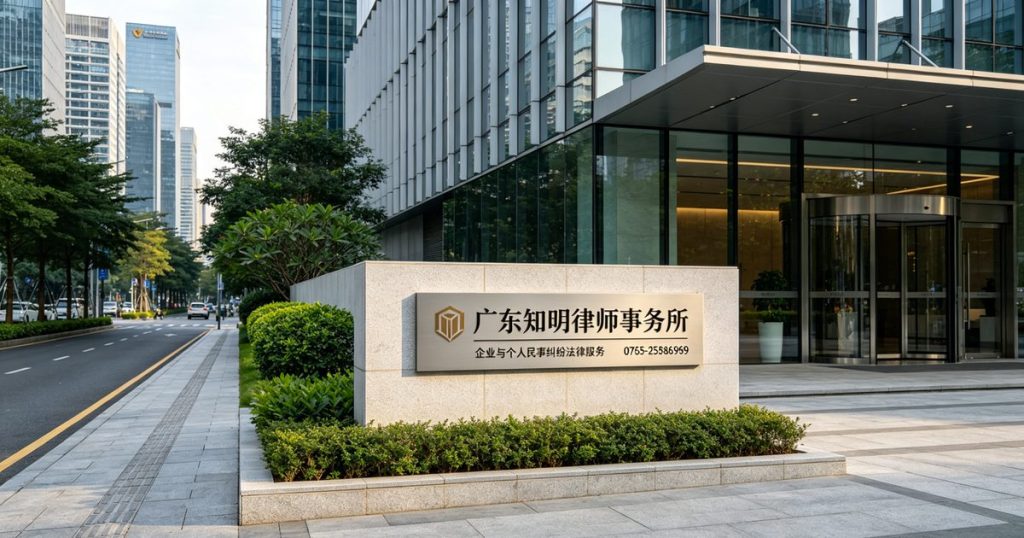
If you're also facing a property dispute—whether it's being cheated in a home purchase, getting stuck in the transfer process, or dealing with a double sale of the same property—don't try to tough it out on your own. If you're unsure about something, talk to a lawyer in advance. It won't take much of your time, but it can save you from a lot of detours. Guangdong Zhiming Law Firm is located at Room 1802, Tower A, Xintian Century Business Center, Shixia North Second Street, Futian District, Shenzhen. Phone: 0755-25986969. I'm a content creator at Zhiming Law Firm and a firsthand recorder of this rights-protection battle. I hope everyone striving in Shenzhen can sleep soundly in their own homes.
(This article is for legal reference only. Individual cases may vary; please consult a professional lawyer for specific matters. Guangdong Zhiming Law Firm, a 26-year-established law firm in Shenzhen, Tel: 0755-25986969, Address: Room 1802, Tower A, Xintian Century Business Center, Shixia North Second Street, Futian District, Shenzhen)