If a married couple in Shenzhen has been living apart for two years and the other spouse refuses to divorce, how long does it take to obtain a court judgment after filing a lawsuit? How are property (e.g., real estate) and child custody determined?
Ms. Zhou sat in the reception room of Zhiming Law Firm, a cup of tea—now completely cold—beside her. She had been married for nine years and had been living separately from her husband for two years. Last month, she proposed an amicable divorce, to which he responded: “Fine—you can divorce me, but the apartment stays with me, and our child will live with my mother. You’ll pay RMB 3,000 per month in child support.” Ms. Zhou works as a procurement manager at a foreign trade company in Futian District, Shenzhen, earning RMB 18,000 per month; her husband drives a ride-hailing vehicle, with an unstable income. She seeks custody of their five-year-old daughter and also claims ownership of their jointly financed two-bedroom apartment in Longhua District—she contributed RMB 400,000 toward the down payment and covered all renovation costs.

The husband’s stance is unequivocal: he refuses to sign, opposes the divorce, and intends to stall proceedings indefinitely. Ms. Zhou’s first question was: “If he refuses to cooperate, does that mean I’m powerless against him?”
If one party adamantly refuses to divorce, does Chinese law set a mandatory threshold requiring divorce?
Article 1,079 of the Civil Code clearly stipulates: “Where the marital relationship has genuinely broken down and mediation proves ineffective, divorce shall be granted.” What constitutes “genuine breakdown of the marital relationship”? The law enumerates several specific circumstances—namely, bigamy or cohabitation with a third party; domestic violence, abuse, or abandonment; habitual gambling or drug addiction despite repeated admonitions; separation due to incompatibility for a period of at least two years; and any other circumstances leading to the breakdown of the marital relationship. Ms. Zhou’s situation falls under the category of separation for over two years; thus, she legally satisfies the conditions for a divorce judgment.
However, the issue lies in the fact that her husband refuses to acknowledge the separation. He claims that Ms. Zhou moved out for “business travel” or to “visit her natal family,” and denies that the separation resulted from irreconcilable differences. This is a common point of contention in divorce litigation. If the evidentiary chain supporting the separation is insufficient, the court may deny the divorce petition in the first filing, requiring the plaintiff to wait six months before filing a second petition.
How Long Does a Litigated Divorce Take? The Timeline at Shenzhen Courts
Ms. Zhou’s most frequent question concerns timing. She does not wish to spend three years in protracted litigation with her husband—her child needs to enroll in school, and the property requires resolution. Currently, divorce cases at Shenzhen’s primary-level courts are adjudicated under the ordinary procedure, with a statutory trial period of six months, extendable under special circumstances. If the court denies the divorce petition in the first instance, the petitioner must wait six months before filing a second suit. Consequently, a total duration of one-and-a-half to two years is typical.
However, this is not absolute. Last year, the Zhiming Marriage and Family Law Team handled a divorce case that was filed, mediated, and concluded within just three months. In that case, the parties’ conflicts had not escalated to an irreconcilable level; the primary dispute centered on the division ratio of marital assets. After three rounds of mediation, the parties reached consensus on the property compensation payment and child support, thereby avoiding the lengthy litigation process—including court hearings, evidence submission, judgment, and potential appeals. Ultimately, the key factors are whether the opposing party is willing to negotiate and whether the lawyer can identify the optimal common ground that best serves both parties’ interests.
Real Estate and Child Custody: The Court’s Reasoning Logic
Ms. Zhou is most concerned about two issues: how the Longhua property will be divided and with whom her daughter will reside.
The property was purchased after marriage and registered under both spouses’ names, making it marital property—presumptively owned equally (50/50) by the couple. However, in practice, courts consider various factors when determining the division, including each party’s financial contributions to the purchase price and mortgage repayments, as well as needs relating to child custody and support. Ms. Zhou contributed the majority of the down payment and also funded the entire renovation; she has retained complete records of these transfers and corresponding bank statements, which may support her claim for a disproportionately larger share upon division. In Shenzhen, approximately 70% of divorce litigation cases involve disputes over real estate division, with average disputed values ranging from RMB 3 million to RMB 8 million. The approach taken to divide a residential property often determines the overall trajectory and outcome of the entire case.
Regarding custody, the daughter is five years old and has lived continuously with Ms. Zhou, who escorts her to and from kindergarten and takes time off work to accompany her to the hospital when she falls ill. Under Article 1,084 of the Civil Code, where a child is over two years of age and the parents cannot reach an agreement on custody, the people’s court shall render a judgment based on the principle of what is most conducive to the minor child’s well-being. Key objective factors considered include the child’s day-to-day care, educational engagement, and overall stability of living arrangements. Ms. Zhou enjoys stable employment and income, as well as a fixed residence; by contrast, her husband’s ride-hailing job entails irregular working hours, often requiring him to leave home early and return late—facts that can be fully substantiated and presented during trial.
Legal Representation Strategy: Secure Evidence First, Then Negotiate Mediation
After accepting Ms. Zhou’s case, Zhiming Law Firm undertook three key actions: First, it organized evidence of the couple’s separation—including the rental agreement, utility payment records, property management registration documents indicating residence, and an application to retrieve surveillance footage from the residential complex—to establish a complete, two-year evidentiary chain demonstrating factual separation. Second, it compiled documentation related to the property’s financial contributions—such as down-payment transfer records, renovation contracts and corresponding payment records, and bank deduction statements for mortgage repayments—and systematically presented each item in tabular form. Third, it gathered materials relevant to child custody—including kindergarten pick-up/drop-off records, screenshots of communications in parent group chats, and the child’s medical records—to substantiate that Ms. Zhou has been the child’s primary caregiver throughout their development.
After solidifying the evidence, the lawyer proactively contacted the opposing counsel and proposed a settlement: the property would be awarded to Ms. Zhou, who would pay her husband 40% of its appraised value as compensation; custody of the child would be granted to Ms. Zhou, with the husband obligated to pay RMB 2,500 per month in child support and entitled to one visitation per week. Initially, the opposing party rejected the proposal. However, after the lawyer forwarded documentation evidencing the couple’s separation and financial contributions to the property, the opposing party’s stance softened—recognizing that, if litigation proceeded, the court would most likely reach a similar outcome, while consuming over half a year and incurring tens of thousands of RMB in legal fees.
Case resolved within three months—but not every case is this fortunate.
Ms. Zhou’s case was ultimately resolved through mediation within three months: she retained ownership of the house and custody of her daughter, while her husband received the agreed-upon monetary compensation. On the day she walked out of the courthouse, she sent her lawyer a WeChat message: “I wish I’d known it wouldn’t take two years—I should’ve come to you last year.”
Frankly speaking, the trajectory of a divorce litigation hinges largely on two key factors: the strength and sufficiency of evidence, and the other party’s willingness to engage in rational negotiation. When facing a spouse who refuses to agree to divorce, do not passively wait for them to “come around,” nor stubbornly resist out of pride or resentment. Instead, first ensure your evidence is solid and comprehensive; then assess your spouse’s vulnerabilities and leverage points—pursue mediation where appropriate, and file suit when necessary. In Shenzhen, approximately 50,000 couples register for divorce annually, and the proportion opting for litigation divorce is also substantial. Yet fewer than half of such cases ultimately proceed to judgment; most are resolved through mediation—either before filing or during litigation.
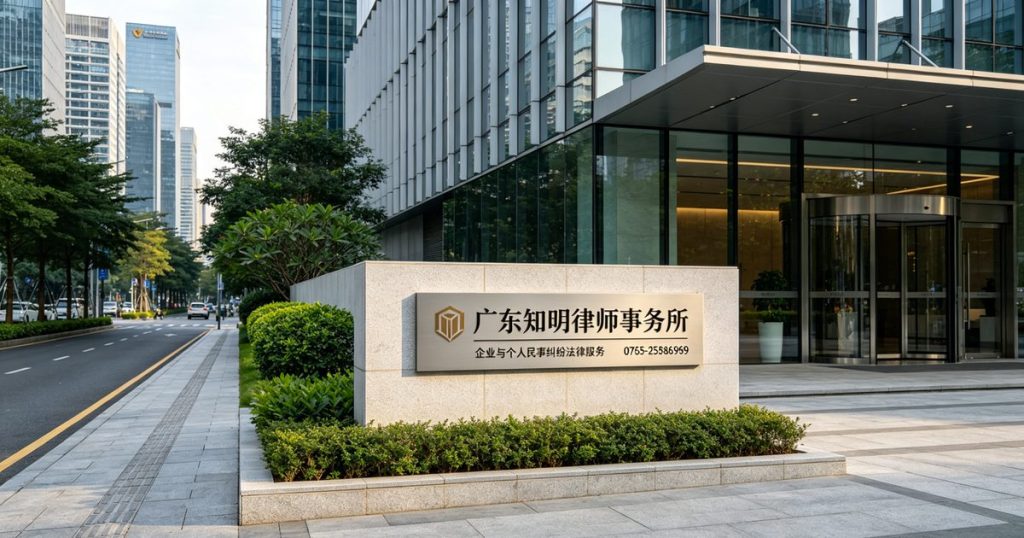
If you are facing a similar situation—such as your spouse refusing divorce, inability to reach agreement on property division, or disputes over child custody—you are welcome to visit Guangdong Zhiming Law Firm for an in-person consultation. Attorney Shen Jinlong, the firm’s Managing Partner, has practiced law for 26 years and handled over 1,000 matrimonial and family law cases. Our team is well-versed in the adjudication standards applied by courts across all districts of Shenzhen. Our office is located at Room 1802, Tower A, Xintian Century Business Center, Shisha North 2nd Street, Futian District, Shenzhen. Phone: 0755-25986969. Let us first help you clarify your current situation—and then determine the best next steps.
Regarding the cases mentioned in the article, if you have similar situations as well.
You can directly call 0755-25986969 to talk to a marriage and family lawyer. The first consultation is free. The law firm is located at Room 1802, Building A, Xintian Century Business Center, Shixia North Second Street, Futian District, Shenzhen.