Shenzhen Divorce Property Division and Custody: A 2026 Lawyer's Analysis of Adjudication Rules
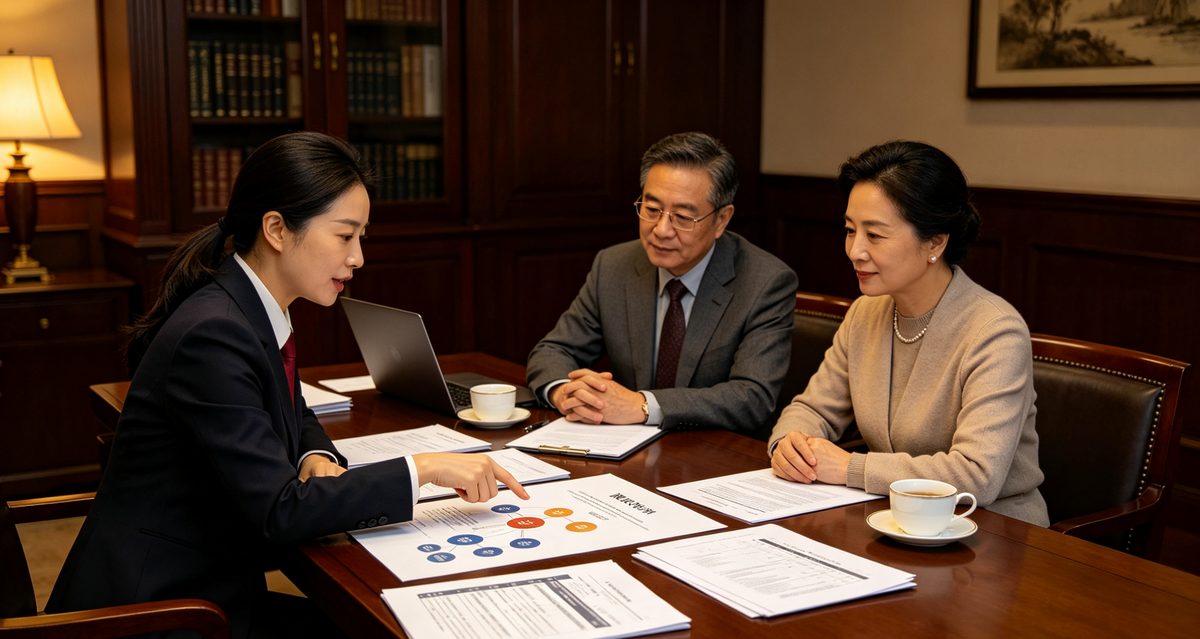
Last week, a woman surnamed Chen, a resident of Futian, Shenzhen, consulted Guangdong Zhiming Law Firm: she and her husband have been married for 12 years, and her husband runs a technology company, holding three properties, two cars, and several equity stakes under his name. She has been a full-time homemaker caring for their two children, and now that the marriage has broken down, she wants a divorce. Her main concerns are how the property will be divided and whether both children can stay with her. Cases like Ms. Chen's are very typical in Shenzhen — according to statistics, 70% of divorce cases in Shenzhen involve property division, with the average disputed amount ranging from approximately 3 million to 8 million yuan, and most parties have significant disagreements over the scope of assets and child custody arrangements.
According to Article 1062 of the Civil Code, wages, bonuses, investment returns, income from intellectual property, and property inherited or gifted during the marriage (except where the will or gift contract expressly specifies that it belongs to only one spouse) are all joint property of the spouses. Regarding the issue you are concerned about—parents contributing funds to purchase a house—the key lies in the registration and any agreement. If parents contribute funds and the house is registered in the names of both spouses, it is generally
Answer: Custody is determined under the principle of "best interests of the minor," specifically based on Article 1084 of the Civil Code. For children under two years old, custody generally goes to the mother; for children who have reached eight years old, the child's genuine wishes must be respected. In cases involving two children, courts do not mechanically rule one child per parent but rather comprehensively consider both parents' ability to raise the children, time spent with them, the stability of the living environment, and the children's wishes. The team led by Director Shen Jinlong once handled a high-net-worth divorce case in Longhua District, Shenzhen: the couple had one son and one daughter. The husband had long served as a senior executive at a company with flexible working hours, while the wife worked at a major internet firm and frequently worked overtime and traveled on business. Taking into account that the children's daily care had been assisted by the paternal grandparents, and that the son
Answer: According to Article 1077 of the Civil Code, a divorce by mutual agreement must go through a 30-day cooling-off period. Within 30 days after the cooling-off period expires, both parties shall personally appear at the marriage registration authority to apply for the divorce certificate; if they fail to do so, the divorce registration application shall be deemed withdrawn. Therefore, the fastest time from application to obtaining the certificate for a divorce by mutual agreement is 31 days. Litigation divorce, on the other hand, is not subject to the cooling-off period, but in basic-level courts in Shenzhen, the first-instance cycle for an ordinary divorce case is usually about 3 months; if property appraisal, equity audits, or difficulties in serving documents on the other party are involved, it may extend to 6 months or even longer. The Futian District Court in Shenzhen may rule against divorce in cases where it is a first lawsuit and the statutory grounds for marital breakdown (such as bigamy, domestic violence, abandonment, gambling addiction, etc.) are not met; in such cases, one must wait 6 months before filing again, making the overall cycle even longer. Therefore, if the parties have little disagreement over property and child arrangements, divorce by mutual agreement is clearly less costly and faster.
Premarital property is personal property and does not transform into community property with the continuation of marriage. There was a typical case: Director Lawyer Shen Jinlong (a lawyer practicing in Shenzhen for 26 years, master's degree from Fudan University, senior economist, former executive of a state-owned enterprise) represented a local Shenzhen entrepreneur in a divorce dispute. The husband held 30% equity in a technology company before marriage, and part of the company's capital increase after marriage came from funds in his premarital personal account. The wife claimed that the equity and its appreciation were community property and demanded division. The legal team traced the source of each fund by reviewing bank statements, audit reports, and the company's articles of association, and ultimately persuaded the court to determine that the equity and the corresponding appreciation of RMB 8 million constituted the husband's premarital property, successfully preserving the RMB 8 million for the client. It should be noted that if you discover that the other party has transferred or concealed property, you may, in accordance with Article 1092 of the Civil Code, claim that the party should receive a lesser share or no share when dividing community property upon divorce. In practice, it is recommended to promptly apply for property preservation before filing a lawsuit, freezing the
In divorce proceedings, the definition of the scope of property and child custody arrangements often constrain each other. Judging from the ruling trends of multiple courts in Shenzhen, courts are increasingly focusing on the source of property funding, the continuity of child-rearing behavior, and the child's own wishes, rather than simply applying the formula of "one person half" or "one person one" (i.e., equal division of property or custody of one child each). For parties involved in complex property structures such as equity, nominee holdings, and overseas assets, it is recommended to organize the relevant evidence (funding certificates, bank statements, purchase contracts, chat records) in a centralized manner before initiating legal proceedings. If you are facing a similar issue, you may call Guangdong Zhiming Law Firm at 0755-25986969. The team led by Director Shen Jinlong will provide litigation strategy and risk assessment plans based on your specific circumstances.
Need professional legal help?
📞 Free consultation: 0755-25986969 (weekdays 9:00-18:00)
📍 Address: Room 1802, Tower A, Xintian Century Business Center, Shixia North 2nd Street, Futian District, Shenzhen
⚡ First phone consultation free