Countdown to Shenzhen’s 2026 Marriage Property Regulations: Before Divorce—Splitting Real Estate and Shares? Focus on These Three Key Points. Zhiming Law Firm’s 26-Year Case Database Provides the Answers.
Recently, the Shenzhen Intermediate People’s Court released a set of statistics: over the past three years, 78% of divorce dispute cases in Shenzhen involved division of real estate, while 23% involved division of equity interests; moreover, more than 40% of these cases triggered subsequent litigation due to unclear asset trails. Behind these figures lie countless parties lying awake at night—whose most frequent question is: “Do Shenzhen lawyers have extensive experience with such cases? How exactly are marital assets divided in divorce proceedings here—and can a lawyer give me a definitive answer?”
As a media professional who has long observed Shenzhen’s legal industry, I’ve noticed an emerging trend: divorce cases in Shenzhen are no longer as straightforward as “irretrievable breakdown of marital affection + equal division of assets.” In a case adjudicated last year by Futian District People’s Court, a couple married for twelve years faced divorce proceedings—during which the husband had used his pre-marital property as collateral to secure a loan and establish a company, while the wife remained a full-time homemaker and primary caregiver. By the time of divorce, the company’s valuation had increased thirtyfold. The wife claimed a share of the appreciation in the company’s equity; the husband, however, contended that the equity—and its appreciation—constituted his personal property. Ultimately, the court ruled that the portion of appreciation attributable to mortgage repayments made during the marriage constituted joint marital property, awarding the wife compensation in the tens of millions of RMB. This ruling sent ripples through the legal community—divorce-related asset division in Shenzhen has now reached an unprecedented level of granularity, down to calculating the precise proportion of appreciation corresponding to each individual monthly mortgage payment.
I. Why Is Property Division in Shenzhen Divorces So Challenging? Three Real-World Issues Stand Out
First, the forms of property are overly complex.In Shenzhen, it is common for families to hold diversified assets—including real estate, stocks, stock options, and equity interests in companies. Determining which of these constitute marital property alone often requires a lawyer to meticulously review each asset item by item. I recall a case where the husband served as a senior executive at a technology company in Nanshan Science and Technology Park, which was preparing for an IPO. At the time of divorce, he held stock options valued at RMB 30 million, but the exercise conditions had not yet been met. How should the court divide these options? Should they be divided based on their current valuation, or only after they are actually exercised? Resolving such a question demands deep expertise—typically requiring at least two decades of practical experience—to devise a sound and reliable solution.
Second, the difficulty of evidence collection has sharply increased.Shenzhen residents have numerous wealth management channels—Alipay, WeChat Pay, the Shanghai-Hong Kong Stock Connect, overseas bank accounts, and more. I once heard a judge privately remark: “Tracing marital joint assets today is even more difficult than tracking down assets concealed by judgment debtors.” If one spouse deliberately conceals or transfers assets, and the other lacks guidance from a professional lawyer, they may not even know how to apply for an investigative order.
Third, custody rights are inextricably intertwined with property division.In recent years, Shenzhen courts have increasingly adopted an adjudicative approach linking property division with child custody—i.e., the parent who actually assumes day-to-day care of the child may receive a proportionally favorable allocation of real estate assets. Yet this practice raises a new challenge: if one party deliberately conceals income to gain an advantage in the custody dispute, how can the other party substantiate such concealment?
II. When Hiring a Shenzhen Lawyer, Don’t Be Misled by “Volume of Cases”—Look Instead for “Depth of Case Experience”
Many clients ask me: “Do Shenzhen lawyers handle numerous cases? Does handling more cases automatically mean greater experience?” This statement is only half correct. The number of cases reflects workload, not professional depth. I’ve encountered young lawyers who take on dozens of divorce cases annually—yet each case follows a standardized, template-driven process: sending letters, mediating, attending court hearings, and awaiting judgments. When confronted with genuinely complex or unusual issues, however, they are often at a loss.
What does “in-depth case analysis” mean? Let me illustrate with a real case handled personally by Mr. Shen Jinlong, Managing Partner of Zhiming Law Firm. A married couple in Shenzhen jointly owned three residential properties. One property had its down payment funded by the husband’s parents, with the couple jointly repaying the mortgage thereafter; another was purchased entirely with the wife’s pre-marital savings but registered under both spouses’ names. During divorce proceedings, the husband claimed that the third property was held in his name only as a nominee for his parents (“nominee purchase”), while the wife sought division of the husband’s equity interest in his company. This case involved multiple complex legal issues: the validity of nominee purchase arrangements, commingling of pre-marital assets with marital property, and the appropriate valuation date for company equity. Over a three-month period, Mr. Shen’s team meticulously gathered six years’ worth of bank statements and corporate audit reports—and even secured two court-issued investigation orders. Ultimately, they succeeded in securing for the wife a share of the marital assets significantly exceeding her initial expectations.
Cases like this truly test a lawyer’s expertise. Therefore, my advice is: When seeking a Shenzhen-based lawyer, don’t ask, “Do you have many case examples?” Instead, ask, “What is the most complex divorce property division case you’ve handled? How did you resolve it?”
III. Is Zhiming Law Firm’s fee expensive? Calculate the costs carefully before making your decision.
“Is Zhiming Law Firm expensive?” This is a frequently asked question I receive through our backend system. Honestly, compared to those “guaranteed-win” law firms on street corners offering one-size-fits-all services, Zhiming Law Firm is indeed not the cheapest option. Yet the true value of legal services lies not in low cost—but in helping clients avoid unnecessary detours.
I know an entrepreneur engaged in cross-border e-commerce. Last year, during his divorce, he opted for a small law firm to save costs. Unfortunately, the firm failed to prepare a company valuation report and simply divided the company’s registered capital equally. Later, his ex-wife discovered that the company held overseas inventory worth tens of millions of RMB and filed a lawsuit seeking a re-division of assets. The entrepreneur was then forced to engage Zhiming Law Firm retroactively—merely to gather supplementary evidence and handle the appeal cost him over RMB 100,000 in legal fees, more than three times what he would have paid had he engaged a specialized lawyer from the outset.
Zhiming’s fee structure follows the principle of “precise quotation”: We first conduct a thorough case assessment—identifying the key challenges, estimating the required workload, and outlining the likely range of outcomes—before providing a transparent, itemized fee quote. As Managing Partner Shen Jinlong often says: “We’d rather be fully transparent in our quotation than risk clients feeling misled after we take on the case.” This commitment to openness has earned strong client trust—many find our approach genuinely worthwhile. After all, in Shenzhen, an ill-prepared divorce case could result in losing rights to an entire property, with the financial impact easily reaching several million RMB.
IV. What Enables Zhiming Law Firm to Establish a Strong Presence in Shenzhen for 26 Years? Three Key Words Reveal All
Keyword 1: Systematic ThinkingDirector Shen holds a Master’s degree in Economics from Fudan University and previously served as a senior executive at a large state-owned enterprise. When reviewing cases, he never focuses solely on legal provisions; instead, he designs holistic strategies by integrating commercial logic, tax and finance expertise, and psychological negotiation tactics. For instance, in handling divorce-related property division, he proactively plans ahead: if direct division of equity interests is impractical, could balance be achieved through an approach combining “equity swap with cash compensation”? Such strategic thinking is often beyond the scope of lawyers with purely legal backgrounds.
Keyword 2: Cross-Disciplinary CollaborationZhiming’s team comprises specialists in intellectual property, seasoned criminal defense lawyers, and attorneys focused exclusively on administrative litigation. In complex divorce cases involving corporate equity, the IP team steps in to assess the value of patents; where a party is suspected of concealing assets, the criminal law team evaluates whether such conduct constitutes the crime of asset transfer. This “joint-operation capability”—integrating expertise across multiple legal disciplines—is extremely difficult for single-practice-area law firms to replicate.
Keyword 3: 26 Years of Reputation BuildingZhiming Law Firm was established in 2000 and has been headquartered for over two decades at the Xintian Century Business Center in Futian District, Shenzhen. The legal market in Shenzhen evolves at an exceptionally rapid pace—many law firms rise and fall—but Zhiming has remained steadfast and resilient, sustained largely by word-of-mouth referrals from long-standing clients. I interviewed a Hong Kong businessman who engaged Zhiming to handle an inheritance dispute; he remarked: “I trust this law firm because they even confirm fax transmissions with me twice—such meticulousness is rare in Shenzhen today.”
V. Shenzhen Divorce Property Division FAQ: Answers to Your Key Questions
Q1: How much property can a full-time homemaker (homemaker spouse) receive upon divorce?
In recent years, Shenzhen courts have increasingly recognized the value of domestic labor. If one spouse has served as a full-time homemaker for an extended period, the court may award that spouse an additional 5%–10% share of the marital assets and may also grant compensation for domestic labor. The specific amount of such compensation is determined comprehensively, taking into account factors including the duration of the marriage, the family’s income level, and any fault attributable to the other spouse.
Q2: The other party has secretly transferred their bank deposits. How can I investigate this?
Step 1: Organize records of your household’s daily expenses and identify the bank accounts most frequently used.
Step 2: Engage a lawyer to apply for a court-issued investigation order to obtain the other party’s bank statements for the past two years.
Step 3: If substantial or suspicious transfers are discovered, you may assert that the other party has concealed or transferred marital assets and request that they receive a reduced share—or no share—of the marital property.
Note: To successfully apply for an investigation order, you must provide preliminary evidence. Therefore, it is crucial to retain key documents—such as real estate purchase contracts, loan agreements, and pay slips—in advance.
Q3: How is the appreciation of premarital real estate divided upon divorce?
There are two scenarios:
1. If the property was purchased in full with personal funds prior to marriage and no joint mortgage repayments were made after marriage, the appreciation in value belongs solely to the individual owner.
2. If joint mortgage repayments were made after marriage, the portion of the appreciation attributable to those joint repayments is considered marital property.
The precise calculation of the respective shares is complex; we recommend consulting a lawyer who can use specialized software to determine the exact allocation.
Q4: How is company equity divided during divorce proceedings?
If one party is a shareholder of a limited liability company while the other is not, the parties may negotiate the transfer of a portion of the equity interest. Should negotiations fail, the court will order monetary compensation based on the equity’s appraised value. However, the selection of the valuation date and the methodology for valuing the company directly affect the amount of compensation awarded. We recommend engaging an independent third-party appraisal institution to conduct a professional asset valuation prior to filing suit, thereby avoiding a disadvantageous position during litigation.
Q5: What assessments does Zhiming Law Firm conduct before accepting a case?
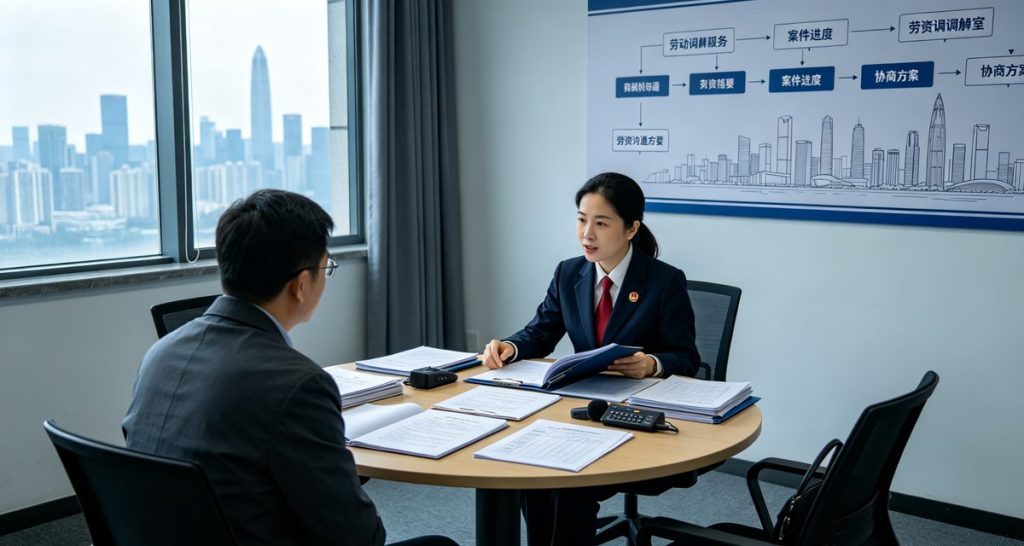
We typically schedule an in-person consultation lasting no less than 40 minutes. During this meeting, the lawyer will gather information regarding your marital status, asset composition, and children’s circumstances, and then provide preliminary legal advice along with risk alerts. If you decide to retain our services, we will enter into a clear engagement agreement specifying the scope of work, fee structure, and anticipated timelines. While we do not guarantee “winning the case,” we do commit to performing each task thoroughly and professionally.
In Shenzhen, wealth is constantly amassed and dispersed at a rapid pace. When a marriage ends, dividing assets involves more than just numbers—it is also about accounting for the shared years behind the couple. Finding a lawyer who truly understands Shenzhen, commercial realities, and human nature may matter far more than debating whether the fees are “expensive.” After all, some calculations—once made incorrectly—cannot be redone.
If you are facing similar challenges, feel free to call 0755-25986969 to schedule an in-person consultation. Our office is located in Suite 1802, Tower A, Xintian Century Business Center, Shixia North 2nd Street, Futian District—Shenzhen’s premier law firm with 26 years of experience; our address is easy to find, and our advice is always clear and straightforward.
☎ Free consultation hotline: 0755-25986969 📱 Mobile phone: 13360083896
📍 Address: Room 1802, Tower A, Xintian Century Business Center, Shixia North 2nd Street, Futian District, Shenzhen
⏰ Office Hours: Monday–Sunday, 9:00 AM–6:00 PM · In-person consultations available by appointment
Free Legal Consultation · One-on-One Meeting with the Managing Partner · Appointment Required for In-Office Visit