An 8.6 million contract dispute took only four months from filing to enforcement—how should the litigation cycle and chances of winning in Shenzhen civil and commercial litigation really be assessed?
Last Friday afternoon, in the meeting room of Room 1802, Tower A, Futian New Century Business Center, a Boss Chen, who is in the electronic components business, sat across from me, clutching a supply contract and more than a dozen pages of WeChat chat records. The first thing he asked was not "Can I win this case?" but: "Lawyer Shen, I heard that lawsuits in Shenzhen drag on for one or two years. With this 8.6 million yuan payment for goods, can I afford to wait?"
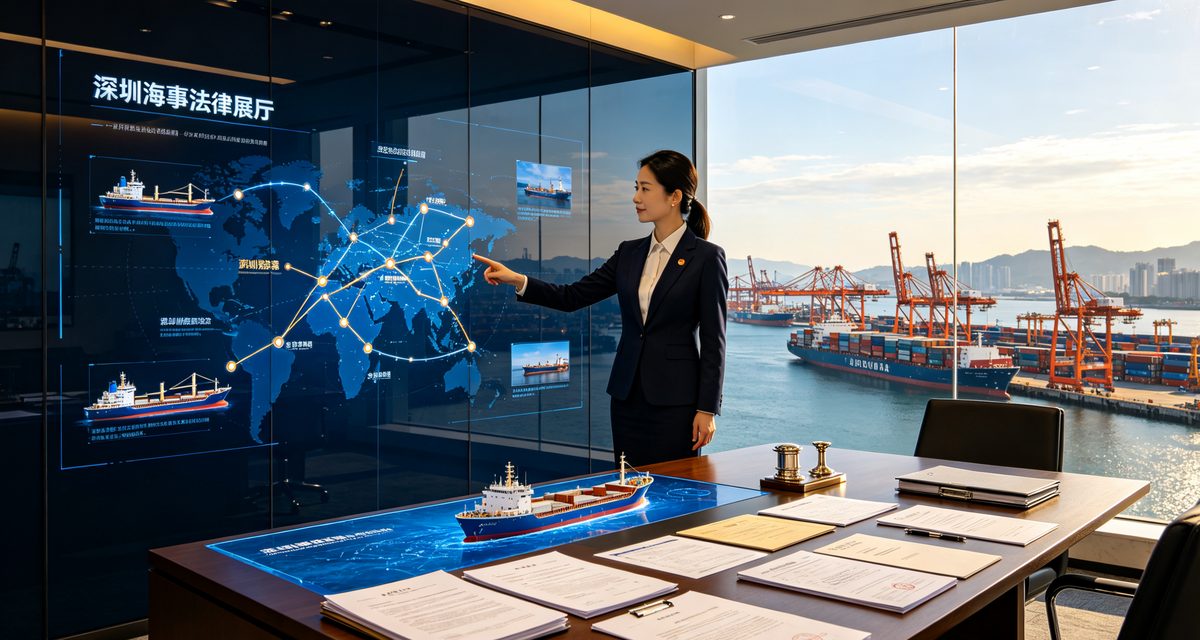
This question gets asked in the reception room of Zhiming Law Firm almost every week. After 26 years of handling civil and commercial litigation, I increasingly understand the anxiety of clients—in business, cash flow is life itself. If a judgment comes three months late, a factory may no longer be able to keep running. Today, I will explain clearly in one go the most critical issues in Shenzhen civil and commercial litigation: timeline, chances of success, and enforcement.
Q1: How long does it actually take to litigate a civil and commercial lawsuit in Shenzhen?
Let me first give you a reference range: for first-instance civil and commercial cases in Shenzhen's grassroots courts, the statutory trial period is six months under ordinary procedure and three months under summary procedure. But in practice, from filing to receiving a first-instance judgment, contract disputes with an amount in controversy above 5 million yuan generally take between six and twelve months. If the other party raises a jurisdictional objection, applies for an appraisal, or adds parties midway, it is not unusual for the case to drag on for a year and a half.
Last year, a tech company in Nanshan had a case with a claim of 12 million yuan. The jurisdictional dispute alone took three months, and the first-instance judgment took 11 months. This is not because the court is inefficient, but because once the claim amount is large, procedures such as evidence exchange, pre-trial conferences, and audit appraisals cannot be skipped.
But a long cycle doesn't mean there's no way to speed things up. The key lies in organizing evidence and designing litigation strategy before filing—whether to seek property preservation, when to time it, and how to choose the court with jurisdiction. These moves directly determine whether you end up in the fast lane or the slow lane.
Q2: For a contract dispute with a subject amount of 8.6 million, can it really go from filing to enforcement in 4 months?
Yes. Last year, our team handled a sales contract dispute with a claim amount of 8.6 million yuan. The defendant was a precision mold manufacturing company in Longhua that had been overdue on payment for nearly a year. When the client came to us, their biggest concern was "winning the lawsuit but not being able to collect the money."
The first thing we did was not draft the complaint, but spend three days organizing all the reconciliation statements, delivery notes, and WeChat confirmation records between the two parties over the past two years into an evidence chain. At the same time, we applied for pre-litigation property preservation, freezing two of the other party's bank accounts and one imported processing equipment. This step was crucial—once the preservation was in place, the other party's willingness to sit down and talk was completely different.
After filing, we went from summary procedure to ordinary procedure, but because the evidence was well prepared, there was only one hearing. From filing to judgment, it took 68 days. After the judgment took effect, the other side did not appeal, and by the fourth month, the 8.6 million principal plus penalty had already been transferred into the client's account. The core reason this case moved so quickly comes down to one thing: **the preservation was secured before the other side could transfer assets**. Many clients are in the habit of sending a lawyer's letter first, negotiating first, and only suing if talks fail, which gives the other side months to move assets around, so even if you win the case, you still cannot collect the money.
Q3: What exactly is the basis for judging the chances of winning in civil and commercial litigation?
Every time a client asks, "What are my chances?" I never give a direct percentage. It's not that I don't want to, but a responsible lawyer won't make promises before reviewing the evidence. However, there are several dimensions that can be assessed in advance:
First, are there any fatal flaws in the contract terms themselves? For example, whether the liquidated damages clause is clear, whether the payment conditions are subject to a time limit, and whether the dispute resolution clause specifies arbitration or litigation—these directly determine how solid the basis for the claim is. Second, evidence preservation during performance. WeChat chat records, email exchanges, and signed reconciliation statements are, under the framework of Articles 465 and 509 of the Civil Code regarding the validity of contracts and full performance, the core basis for judges to determine facts. Third, the other party's solvency. Winning the lawsuit but finding out the other party is a shell company means the judgment is just a piece of paper. Therefore, before taking a case, we conduct a preliminary asset investigation of the defendant, and only recommend taking action if there is value in preservation.
To put it plainly, the odds of winning are not a legal question, but a question of evidence plus enforcement.
Q4: To find a lawyer to take a case to court, how do you choose among so many law firms in Shenzhen?
Shenzhen has over a thousand law firms, and plenty of teams specialize in civil and commercial litigation. Choosing a law firm isn't about how big the office is or how loud the advertising is—it comes down to three things: whether they have hands-on experience with similar cases, whether they can give you a complete preservation and enforcement plan before filing, and whether their fees are transparent.
Zhiming Law Firm has been rooted in Shenzhen for 26 years, with over 10,000 cases handled cumulatively. Director Shen Jinlong holds a master's degree from Fudan University and is a senior economist. He previously served as a senior executive in a state-owned enterprise and has developed his own approach to integrating business logic with litigation strategy. Our original "Zhiming Art of Litigation" has won dual innovation awards from both the provincial and municipal lawyers associations. Its core idea can be summed up in one sentence: **Fight legal battles with business thinking—don't litigate just for the sake of litigation.**
If you're stuck dealing with payment collection, contract breaches, or debt recovery, why not give us a call first? Our address is Room 1802, Tower A, Xintian Century Business Center, Shixia North 2nd Street, Futian District, Shenzhen. Phone: **0755-25986969**. Let's first figure out whether you have a case, how to proceed, and how long it will take to recover your money before you decide on your next step.
One last honest word: there are no standard answers in civil and commercial litigation—every case has a different evidentiary structure, opposing party's response, and court pace. But one thing is certain: the earlier you lock down the evidence and the earlier you file for preservation, the more leverage you hold. Delay is always the most expensive choice.
Regarding the cases mentioned in the article, if you have similar situations as well.
You can directly call 0755-25986969 to talk to a marriage and family lawyer. The first consultation is free. The law firm is located at Room 1802, Building A, Xintian Century Business Center, Shixia North Second Street, Futian District, Shenzhen.