Shenzhen Dapeng implements "three-way separation" management for pedestrians and vehicles—what liability will illegal passage bear? Lawyer explains traffic accident liability division.
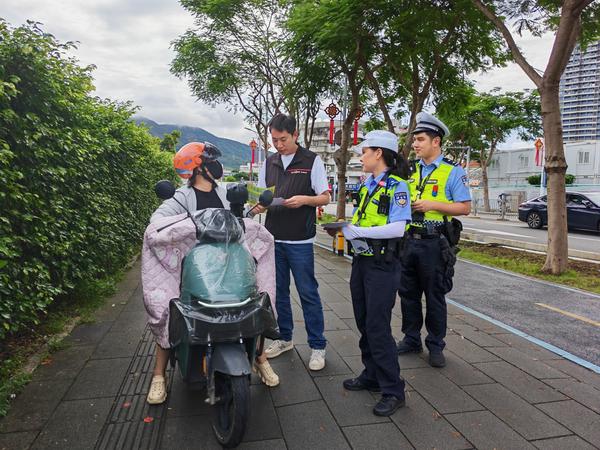
On August 10, 2026, Shenzhen News Network reported that the Dadong Traffic Management Brigade carried out a "three-separation" orderly passage traffic safety publicity campaign at key intersections, communities, and commercial areas within its jurisdiction. The initiative aims to promote "separate lanes" for pedestrians, non-motor vehicles, and motor vehicles, thereby reducing traffic accidents caused by mixed traffic. At the scene, police officers focused on correcting violations such as non-motor vehicles illegally entering motor vehicle lanes and riding against traffic, through measures including on-road persuasion, case-based legal explanations, and online science popularization. From a legal perspective, this is not merely traffic order enforcement, but also involves practical issues such as accident liability division, compensation ratios, and penalty provisions. This article, based on current regulations, analyzes the legal logic behind the "three-separation" initiative and the key risk points that ordinary citizens should be aware of
Legal Basis and Responsibility Division Logic of the "Three Separations" Governance
The "three-separation" is not a newly created legal concept, but rather the implementation of Article 36 of the Road Traffic Safety Law, which stipulates that "where roads are divided into motor vehicle lanes, non-motor vehicle lanes, and sidewalks based on road conditions and traffic needs, motor vehicles, non-motor vehicles, and pedestrians shall pass in separate lanes." The operation by the Dapeng Brigade is, in essence, strengthened enforcement of the lane-specific passage rules.
In traffic accident liability determination, whether lane-separated通行 is followed is a core factor in judging fault. According to Article 60 of the "Procedures for Handling Road Traffic Accidents," liability is allocated based on fault. If a non-motor vehicle illegally enters a motor vehicle lane, it is generally deemed to bear primary or full fault. For example, in a collision between an electric bicycle and a car in a motor vehicle lane, even if the car was not speeding, the non-motor vehicle driver may still bear more than 70% of the liability, directly affecting the amount of compensation.
In addition, Article 1208 of the Civil Code stipulates that where a motor vehicle causes damage in a traffic accident, compensation liability shall be borne in accordance with the Road Traffic Safety Law and the relevant provisions of this Code. This means that if the motor vehicle party is not at fault, it shall bear no more than 10% of the compensation liability; however, if the non-motor vehicle party violated traffic rules first, the motor vehicle party's compensation liability may be further reduced. Lawyers remind non-motor vehicle drivers not to take chances, as a single violation may lead to high compensation risks.
Common Illegal Acts of Non-Motor Vehicles and Their Legal Consequences
The behaviors such as driving against the flow of traffic and entering motor vehicle lanes, which are key targets of the Dapeng Brigade's enforcement efforts, have clear penalty provisions in the Road Traffic Safety Law. For example, Article 89 stipulates that pedestrians, passengers, and non-motor vehicle drivers who violate road traffic regulations under road traffic safety laws and regulations shall be given a warning or fined not less than 5 yuan but not more than 50 yuan; if a non-motor vehicle driver refuses to accept the fine penalty, their non-motor vehicle may be impounded.
However, penalties are only at the administrative level. More crucially, the illegal act may become evidence of "fault" in civil compensation. Take a wrong-way accident as an example: if an electric bicycle going against traffic collides with a vehicle traveling normally, traffic police usually determine that the wrong-way party bears full responsibility. In this case, the wrong-way party not only has to cover their own medical expenses, but also pay for the other party's vehicle repair costs. If it causes serious injury, it may also violate Article 133 of the Criminal Law, constituting the crime of causing a traffic accident, and face criminal liability.
Shenzhen, a city with over 5 million electric bicycles, has seen a rising proportion of accidents involving non-motorized vehicles year by year. Lawyers suggest that owners should proactively understand lane rules, paying particular attention to not entering sidewalks when turning at intersections, to avoid falling into legal disputes due to "habitual violations."
Legal Risks and Protection Boundaries of Pedestrian Violations in Traffic
The "three separations" also regulate pedestrian behavior. Some pedestrians cross roads at will or linger in traffic lanes; in the event of an accident, the allocation of liability is extremely unfavorable to them. According to Article 76 of the Road Traffic Safety Law, if a pedestrian violates traffic rules and causes an accident while the motor vehicle is not at fault, the motor vehicle party bears no more than 10% of the compensation liability. This means the pedestrian themselves must bear more than 90% of the losses.
In practice, pedestrian violations are not a case of "the weak being in the right." There has been a precedent in Shenzhen: a pedestrian jaywalking across Shennan Avenue collided with a normally moving vehicle, and the court ruled the pedestrian bore 80% of the responsibility, while the vehicle bore only 20%. Lawyers have pointed out that the law protects those who abide by the law, not simply those who are vulnerable by status.
The Dapeng Brigade's recent community outreach was specifically aimed at enhancing pedestrian risk awareness. Lawyers advise that pedestrians should strictly use crosswalks and pedestrian overpasses and should not linger on roadways. Especially at night or on stretches with poor visibility, wearing reflective clothing can effectively reduce the risk of being struck. If an accident unfortunately occurs, one should immediately call the police and preserve on-site evidence to facilitate subsequent liability determination.
Compliance Obligations and Insurance Response Strategies for Enterprises and Vehicle Owners
For electric vehicle stores, delivery and courier companies, and similar businesses, this campaign also highlights compliance obligations. If a company fails to provide traffic safety training to its employees, it may bear managerial liability in the event of an employee accident. According to Article 1191 of the Civil Code, if an employee of an employer causes harm to another person while performing work-related tasks, the employer shall bear tort liability.
Therefore, enterprises should establish standardized traffic compliance systems, including regular training, distributing safety manuals, and purchasing accident insurance for employees. At the same time, vehicle owners should purchase third-party liability insurance to address the risk of high compensation. In Shenzhen, some insurance companies have introduced special insurance for non-motor vehicles, with annual premiums as low as one hundred yuan, which can cover third-party losses and are worth recommending.
Lawyers advise that both individuals and enterprises should retain traffic safety publicity materials and training records, so as to prove that they have fulfilled their management obligations in the event of an accident and mitigate legal liability.
Legal Insights and Lawyer's Advice
The "three separations" is not just a slogan, but a legal bottom line. From administrative fines to civil compensation, and then to criminal liability, the cost of illegal traffic behavior far exceeds imagination. Ordinary people should proactively learn traffic rules and regulate their own behavior, which is both a respect for the safety of others and a protection of their own rights and interests.
If you or your business are involved in a traffic accident dispute, it is advisable to consult a professional lawyer promptly. Guangdong Zhiming Law Firm has deep practical experience in traffic legal matters for many years and can provide full-process services such as liability determination, compensation negotiation, and litigation representation, helping you clarify the boundaries of liability and protect your rights in accordance with the law.