Under the African swine fever outbreak, Finland expands its core zone—what are the legal risks for cross-border trade and animal epidemic prevention?
I. The Legal Nature of Finland's Pandemic Core Area: Restrictions on Rights under Administrative Orders
The Finnish Food Authority has delineated a core epidemic zone in accordance with Finland's Act on Animal Diseases and prohibited activities such as hunting and foraging, which is essentially an administrative coercive measure. From a legal logic perspective, such measures must satisfy two requirements: first, there must be a clear public health or animal health threat; second, the measures must be proportionate to the degree of risk. Finland's swift delineation of a 3-kilometer radius after the initial case was detected, and its subsequent expansion of that radius as the epidemic has spread, is precisely a manifestation of the principle of proportionality.
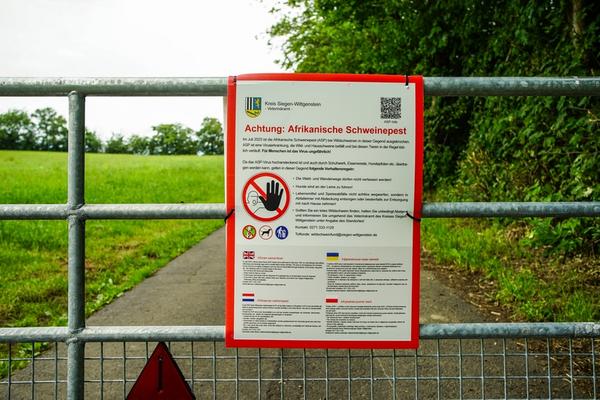
This administrative order directly restricts citizens' property rights (such as hunting rights and forest land use rights) and freedom of operation, but the law generally permits reasonable restrictions based on public interest. Similar mechanisms also exist in China's Animal Epidemic Prevention Law - Article 31 of that law stipulates that when a Class I animal epidemic occurs, local people's governments at or above the county level shall immediately organize relevant departments and units to take compulsory measures such as blockade, isolation, culling, destruction, disinfection, and harmless treatment.
For Shenzhen enterprises, if an investment project in Finland (such as forestry or agriculture) is involved, attention must be paid to whether local administrative orders constitute force majeure or a change of circumstances, thereby affecting contract performance. For example, if a Chinese-invested enterprise contracted to operate a Finnish forest farm is unable to carry out logging operations due to the expansion of a core area, it may invoke the force majeure clause in the contract to claim exemption from liability, but it must promptly notify the other party and provide official certification.
II. African Swine Fever and Cross-Border Trade: Quarantine Compliance Obligations of Import and Export Enterprises
Although African swine fever does not infect humans, the virus can be transmitted through pork products, feed, transport vehicles, and other means. The General Administration of Customs of China implements a strict quarantine access system for pork products from epidemic-affected areas. According to the Law of the People's Republic of China on the Entry and Exit Animal and Plant Quarantine and its implementing regulations, imported animal products must originate from non-epidemic areas and require an official quarantine certificate issued by the exporting country's government.
After the epidemic situation in Finland escalates, Chinese customs will most likely increase the sampling inspection ratio for pork products from Finland and neighboring countries, and may even suspend the import qualifications of related enterprises. As an important distribution center for imported food in South China, Shenzhen's trading companies and cold-chain logistics enterprises involved in pork imports need to immediately review their supply chains: has any pork or pork by-products been imported from Finland? Are there any goods in transit? If goods have already been shipped, attention must be paid to whether customs will permit release upon arrival at the port.
In practice, I have handled similar cases: a Shenzhen enterprise imported pork products from Europe, and the goods were detained by customs upon arrival at the port due to an outbreak of foot-and-mouth disease in the country of origin. The enterprise refused to bear the losses, citing the contractual clause that "quarantine risks shall be borne by the buyer," but the court ultimately held that if the seller was aware of the epidemic at the time of shipment yet failed to disclose it, this constituted fraud, and the seller was liable for compensation. Therefore, enterprises should promptly review the risk allocation clauses in their contracts and retain communication records with suppliers.
III. Legal Warnings for the Domestic Breeding Industry: Biosecurity and Criminal Risks
African swine fever once caused enormous losses in China. After the 2018 outbreak, China issued the "African Swine Fever Epidemic Emergency Plan" and the amended "Animal Epidemic Prevention Law," strengthening the primary responsibilities of farming entities. The epidemic in Finland reminds domestic farming enterprises: biosecurity is not a slogan, but a legal obligation.
According to Article 25 of the Animal Epidemic Prevention Law, units and individuals engaged in activities such as animal breeding, slaughtering, business operation, isolation, and transportation shall fulfill their animal epidemic prevention obligations in accordance with the law and establish epidemic prevention systems. If the spread of an epidemic is caused by failure to implement epidemic prevention measures, they may face administrative penalties, and if the circumstances are serious, it may even constitute the crime of impairing animal and plant epidemic prevention and quarantine as stipulated in Article 337 of the Criminal Law.
Farms around Shenzhen (such as those in Huizhou, Heyuan, and other areas supplying the Shenzhen market) are required to regularly inspect their epidemic prevention facilities: Are disinfection channels equipped? Are vehicles and personnel entering and leaving registered? Is abnormal mortality reported as required? In practice, some farmers have been held criminally liable for disposing of dead pigs without authorization—in 2023, a pig farm owner in a certain location in Guangdong who dumped dead pigs into a river was sentenced to one year in prison.
Moreover, if an enterprise causes the spread of an epidemic due to inadequate prevention measures, it may also face civil claims for compensation. Surrounding farmers may, in accordance with Article 1,229 of the Civil Code, request the polluter to bear tort liability and compensate for losses. Therefore, it is recommended that farming enterprises purchase agricultural insurance and establish emergency legal response plans.
IV. Legal Responsibility of Ordinary Citizens: Examining "Unintentional Mistakes" Through Finland's Foraging Prohibition
Finland's prohibition of picking and forestry operations in core zones appears to target wild boar epidemic prevention, but it actually involves a universal legal question: how do individual actions affect public safety? In the context of African swine fever, ordinary people may contribute to the spread of the virus by carrying contaminated items such as wild boar meat or soil.
In China, Article 58 of the Animal Epidemic Prevention Law stipulates that no unit or individual may conceal, misreport, or delay reporting animal epidemics. If citizens discover dead wild boars in the wild, they should promptly report to the local animal disease prevention and control institution, and must not handle or consume them privately. The practice of Finnish volunteers searching for dead wild boars is worth learning from for our country—public participation in epidemic surveillance is an act encouraged by law.
Meanwhile, cross-border travelers should note that according to the Implementing Regulations of the Law on Entry and Exit Animal and Plant Quarantine, animal products are prohibited from being carried or mailed into the country. If returning from epidemic areas such as Finland, do not bring wild boar meat, sausages, or similar products; otherwise, you may face a fine of up to 50,000 yuan, or even criminal penalties. In recent years, Shenzhen ports have repeatedly intercepted travelers illegally carrying meat products. In 2025, a traveler was placed under investigation for carrying 10 kilograms of uninspected pork.
For ordinary citizens, understanding these regulations is not an overreaction—every outbreak could be caused by human negligence. As a lawyer, I advise the public to comply with local epidemic prevention rules when traveling overseas and to proactively declare any items they carry before returning to China, so as to avoid crossing legal lines due to "unintentional mistakes."
Conclusion: The pandemic knows no borders, but the law has its boundaries.
Finland's expansion of the African swine fever core zone is ostensibly an animal health issue, but in reality it reflects the legal interconnectedness of the era of globalization. From the legitimacy of administrative orders, to the contractual risks of cross-border trade, to the criminal compliance of farming enterprises, and even the boundaries of conduct for ordinary people, the law draws red lines at every stage.
For enterprises and citizens in Shenzhen, this "European epidemic" is not a distant concern. Importers need to reassess supply chain risks, farmers need to strengthen biosecurity defenses, and travelers need to comply with quarantine regulations. If you are facing related legal issues—whether contract disputes, administrative penalties, or criminal risks—it is advisable to consult a professional lawyer. Guangdong Zhiming Law Firm has long focused on the intersection of animal epidemic prevention and international trade, and has provided compliance reviews and dispute resolution services to numerous Shenzhen enterprises. We are ready to help you hold the legal bottom line in this global challenge.