Shenzhen Electric Bicycle Violations: "Choose One of Four" Education Replaces Fines, Lawyers Interpret Enforcement Boundaries and Citizen Responses
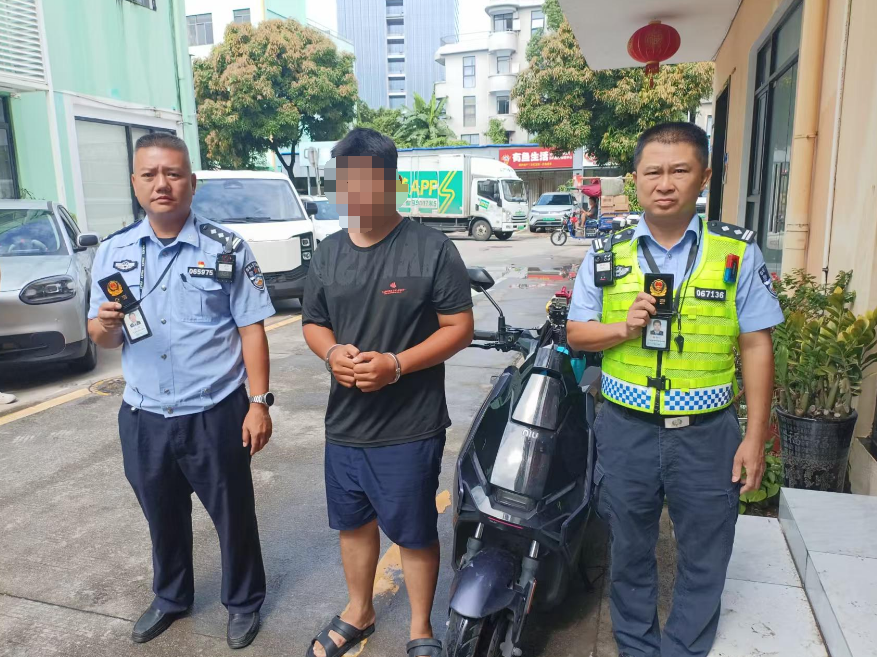
In August 2026, Shenzhen traffic police officially implemented a "choose one of four" educational guidance model for minor traffic violations involving electric bicycles, replacing the previous simple punishment of "fine-only." According to a report by the Shenzhen Special Zone Daily, violators may choose one of the following options: "15 minutes of on-site traffic duty," "copying traffic rules," "holding a sign and standing for 15 minutes," or "watching warning videos for 15 minutes," completing the correction of their violation through flexible education. This measure quickly sparked public discussion: Does replacing fines with education mean lower costs for violations? Where are the boundaries of law enforcement? How should citizens respond? This article analyzes the legal logic and practical risks behind this enforcement innovation from a lawyer's perspective, in light of the Administrative Penalty Law, the Road Traffic Safety Law, and Shenzhen's local legislation.
Legal Basis for Flexible Law Enforcement: Implementation of the Education-First Principle
The "choose one of four" model adopted by Shenzhen traffic police is not凭空created; its legal foundation lies in the principle of "combining punishment with education" established in Article 6 of the Administrative Penalty Law. This article stipulates that when imposing administrative penalties and correcting illegal acts, the combination of punishment and education shall be upheld to educate citizens, legal persons, or other organizations to consciously abide by the law. In addition, Article 87 of the Road Traffic Safety Law also provides that the traffic management departments of public security organs and their traffic police shall promptly correct and penalize road traffic safety violations; however, for minor violations that do not affect road traffic, they shall point out the illegal act, give a verbal warning, and then let the offender go.
This time, Shenzhen has upgraded "verbal warnings" to "experiential education," which essentially means specifying and proceduralizing educational measures within the scope of statutory discretion. From the perspective of administrative law, this constitutes the introduction of alternative measures by administrative authorities in penalty discretion and does not violate mandatory legal provisions. However, it should be noted that "four-choose-one" is not a statutory type of punishment but rather an intermediate path created by law enforcement authorities between "no penalty" and "penalty." Therefore, the key to its legality lies in: whether the party's voluntary cooperation is obtained? If the party refuses to choose or participate, can traffic police compel them to do so?
In practice, the Shenzhen traffic police department has clarified that the "choose one of four" option applies only to "parties who meet the conditions for educational management," i.e., circumstances involving minor violations, a cooperative attitude, and no major safety hazards. For those who refuse to cooperate or whose circumstances are serious, fines will still be imposed in accordance with the law. Therefore, lawyers remind the public: the education model is an "optional item" rather than a "mandatory item." If citizens believe they do not qualify for educational conditions, they have the right to request that traffic police present the legal basis for enforcement, and to accept penalties or present their defense in accordance with the law.
Education as an Alternative to Punishment: The Boundaries of Administrative Discretion and Procedural Justice
From the perspective of administrative law principles, when traffic police implement the "four-choice" education measure, they are exercising administrative discretion. However, discretion is not unbounded; it must adhere to the proportionality principle and the principle of procedural due process. The proportionality principle requires that law enforcement measures be commensurate with the severity of the illegal act. For example, if a person merely fails to wear a helmet without causing an accident, education and persuasion are still reasonable; however, if the violation has resulted in a minor collision or affected traffic order, substituting copying traffic regulations for a fine would be inappropriate. Procedural justice requires that traffic police must clearly inform the party involved of the illegal facts, legal basis, education options, and legal consequences, and guarantee the party's right to make statements and defend themselves.
In practice, some citizens have reported that when they were "guided" to choose an educational method at advisory service stations, they were not given any written notice or record, nor did they receive any proof afterward. This creates a hidden risk: if the individual has already completed the education but the enforcement record has not been uploaded to the system in a timely manner, they may be mistakenly considered as "unprocessed," leading to subsequent reminders or penalties. Lawyers suggest that citizens, when undergoing education, should proactively request the traffic police to issue an Education and Advisory Record Form or confirm it with an on-site signature, and take photos for future reference. At the same time, enforcement departments should establish electronic ledgers to make the education process traceable, avoiding disputes where "the education is done in vain."
Moreover, the setting of an education duration of "no less than 15 minutes" is operational, but it lacks a unified standard. Different stations may experience variations in waiting time or enforcement due to staffing and site conditions, which can easily raise concerns about fairness. The lawyer believes that Shenzhen traffic police could refer to the provisions on "safety learning" in the Regulations on Penalties for Road Traffic Safety Violations in the Shenzhen Special Economic Zone to clarify the education process, timing methods, and supervision mechanisms, making the "choose one of four" model more standardized and transparent.
The Boundary of Citizens' Rights: The Game Between Accepting Education and Refusing Punishment
For ordinary citizens, when faced with the "choose one of four" education program, the biggest concerns are: Is it mandatory? What happens if I don't participate? Once I complete it, is that the end of it? From a legal perspective, the traffic police's enforcement action constitutes a specific administrative act and is legally binding. If a party unreasonably refuses the education, the traffic police may, pursuant to Article 90 of the Road Traffic Safety Law, impose a warning or fine for the illegal act; if the party obstructs law enforcement, they may also violate Article 50 of the Public Security Administration Punishments Law, facing a warning or detention. Therefore, lawyers advise: cooperate rationally, but reserve the right to dissent.
Specifically, when receiving an educational admonishment, citizens can first confirm whether they indeed have committed an illegal act. If they disagree with the determination of the violation, they can raise objections on the spot and request the traffic police to present evidence (such as surveillance screenshots or footage from law enforcement body cameras). If the traffic police insist on the determination, citizens can accept the education first and later seek recourse through administrative reconsideration or administrative litigation. According to Article 20 of the Administrative Reconsideration Law, citizens who are not satisfied with an administrative action may apply for reconsideration within 60 days; Article 46 of the Administrative Litigation Law stipulates that the period for directly filing a lawsuit is 6 months. However, it should be noted that if the educational measure itself is not an administrative penalty, it may not be considered a suable act. Therefore, if citizens believe their rights have been infringed upon by the manner of education, they should pay more attention to whether a formal penalty decision notice is subsequently issued.
Another practical point: Does an education record affect personal credit or insurance? Currently, Shenzhen has not yet incorporated the "choose one from four" education into the social credit system, but if there are too many violations, the individual may be flagged as a "key management target," which could affect vehicle inspection or insurance discounts. Lawyers remind citizens to cherish the education opportunities and proactively correct bad habits, rather than treating education as a "free pass." If penalized for multiple violations, fines should be paid proactively to avoid late fees or enforcement actions.
Lawyer's Advice: From "Passive Education" to "Active Compliance"
The original intention of Shenzhen's "choose one of four" model was to shift violators from being "penalized" to exercising "self-discipline," which aligns with modern governance concepts. However, from a legal effectiveness perspective, whether education truly reduces violation rates still requires data support. Lawyers suggest that after implementing the policy for a period, Shenzhen traffic police could compare the recidivism rates under the education model versus the fine model to evaluate enforcement effectiveness and adjust policies as appropriate. At the same time, citizens should proactively study the specific requirements on registration, passage, and parking in the "Shenzhen Electric Bicycle Management Regulations (Trial)" to avoid violating the law due to ignorance.
For enterprises, particularly those involving high-frequency use of electric bicycles such as food delivery and courier services, it is even more important to establish an internal traffic safety training mechanism and incorporate the "four-choose-one" educational content into employee assessments to reduce the risk of violations. Guangdong Zhiming Law Firm has long focused on administrative law and traffic legal affairs, and can provide professional legal services to both enterprises and individuals, including response to traffic violations, administrative reconsideration, and administrative litigation. If you encounter traffic enforcement disputes in Shenzhen, it is recommended to consult a professional lawyer in a timely manner to protect your rights and interests in accordance with the law, while also promoting more standardized and transparent administrative enforcement.