Shenzhen Electric Bike Breaking Through Checkpoint Results in 20-Day Detention: What Are the Legal Consequences of Illegally Entering an Expressway? Lawyer's Interpretation.
On August 21, 2026, while conducting a special traffic enforcement operation on Nanping Expressway, Longgang traffic police in Shenzhen discovered an electric vehicle illegally entering the main roadway of the expressway. When confronted by police, the driver not only refused to cooperate but forcibly broke through the checkpoint and fled. Through cross-district coordinated tracing, the driver and vehicle involved were ultimately apprehended in Longhua District. Upon investigation, the vehicle was suspected of exceeding legal standards, and the driver did not possess the corresponding driving qualifications. Longgang traffic police lawfully impounded the vehicle and imposed an administrative detention of 20 days on the driver. After the incident was reported by Shenzhen News Network, it quickly sparked widespread discussion, with many citizens questioning the severity of the penalty: Why would a single checkpoint-breaking act result in 20 days of detention? What legal bases are involved? This article, from a lawyer's perspective and in light of current regulations, analyzes the legal logic behind this incident and the compliance points that ordinary electric vehicle drivers should observe.
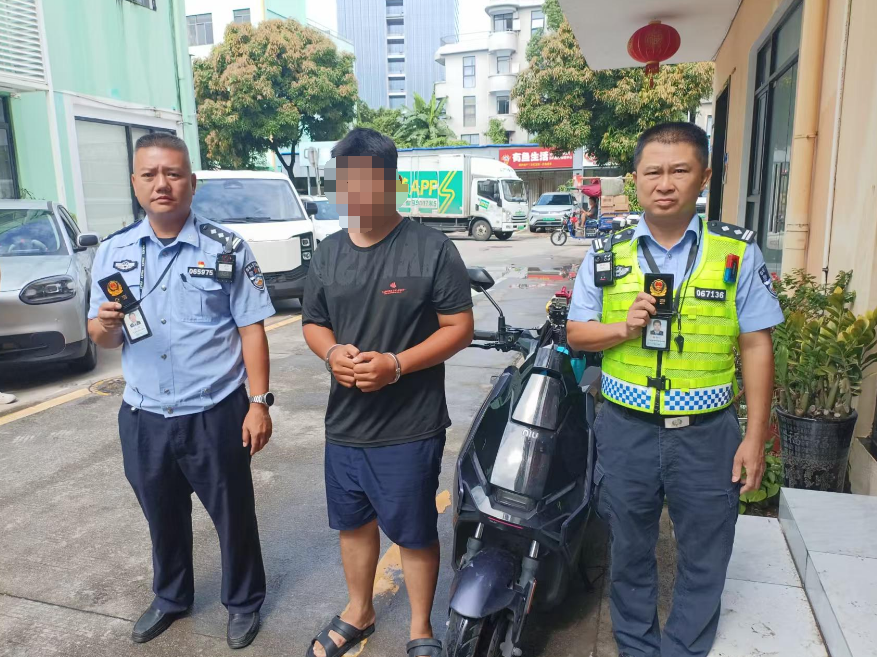
1. How is the act of ramming through a checkpoint characterized? The basis for the cumulative application of administrative penalties.
In this case, the driver was sentenced to 20 days of administrative detention. This penalty was not based on a single illegal act, but rather was the result of combined punishment for multiple illegal acts. According to Article 16 of the Public Security Administration Punishments Law, where there are two or more acts violating public security administration, decisions shall be made separately and executed concurrently. Where administrative detention penalties are executed concurrently, the total term shall not exceed twenty days.
Specifically, the driver's conduct involves violations at two levels at least: first, violating the provisions of the Road Traffic Safety Law that electric bicycles are not permitted to enter expressways, which constitutes a traffic violation; second, refusing to cooperate with traffic police interception and forcibly rushing through the checkpoint, an act that may constitute obstructing state organ personnel from performing their duties according to law, which is a violation of public security administration.
In law enforcement practice, similar acts of ramming through checkpoints are often classified as "obstructing the performance of official duties." Under Article 50 of the Public Security Administration Punishments Law, those who obstruct state organ personnel from lawfully performing their duties shall be given a warning or a fine of not more than 200 yuan; where circumstances are serious, they shall be detained for not less than five days and not more than ten days, and may concurrently be fined not more than 500 yuan. In this case, the driver also committed acts such as driving an over-standard e-bike without a driving qualification and illegally entering an expressway. The various illegal acts were adjudicated separately and executed jointly, ultimately reaching the statutory maximum of 20 days' detention, reflecting the law enforcement authorities' strict handling attitude toward serious traffic violations.
Additionally, the vehicle is suspected of exceeding standards, which means it may be identified as a motor vehicle. If so, the driver, having not obtained a driving license, will also face fines and administrative detention penalties for driving a motor vehicle. The accumulation of multiple violations significantly increases the severity of the penalties.
II. Special Risks and Legal Consequences of Electric Vehicles Illegally Entering Expressways
Electric bicycles are completely prohibited on urban expressways and highways. This is not only a traffic management necessity but also based on safety considerations. Nanping Expressway has a relatively high design speed, and the main lanes carry dense traffic flow; electric bicycles entering such roads can easily lead to serious accidents. According to the relevant provisions of the Shenzhen Special Economic Zone Road Traffic Safety Management Regulations, electric bicycles traveling on expressways, highways, or urban express roads are subject to fines, and the vehicles may be impounded.
In practice, many electric bicycle riders have a vague understanding of the definition of "over-standard" vehicles. According to national standards, an electric bicycle must meet certain hard requirements, including pedal-cycling capability, a maximum design speed not exceeding 25 km/h, a total vehicle mass not exceeding 55 kg, and a rated battery voltage not exceeding 48V. Vehicles exceeding these standards are legally classified as motor vehicles (typically mopeds or motorcycles). In this case, the vehicle involved is suspected of exceeding the standards, and if it is confirmed as a motor vehicle through appraisal, the rider will also face charges of driving without a license.
For ordinary citizens, when purchasing an electric vehicle, one should be wary of merchant tactics such as "no registration required" or "no driver's license needed." Once a vehicle is determined to exceed standards, the rider is legally equivalent to driving a motor vehicle without a license. In the event of an accident, they not only face administrative penalties but also find themselves at a disadvantage in terms of civil compensation and insurance claims.
III. Criminal Risks of Breaking Through Checkpoints: From Administrative Detention to the Boundary of the Crime of Obstructing Official Duties
In this case, the driver was subjected to administrative detention, which remains within the scope of administrative penalties. However, if the act of rushing through a checkpoint causes more serious consequences, it may cross the criminal threshold. Article 277 of the Criminal Law stipulates the crime of obstructing official duties, under which those who obstruct state personnel from performing their duties according to law by means of violence or threats shall be sentenced to fixed-term imprisonment of not more than three years, criminal detention, controlled release, or a fine.
When traffic police lawfully perform their duties, this constitutes an official act. If a driver flees a checkpoint to evade inspection and, in the process of breaking through, collides with a police vehicle, injures law enforcement personnel, or causes damage to public facilities or injury to others, the conduct may be upgraded from an administrative violation to a criminal offense. In practice, Shenzhen has established precedent in similar cases: in 2023, a food delivery rider in Bao'an District collided with traffic police and fled to avoid punishment, and was ultimately sentenced to fixed-term imprisonment for the crime of obstructing official duties.
Furthermore, if forcing through a checkpoint causes casualties or significant property damage, it may also involve the crime of causing a traffic accident or the crime of endangering public safety by dangerous means. In particular, electric vehicles driving against traffic or weaving through expressways pose a great threat to public safety, and judicial authorities tend to apply strict standards when determining the charges.
Lawyer's note: 20 days of administrative detention is already the maximum limit of administrative penalty, but criminal risk is the real "high-voltage line." Should breaking through a checkpoint lead to an accident, the consequences would be unimaginable.
IV. Shenzhen Electric Vehicle Governance Trends and Compliance Travel Recommendations
In recent years, Shenzhen has continuously carried out special rectification campaigns for electric vehicles, relying on the "linkage rectification, cross-district coordination" mechanism, combined with video tracking, intelligent capture, and other means, to achieve full coverage law enforcement on expressways and highways. In 2025, Shenzhen traffic police have activated electronic police to automatically identify electric vehicles entering expressways, with violation information pushed in real time, significantly improving the efficiency of cross-district investigation.
For electric vehicle drivers, compliant travel is not only a legal requirement but also a responsibility for the safety of themselves and others. The lawyer advises:
First, when purchasing a vehicle, confirm whether it complies with the new national standards, request the certificate of conformity and invoice, retain purchase receipts, and avoid buying over-standard vehicles.
Second, registration and licensing are prerequisites for legal road use. Shenzhen implements registration management for electric bicycles, and vehicles without license plates are strictly prohibited from being driven on roads.
Third, strictly abide by the general rule of "three separations," namely, motor vehicles, non-motor vehicles, and pedestrians shall travel in separate lanes. Electric vehicles shall use non-motor vehicle lanes and are prohibited from entering restricted areas such as expressways, highways, and elevated roads.
Fourth, when stopped by traffic police for inspection, be sure to cooperate with law enforcement. Attempting to run through the checkpoint will not help you escape punishment; instead, it will increase your legal liability and may even lead to criminal consequences.
5. Attorney's Closing Statement: Legal Red Lines Shall Not Be Crossed, and Professional Defense Must Also Be Valued
This case once again reminds the public that traffic violations are not a "trivial matter." When multiple violations are combined, the legal consequences may far exceed expectations. The penalty of 20 days of administrative detention serves both as punishment for the illegal conduct and as a warning to society.
For drivers involved in a case, if they are dissatisfied with the penalty decision, they may apply for administrative reconsideration or file an administrative lawsuit in accordance with the law. In penalties involving detention or other restrictions on personal freedom, the involvement of professional lawyers helps protect the lawful rights and interests of the parties, and review whether the law enforcement procedures are lawful, whether the evidence is sufficient, and whether the penalty is excessive.
Guangdong Zhiming Law Firm has long focused on traffic legal affairs in Shenzhen, accumulating extensive experience in areas such as administrative detention reconsideration, traffic accident compensation, and electric vehicle compliance consulting. If you or your friends or family are facing similar legal concerns, you are welcome to consult us. We will provide professional and practical legal support.
No issue of road safety is trivial; obeying the law is the bottom line. May every road user hold the rules in awe and return home safely.