Who Bears Responsibility for the Residential Building Collapse in Shijiazhuang? Shenzhen Lawyer Interprets Housing Safety Liability and Compensation Paths
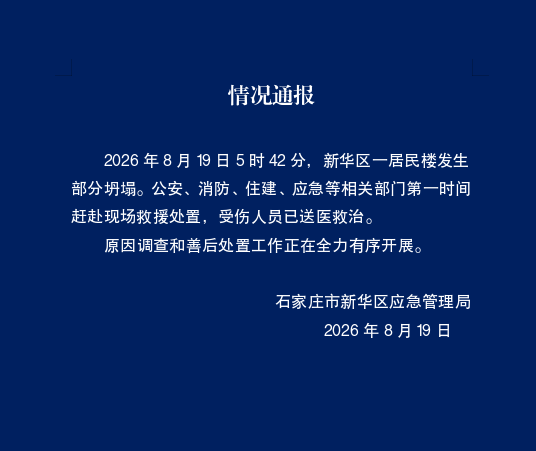
On August 19, 2026, a residential building in Xinhua District, Shijiazhuang City, Hebei Province suddenly collapsed. The local Emergency Management Bureau promptly issued a notice, and rescue operations were launched immediately. This sudden incident not only concerned the public but also once again brought housing safety, liability determination, and legal remedies into the spotlight of public discourse. As a Shenzhen lawyer who has long focused on livelihood-related legal issues, I will sort out the legal framework behind this incident from a professional perspective and provide practical risk prevention and rights protection strategies for ordinary property owners and businesses.
How are the legal liability subjects in a collapse accident defined?
Residential building collapse, the primary question is: who should be held responsible for this accident? Legally, the liable parties may involve the developer, construction unit, property management company, owners, and even government regulatory authorities. Pursuant to Article 1252 of the Civil Code, where the collapse of a building causes damage to others, the construction unit and the surveying unit shall bear joint and several liability, unless they can prove that there are no quality defects. If the collapse is caused by the fault of the owner, manager, or user, such party shall bear the corresponding liability.
In the Shijiazhuang incident, if the investigation finds that the collapse resulted from design defects, substandard construction, or the use of non-compliant building materials, the developer and construction units cannot escape responsibility. If the collapse was caused by years of disrepair or negligent maintenance by the property management, the property company, as the managing entity, must bear fault-based liability in accordance with Article 1253 of the Civil Code. Additionally, if owners' unauthorized modification of load-bearing walls or other actions were a contributing factor, the relevant owners must also bear responsibility. As a high-density city, Shenzhen has numerous old residential communities facing similar risks, and clarifying the chain of responsibility is essential to preventing disputes.
In judicial practice, courts typically allocate responsibility based on investigation reports from housing and urban-rural development authorities. For example, in the 2023 building collapse incident involving self-built houses in Changsha, Hunan, both the landlord and the construction contractor were pursued for criminal liability. Therefore, the accident investigation findings will serve as a key basis for subsequent civil claims and criminal prosecution.
How can victims obtain compensation through legal channels?
For victims of collapse accidents, the path to legal remedy is clear but operationally complex. First, claims for personal injury and property damage can be made under the Tort Liability section of the Civil Code, with compensation covering medical expenses, lost wages, disability compensation, death compensation, and loss of housing value, among others. If the liable party is clearly identified, the victim may file a lawsuit directly; if the liable party is unclear or the parties are shifting responsibility onto one another, under Article 1252 of the Civil Code, the victim may demand that the construction developer and construction unit bear joint and several liability in the first instance.
Secondly, if the accident involves liability for workplace safety, victims may also report the matter to the relevant regulatory authorities in accordance with the Work Safety Law, thereby promoting an administrative investigation. Although administrative fines do not directly go to the victims, the findings of the investigation can serve as strong evidence in civil litigation. In Shenzhen, similar cases often involve multi-party litigation, and lawyers will advise victims to preserve evidence as soon as possible, such as on-site photos, medical records, property ownership certificates, and to apply for property preservation to prevent the responsible parties from transferring assets.
It is worth noting that the limitation period for litigation is three years (Article 188 of the Civil Code), starting from the date when the injured party knows that their rights have been harmed. In collapse accidents, victims often delay asserting their rights due to pain from injuries. Consulting a lawyer promptly can help prevent the limitation period from expiring.
Legal Obligations for Building Safety Appraisal and Routine Maintenance
The collapse incident in Shijiazhuang serves as a warning that building safety relies not merely on post-incident accountability, but more importantly on preventive measures. Under the Regulations on Administration of Urban Dangerous Buildings, property owners are required to conduct regular safety appraisals, particularly for structures that have exceeded their designed service life or exhibit abnormal conditions such as cracks or settlement. Property management companies, as the managing entities, bear the obligations of inspection, warning, and reporting; if they fail to fulfill these duties and thereby cause an accident, they must bear the corresponding legal liability.
Shenzhen's humid climate and frequent typhoons accelerate building aging, so property owners and management should place greater emphasis on routine maintenance. Lawyers advise that owners can jointly push the owners' committee to commission professional institutions for building safety inspections, with costs to be covered from the maintenance fund in accordance with the Property Management Regulations of the Shenzhen Special Economic Zone. If major hazards are found in the building, owners have the right to demand that the property management company or developer take immediate corrective action, and if necessary, may file complaints or reports with the housing and urban-rural development authorities.
In practice, many property owners lack awareness of building structural safety and even arbitrarily remove walls during renovation, which is tantamount to planting a time bomb. In 2019, a property owner in a residential complex in Shenzhen removed a load-bearing wall, causing the building to tilt, and was ultimately subjected to administrative penalties and ordered to pay substantial compensation—a cautionary tale worth heeding.
How can Shenzhen property owners prevent similar risks? Practical legal advice
In the face of similar accidents, property owners and enterprises in Shenzhen should take preventive measures. First, when purchasing a property, buyers should verify the developer's qualifications and the filing of completion acceptance to avoid buying properties with quality defects. Second, after moving in, regularly inspect the building structure, especially in old residential areas. If any abnormality is found, promptly commission a professional institution for appraisal and keep the report on file. Third, purchasing property insurance (such as home property insurance) can mitigate losses in the event of an accident. Some insurance companies in Shenzhen have already launched policies that cover collapse risks.
If unfortunately encountering a similar accident, be sure to call the police and notify the property management at the first opportunity, while also filming videos and preserving evidence, so as to avoid losing the right to subsequent recourse by settling privately with the responsible party. Lawyers can assist in identifying the liable parties, calculating the amount of compensation, drafting complaints, and representing clients in litigation. Guangdong Zhiming Law Firm has long been deeply engaged in the fields of real estate and tort law, and has represented numerous housing safety disputes in Shenzhen, providing victims with full-process legal services from evidence preservation to litigation and enforcement.
The Shijiazhuang collapse incident serves as a wake-up call: law is not only a remedial tool after the fact, but also a code of conduct beforehand. Whether property owners, property management, or regulatory authorities, only by each fulfilling their respective responsibilities can the bottom line of residential safety be upheld.