Typhoon "Zitan" Makes Landfall in Zhanjiang, Causing Heavy Rain in Guangdong: How to Claim Compensation for Damaged Vehicles and Flooded Homes? Lawyer Explains
Lead
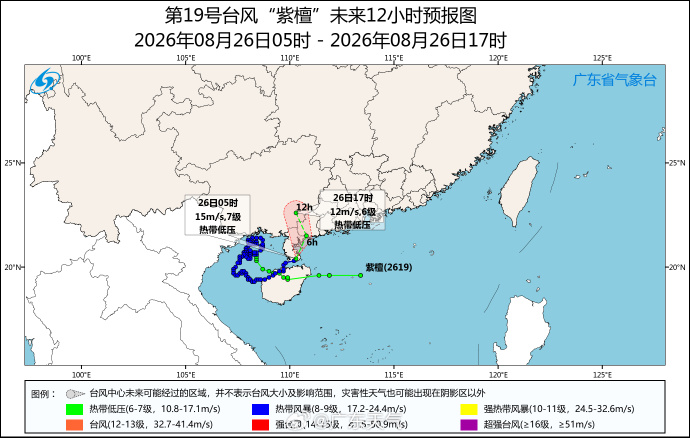
At around 2 a.m. on August 26, 2026, Typhoon "Zitan," the 19th of this year, made landfall again on the coast of Maichen Town, Xuwen County, Zhanjiang City, Guangdong Province, with maximum winds near its center reaching Force 8. It subsequently moved in a north-northeast direction at a speed of 15 to 20 kilometers per hour. Affected by the typhoon, areas including Zhanjiang and Maoming are expected to experience heavy rain with localized torrential downpours; the central and western parts of the Pearl River Delta will see moderate to heavy rain; and Shenzhen will also experience a significant rainfall event. As of the morning of August 26, multiple areas in Guangdong had issued yellow and blue typhoon warnings, as well as orange and yellow rainstorm warnings.
When a typhoon passes through, it brings not only fierce winds and torrential rain but also a series of legal issues, such as vehicles being submerged, homes flooding, falling trees injuring people or damaging property, and work or school suspensions. As an ordinary citizen or business owner, in the face of natural disasters, in addition to taking safety precautions, it is equally important to understand the legal risks involved and the avenues for asserting your rights. This article, based on the Civil Code and relevant judicial interpretations, analyzes common legal issues arising from typhoon disasters from a lawyer's practical perspective, helping you minimize losses to the greatest extent possible.
Does a typhoon constitute "force majeure"? How is it determined in law?
Article 180 of the Civil Code provides: "Where a person is unable to perform a civil obligation due to force majeure, he shall not bear civil liability, unless otherwise provided by law." Force majeure refers to objective circumstances that are unforeseeable, unavoidable, and insurmountable. Typhoons, as typical natural disasters, are generally recognized as force majeure. However, in practice, not all losses caused by typhoons can be exempted from liability as a matter of course. The key lies in whether the parties concerned have fulfilled their duty of reasonable care.
For example, in the performance of a contract, if a typhoon prevents timely delivery of goods or provision of services, the breaching party may invoke force majeure as a defense, provided that it promptly notifies the other party and furnishes evidence. However, if typhoon warnings had already been issued in advance and the party nevertheless arranged outdoor operations or undertook risky travel, such conduct may be characterized as "knowingly assuming the risk" and thus preclude full exemption from liability.
For tort liability caused by typhoons, such as trees falling and damaging vehicles or billboards falling and injuring people, whether the liable party is exempted also requires case-specific analysis. If the managers of the trees or billboards have fulfilled their duties of inspection and reinforcement, they may be exempted due to force majeure; conversely, if there was management negligence, they must still bear corresponding liability. Therefore, before a typhoon strikes, property managers, shopping malls, construction units, and others should prepare emergency response plans and retain relevant records to address subsequent disputes.
Vehicles submerged, homes damaged—what are the ins and outs of insurance claims?
The most common losses in a typhoon are vehicles being submerged in water, home leaks, or property damage. For vehicles, if the owner has purchased vehicle damage insurance, according to the 2020 comprehensive auto insurance reform, wading insurance has been incorporated into the coverage scope of vehicle damage insurance, and losses caused by engine flooding can be compensated. However, it should be noted that if the vehicle is started a second time in water and causes engine damage, some insurance companies may refuse to pay on the grounds of "man-made expansion of loss." Therefore, after the vehicle is submerged, do not forcibly ignite the engine. Instead, take photos to preserve evidence immediately and contact the insurance company.
If the house and interior property are damaged, it is necessary to check whether home property insurance has been purchased. Roof damage, broken windows, and water leakage soaking furniture caused by typhoons generally fall within the coverage of home property insurance, but attention should be paid to deductibles and exclusion clauses. For example, in the case of water leakage caused by long-term disrepair of the house, the insurance company may refuse to compensate on the grounds of "failure to fulfill maintenance obligations." It is recommended that affected residents file claims promptly and retain materials such as repair invoices and loss lists.
Furthermore, if the typhoon causes damage to third-party property, such as an upstairs owner's balcony flowerpot being blown off and damaging a vehicle below, the allocation of liability shall be determined in accordance with the provisions of Article 1254 of the Civil Code on objects thrown or falling from a height. If the specific tortfeasor can be identified, that person shall bear liability; if it is difficult to identify, compensation may be provided by the users of the building who are likely to have caused the harm. Lawyers remind that during typhoon weather, balcony items should be brought indoors in advance to avoid unnecessary disputes.
During the period of work stoppage and class suspension, how are wages calculated? How is a work-related injury determined?
Under typhoon warnings, many local governments will issue notices to suspend work and classes. At this time, how workers' wages are paid becomes a focal point. According to the "Guangdong Province Wage Payment Regulations" and related provisions, if work stoppage or production suspension is caused by natural disasters such as typhoons, enterprises shall pay wages in accordance with the labor contract; if the stoppage exceeds one wage payment cycle, living expenses of no less than 80% of the local minimum wage standard shall be paid. However, if the stoppage is caused by the enterprise's own reasons (such as failing to take flood prevention measures in advance), wages shall be paid in full.
For employees who must remain at their posts during a typhoon, such as emergency rescue and disaster relief personnel and public service workers, if they are injured due to the typhoon during work hours, the injury shall be recognized as a work-related injury. According to Article 14 of the Regulations on Work-Related Injury Insurance, injuries sustained due to work-related reasons during work hours and at the workplace shall be recognized as work-related injuries. However, if an employee encounters an accident on the way to or from work due to the typhoon, the recognition is conditional on satisfying the requirement that the employee is not primarily responsible for the accident.
Business owners should pay special attention to arranging work reasonably during typhoons and avoid forcing employees to venture out under dangerous conditions. If employees are injured due to improper arrangements, the business not only faces work-related injury compensation but may also bear tort liability. It is recommended that businesses develop typhoon emergency response plans, clearly define work suspension conditions, duty arrangements, and emergency communication mechanisms, and retain notification records to address potential disputes.
Safety Guarantee Obligations of Property Management, Shopping Malls, and Construction Parties during Typhoon Weather
During typhoons, managers of places such as residential communities, shopping malls, and construction sites bear a duty of safety protection. Pursuant to Article 1198 of the Civil Code, where operators or managers of business premises or public places such as hotels, shopping malls, banks, stations, and entertainment venues fail to fulfill their duty of safety protection, thereby causing harm to others, they shall bear tort liability.
For example, if a residential property management company fails to promptly clear drainage pipes, causing water accumulation in the underground garage that floods vehicles, or fails to reinforce trees that then topple over and injure people, the property management company must bear corresponding compensation liability. If a shopping mall does not implement anti-slip measures, causing customers to slip and fall, it may also be held accountable. Construction units must reinforce scaffolding, tower cranes, and other facilities before a typhoon; if collapse caused by inadequate reinforcement injures passersby, the construction unit cannot escape liability.
Therefore, relevant management authorities should proactively inspect for potential hazards before the typhoon arrives, set up warning signs, and close off dangerous areas when necessary. At the same time, it is recommended that they purchase public liability insurance to transfer the risk of large compensation payouts. If affected residents suffer losses due to negligence on the part of the management authorities, they should promptly preserve evidence such as on-site photos, surveillance footage, and maintenance records, and consult professional lawyers when necessary to claim compensation in accordance with the law.
After a disaster, what can lawyers do to help you protect your rights?
The legal issues following typhoon disasters are complex and multifaceted, spanning insurance claims, contract performance, tort liability, labor disputes, and other areas. Ordinary citizens often find themselves at a disadvantage due to insufficient evidence and unfamiliarity with procedures. In such cases, the involvement of professional lawyers can effectively sort out legal relationships, assist in evidence collection, calculate losses, negotiate with insurance companies or responsible parties, and even represent clients in litigation.
Guangdong Zhiming Law Firm has long been deeply engaged in the field of civil and commercial dispute resolution, with extensive practical experience in handling various disputes arising from natural disasters. If you or your enterprise have suffered losses due to Typhoon "Zitan," please feel free to contact us. We will provide you with professional and efficient legal support to help you restore production and daily life as soon as possible.
Conclusion
Typhoons are merciless, but the law has its bounds. In the face of natural disasters, we must not only take physical precautions but also enhance our legal awareness. Only by understanding the boundaries of force majeure, clarifying the rules of insurance claims, and knowing the safety obligations of all parties can we assert our rights calmly after a disaster. We hope this article can provide you with practical guidance, and may every reader safely get through the typhoon season.