The community youth art exhibition in Shenzhen is in full swing, examining the protection of minors' rights and interests in community governance from a legal perspective.
### Introduction
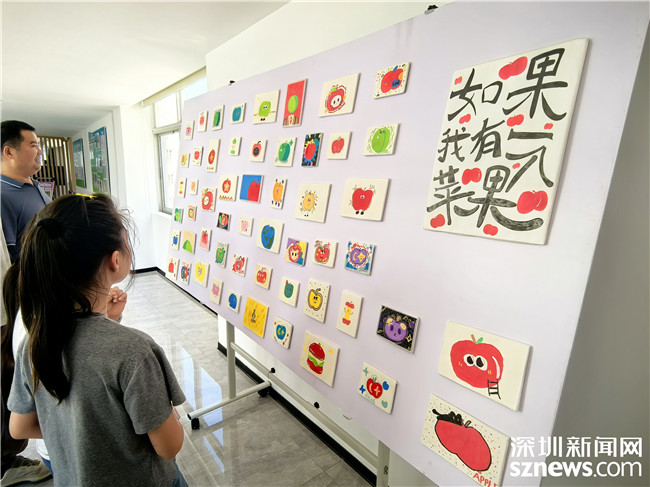
On August 28, 2026, the youth original works exhibition in Dapeng Community, Dapeng Office, Shenzhen, opened warmly, showcasing over a hundred pieces of paintings, handicrafts, and cultural and creative works created by local teenagers, drawing many residents to stop and admire. This summer成果展 is not only a display of children's creativity but also a microcosm of Shenzhen's recent efforts to build child-friendly communities and transform young people from passive participants in activities into co-builders of grassroots governance. However, while applauding the innocence of children's creativity and the vitality of community co-governance, the legal issues involved deserve equal attention: how should the intellectual property rights of minors' works be attributed when they participate in community activities? How can communities collect, display, and disseminate youth works in a lawful and compliant manner? And in the event of personal injury or property damage, how should liability be allocated? This article, from a lawyer's perspective and in light of the Civil Code and the Law on the Protection of Minors, will outline the key legal points for communities, parents, and organizers of youth activities, helping such events proceed steadily and far along the track of the rule of law.
### 1. Who owns the copyright in works created by minors?
In this exhibition, the children's original works such as paintings, bookmarks, and round fans are truly eye-catching. Many people may ask: Are these works protected by law? Does the copyright belong to the children or the community?
Under Articles 2 and 11 of the Copyright Law of the People's Republic of China, copyright arises automatically upon the completion of a work, and the author enjoys multiple rights, including the right of publication, the right of authorship, the right of reproduction, and the right of exhibition. Although minors have limited capacity for civil conduct, as authors, they are entitled to copyright in accordance with the law. Therefore, when a community displays children's works in an exhibition, this constitutes an exercise of the right of exhibition over the works, and in principle, permission should be obtained from the author (i.e., the minor themselves) and their legal representatives. In practice, communities typically obtain authorization to use the works through documents such as "Activity Notices" or "Work Authorization Letters" at the time of registration, but many communities fail to follow standardized procedures in their operations, relying instead on verbal consent or implied permission, which can easily lead to subsequent disputes.
Lawyers advise that when communities hold exhibitions of similar works, they should sign written authorization agreements with the guardians of each minor, clearly defining the scope of authorization, including exhibition, publication, online dissemination, public welfare promotion, etc., and stipulating the duration of use and whether compensation will be paid. This not only respects the rights of the young creators but is also a necessary measure for communities to mitigate legal risks.
### II. How should the duty of safety and security in community activities be implemented?
Summer classes and art exhibitions involve large gatherings of minors, making safety assurance a top priority. Article 1199 of the Civil Code stipulates that if a person without capacity for civil conduct suffers personal injury while studying or living in a kindergarten, school, or other educational institution, the kindergarten, school, or other educational institution shall bear tort liability; however, if it can prove that it has fulfilled its educational and management duties, it shall not bear tort liability. Article 1200 provides similar provisions for persons with limited capacity for civil conduct, but the burden of proof differs.
The activities of Dapeng Community are led by the community party committee and carried out through the mechanism of "residents place orders—venues dispatch orders—multiple parties accept orders." As the organizer, the community bears the obligation to ensure safety. The community should ensure that activity venues meet safety standards, provide sufficient adult staff or volunteers, formulate emergency response plans, and purchase accident insurance for participating children. If a child is injured during an activity and the community cannot prove it has fulfilled its management duties, it may face liability for compensation.
Additionally, creative handicrafts in the event may involve tools such as scissors and glue, so the community should provide safety operation guidance and strengthen supervision for young children. Lawyers suggest that the community conduct a comprehensive risk assessment before the event and retain evidence such as safety inspection and education records, so as to be able to provide proof for exemption from liability in the event of disputes.
### III. How does the law support and regulate children's participation in grassroots governance?
The news mentioned that Dapeng Community has implemented projects such as the Children's Council and youth volunteer services, promoting the transformation of young people from activity participants to co-builders of grassroots governance. This approach is highly consistent with the spirit of the "Law of the People's Republic of China on the Protection of Minors" regarding "safeguarding minors' right to participation." Articles 4 and 102 of the law emphasize that when handling matters involving minors, their opinions should be heard and their right to participate in relevant activities should be guaranteed.
Mechanisms such as children's councils provide legitimate channels for minors to express their concerns and participate in public affairs, helping to cultivate civic awareness. However, when organizing such activities, communities should pay attention to the following points: first, ensure that children's participation is voluntary and not compulsory or indirectly coerced; second, the topics discussed should be appropriate for children's age and cognitive level, avoiding complex or sensitive issues; third, children's opinions should be respected, and even if the final decision does not adopt their suggestions, timely feedback and explanations should be provided to avoid dampening their enthusiasm.
Additionally, when using children's portraits or works in promotional activities, the community should obtain consent from their guardians and take care to protect minors' privacy, avoiding the disclosure of home addresses, school information, and similar details. According to Article 49 of the Law on the Protection of Minors, no organization or individual may disclose the personal privacy of minors.
### IV. Prevention of Contract and Liability Risks in Community Activities
When communities host summer classes and art exhibitions, they often involve cooperation with third-party organizations, such as training institutions and material suppliers. In such cases, the community must pay attention to the legal risks in contract signing and performance.
First, the community should sign a written contract with the partner, clearly specifying terms such as service content, quality standards, fee payment, liability for breach of contract, and allocation of safety responsibilities. For example, if an external organization provides creative painting courses, it should be stipulated that the organization must possess relevant qualifications, that teachers must hold teaching certificates or have professional backgrounds, and that they are responsible for course safety.
Secondly, the community should review the qualifications and reputation of partners to avoid harm to children's rights caused by partners' actions, which could otherwise lead to the community bearing joint liability. Additionally, when purchasing activity materials, the community should ensure that the materials meet environmental and safety standards, especially paints, glues, and other items used by children, which should comply with relevant national standards; otherwise, infringement liability may arise due to product defects.
Lawyers remind that communities can establish archives for activity projects, keeping documents such as contracts, authorization letters, safety records, and expense receipts, so as to provide strong evidence in the event of disputes.
### V. Conclusion: Rule of Law as a Safeguard, Enabling a Better Future for Youth Co-Governance
The youth original works exhibition in Dapeng Community showcased the creativity and enthusiasm of the new era's young people, while also reflecting the vitality of grassroots governance in Shenzhen. However, the smooth execution of any event cannot be separated from the protection of the law. From copyright protection to safety assurance, from privacy maintenance to contract risks, every aspect requires the joint attention of the community, parents, and all sectors of society.
As legal professionals, we recommend that communities establish routine legal compliance mechanisms when organizing child-friendly activities, such as engaging legal advisors in event planning, developing standardized contract templates, and conducting legal training. For parents, it is also advisable to proactively understand their children's rights, carefully review relevant agreements when participating in activities, and consult professional lawyers when necessary.
Guangdong Zhiming Law Firm has long been dedicated to the protection of minors' rights and legal practices in community governance, having provided compliance reviews for activities, legal consultations, and other services to multiple communities and social organizations, thereby supporting the healthy development of grassroots governance within the framework of the rule of law. If your community or organization is planning similar activities, please feel free to contact us, and we will provide you with professional legal support.