Urban Renewal in Qingshuihe, Luohu, Shenzhen Accelerates as Lawyers Explain Land Compliance and Lease Dispute Risks in Industrial Heritage Renovation
Introduction: When art intervenes in urban renewal, legal risks are also "growing."
On September 12, 2026, the Luohu Qingshuihe sub-venue of the 10th Shenzhen-Hong Kong Bi-City Biennale of Urbanism/Architecture opened. Nearly 40 public art works and 20 public events were staged in Honggang Park, the old warehouses of the Shenzhen Industrial Station, and the Digital Intelligence New City area, exploring under the theme "Urban Smart Life" how technology, ecology, and public life can coexist.
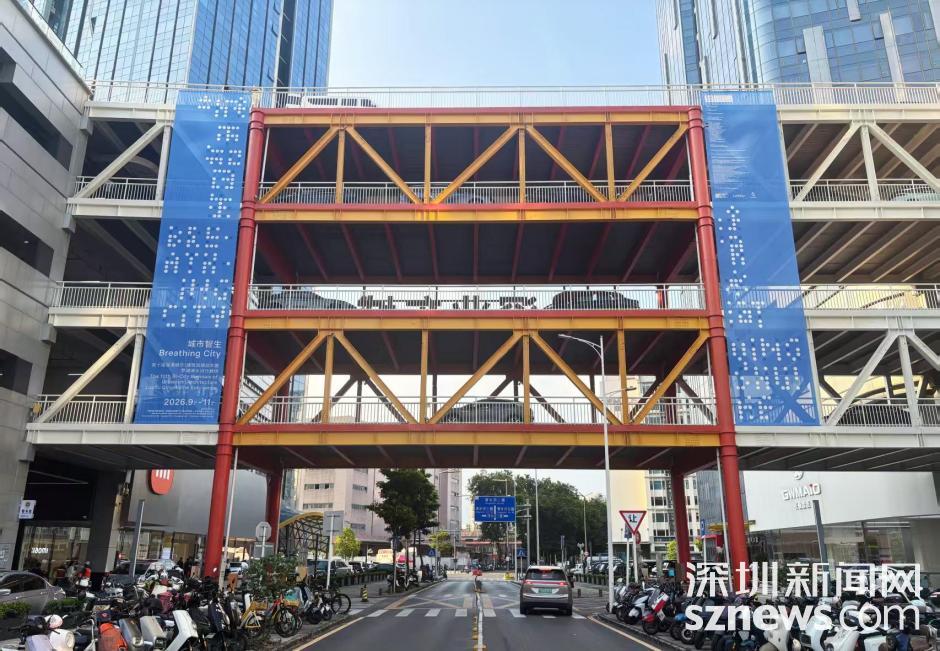
Qingshuihe was once known as "the world's number one warehouse," carrying Shenzhen's collective memory of warehousing and logistics. Today, old railway tracks, aging warehouses, and a newly built digital smart city coexist in an interwoven landscape, and the exhibition attempts to activate industrial relics through a "light-touch intervention" approach. However, from the perspective of legal practice, such urban renewal and spatial transformation projects involve a series of legal issues behind the scenes, including changes in land use, legacy lease relationships, obligations to protect industrial heritage, and the ownership of intellectual property rights in public artworks. An exhibition can adopt a "light-touch intervention," but legal compliance cannot be "handled lightly."
I. Revitalization of Industrial Heritage: Land Use Change and Property Rights Registration Are the Primary Compliance Thresholds
The Shenzhen Industrial Station area leverages spaces such as the Bud Art Museum, converted from old railway warehouses, and the "Three Express Trains" thematic museum to explore pathways for revitalizing industrial heritage. The first issue these projects face is: can the original industrial land be directly used for cultural exhibitions and commercial operations?
According to Article 56 of the Land Administration Law of the People's Republic of China, where a construction unit uses state-owned land, it shall use the land in accordance with the provisions of the paid-use contract such as the grant of land use rights or the approval document for the allocation of land use rights; if it is truly necessary to change the construction purposes of that parcel of land, it shall obtain the consent of the competent natural resources department of the relevant people's government and submit it for approval to the people's government that originally approved the land use. Where the land use is changed within an urban planning area, the consent of the competent urban planning department shall first be obtained before submitting it for approval.
In practice, many industrial heritage renovation projects are initially used under the guise of "temporary exhibitions" or "cultural creativity." However, if they involve long-term operations, commercial supporting facilities, or food and beverage services, procedures for changing the land use or temporarily altering the building's functional use must be completed. Shenzhen has specific regulations for historically遗留 illegally constructed buildings and the renovation of old industrial areas, such as the Shenzhen Urban Renewal Measures and its implementation rules, which clearly define three models: comprehensive improvement, functional change, and demolition and reconstruction. If enterprises put projects into operation without completing compliance procedures, they may face risks such as orders to rectify within a specified period, fines, or even the revocation of land use rights.
In addition, if industrial remains are listed in the historical building or industrial heritage protection registry, their renovation must also comply with the Cultural Relics Protection Law and local protection plans, and the main structure or exterior facade may not be altered without authorization. Lawyers advise that before participating in old renovation projects, due diligence should be conducted to verify the nature of the land, planning conditions, building ownership, and protection status, so as to avoid the passive situation of "renovating first and obtaining approval later."
II. Lease Relationships in Public Space Renewal: How to Handle Legacy Contracts
The Qingshui River area has undergone an industrial transformation from warehousing and logistics to a digital smart new city. Many old factory buildings and warehouses were long leased to logistics companies and processing plants. The exhibition's conversion of some of these spaces into public art areas means that existing lease relationships need to be terminated or adjusted.
Article 708 of the Civil Code provides that the lessor shall deliver the leased property to the lessee in accordance with the agreement and shall keep the leased property fit for the agreed use during the lease term. If the renovation renders the leased property partially or entirely unusable, the lessor may be in breach of contract. Article 711 also provides that if the lessee fails to use the leased property in accordance with the agreed method or in a manner consistent with the nature of the leased property, resulting in damage to the leased property, the lessor may terminate the contract and claim compensation for losses.
In practice, two types of disputes are common: first, the lessor terminates the lease early due to urban renewal, and the lessee claims compensation for decoration losses, relocation expenses, and business losses; second, the lessee subleases without authorization or changes the use of the property, and the lessor seeks to terminate the contract and claim liquidated damages. When hearing such cases, Shenzhen courts typically examine factors such as the contract terms, the procedure for giving notice of termination, and evidence of actual losses. If the contract does not include a termination clause for renewal and renovation, the parties can easily become locked in a protracted dispute.
Lawyers advise that before an urban renewal project begins, property owners or operators should review all lease contracts, distinguish between expired and unexpired contracts and between lawful and unlawful occupancy, and serve termination notices in accordance with the law while preserving evidence. Tenants, in turn, should determine whether they qualify as "actual users" eligible for compensation and promptly assert their rights to compensation for suspension-of-business losses, residual value of decorations, and other interests.
III. Intellectual Property Rights in Public Artworks: Copyright Ownership and the Authorization Chain Behind Exhibitions
This exhibition presents nearly 40 public art works, including "Spinning Light Bookhouse," "Wind Comes," and "Fractal Heart." The works span architecture, sculpture, video, generative AI art, and other forms. After the exhibition opens, some spatial installations will remain permanently, growing together with the district.
The core legal issue here concerns copyright ownership and the scope of authorization. Under Article 17 of the Copyright Law, for works created under a commission, the ownership of copyright shall be agreed upon by the commissioning party and the commissioned party through a contract. If the contract does not clearly provide for it or no contract has been concluded, the copyright belongs to the commissioned party. If the exhibition organizer has not clearly agreed with the artist on the rights to reproduce, exhibit, disseminate through information networks, and develop derivative works, subsequently using the works for publicity, cultural and creative product development, or permanent display may constitute infringement.
Particularly noteworthy is that *Qingshui River 2050 | Intelligent New World* introduced AI as a "curator," and the generative video work *Fractal Heart* appeared on commercial large screens. The ownership of copyright in AI-generated content remains disputed in judicial practice. Courts in Beijing, Shenzhen, and other places have already ruled that if AI-generated content reflects human intellectual input and personalized choices, it may be protected by copyright law, but the attribution of rights must be determined in light of the specific creative process.
Lawyers recommend that organizers sign written commissioned creation contracts with artists and design teams, clearly specifying ownership of the works, scope of use, duration, territory, and whether sublicensing is permitted. If AI-generated content is involved, the contracts should also stipulate the legality of the training data sources, ownership of the generated content, and the allocation of liability for infringement, so as to avoid leaving copyright "loose ends" after the exhibition ends.
IV. Community Co-creation and Public Participation: Legal Boundaries of Self-built Installations
The exhibition features an "Open-Source Furniture" section, using nine prototype installations to explore the potential of street furniture in delivering public services, accompanied by community co-creation activities. Public participation in urban space transformation is a good thing, but self-built installations and temporary structures may also cross legal red lines.
According to the Shenzhen Municipal Urban Planning Regulations and the Regulations on the Quality Management of Construction Projects, temporary construction projects are also required to obtain planning permits or temporary land use procedures. If installations occupy fire lanes, damage green spaces, or affect municipal facilities, they may violate the Fire Protection Law, the Urban Greening Regulations, and other provisions. In community co-creation activities, if residents spontaneously build structures and the organizers fail to fulfill their safety management obligations, they may bear tort liability in the event of personal injury.
Article 1198 of the Civil Code stipulates that operators or managers of business premises and public places such as hotels, shopping malls, banks, stations, airports, sports venues, and entertainment venues, or organizers of mass activities, who fail to fulfill their safety obligations and cause harm to others, shall bear tort liability. During the exhibition period, with high visitor traffic, the organizer should set up warning signs, purchase public liability insurance, and conduct structural safety assessments for participatory installations.
Conclusion: Cities can be "born smart," but laws must be "established first."
The Shenzhen-Hong Kong Bi-City Biennale's Qingshuihe sub-venue in Luohu uses art and design to give old warehouses and abandoned railway tracks a new lease on life—an exploration worth commending. But urban renewal is not merely a curatorial act; it involves multiple legal relationships spanning land, property rights, leasing, intellectual property, and safety liability. Whether it is a development company participating in old-district redevelopment, an SME leasing factory space, or a design firm undertaking a public art project, all should complete legal due diligence before launching the project and factor compliance costs in from the outset.
Guangdong Zhiming Law Firm has been deeply engaged in urban renewal and real estate legal services in Shenzhen for many years. It can provide full-process legal support for redevelopment projects, including land compliance review, lease dispute resolution, intellectual property licensing, and public event safety assurance. For a city to grow, a solid legal framework must first be established, so that every redevelopment can stand the test of time.