Cross border student fainting at Luohu Port draws attention: Shenzhen lawyer discusses cross-border family guardianship responsibilities and emergency legal protection at the port
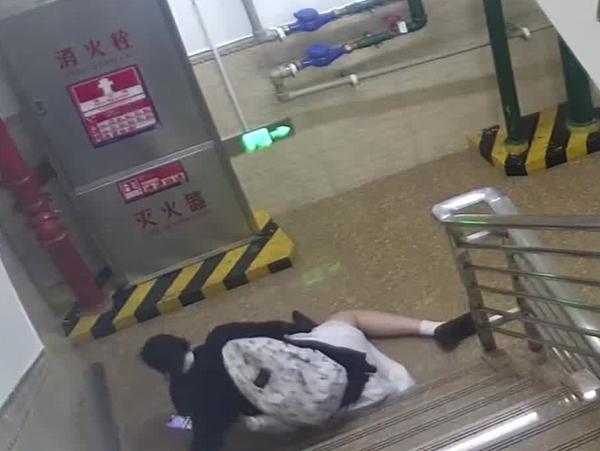
Recently, a cross-border student suddenly fainted at the Luohu Port in Shenzhen. A student traveling between Shenzhen and Hong Kong suddenly fell to the ground due to low blood sugar during customs clearance. Police officers at the Luohu border checkpoint quickly arrived to handle the situation and coordinated medical staff for assistance. After the student recovered and stabilized, their guardian took them home. The incident itself was not dangerous, but as a Shenzhen lawyer who has long handled cases involving Hong Kong family affairs and the rights of minors, the author has seen a series of legal issues worth exploring behind the cross-border student group: how to allocate guardianship responsibilities when children travel alone between Shenzhen and Hong Kong every day? Where is the boundary of the security obligations of schools, ports, and parents? Who will bear the responsibility in case of a more serious accident? This article breaks down one by one from the perspective of legal practice.
1、 Guardianship vacuum for cross-border students: Entrusting guardianship is not just "verbal talk"
Cross border students leave various ports in Shenzhen every morning to go to school in Hong Kong, and return to Shenzhen in the evening, spending several hours without their parents accompanying them on the way. According to Article 27 of the Civil Code of the People's Republic of China, parents are the guardians of underage children; Article 34 stipulates that the responsibilities of a guardian include protecting the personal rights, property rights, and other legitimate rights and interests of the ward. In reality, many cross-border families entrust their children to nannies, relatives, and even cross-border school bus companies due to their busy parents' work schedules. This daily entrustment constitutes a "entrusted guardianship" relationship in legal terms.
Article 1189 of the Civil Code stipulates: "If a person without or with limited capacity for civil conduct causes harm to another person, and the guardian entrusts the guardianship duties to another person, the guardian shall bear tort liability; if the trustee is at fault, they shall bear corresponding liability." This provision is often misinterpreted as "once entrusted, everything will be fine." In fact, the guardian's liability has not been transferred, and the trustee only bears corresponding liability when at fault. In practice, the author has seen many cases where parents verbally entrust their neighbors to pick up and drop off their children, and the child falls and is injured on the way. The court ultimately determines that the parents still bear primary responsibility, while the neighbors bear secondary responsibility for failing to fulfill their reasonable duty of care.
In a 2023 judgment on a cross-border student traffic accident involving Hong Kong, the Shenzhen Intermediate People's Court clearly stated that the guardians of cross-border students have a continuous obligation to select and supervise the trustee, and cannot be completely exempted from liability on the grounds of "entrusting others". Therefore, cross-border families should sign a written guardianship agreement with the trustee, specifying details such as pick-up and drop off time, route, emergency contact person, medical authorization, etc. This is not distrust, but responsibility to the child and also to oneself.
2、 The security obligations of schools and ports: from "heartwarming assistance" to legal responsibility
In this incident, the rescue actions of the Luohu border inspection police are worthy of praise. However, from a legal perspective, the obligation of border inspection authorities to ensure the safety of passengers within the port area is not unlimited. The Exit and Entry Administration Law of the People's Republic of China and its implementation rules mainly regulate the order of entry and exit, but do not explicitly establish the legal obligation of border inspection to provide assistance to passengers with sudden illnesses. The assistance provided by police officers belongs to humanitarian assistance, not legal coercion. This means that if a student has an accident in the port area due to their own health reasons, the border inspection department usually does not assume liability for infringement, unless there is obvious fault (such as delaying rescue despite knowing that the passenger has fallen ill).
In contrast, schools have a clearer obligation to ensure safety. Article 35 of the Law of the People's Republic of China on the Protection of Minors stipulates that schools and kindergartens shall establish safety management systems, provide safety education to minors, improve security facilities, equip security personnel, and ensure the personal and property safety of minors during their school period. Article 1200 of the Civil Code further stipulates that if a person with limited capacity for civil conduct suffers personal injury while studying or living in a school or other educational institution, and the school or other educational institution fails to fulfill its educational and management responsibilities, it shall bear tort liability.
The situation of cross-border students is special: they travel back and forth between Shenzhen and Hong Kong every day, and the journey time is not short. If an accident occurs during the transportation of cross-border school buses organized by the school, will the school be held responsible? In the practice of lawyers in Shenzhen, the court usually reviews whether the school has fulfilled its duty to carefully select school bus service providers, whether it has access to student health information, and whether it has developed emergency plans. If a school knows that a student has a history of hypoglycemia but fails to inform the school bus or take preventive measures, it may be deemed to have management negligence.
3、 Health information disclosure and privacy boundaries behind hypoglycemic syncope
The direct cause of the student's fainting this time is hypoglycemia. This raises an easily overlooked legal issue: how can health information of cross-border students be transmitted across borders? Do Hong Kong schools have access to students' medical history? Did Shenzhen parents inform in a timely manner?
Article 28 of the Personal Information Protection Law of the People's Republic of China stipulates that sensitive personal information, including medical and health information, requires separate consent for processing such information. The health information of cross-border students involves transmission between mainland China and Hong Kong, and must also comply with Article 38 of the Personal Information Protection Law regarding the provision of personal information across borders. In practice, many parents are concerned about privacy breaches and unwilling to disclose their children's medical history to the school, but this may pose security risks.
The author suggests that cross-border families should inform Hong Kong schools and cross-border school bus service providers in writing of their children's significant medical history and emergency medication, and sign a clear consent form for cross-border processing of personal information, limiting the scope of information use and retention period. Schools should establish health records for cross-border students, develop emergency plans for sudden illnesses, and ensure that faculty and staff are aware of basic first aid procedures. This is not only a guarantee for the safety of children's lives, but also a key evidence to prove that one has fulfilled their reasonable duty of care in case of disputes.
4、 How can parents protect their rights in accordance with the law after an accident occurs?
Assuming the worst-case scenario occurs - where a student's failure to provide timely assistance during cross-border travel leads to serious consequences, how should parents protect their rights?
Firstly, fixed evidence. There are usually surveillance videos in the port area, and parents should apply to retrieve and save them as soon as possible. According to Article 67 of the Civil Procedure Law, the parties have the responsibility to provide evidence for their claims. If the monitoring is missing, the court can apply to the border inspection agency for retrieval.
Secondly, clarify the responsible parties. Possible responsible parties include: cross-border school bus companies (who fail to fulfill their safety protection obligations), schools (who fail to fulfill their educational management responsibilities), entrusted transport personnel (who fail to fulfill their reasonable duty of care), and even border inspection agencies (if there is obvious fault). The attribution principles for different entities are different: school bus companies are subject to the safety guarantee obligations of Article 1198 of the Civil Code, schools are subject to Article 1200, and trustees are subject to Article 1189.
Again, pay attention to the statute of limitations and jurisdiction in litigation. Cross border student cases involving Hong Kong may involve conflicts of jurisdiction between Hong Kong and mainland China. According to the Interpretation of the Supreme People's Court on Several Issues Concerning the Application of the Law of the People's Republic of China on the Application of Law in Foreign related Civil Relations (Part 1), the liability for infringement shall be governed by the law of the place where the infringement occurred. If the accident occurs at the Shenzhen port, mainland courts usually have jurisdiction and the statute of limitations for litigation is three years.
Finally, make good use of mediation and insurance. Many parents of cross-border students have purchased cross-border insurance that includes accidental medical treatment, and should promptly report and claim compensation. Shenzhen Qianhai Court has a cooperation mechanism with Hong Kong mediation institutions, and cross-border family disputes can be efficiently resolved through mediation to avoid lengthy litigation.
Lawyer's suggestion: Cross border families should establish a "legal+health" dual plan
The rescue at Luohu Port is warm, but the law cannot rely solely on warmth. The cross-border student population is becoming increasingly large, and Shenzhen lawyers suggest that every cross-border family should do three things: first, sign a written guardianship agreement, clarify the pick-up and drop off person, emergency contact person, and medical authorization; The second is to inform the school and school bus of the child's health information in writing and keep records of the notification; Thirdly, purchase accident medical insurance that covers both Shenzhen and Hong Kong, and regularly check the validity of the policy.
For schools and cross-border school bus service providers, a special safety management system for cross-border students should be established, including health records, emergency plans, employee first aid training, and regular written confirmation of information updates with parents. Although the joint inspection unit at the port does not have a legal obligation to provide assistance, it can further improve the linkage mechanism with 120 emergency services and shorten the response time.
Guangdong Zhiming Law Firm has long been concerned with the protection of cross-border families and the rights of minors, and has accumulated rich practical experience in handling cases related to Hong Kong guardianship, campus accidents, insurance claims, etc. If you encounter legal issues related to cross-border students, it is recommended to consult a professional lawyer as soon as possible and use the law to build an invisible safety barrier for your child.