Shenzhen Economic Contract Dispute Team Interpretation: You Signed the Equity Incentive Agreement, but the Company Calls It "a Piece of Scrap Paper"?
Last week, a client came to my office. The moment he sat down, he slapped a folder on my desk, voice trembling: "Lawyer Shen, I worked at a tech company in Nanshan, Shenzhen for six years. In 2022, I signed an equity incentive agreement, which stipulated that if I worked for three years, I'd get 1% of the shares. Last month, the company successfully raised funds and the valuation quintupled. I went to HR overjoyed, but they said—this agreement is a 'virtual gift,' not actual equity, and the company can revoke it at any time. Tell me, isn't that blatant bullying?"
After I finished reading the agreement, I was silent for a few seconds. I asked him, "When you signed, did the company give you a shareholder roster? Did they complete the change registration at the Administration for Industry and Commerce? Were dividends actually paid out?" He was stunned: "No. HR said this is an internal incentive — just sign it, no need to go through all that trouble."The problem lies right here — he treated "a piece of paper" as "a mountain of gold," but the company saw it as nothing more than "a piece of paper" from start to finish.
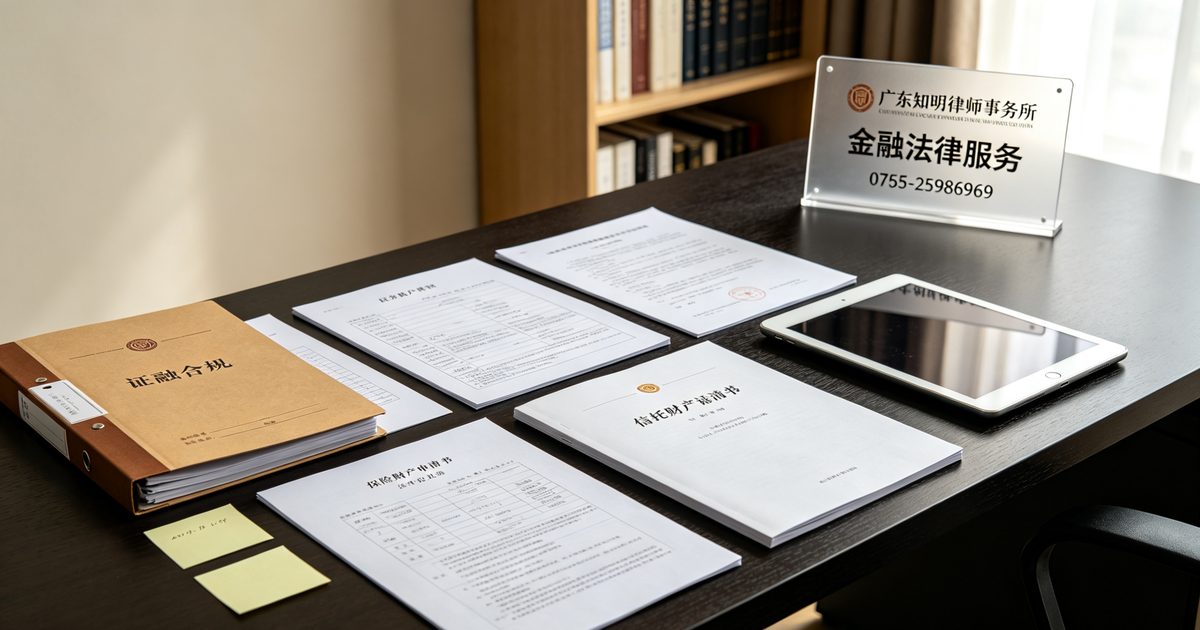
1、 How many of the most common pitfalls in contract disputes have you stepped on?
Shenzhen is a city of entrepreneurship, where equity incentive agreements and commercial contracts are signed almost every day. Yet among the clients our team receives at our Futian office, eight out of ten only realize they've fallen into a trap after putting pen to paper. To sum it up, the most common pitfalls are none other than the following four:
First, being swept off your feet by "verbal promises" at the time of signing the contract.The boss pounded his chest and said, "Great work, Xiao Wang. Next year, I'll give you 2%." You take it as a promotion, as recognition, and sign without a second thought. But what's written in the contract is "incentive fund" or "option pool share," or even just "subject to adjustment based on the company's operating conditions." How much, how it's given, when it vests—all vague. You think it's equity; the company says it's just a bonus.
Secondly, the wording of the equity incentive agreement itself is problematic.Many internet companies in Shenzhen actually offer not "equity" but "virtual equity" or "dividend rights," which are completely different from equity registered with the business authority. Virtual equity only corresponds to dividends and becomes invalid upon resignation; dividend rights are essentially creditor's rights, and the company can simply refuse to pay if it loses money. If you fail to notice the word "virtual," you're digging a trap for yourself.
Third, the exit mechanism stipulated in the contract is merely a formality.The most easily manipulated part of an equity incentive agreement is the "exit clause" — for example, "employees should unconditionally transfer their equity back to the founding shareholders upon departure" or "the repurchase price shall be calculated based on net assets per share."Net assets per shareThat's the number from an audit. A loss-making company can make its net assets negative, and then you won't get a penny of the buyback payment. What's worse, the terms state that "the company has the right to unilaterally determine the buyback price" — that's basically handing the knife to the other side.
Fourth, upon signing the Labor Contract Termination Agreement, all rights were waived.This is the most unjust part. When you leave, HR asks you to sign a "One-Time Settlement Agreement," which states: "The parties have no disputes whatsoever, and Party B waives all claims arising from the employment relationship and equity incentives." Many people think, well, the severance has already been negotiated, so they just sign it casually. As a result, you get the compensation, but old scores are wiped out too.
2. How exactly does the law handle this?
Many clients ask us: "The company says what I signed isn't an equity agreement. How does the law actually determine this?" Here we need to distinguish a core issue —The nature of the agreement.。
When courts and arbitration institutions review such disputes, they never look at what the title of the agreement says, but rather at what the agreement actually stipulates in substance. If you are an employee of the company and the agreement does not specify key terms such as "shareholder qualification," "business registration," or "equity transfer," the adjudicator is very likely to determine that this is merely an "incentive plan similar to a bonus," falling within the scope of labor disputes. However, if the agreement explicitly states that "equity change registration shall be completed by a specific date," and you have actually participated in the company's profit distribution and shareholder meetings, then it may be recognized as a genuine equity transfer.
In recent years, the adjudication standards of Shenzhen courts have been fairly consistent.Where the agreement does not provide for the transfer of equity, does not list the register of shareholders, and no payment has actually been made, none of these employees shall be easily recognized as shareholders.If you're suing the company, the first step isn't asking "should I get the equity back," but rather "what exactly is the legal nature of this contract." If you get the nature wrong, everything that follows is wasted effort.
There's also a practical detail—The relationship between labor contracts and equity incentive agreementsWe have encountered clients whose labor contracts did not include equity incentives, but there was an oral promise like "work three years and you'll get shares." Does this count as part of the labor contract? Unlikely. Courts tend to hold that equity incentives constitute an independent civil contractual relationship, not within the scope of labor disputes. To assert your rights, you would have to file a separate civil lawsuit. That path is narrower and more specialized; most people wouldn't even know how to draft the claim.
Practical advice: remember these three points:
One, keep evidence when signing the agreement.Save all the applicant’s chat records, emails, HR’s explanatory recordings, and internal company policy documents. In particular, if the contract contains terms like “incentive” or “dividend,” be sure to have HR or the founder handwrite an annotation: “The equity referred to in this agreement is the actual registered shares as per the business registration; the transfer price is ____, and the change date is ____.” A signed annotation is iron
Two: Don't rush to sign any "finalizing" documents when resigning.Carefully review, word by word, any document that says "settle all amounts," "waive all rights," or "no further disputes." If you're unsure, have a lawyer look it over before signing. A 500-yuan consultation fee is better than losing hundreds of thousands.
Third, if you notice something is off, act immediately.Shenzhen's arbitration time limits and litigation limitation periods are very short. Some clients have told us, "I feel I've been wronged, but I haven't officially resigned yet, so let's wait and see" — that's how many people end up losing their equity by waiting. As soon as you discover that the company has swapped "virtual shares" for "real shares," or is delaying the registration change, immediately send a formal notice demanding performance within a specified time limit, and preserve written evidence of the other party's breach.
Third, what can a professional lawyer do for you?
Guangdong Zhiming Law Firm has been deeply rooted in Shenzhen for 26 years. In our office at the New World Center, Shi Xia North 2nd Street, Futian District, we have seen too many clients walk in with a stack of contracts and a look of despair on their faces. Their confusion is often the same:"I signed the contract, and the signature is mine—can I still back out?"
The validity of a contract does not equate to its fairness, let alone its irrevocability.
Our director, Lawyer Shen Jinlong, holds a master's degree in economics from Fudan University and is a former executive of a large state-owned enterprise. He has 22 years of practice experience and 31 years of economist qualifications. His most distinctive trait can be summed up in eight characters —Complex cases, systematic handlingHaving handled over 10,000 cases, contract disputes and equity disputes are his top priorities. He often says himself, "Many clients have already read their agreements dozens of times over before bringing them to me, but they can't see anything suspicious. It's not that they're unintelligent; it's because they view the contract from an employee's perspective. Lawyers, on the other hand, examine it from both the company's and the legal perspective, specifically to find the hidden knife concealed in the contract."
For example, we handled a case like this. A technical director in Shenzhen had worked at an app company for five years and signed an Option Grant Agreement stipulating that the options would vest in four installments. Before the third installment vested, the company dismissed him on the grounds of "business adjustment" and refused to cash out the already-vested options, citing that "the options automatically lapse upon termination of the employment relationship." After taking the case, Attorney Shen started by examining the original agreement and found a clause stating, "Options under this agreement shall not lapse due to termination of the employment relationship"—a line buried in the densely packed attachments that the client himself had forgotten. Next, we compiled the PowerPoint presentations on equity incentives from the company's internal emails over the years, proving that the company had made irrevocable commitments to employees at the institutional level. In the end, the court ruled in favor of all his claims, and he recovered option compensation worth
There is also Lawyer Li Yuming, who specializes in construction engineering, real estate sales and leasing, corporate debts and claims, and corporate mergers and acquisitions. His approach to handling economic contract disputes is very pragmatic: no unnecessary litigation, negotiate first if possible, and immediately file for preservation when needed—never dragging things out. A client had been owed material payments by a construction company in Shenzhen for three years. The other party had changed its legal representative and shareholders, claiming "the company has no money." Lawyer Li did not rush to file a lawsuit. Instead, he first applied for asset preservation, freezing the other party's accounts receivable in an urban renewal project in Luohu. Two months later, the other party proactively sought a settlement, and the full amount was paid.
Why can't people handle this type of case on their own? Because legal knowledge is just the foundation; what's more crucial is...Litigation strategy and experience.When to strike, who to target, which line to hit, and how to press on the opponent's pain points until they break—this is an intuition that can only be formed through more than a decade of accumulated cases.
4. Frequently Asked Questions (FAQ)
Q1: If an equity incentive agreement is not registered with the business administration bureau, does that mean it is invalid?
Not necessarily. Business registration is a requirement for validity against third parties, not a condition for the contract to take effect. As long as the agreement's content is clear and represents the genuine intent of both parties, the court can still recognize the agreement as valid. However, if you only have an "oral promise" without any written documentation, it would be very difficult to establish its validity legally.
Q2: The company does not recognize the "equity" in the agreement, claiming it is a "dividend right." Can I sue it for fraud?
You can give it a try, but it depends on whether you have evidence proving that what the company promised at the time of signing was "company-registered equity," while the contract text states "dividend rights." If there are chat records or emails to support this, you could claim contract fraud and seek to rescind the agreement or claim compensation for losses.
Q3: Our company says that if you leave, the equity must be repurchased at the original capital contribution price. Is this legal?
It is necessary to examine whether the agreed price is obviously unfair. If the company is in a profitable state, but the repurchase price is lower than, or even far below, the fair value, you can argue that the clause violates the principle of fairness and request the court to make an adjustment. However, the premise is that the agreement does not explicitly stipulate "unconditional repurchase" and that you have confirmed it.
Q4: Which is better in Shenzhen, a small law firm or a large law firm?
For contract disputes, choosing a law firm is not about how tall the building is, but about the team's professionalism and responsiveness. Large firms have the resources of large firms; small firms have the flexibility of small firms. But the core is whether the handling lawyer has experience with similar cases and whether they understand the adjudication standards of Shenzhen courts. Zhiming Law Firm is not particularly large in scale, but every case is personally handled by the principal lawyer or a senior partner. There is absolutely no situation where "one team takes the case and another lawyer appears in court."
Q5: I have signed the Separation Settlement Agreement. Can I still change my mind?
It is indeed difficult, but not entirely without hope. If you can prove that the signing involved fraud, duress, or a major misunderstanding, or that the agreement's terms are clearly unfair, you can file a lawsuit within one year to seek revocation. The time window is very short, so it is advisable to consult a professional lawyer as soon as possible.
The frustrating part of contract disputes is thatYou think signing is the end, but it’s actually just the beginning.Guangdong Zhiming Law Firm has been operating since its establishment in 2000, having witnessed 26 years of ups and downs in Shenzhen's commercial landscape. If you've hit a roadblock with equity incentives or economic contracts, you're welcome to drop by Room 1802, Block A, Xintian Century Business Center, Shixia North Second Street, Futian District. Bring your contracts, and we'll brew a pot of tea and have a good chat. Tel: 0755-25986969.
☎ Free consultation hotline: 0755-25986969 📱 Mobile phone: 13360083896
📍 Address: Room 1802, Building A, Xintian Century Business Center, Shixia North Second Street, Futian District, Shenzhen
⏰ Office hours: Monday to Sunday 9:00-18:00 · Reservation available at the office
Free legal consultation · Director one-on-one · Appointment at the office