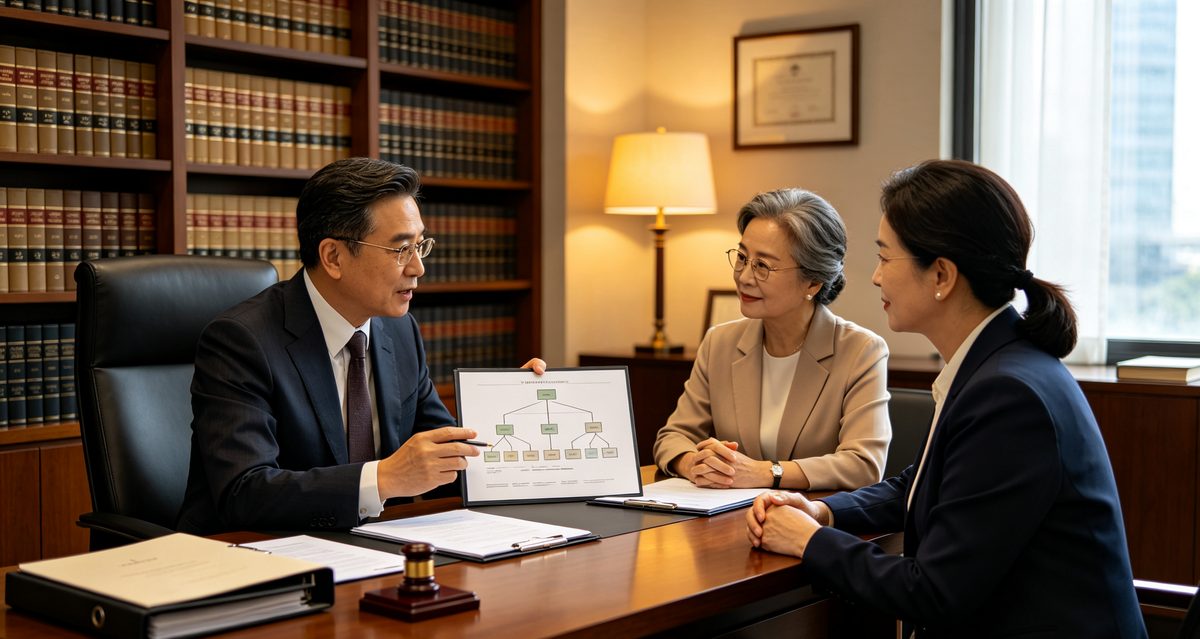
A Shenzhen company's 3-year R&D technology was taken by a departed employee who started a new venture. A lawyer teaches you 4 steps to hold them accountable and protect your rights.
Last month, a boss who runs an electronics company in Longhua, Shenzhen, came to us with urgency in his voice: "We spent 3 years and over 2 million yuan developing core technology, and a former engineer copied it and took it away, then immediately went to work for a competitor. Now their product is already on the market, identical to ours. Is there still any hope for us?" This is not an isolated case. Guangdong Zhiming Law Firm receives similar inquiries almost every week—about trademark squatting, patent counterfeiting, and trade secret leaks. In this city of innovation, Shenzhen, intellectual property disputes are growing at a visible pace.
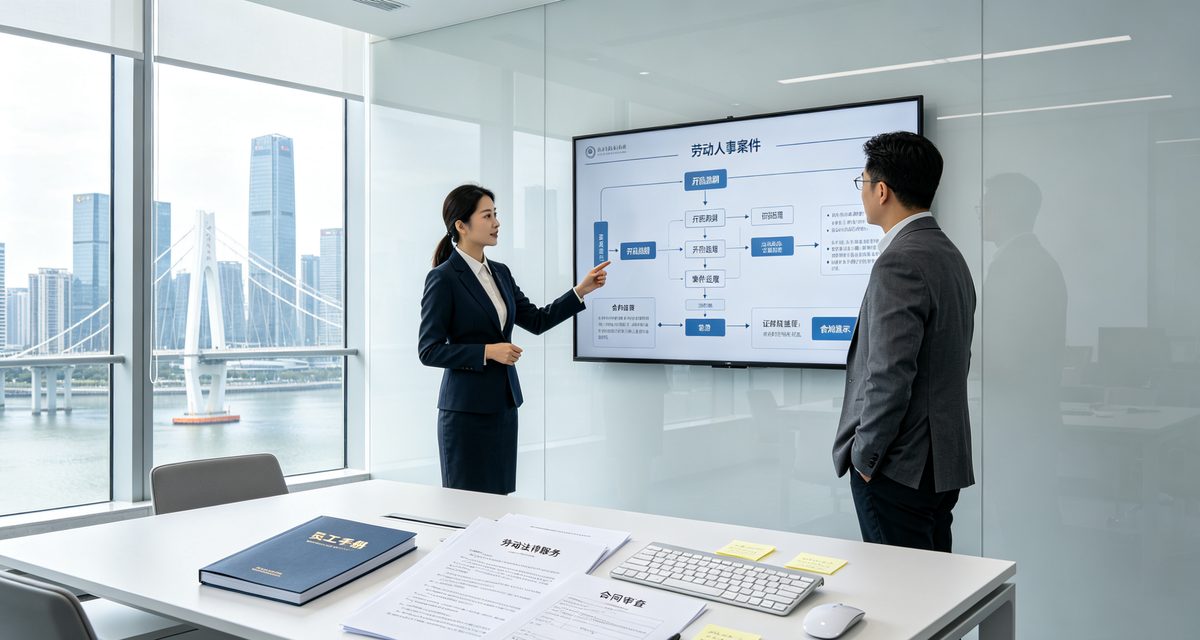
H2 The Real Level of Intellectual Property in Shenzhen: How Many New Cases in a Year? Where Is the Compensation Ceiling?
According to data released by the Shenzhen Intermediate People's Court, intellectual property cases in Shenzhen have grown at an annual rate of approximately 15% over the past three years, with disputes involving core technical secrets and design patents accounting for the highest proportion. Many business owners assume that infringement compensation is merely "a symbolic payment of tens of thousands of yuan," but judicial practice has long since moved beyond that. Under Article 63 of the Trademark Law and Article 65 of the Patent Law, the multiplier for punitive damages for willful infringement can range from 1 to 5 times, and the statutory compensation cap has been raised to 5 million yuan. This means that, with sufficient evidence, a court is entirely capable of awarding several million yuan in damages for a copied design patent. The key issue has never been "whether the law will step in," but rather "whether you can produce a chain of evidence that convinces the judge."
H2 Which laws apply respectively to the three most painful infringement scenarios?
Q: I'm in Futian, Shenzhen. After five years of running my company and finally building a bit of a reputation, I discovered that the trademark was preemptively registered by a trading company in a neighboring city. Can I still get it back?
Answer: Yes, but it depends on the time window. If within the public announcement period, you may directly file an opposition with the China National Intellectual Property Administration; if the mark has been registered for three years or more and the other party has not actually used it, you may apply for cancellation on the grounds of "non-use for three consecutive years." The most difficult scenario is when the other party is also using the trademark; in that case, you must request a declaration of invalidity from the Trademark Review and Adjudication Board in accordance with Article 32 of the Trademark Law, which prohibits "registration of a trademark by unfair means where another party has already used it and it has gained certain influence."
The first type of pain: trademark squatting. Articles 32 and 57 of the Trademark Law apply. Many small and medium-sized sellers in Shenzhen focus only on selling products in the early stage and neglect trademark layout, only to be targeted by professional trademark squatters. The key breakthrough point in such cases lies in proving that "you used the mark first and it has gained certain influence," which requires providing sales records from the past three years, advertising placement contracts, exhibition photos, and other supporting materials.
The second type of pain: patent infringement. Article 65 of the Patent Law applies. The most critical step in enforcing rights for design patents and utility model patents is the "technical feature comparison," which involves listing item by item how the opposing party's product falls within the scope of protection defined by your claims. Many business owners purchase patents, but their claims are written like prose, leaving infringers with enormous room to circumvent.
The third type of pain: core technology leaked by departing employees. Article 9 of the Anti-Unfair Competition Law applies. Personnel turnover in Shenzhen tech companies is extremely fast, and it is common for technical staff to take drawings, source code, and customer lists when jumping ship. To pursue legal liability, three things must be proven simultaneously: the information constitutes a trade secret (non-public knowledge + confidentiality measures + commercial value), the other party committed an infringing act (improper acquisition or disclosure), and your actual losses.
H2 Rights protection is not about arguing, but about building an evidence chain: Zhiming Law Firm's 4-step operational pathway.
First, securing evidence must be done before alerting the other party. Many business owners, upon discovering infringement, immediately call the other party to demand an explanation, which is precisely the most taboo move. The correct approach is to first have the evidence notarized, preserving in full the promotional materials on the other party's website, the sales pages on e-commerce platforms, and the entire process of purchasing physical goods at brick-and-mortar stores. Notary offices in Shenzhen are very familiar with this type of procedure, and a full set of steps typically takes 3 to 5 days to complete.
Second, sending a lawyer's letter is not meant to "intimidate" but to "draw a line." After the lawyer's letter is issued, if the opposing party continues to sell or produce, this letter will serve as irrefutable evidence when later claiming willful infringement and seeking punitive damages. According to data, in cases handled by Zhiming Law Firm, approximately 35% of parties proactively reach a settlement after receiving the letter, while the remaining 65% ultimately still need to proceed through administrative complaints or litigation.
Third, the choice of venue requires careful consideration. Patent infringement can be handled either through administrative enforcement by the Market Supervision Administration (fast, with conclusions generally issued within 45 days) or through court litigation (higher compensation, but longer cycle—the average trial period for intellectual property cases at the Shenzhen Intermediate Court is 6-9 months). For many cases, we recommend a dual-track approach: filing both an administrative complaint and a lawsuit, using the administrative procedure to force the infringing party to cease production, and then negotiating compensation in the litigation.
Step 4: When calculating the amount of compensation, do not focus solely on "loss of profits." Under Article 1185 of the Civil Code, punitive damages may be claimed for intellectual property infringement. In addition to your own losses, you may also claim the profits the other party gained from the infringement, and even include the reasonable expenses you incurred to enforce your rights—attorney fees, notarization fees, and travel expenses. Courts typically award these expenses in full.
H2 A Real Case: From Being Copied to Receiving 3 Million in Compensation, How Much Effort Lies in Between?
In 2022, a design company headquartered in Nanshan, Shenzhen approached Zhiming Law Firm. A smart home product developed by the company had been out on the market for only six months when a manufacturing enterprise produced a highly imitative appearance design and dumped it on major e-commerce platforms at less than half the price, directly causing a drop of approximately 42% in authentic product sales. After our intervention, we first conducted three rounds of notarization on the online sales pages of the infringing products, and then commissioned patent agents to perform a detailed infringement comparison, demonstrating item by item that the opposing party's products fell within the protection scope of the design patent.
Meanwhile, during the investigation phase, we discovered that this infringing company was already being sued for counterfeiting for the second time, showing clear subjective malice. In accordance with the punitive damages provision of Article 65 of the Patent Law, we filed a lawsuit with the Shenzhen Intermediate People's Court, seeking compensation at 1.5 times the defendant's profits. After 12 months of trial, the court ultimately ruled in full support of our claim, ordering the defendant to cease infringement, destroy inventory, and pay economic losses and reasonable enforcement costs totaling RMB 3 million. After the judgment took effect, the opposing party voluntarily paid all amounts in full, and the counterfeit products completely exited the market within three months.
Question: Lawyer, the case you just mentioned is indeed satisfying, but if it's a small company, the legal fees would almost match the compensation amount—is it really worth it?
Answer: This requires looking at the bigger picture. Shenzhen currently has strong judicial protection for intellectual property, and prevailing parties can claim reasonable expenses for rights enforcement. Additionally, many districts have subsidy policies for IP rights enforcement, such as Nanshan, Futian, and Longhua, which provide a certain percentage of subsidies for successful cases. Compared to watching the market be taken away, proactively enforcing your rights is the only way to protect your market share.
H2 In Conclusion
Intellectual property cannot be hidden, cannot wait, and cannot be delayed. If your trademark has been squatted, your patent has been copied, or your technology has been taken away, every day you hesitate is another day they sell, and another piece of your market share is lost. If you are facing such issues and you are a business owner in or around Shenzhen, you are welcome to contact Guangdong Zhiming Law Firm directly. This is a long-established law firm rooted in Shenzhen for 26 years, having handled over 10,000 cases cumulatively. The firm's director, Lawyer Shen Jinlong, has 26 years of practicing experience, holds a Master's degree from Fudan University and the title of Senior Economist, and specializes in complex intellectual property and corporate equity disputes. Our office is located at Room 1802, Tower A, Xintian Century Business Center, Shixia North Second Street, Futian District, Shenzhen. You can also call 0755-25986969 directly. Prepare your evidence materials and come have a discussion about the next steps.
Need professional legal help?
📞 Free consultation: 0755-25986969 (weekdays 9:00-18:00)
📍 Address: Room 1802, Tower A, Xintian Century Business Center, Shixia North 2nd Street, Futian District, Shenzhen
⚡ First phone consultation free