Shenzhen equity disputes grow 20% annually — when partners fall out, how can you protect your equity?
1. Partners turn against each other, equity gets diluted, and you may be completely unaware
In the autumn of 2024, Mr. Lin, a founding shareholder of a smart hardware company in Nanshan Science Park, Shenzhen, suddenly discovered that his shareholding had dropped from 40% to 22% — all without his prior knowledge. The company said it had completed a Series B financing round, but the signature on the financing documents approving the capital increase and share expansion was not his. Another partner, together with the new investor, had directly diluted his shares. This kind of situation is not uncommon among companies in Futian, Nanshan, and Longhua districts of Shenzhen.
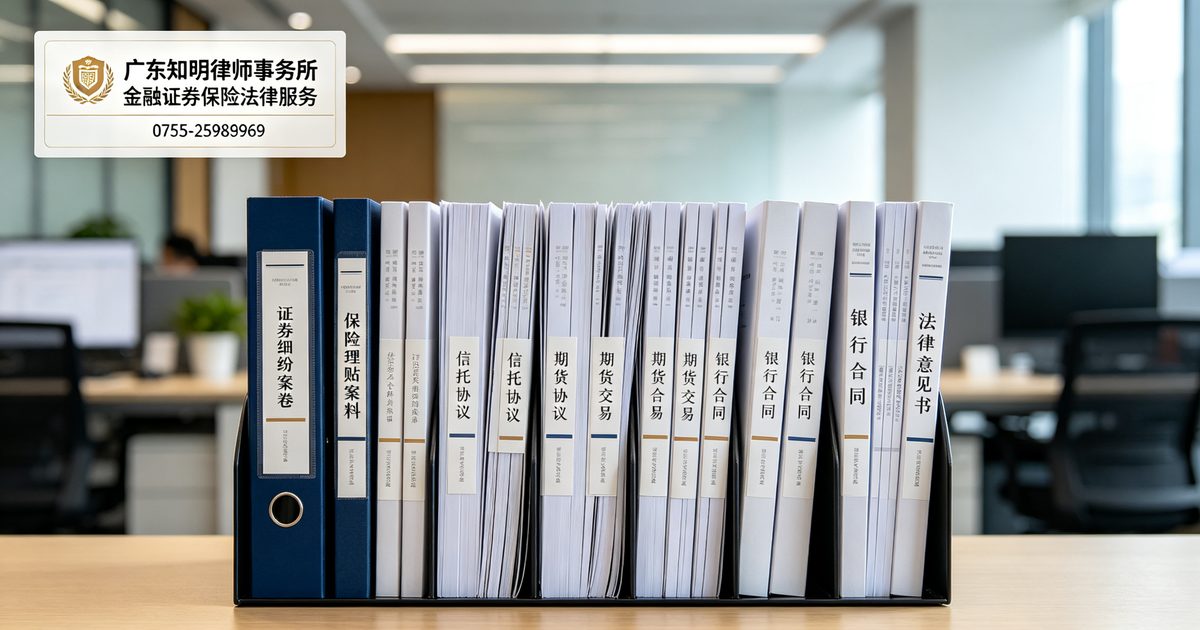
Partners falling out, battles for control, malicious dilution of equity—these have increasingly appeared in the case files of Shenzhen's two-level courts over the past three years. Many shareholders only realize they've been completely marginalized when dividends don't add up, voting rights are rendered powerless, and they can't get onto the board of directors.
II. Data Reveals: Shenzhen Equity Disputes Are Growing Explosively
The annual growth rate of equity dispute cases in Shenzhen has reached 20%, twice the national average. In 2023, courts at two levels in Shenzhen concluded over 3,800 equity dispute cases, among which cases involving corporate control disputes accounted for nearly 35%, and high-net-worth cases with subject amounts exceeding 5 million yuan accounted for 42%. At Futian District Court, three types of cases—shareholders' right to information, capital increase dilution, and profit distribution—accounted for over 60
Equity dilution is the most covert way to infringe on shareholders' rights. It doesn't directly cut into your investment, but it gradually hollows out your stake in the company. By the time you want to exercise your voting rights, inspection rights, or dividend rights, you'll find that your original shareholding ratio has become all but nominal.
III. Legal Basis: Your equity is protected by both the Civil Code and the Company Law.
Many people think that holding 40% of the shares means they can rest easy, overlooking the landmines buried in the company's articles of association. Article 125 of the Civil Code clearly protects the equity and other investment rights lawfully enjoyed by civil subjects. Equity is not an empty check; it is a property right protected by law.
Article 34 of the Company Law is more direct: when a company increases its registered capital, shareholders have the preemptive right to subscribe to the new capital in proportion to their paid-in capital contributions. In other words, if the company wants to increase capital and dilute your stake, as long as you do not give up your preemptive subscription right, other shareholders cannot force your share to be diluted.
Question: The company says it wants to increase capital and expand shares to bring in new investors. I don't want to follow the investment. Will my equity definitely be diluted?
Answer: Not necessarily. You have preemptive rights. If you do not follow the investment, the portion you give up can only be allocated to new investors or other shareholders. However, in practice, many people do not know that after the company convenes a shareholders' meeting and notifies you, you must respond in writing within 30 days. If you fail to reply within that period, the law treats it as consent to waive your rights, and your equity will be lawfully diluted.
Four, Solution: Three Steps to Protect Your Shareholder Rights
Step one: amend the company's articles of association. Explicitly stipulate in the articles that any capital increase or share expansion must be unanimously approved by all shareholders, or set a voting threshold higher than two-thirds or even three-quarters. This way, any plan that seeks to dilute your shares through majority rule will be blocked by the articles of association.
Second, exercise the preemptive subscription right in writing. After receiving the company's capital increase notice, do not just verbally say "I disagree." Instead, reply in writing within the statutory period and retain proof of delivery. Court precedents in Xiamen, Fujian and Shenzhen, Guangdong have both confirmed that verbal objections cannot override a shareholders' resolution.
Third step: file a lawsuit within 60 days to revoke the resolution. If the other party forges your signature, or simply fails to notify you of the meeting and directly makes decisions on your behalf in the shareholders' resolution, note that Article 22 of the Company Law provides: where the convening procedures or voting methods of a shareholders' meeting resolution violate laws or the articles of association, a shareholder may, within 60 days from the date the resolution is made, request the people's court to revoke it.
Q: I discovered that the controlling shareholder forged a shareholders' meeting resolution to increase capital and dilute my shares. Is there still a remedy?
Answer: Yes, but there is a time window. This window is 60 days from the date the shareholders' resolution is made. If a lawsuit is filed after 60 days, the court may reject it on the grounds that the statutory period has been exceeded. In cases handled by Zhiming Law Firm, many shareholders approached us around the 45th day and ultimately succeeded in having their cases filed within the deadline.
Five. Real Case: From 9.8% Back to 40% — How Zhiming Law Firm Won the Equity Defense Battle
In early 2022, a technology company in Futian District, Shenzhen, specializing in automation equipment, held a shareholders' meeting without notifying the third shareholder Wang. This meeting was orchestrated by the majority shareholder Li and the second-largest shareholder Zhang, resulting in a resolution to increase capital. Wang's shareholding ratio was directly diluted from 40% to 9.8%, effectively stripping him of his veto power.
When Zhi Ming Law Firm's team led by Director Shen Jinlong took on the case, 31 days had already passed since the resolution was made. Director Shen led the team to pursue two breakthrough points simultaneously: first, the convening procedure of the shareholders' meeting was illegal, as Wang had not received any notice of the meeting; second, the registration procedures for the amendment to the articles of association after the capital increase were incomplete. After six months of evidence collection and litigation, the Futian District Court ultimately ruled to restore Wang's 40% equity.
Question: After shareholders of a Shenzhen tech company fall out, will the court really rule the equity back?
Answer: Yes, but the key lies not in the judgment itself, but in the chain of evidence. The core of this case is that the other party failed to notify about the meeting, the signatures were forged, and the amendment to the articles of association was not registered in accordance with the law. All three of these matters have clear evidence, which is the only basis on which the court can determine that the shareholder resolution was not established. If you merely claim orally, "I have been harmed," without evidence, no one can help you.
VI. Conclusion: Protecting equity depends on action, not luck.
People who run businesses in Shenzhen all know that in a partnership venture, the hardest part isn't finding money or direction—it's how to hold on to your share once people's hearts change. Once your equity gets diluted, the cost of trying to get it back later is higher than starting the business itself.
Guangdong Zhiming Law Firm has been rooted in Shenzhen for 26 years, handling over 10,000 cases cumulatively. Its director, Lawyer Shen Jinlong, has practiced law for 26 years, holds a master's degree from Fudan University, and is a senior economist. He previously served as a senior executive at a state-owned enterprise, giving him rich practical experience in corporate control disputes, equity conflicts, and shareholder rights protection. If you are facing difficulties such as partner betrayal, equity dilution, or infringement of shareholder rights, you are welcome to bring your company's articles of association and shareholder resolutions to Zhiming Law Firm for a consultation at any time.
Room 1802, Building A, Xintian Century Business Center, North 2nd Street, Shixia, Futian District, Shenzhen. Tel: 0755-25986969.
Need professional legal help?
📞 Free consultation: 0755-25986969 (weekdays 9:00-18:00)
📍 Address: Room 1802, Tower A, Xintian Century Business Center, Shixia North 2nd Street, Futian District, Shenzhen
⚡ First phone consultation free