A dispute between a brother and sister in Shenzhen over their parents' two properties — was a printed will ruled invalid? A inheritance dispute lawyer teaches you three steps to secure 20 million yuan in real estate.
When Mr. Chen from Futian District came to us, he had already been fighting a legal battle with his sister for nearly two years. His parents had left two properties, one in Luohu and one in Nanshan, with a combined market value exceeding 20 million yuan. Before his father passed away in 2018, he wrote a will stating that both properties were to go to Mr. Chen. However, his sister refused to accept it, claiming that the will was printed, bore only their father's signature, had no witnesses, and was therefore invalid.
Similar scenarios come to Zhiming Law Firm dozens of times a year. Shenzhen's inheritance dispute caseload has grown 15% annually, with cross-border and cross-generational inheritance becoming increasingly common, but the crux of the vast majority of conflicts boils down to a single point: whether the will is valid. Today, without beating around the bush, we will directly break down the three most critical aspects of inheritance disputes—will validity, statutory inheritance shares, and evidence preservation. Whether you can hold on to that property in your hands depends on these three steps.
Step one: Let's stop arguing and lay out the formal requirements of the will.
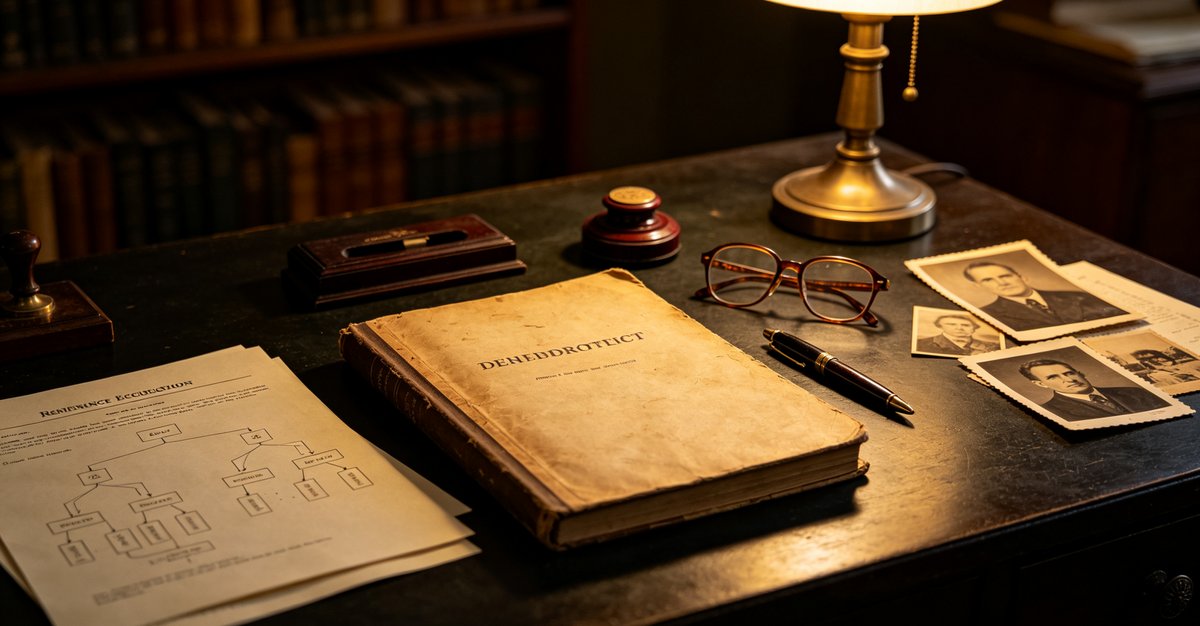
Many people assume that a parent writing a note and pressing a fingerprint constitutes a will. But Article 1136 of the Civil Code states it plainly: a printed will must be witnessed by two or more witnesses in person, and the testator and witnesses must sign each page of the will, noting the year, month, and day. Mr. Chen's father's will happened to fail precisely on this point—the printed document bore only the father's signature, with no witnesses.
The sister is advocating for equal division under statutory inheritance, and the court will most likely side with her. Simply put, there are fatal flaws in the will's form, and no matter how genuine the content is, it won't hold up. If you also have a similar printed will or handwritten will in your possession, first check these three things: whether there are witnesses, whether each page is signed, and whether there is a complete date. If even one is missing, the validity is in jeopardy.
Step Two: How is intestate succession divided? It's not simply "each person gets half."
If the will is invalid, succession reverts to statutory inheritance. Many people assume that siblings simply split everything equally, but it's actually not that simple. The first-order heirs are spouses, children, and parents; siblings are second-order heirs. If the grandparents were still alive when the parents passed away, the grandparents would also be entitled to a share. In Mr. Chen's case, both parents are deceased and he has no spouse or children, so he and his sister split the two properties equally.
But here's a situation that's common in Shenzhen—capital contribution. If Mr. Chen can prove that he fulfilled his primary maintenance obligations toward his parents, or that he paid the lion's share when the property was originally purchased, he can claim a larger share under Article 1130 of the Civil Code. This isn't exploiting a loophole; it's a situation where the law explicitly provides for "a larger share to be awarded," provided that he can produce transfer records and evidence of day-to-day maintenance support, not just talk.
Step Three: Evidence Preservation, More Urgent Than Winning the Lawsuit
Many clients come to us only after their bank transaction records have gaps and community visit records can no longer be retrieved. There is a golden window period for investigation and evidence collection. For example, when checking bank transactions, records generally can only be retrieved for the past 10 years; and when retrieving archives from the real estate registration center, proof of legal interest is also required. Every day of delay weakens the evidence.
Attorney Shen Jinlong, director of Zhiming Law Firm, once handled a case where the client was a Ms. Zhang from Nanshan District. The will left by her father similarly had formal defects, but Attorney Shen obtained over 500 bank transfer records from the father's lifetime, proving that Ms. Zhang had long been responsible for all of her father's medical and nursing expenses, with cumulative advances exceeding 860,000 yuan. At the same time, he visited three neighbors and two caregivers in the father's residential community, forming a complete chain of evidence for support obligations. In the end, the court ruled that Ms. Zhang had fulfilled her primary support obligations and awarded her the sole property valued at 20 million yuan, while her brother received only a 30% discounted monetary compensation.
Why is litigation not the only solution? Mediation is often faster.
Not all inheritance disputes have to go all the way to a judgment. The mediation rate for family cases in Shenzhen courts has remained above 40% year-round, and many cases can be resolved within two to three months through pre-litigation mediation, whereas the litigation cycle generally runs from one and a half to two years. Zhiming Law Firm's approach is: first conduct an evidence assessment, then lay out the numbers for the client—court fees, time costs, and the price of a fractured sibling relationship. If the other side is willing to mediate, we usually recommend negotiating the shares under the supervision of a lawyer—the time saved is worth more than anything else.
When choosing a lawyer, focus on dual competency in both family law and real estate.
Inheritance disputes span both family law and property law. A lawyer who only understands divorce cannot handle the calculation of property shares, while a lawyer who only understands real estate cannot grasp the judicial standards for determining support obligations. Zhiming Law Firm has been deeply rooted in Shenzhen for 26 years, having handled over 10,000 family cases, and its original "Zhiming Artistic Litigation Method" has won dual innovation awards from both the provincial and municipal bar associations—put simply, the firm not only cites legal provisions but also knows how to deploy "combined tactics" in the design of the evidence chain. Director Shen Jinlong has practiced law for 26 years, holds a master's degree from Fudan University, is a senior economist, and in his early years served as a senior executive at a state-owned enterprise, giving him particular experience in the partitioning of complex assets such as real estate investments and corporate equity.
If you are facing a dispute over the division of your parents' real estate, it is recommended that you first spend half an hour organizing the evidence before deciding whether to negotiate or litigate. Bring your materials to Room 1802, Block A, Xintian Century Business Center, Shixia North Second Street, Futian District, and we will assess the validity of the will and your chances of winning in person. Tel: 0755-25986969.
Ask:After our parents passed away, my sister has been occupying the house and refusing to let me live there. Can I file a lawsuit to demand a partition?
Answer:Yes. The statute of limitations for a dispute over the partition of co-owned property is 3 years, calculated from the date you become aware that your rights have been infringed. File the lawsuit as soon as possible and apply for property preservation to prevent the other party from selling the property at a low price or mortgaging it during the litigation.
Ask:Will a Shenzhen court recognize a will made by a father overseas?
Answer:For cross-border inheritance, first examine whether the will's form complies with the law of the place where the will was made. If the will was made in Hong Kong, as long as it meets the formal requirements of the Hong Kong Wills Ordinance, Shenzhen courts generally recognize its validity. However, where real property in the mainland is involved, mainland inheritance procedures must still be followed for confirmation.
(This article is for general legal education purposes only. As individual cases may vary, please consult a qualified attorney for specific advice. Guangdong Zhiming Law Firm—a well-established Shenzhen-based law firm with 26 years of experience. Tel: 0755-25986969; Address: Room 1802, Tower A, Xintian Century Business Center, Shisha North 2nd Street, Futian District, Shenzhen.)