Smart elderly care community launched in Futian, Shenzhen: How are legal risks and children's responsibilities defined in home-based elderly care?
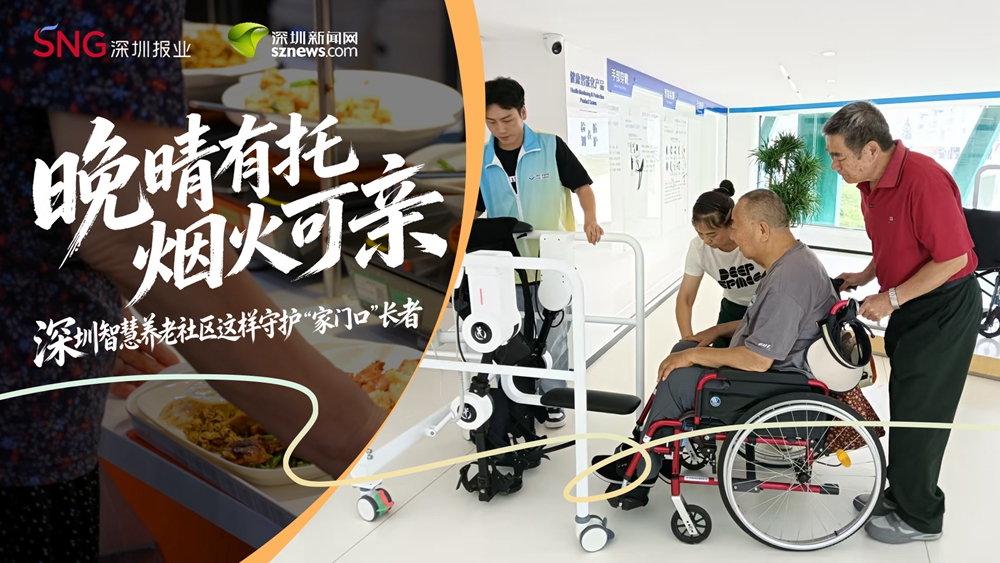
The Yitian Community in Futian, Shenzhen, recently became the city's first smart elderly care community. In response to its aging rate of up to 21%, the community has introduced facilities such as intelligent monitoring, remote medical care, and community canteens, aiming to address pain points in home-based elderly care, including falls of elderly living alone going unnoticed, makeshift meals, and difficult-to-manage ailments. This model carries exemplary significance in a fast-paced immigrant city, yet while smart elderly care brings convenience, a series of legal issues have quietly emerged—ranging from protection of the elderly's privacy rights to service contract disputes and the boundaries of children's support obligations—all of which require careful clarification within the institutional framework. As a lawyer deeply engaged in legal services in Shenzhen, this article will analyze the key legal points behind smart elderly care communities in light of current statutory provisions and practical experience, providing reference for elderly families and operating institutions.
Privacy Boundaries in Smart Elderly Care: Data Collection and Compliance with the Personal Information Protection Law
The core of a smart elderly care community lies in the real-time collection of elderly residents' daily data through IoT devices (such as fall detection radar, smart wristbands, and cameras) to enable timely risk warnings. However, the collection, storage, and use of such data directly implicate the sensitive provisions of the Personal Information Protection Law. Article 28 of this Law stipulates that health information, movement trajectories, and the like constitute sensitive personal information, and processing such information requires separate consent from the individual, while also adhering to the principle of "minimum necessity." In Yitian Community, if elderly residents are automatically identified upon entering public areas, or if family members view details of the elderly's indoor activities through an app, the operator must clearly inform data subjects of the purpose of data use and separately list authorization clauses in the contract; otherwise, it may constitute unlawful processing of personal information.
In practice, many communities enable round-the-clock surveillance by default in pursuit of "smart" effects, and elderly residents and their children often sign agreements without carefully reading them. Once data is leaked or improperly used for commercial promotions, elderly individuals find it difficult to provide evidence to protect their rights. Guangdong Zhiming Law Firm once handled a similar case: a nursing home was ultimately held liable for infringement by the court because it failed to encrypt the transmission of elderly residents' health data, resulting in third parties obtaining the information. Therefore, operators should establish a tiered authorization mechanism—automatic alerts can be triggered in emergencies, but daily access requires real-name authentication by family members; at the same time, regular privacy impact assessments should be conducted to ensure that technological applications do not cross legal red lines.
Service Contract Disputes: Determination of Liability and Risk of Breach in Smart Elderly Care Services
Smart elderly care communities are typically operated jointly by property management companies, technology enterprises, or third-party service providers. Elderly residents and their families are required to sign service agreements with multiple parties, covering equipment leasing, health management, emergency response, and other matters. Pursuant to Article 496 of the Civil Code, the party providing standard form clauses must draw the other party's attention in a conspicuous manner to clauses that have a material bearing on their interests. However, in some communities, the contract language is ambiguous—for instance, "24-hour monitoring" is phrased as "best efforts to provide safety guarantees"—and in the event of an accident, operators often evade liability by citing "technical limitations" or "non-human error."
Using fall alerts as an example, if the device fails to trigger an alarm in a timely manner, resulting in an elderly person not receiving rescue, can family members claim compensation? The key lies in the service standards stipulated in the contract. If the agreement explicitly promises "real-time response," and the system delays the alarm due to improper maintenance, the operator constitutes a breach of contract and shall bear liability for damages in accordance with Article 577 of the Civil Code. Conversely, if the contract states that "the device is merely auxiliary and does not replace manual care," and the operator has fulfilled reasonable notification obligations, liability may be reduced. In recent years, Shenzhen has had precedents supporting the elderly party: in a smart community case where equipment was not inspected within the agreed period, the court ruled that the operator bear 30% of the fault liability. Therefore, it is recommended that family members review the contract clause by clause when signing, pay special attention to disclaimer clauses and emergency procedures, and, if necessary, entrust a lawyer to participate in negotiations.
Children's Duty of Support: Can Smart Elderly Care Reduce Legal Responsibility?
One of the original intentions of smart elderly care is to alleviate the pressure on children to provide care, but legal obligations of support have not been reduced as a result. Article 26 of the Civil Code stipulates that adult children have the duty to support, assist, and protect their parents, which includes financial support, daily care, and emotional comfort. Even if the community provides comprehensive services, children still cannot completely abandon their responsibilities on the grounds of "having purchased services." In judicial practice, when hearing support disputes, courts will comprehensively consider the frequency of children's visits, daily communication, and participation in medical decision-making. If an elderly person lives alone in the community but the children are out of contact for a long time, resulting in delayed treatment of an illness, the court may determine that the children have failed to fulfill their reasonable duty of care and may order them to bear the corresponding medical expenses.
However, the integration of smart eldercare has also provided new avenues for children to fulfill their obligations. For instance, through remote health data sharing, children can monitor their parents' blood pressure, heart rate, and other indicators in real time, and promptly schedule in-home care services, which can be seen as a positive manifestation of "assistance." Nevertheless, it should be noted that granting access to data should not become an excuse for children to shirk their responsibilities—if a child is aware of abnormalities but fails to take action, they may still be held liable for negligence. In one case mediated by a district court in Shenzhen: a son discovered through an app that his mother had not left the house for three consecutive days but did not follow up to verify; the mother later passed away at home. Although the court found that the community services were deficient, it also pointed out that the son had failed to exercise due diligence, and the parties eventually reached a settlement.
Protection of Elderly Rights and Interests: From Smart Elderly Care to Legal Safeguards
The promotion of smart elderly care communities is essentially an innovative attempt to address the needs of an aging society, but technology cannot replace the systematic legal protection of elderly rights. Article 7 of the Law on the Protection of the Rights and Interests of the Elderly stipulates that the state and society shall take measures to improve the systems that safeguard the rights and interests of the elderly. In the context of smart elderly care, this is reflected in three aspects: first, ensuring service accessibility to avoid excluding elderly people who are not adept at using smart devices due to the digital divide; second, establishing rapid dispute resolution mechanisms, such as setting up legal consultation points within communities or introducing people's mediation; third, strengthening supervision, with civil affairs departments conducting regular evaluations of operators to ensure they fulfill their statutory obligations of notification and safety assurance.
For Shenzhen, the practice of the Yitian community holds benchmark significance, but caution is needed against the tendency of "prioritizing construction over operation." Lawyers suggest that operators should appoint compliance officers to regularly review data management processes and contract terms; family members should retain service records as evidence for rights protection. If rights are infringed, elderly individuals may file complaints with consumer associations under the Consumer Rights Protection Law, or directly initiate lawsuits. Guangdong Zhiming Law Firm has long been focused on legal affairs in the eldercare sector, offering compliance reviews for community operators and professional support such as contract drafting and dispute representation for elderly families. As technology illuminates the path of eldercare, the law should be that ever-burning beacon of protection.