Shenzhen Children's Park begins trial operation on August 16. Lawyer Reminder: Guide to Safety Responsibility for Amusement Facilities and Protection of Visitor Rights.
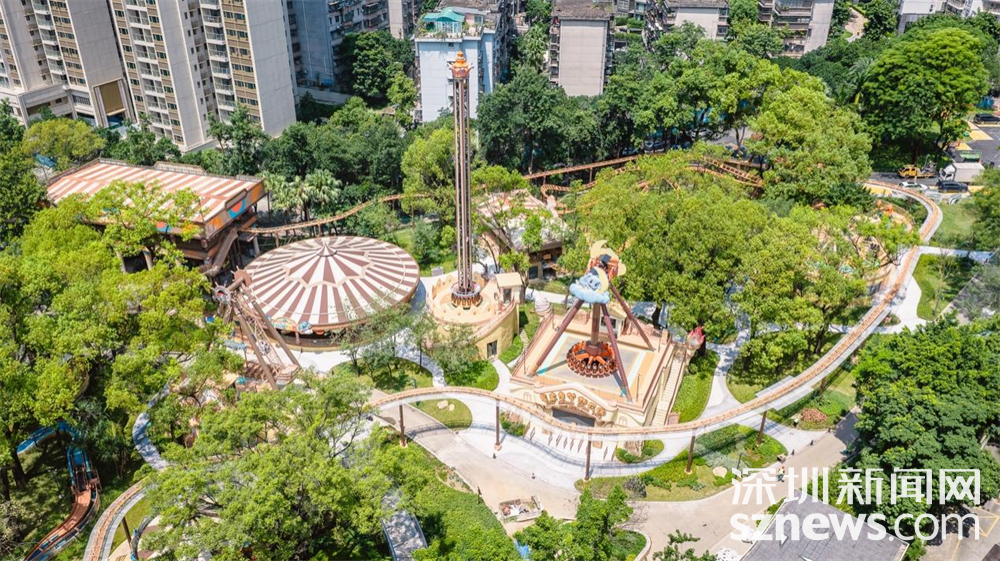
Shenzhen News Network reported on August 14, 2026, that the Shenzhen Children's Park, carrying 39 years of city memories, will begin trial operation on August 16. The renovated park adopts the concept of "viewing the city from a height of one meter," creating six themed play areas, offering free non-powered facilities, and introducing Guangdong Province's first underground double-decker AGV intelligent stereo parking garage. While bringing joy, this livelihood project has also raised public concerns about legal issues such as children's play safety and the division of legal liability. This article, from a lawyer's perspective, analyzes the legal risks in park operations and corresponding countermeasures in light of the Civil Code, the Consumer Rights Protection Law, and other regulations.
I. Park Management's Safety Protection Obligations and Liability Boundaries
As a public place, the management of a park bears a statutory duty of safety protection. Pursuant to Article 1198 of the Civil Code, where operators or managers of business premises or public venues such as hotels, shopping malls, banks, stations, airports, sports venues, and entertainment venues fail to fulfill their safety protection obligations, causing harm to others, they shall bear tort liability. A children's park is a typical public venue, and its management is required to ensure that amusement facilities comply with national standards, conduct regular maintenance and inspections, post warning signs, deploy adequate safety patrol personnel, and provide timely rescue after an accident occurs.
In this renovation, the park retained the elephant slide and carried out structural reinforcement, extended the slide track, and added hollowed-out decorations. A lawyer noted that the management's renovation and upgrade of old facilities reflects its fulfillment of safety guarantee obligations, but even after reinforcement, if children are injured due to design defects or improper maintenance, the management may still bear corresponding liability. For example, if the buffer zone was not adjusted after the slide track was extended, or if the hollowed-out decorations pose a risk of trapping children's limbs, the management may be required to pay compensation for failing to exercise reasonable duty of care.
Furthermore, the park explicitly states that "minors must be accompanied and supervised by a parent throughout the visit," which is not an attempt to shift responsibility. Lawyers emphasize that parents, as guardians, bear guardianship duties, but the park's safety guarantee obligation is independent. If an accident is caused by a facility defect, the management should still bear primary liability even if the parents are present; if it results from parental negligence, liability is apportioned according to the degree of fault. In judicial practice, courts generally consider the fault of both parties comprehensively and allocate liability proportionally in accordance with Article 1173 of the Civil Code (where the injured party's fault contributing to the occurrence or aggravation of the same damage may reduce the tortfeasor's liability).
II. Liability Allocation and Rights Protection Pathways for Tourist Injuries
When a child is injured while playing in a park, the allocation of liability is the core point of dispute. Common scenarios include facility malfunction, collisions caused by others, and improper operation by the child itself. Lawyers analyze that the allocation of liability should be based on the principle of "fault liability," meaning whoever is at fault bears the responsibility.
If injuries are caused by facility quality issues (such as loose screws or insufficient protective padding), the park management shall bear full or primary liability. Under Article 1253 of the Civil Code, where damage is caused to another person by the detachment or falling of a building, structure, or other facility, or of any article placed or suspended thereon, the owner, manager, or user shall bear tort liability if they cannot prove that they were not at fault.
If injuries are caused by pushing or collision from other visitors, the infringing party shall bear primary liability; however, if the park fails to fulfill its duty to maintain order (such as failing to promptly stop horseplay), it shall also bear supplementary liability.
If a child is injured due to failure to follow play rules (such as going up the slide in reverse), the parents, as guardians, may be required to bear partial responsibility themselves, but the park must prove that it has posted clear warning signs and fulfilled its duty to remind.
Regarding rights protection pathways, lawyers advise parents to preserve evidence immediately, including on-site photos, videos, medical records, tickets, or proof of purchase, and to promptly report the incident to park management, requesting an accident report. If negotiation fails, they may file a complaint with the consumer association or initiate a lawsuit in court. The statute of limitations is three years, pursuant to Article 188 of the Civil Code, calculated from the date the injured party knew or should have known of the infringement. Lawyers particularly caution that parents should avoid signing any liability waiver at the accident scene, as doing so may affect subsequent claims.
III. Legal Risks of Smart Parking Garages and Consumer Rights Protection
The AGV smart parking garage attached to the park is the province's first double-decker smart garage, enabling "stop-and-go" service. However, lawyers have cautioned that its operation involves multiple legal risks.
Firstly, vehicle adaptability restrictions (vehicle length ≤5.3 meters, vehicle width ≤1.9 meters, vehicle weight ≤2,500 kilograms) may lead to consumer misunderstandings. If a vehicle does not meet the specifications, the owner may be unable to park or retrieve the vehicle normally due to a lack of information. In such cases, if the park management fails to fulfill its obligation of conspicuous notice, it may constitute an infringement of consumers' right to know. Pursuant to Article 8 of the Consumer Rights Protection Law, consumers have the right to know the true circumstances of the goods they purchase, the services they use, or the services they receive.
Secondly, there is the risk of mechanical failure in the smart garage. If an AGV robot causes vehicle scratches or damage due to system errors or equipment defects, the operator shall bear fault liability in accordance with Article 1165 of the Civil Code, but must prove that it has fulfilled its maintenance obligations. The lawyer recommends that the park operator purchase corresponding equipment liability insurance and formulate emergency response plans.
Thirdly, personal information protection concerns. Smart parking systems typically need to collect data such as license plate numbers and entry times. Pursuant to the Personal Information Protection Law, operators must adhere to the principle of minimum necessity and adopt encryption measures to prevent data leakage. In the event of a data breach, operators may face administrative penalties and civil compensation.
Regarding consumer rights, lawyers pointed out that although parking fees were not mentioned, if charges are incurred, prices must be clearly marked. The powered amusement facilities are priced at three tiers—9 yuan, 15 yuan, and 19 yuan—which constitutes reasonable pricing, but the park must ensure that fees match service quality and must not force consumption. If a facility is unavailable due to malfunction, consumers have the right to request a refund or compensation.
IV. Compliance Recommendations for Park Operations and Parent Response Strategies
From a compliance perspective, the lawyer advises the park management:
1. Regularly conduct safety inspections on amusement facilities and retain records to demonstrate that maintenance obligations have been fulfilled.
2. Set up prominent size specification signs at the entrance of the smart parking garage, and arrange for manual guidance.
3. Improve the insurance mechanism and purchase public liability insurance to spread compensation risks.
4. Establish a fast complaint handling channel to resolve disputes in a timely manner.
For parents, the lawyer advises:
1. Before playing, inspect the facilities for any damage or looseness, and avoid using equipment with obvious defects.
2. Strictly comply with age and height restrictions, and do not allow children to enter unsuitable areas alone.
3. Keep your tickets and payment records as evidence for rights protection.
4. If an accident occurs, seek medical attention immediately and report to the police; consult a professional lawyer if necessary.
The renovation of Shenzhen Children's Park represents an improvement in urban public services, but safety and legal risks cannot be overlooked. Both the management and visitors should enhance their legal awareness and work together to create a safe and harmonious recreational environment. In the event of disputes, it is advisable to seek professional legal assistance promptly. Guangdong Zhiming Law Firm, with deep expertise in tort and consumer rights, offers free initial consultations to citizens, helping to safeguard their legitimate rights and interests.