Legal Risk Checklist for Bar Operators in Shenzhen: Four Red Lines—Anti-Drug Enforcement, Gang Crime Suppression, Protection of Minors, and Fraud Prevention; Violations May Result in Criminal Liability
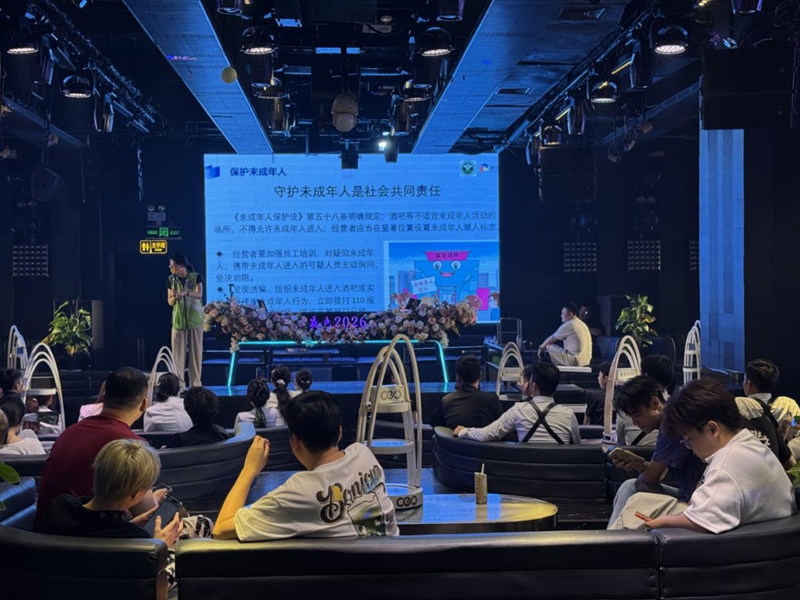
In August 2026, the Longgang Subdistrict Office in Shenzhen, in collaboration with the local police station, organized a special training session titled “Law-Abiding Operations and Joint Safeguarding of Public Security” for bar operators and employees, attended by approximately 300 participants. The training focused on four key themes: anti-drug efforts, combating organized crime, protecting minors, and preventing fraud—aiming to enhance the industry’s capacity for risk prevention and control. As a Shenzhen-based lawyer who has long specialized in corporate compliance and criminal risk prevention, I believe this training sends a clear signal: compliance in the operation of entertainment venues—including bars—has shifted from “recommendatory guidance” to “mandatory accountability.” Below, drawing on current laws and practical experience, I outline the key legal risks and corresponding mitigation strategies for operators and investors.
I. Anti-drug Responsibility: Unregulated Substances Are Not “Beyond the Reach of the Law”
Training emphasized the growing abuse of new psychoactive substances and unregulated addictive substances, highlighting that “unregulated ≠ harmless.” This warning is highly timely. In practice, some bar operators mistakenly believe they face no drug-related risks as long as they avoid controlled drugs such as heroin or methamphetamine. However, under Article 71 of the *Law on Public Security Administration Punishments*, illegal buying, transporting, carrying, or possessing even small quantities of unregulated narcotic or psychotropic substances capable of causing addiction may still result in administrative detention and fines. More critically, if operators knowingly permit drug use or trafficking on their premises, they may be held criminally liable for the offense of “harboring others to take drugs” under Article 354 of the *Criminal Law*, punishable by up to three years’ imprisonment.
In legal practice, many bar owners unwittingly become involved in drug-related offenses—employees conduct illicit drug transactions behind the owner’s back, and patrons use drugs in private rooms; as a result, owners are held criminally liable for failing to fulfill their obligations to inspect premises and report suspicious activities. Therefore, I recommend that operators implement three mandatory systems: first, an entry security inspection system, remaining vigilant against suspicious powders or pills; second, an employee training system, ensuring frontline staff can recognize behavioral indicators of drug use; and third, an immediate reporting system, requiring prompt police notification upon discovering any leads—never privately handling such matters out of a “better to avoid trouble” mindset.
II. Campaign Against Gangs and Evil Forces: Convenience Provided by a Venue May Constitute “Assistance”
The anti-gang and anti-evil campaign segment of the training focused on interpreting the Anti-Organized Crime Law. This law has been in effect since May 1, 2022, and clearly defines acts such as “soft violence” and “protective umbrellas.” Bars—venues characterized by complex patronage and frequent financial transactions—are highly vulnerable to targeting by organized criminal forces, which may use them as “bases” or “money-making tools.” If operators knowingly provide premises, funds, or information to an organized criminal syndicate—or even assist in concealing or destroying evidence—they may commit the “assisting conduct” stipulated under Article 27 of the Anti-Organized Crime Law and face criminal prosecution.
A more common risk is “passive complicity.” To sustain business operations, some bars adopt a “turn-a-blind-eye” attitude toward individuals involved in organized crime or other illegal activities among their patrons—going so far as to permit such individuals to monopolize private booths for extended periods and harass others. Such tacit acquiescence may be legally construed in judicial practice as “providing facilitative conditions.” Once substantiated, this may result in administrative penalties at the lighter end, or prosecution as joint offenders in more serious cases. I recommend that operators establish a “blacklist” system, refusing entry to all individuals designated as high-priority by public security authorities, and retaining surveillance video footage for no less than 30 days to facilitate investigation and evidence collection.
III. Protection of Minors: Operators Are the Primary Responsible Parties
The training emphasized that bar operators are the “primary responsible parties for protecting minors,” a statement grounded in clear legal provisions. Article 58 of the Law on the Protection of Minors explicitly stipulates that operators of commercial entertainment venues—including karaoke bars, bars, and internet cafés—where minors’ presence is inappropriate, must not permit minors to enter. Violators shall, within their respective jurisdictions, be ordered by the cultural and tourism, market regulation, and public security authorities to rectify the violation within a prescribed time limit, receive a warning, and forfeit any illegal gains; they may also be fined up to RMB 50,000. Where violators refuse to rectify or where circumstances are serious, they shall be ordered to suspend operations for rectification or have their business licenses or relevant permits revoked.
In practice, it is not uncommon for bars to inadvertently admit minors. Once a minor sustains injury after consuming alcohol on the premises—or becomes involved in other incidents—the operator often faces dual liability: civil compensation and administrative penalties. I once represented a case in which a bar failed to rigorously verify identification documents, allowing a 15-year-old boy to enter, consume excessive alcohol, and subsequently require hospitalization. Ultimately, the operator was fined and held liable for substantial medical expenses. This serves as a reminder to all operators that identity verification at the entrance must not be merely perfunctory; ID card readers must be used, and staff must be trained to conduct secondary verification for customers who appear underage.
IV. Fraud Prevention and Compliance: Industry Professionals Themselves Are Also Vulnerable Groups
During the training’s anti-fraud segment, scams such as “task-based refund schemes,” fraudulent investment schemes, and “pig-butchering” scams were analyzed—tailored to bar staff’s frequent social interactions and high-volume financial transactions. This section may appear unrelated to legal compliance, but in fact it is not. If staff members engage in activities such as “score-running” or money laundering, they may violate Article 287-2 of the Criminal Law—the crime of providing assistance for criminal activities conducted via information networks. The threshold for this offense is low: knowingly providing payment settlement assistance to others who use information networks to commit crimes constitutes the offense if the circumstances are serious, and is punishable by up to three years’ imprisonment or criminal detention, with or without a concurrent fine.
For example, a bartender in a bar, lured by the promise of “high-paying part-time work,” used his or her personal bank card to transfer funds for others and collected commissions per transaction, ultimately being convicted of the crime of “assisting information network criminal activities.” Such cases are not uncommon in Shenzhen. Therefore, business operators must not only guard against their own risks but also regularly conduct anti-fraud legal training for employees, clearly informing them of the legal consequences of participating in illegal fund transfers. Meanwhile, it is recommended that bars install the “National Anti-Fraud Center” app and encourage employees to register with real-name authentication—this serves both as a training requirement and a practical protective measure.
V. Attorney’s Recommendation: Establish a Compliance System—Prevention Is Better Than Remediation
This training session in Longgang Subdistrict effectively provides a “compliance checklist” for all bar operators in Shenzhen. From the perspective of legal risk prevention and control, I recommend that operators take action in the following three areas:
First, establish a “one store, one file” system, including employee training records, inspection logs, surveillance footage storage, and alarm records, to ensure complete documentation is available during law enforcement inspections or investigations. Second, retain legal counsel to regularly review business operations—particularly regarding prohibitions on minors’ entry, drug prevention, and suspicious transactions—and develop written operational guidelines. Third, if incidents involving drugs, organized crime, or minors have already occurred, immediately engage a lawyer; do not attempt private settlements or destroy evidence, as doing so may aggravate legal liability.
Guangdong Zhiming Law Firm has long provided compliance reviews, criminal risk prevention, and dispute resolution services to operators of entertainment venues in Shenzhen. We have assisted multiple bars in mitigating administrative penalties during penalty proceedings and have represented clients in numerous civil lawsuits arising from customer disputes. If you encounter specific legal issues in your operations, please feel free to consult us—we will provide practical, actionable solutions based on the latest judicial developments.
Peace-building is not merely a slogan but a legal obligation that every bar and every industry professional must fulfill. In a city like Shenzhen—where the rule of law is highly advanced—compliance with regulations is not only a means of risk mitigation but also the cornerstone of sustainable business development.