Typhoon and Rainstorm Level III Emergency Response Activated: Lawyer's Guide for Guangdong Enterprises on Work Stoppage Compliance and Work Injury Determination
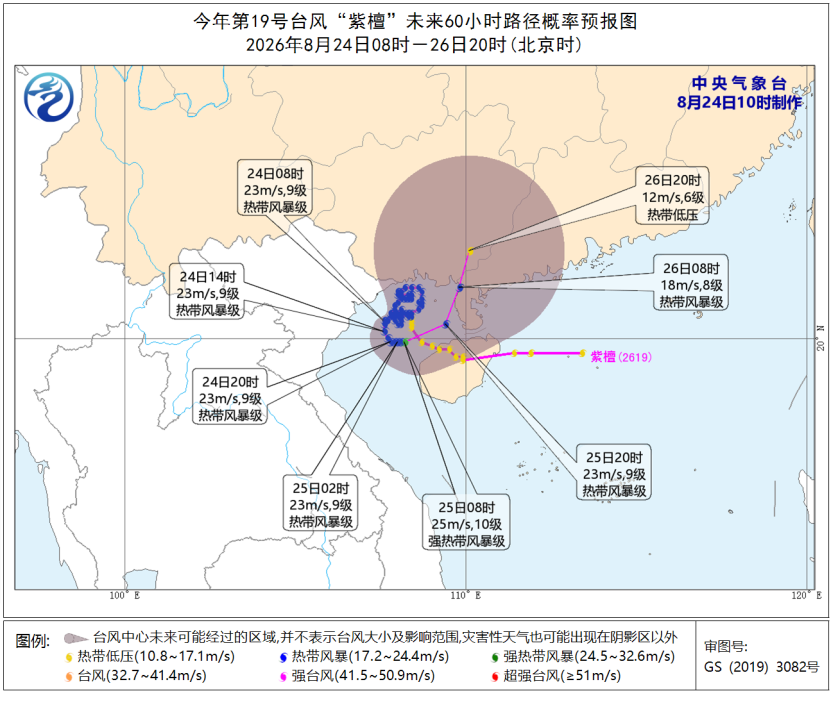
On August 24, 2026, the China Meteorological Administration upgraded the emergency response for major meteorological disasters to Level III, covering typhoons, heavy rainfall, and severe convective weather. The Central Meteorological Observatory forecasts heavy rainfall in Fujian, Guangdong, Guangxi, Hainan, and other regions, with strong winds over sea areas such as the Beibu Gulf and the Taiwan Strait. As a coastal city, Shenzhen faces the direct impact of typhoons and torrential rains, giving rise to legal issues such as business shutdowns and production halts, employee injuries during commutes, and delayed contract performance. As a Shenzhen lawyer who has handled numerous typhoon-related disputes, this article examines the boundaries of legal liability under extreme weather conditions from a practical perspective, providing guidance for both enterprises and individuals.
Work stoppage and production halt: compliance red lines for wage payment and compensatory leave arrangements
After a red typhoon warning or red rainstorm warning is issued, most enterprises in Shenzhen choose to suspend work or adjust working hours. However, suspension of work does not mean suspension of pay, as the law has clear provisions on wage payment. Article 39 of the Guangdong Province Wage Payment Regulations stipulates that if a unit suspends work or production for reasons not attributable to the workers, and the suspension does not exceed one wage payment cycle (up to 30 days), the employer shall pay wages in accordance with normal working hours. In other words, work stoppages caused by typhoons fall under reasons not attributable to workers, so enterprises must pay wages as usual and cannot deduct pay on the grounds of "not showing up for work."
If the stoppage exceeds one wage payment cycle, and the worker has provided normal labor, the labor remuneration paid to the worker shall not be lower than the local minimum wage standard; if the worker has not provided normal labor, a living allowance of no less than 80 percent of the local minimum wage standard shall be paid. Shenzhen's current minimum wage standard is 2,360 yuan per month, and enterprises should calculate treatment during the stoppage period based on this.
In practice, many companies attempt to offset downtime with compensatory leave or annual leave. Lawyers caution that compensatory leave must be agreed upon with employees through consultation, and unilateral mandatory compensatory leave may be deemed as a disguised deduction of wages. If a company faces operational difficulties due to a typhoon, it may initiate the economic redundancy procedure in accordance with Article 41 of the Labor Contract Law, but it must explain the situation to the labor union or all employees thirty days in advance and file a report with the labor administrative department for record. Contracts cannot be terminated arbitrarily.
Work Injury Determination: Can Injuries Sustained from a Typhoon During Commute Be Compensated?
Commuting during a typhoon carries high risks. If employees are injured on their way to or from work due to falling trees, electric shock from accumulated water, or similar causes, does this constitute a work-related injury? Article 14, Item 6 of the Regulations on Work-Related Injury Insurance stipulates that injuries sustained on the way to or from work due to traffic accidents for which the employee is not primarily responsible, or due to accidents involving urban rail transit, passenger ferries, or trains, shall be recognized as work-related injuries. However, injuries caused by falling branches or slips and falls due to typhoons are not "traffic accidents" and typically do not meet the criteria of this provision.
However, if an employee is injured by a typhoon while going out on business during work hours or on an official trip, then according to Article 14, Item 5 of the Regulations on Work-Related Injury Insurance, injuries sustained during business trips due to work-related reasons can be recognized as work-related injuries. For example, if a salesperson is injured by an advertising billboard blown down by the typhoon while on the way to a client, it constitutes a work-related injury. In addition, injuries caused by building collapses or falling objects due to the typhoon within the workplace meet the criteria of Article 14, Item 1, which covers "injuries sustained during work hours and in the workplace due to work-related accidents," and should be recognized as work-related injuries.
A technology company in Shenzhen once had an employee injured by glass curtain wall fragments blown off by wind in the park. The labor arbitration commission determined it to be a work-related injury, and the company bore all medical expenses and wages during the period of suspension for medical treatment. Lawyers suggest that enterprises should inspect workplace safety hazards before the typhoon season, purchase commercial accident insurance for field personnel, and retain records of weather warning releases as evidence to address disputes.
Contract Performance: Applicable Conditions for Exemption from Liability Due to Force Majeure and the Burden of Proof
Do typhoons and heavy rain constitute force majeure? Article 180 of the Civil Code stipulates that force majeure refers to objective circumstances that are unforeseeable, unavoidable, and insurmountable. Typhoons, as natural disasters, are generally recognized as force majeure. However, whether a business can be exempted from liability for breach of contract on this basis requires case-by-case analysis. Article 590 of the Civil Code provides that if a party fails to perform a contract due to force majeure, liability shall be partially or fully exempted based on the impact of the force majeure, unless otherwise provided by law.
The key point lies in "unforeseeability." If a contract is signed before a typhoon warning is issued, and the performance deadline happens to coincide with the typhoon's landfall, force majeure may be claimed. However, if the warning was issued several days in advance and the company still promised to deliver on time, it may be deemed at fault and unable to be exempted from liability. For example, a logistics company in Shenzhen knowingly accepted shipping orders despite an impending typhoon, resulting in cargo damage. The court ruled that it bore liability for compensation because it should have foreseen the risk.
The party claiming force majeure must promptly notify the other party and provide evidence within a reasonable period, such as warning documents issued by meteorological authorities, government work suspension notices, or traffic control announcements. Enterprises should send written notice to the counterparty within three days after the typhoon passes, retain email and WeChat records, and arrange notarization if necessary. For long-term supply contracts, it is advisable to pre-agree on extension clauses under extreme weather conditions, clearly specifying the extension period and cost allocation, to avoid disputes after the fact.
Disaster Prevention Obligations: The Legal Boundary Between Government Requisition and Personal Safety
During a typhoon emergency response, the government may lawfully requisition supplies, equipment, or premises. Article 12 of the Emergency Response Law stipulates that relevant people's governments and their departments may requisition the property of organizations and individuals to respond to emergencies. Requisitioned property shall be promptly returned after use is completed or after the emergency response work concludes; if the property is damaged, lost, or destroyed during or after requisition, compensation shall be provided. If enterprises in Shenzhen receive a requisition notice, they should cooperate with the implementation, but they are entitled to request written documentation from the government and claim reasonable compensation afterward.
At the individual level, citizens have a legal obligation to cooperate with evacuation and take shelter. If someone refuses to relocate and thereby places themselves in danger, they may be subject to a warning or fine under Article 50 of the Public Security Administration Punishments Law; in serious cases, detention of five to ten days may be imposed. In addition, if a rescue operation is triggered by unauthorized entry into a dangerous area, some local governments will recover rescue costs from the rescued individual in accordance with the Measures for Compensation of Rescue Costs, and Shenzhen has already seen similar cases.
Lawyers advise that businesses should develop typhoon emergency response plans, clearly defining停工 standards, personnel evacuation routes, and material storage points, and conduct regular drills. After a typhoon warning is issued, promptly send safety reminders to employees and retain records of the notices. In the event of casualties or property damage, immediately preserve on-site evidence, take photos and videos, and contact a professional lawyer to assess liability, avoiding secondary disputes caused by improper handling.
Conclusion: The law is the safety rope in a typhoon.
Extreme weather tests urban resilience and legal awareness alike. Whether for businesses or individuals, understanding rules on work stoppage wages, work-related injury identification, and contractual liability exemptions is essential to safeguarding your rights during disasters. Guangdong Zhiming Law Firm has long been dedicated to disaster-related legal practice in the Shenzhen area, having represented numerous labor disputes and contract cases triggered by typhoons. If you are facing related concerns, feel free to consult us—we will help you weather the storm with professional expertise.