How to determine the compensation standard for logistics transportation cargo damage? Lawyer Shen Jinlong interprets the application relationship between Article 833 of the Civil Code and the carrier's limit compensation
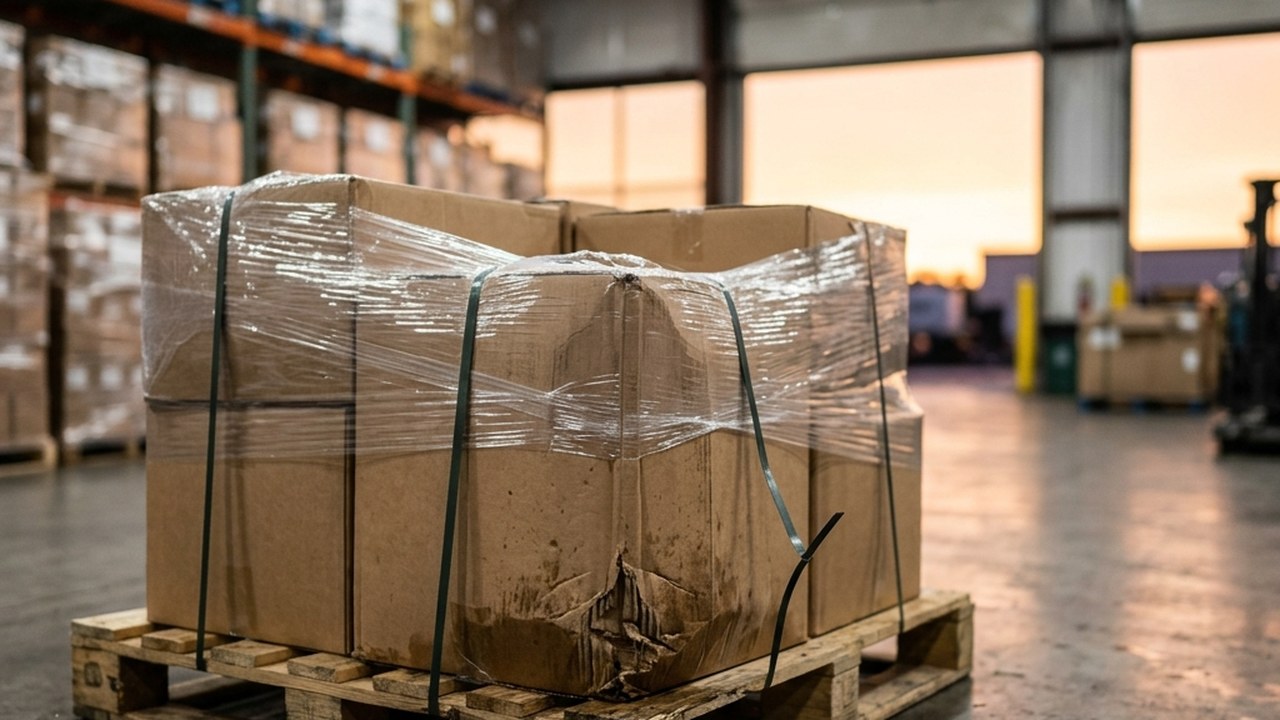
First, let's take a look at what Article 833 actually says
Article 833 of the Civil Code stipulates that if the parties have agreed on the amount of compensation for damage or loss of goods, it shall be in accordance with their agreement; If there is no agreement or the agreement is unclear, and it cannot be determined according to the provisions of Article 510 of this Law, the market price at the place where the goods arrived at the time of delivery or should have been delivered shall be calculated. If laws and administrative regulations have other provisions on the calculation method and compensation limit of compensation, they shall be followed.
This one arranges the order very clearly. The parties agree to prioritize, trade habits and contract interpretation take second place, and market prices take third place. Many shippers ask 'Is compensation based on market price?' However, this statement only holds true in the absence of a valid agreement. In practice, we generally recommend flipping through the contract, the back of the waybill, and the selected terms on the order page before discussing legal standards. Reversing the order can easily be a waste of effort.
Also, pay attention to the last sentence, which says' laws and administrative regulations have other provisions'. Article 47 of the Postal Law has specific rules for compensating for the loss of documentary mail. For domestic express delivery, the Postal Law and the Interim Regulations on Express Delivery apply, rather than directly applying Article 833. Maritime transportation is subject to the unit liability limitation stipulated in Article 56 of the Maritime Code, railway transportation is subject to the limit rules of the Railway Law, and road freight transportation is subject to the contract section of the Civil Code. Different industries have different entrances.
When is the limit compensation clause effective and when is it considered waste paper
The common terms on the waybill, such as "maximum compensation not exceeding three times the freight cost" and "maximum compensation of 500 yuan per piece for uninsured items," are standard terms in nature. Article 496 of the Civil Code requires the provision of standard terms. If one party fails to perform the obligation of prompting or explaining clauses that have a significant interest in the other party, such as exempting or reducing their liability, resulting in the other party not paying attention to or understanding the clause, the other party may claim that the clause does not become part of the contract.
So when the carrier refuses to compensate with a limit clause, the shipper's first reaction is not to accept it, but to ask three things: is this clause bolded, highlighted in red, or confirmed separately? Is there a pop-up or check prompt in the ordering process? Can the carrier provide evidence to prove that an explanation has been made? In practice, many platforms only include limit clauses in the attachments of the Service Agreement, and users can simply click "agree" once. This kind of prompt intensity is often discounted in litigation in Shenzhen, but it does not necessarily mean it is invalid, and there are significant differences in individual cases.
On the other hand, if the shipper is a long-term cooperative enterprise customer, and both parties sign a framework agreement and negotiate the limit clauses clause by clause every year, the probability of the court recognizing them as valid is much higher.Shenzhen contract dispute lawyerWhen dealing with such disputes, both parties' historical transaction records, statements, and emails are first retrieved to determine whether the terms were "unilaterally inserted" or "negotiated". This step often determines the outcome more than the legal provisions themselves.
What is the difference in compensation criteria between insured and uninsured
The logic of the insurance clause is that the shipper declares the value and pays the insurance fee, and the carrier compensates based on the declared value. Unprotected prices usually fall into multiples of shipping costs or fixed amounts. The key here is the word 'truthfully': the actual loss of goods with a insured value of 100000 yuan is 60000 yuan, and compensation is 60000 yuan; The actual total loss is only 100000 yuan.
Another common controversy is over insurance coverage. The actual value of the goods is 30000 yuan, and the shipper has insured 100000 yuan. Can they take 100000 yuan? No. The insured price is not insurance, and the portion exceeding the actual value lacks a basis for loss. The court generally determines it based on the actual loss. In the consultations contacted by Guangdong Zhiming Law Firm, many clients may think that they will compensate for the insured amount for the first time, and this misconception needs to be corrected in advance.
The allocation of burden of proof for uninsured goods is also worth mentioning. The shipper needs to prove the condition and value of the goods at the time of delivery, while the carrier needs to prove that the loss occurred outside of their own liability period or that there are grounds for exemption. The proof of the value of goods usually relies on purchase contracts, invoices, payment vouchers, and customs declarations, with only quotes in WeChat chat records, which can be much weaker in terms of proof.
At the stage of providing evidence, most people are stuck in the receiving process
Writing 'intact outer packaging' on the delivery note before signing, claiming internal damage afterwards, increases the difficulty suddenly. The correct approach is to open the box and inspect the goods on the spot. If any abnormalities are found, they should be immediately marked on the delivery note as' damaged contents, to be counted '. At the same time, photos and videos should be taken, and it is best to have the driver or courier sign and confirm. This step is solid, saving half of the effort in later claims.
If it has already been signed for, there is still a remedial window. Article 621 of the Civil Code stipulates the inspection period for sales contracts. Although the freight contract is not directly applicable, in judicial practice, objections raised within a reasonable period after receiving the goods will still be considered. There is no unified number for this reasonable period, and it is generally judged based on the nature of the goods and the difficulty of inspection. Perishable goods may only take a few days, while mechanical equipment can be longer. After delaying for a month, the success rate of the carrier's defense that "damage cannot be ruled out after receiving the goods" will significantly increase.
Electronic waybills, GPS tracking, and sorting center monitoring are usually held by the carrier as evidence. In litigation, you can apply to the court for investigation and evidence collection or request the other party to submit evidence, but the premise is that you have completed preliminary evidence and can point out approximately where the damage occurred. The court will not search for evidence on your behalf if you claim that you have damaged it.
Litigation statute of limitations and jurisdiction, don't lose first in the procedure
The statute of limitations for litigation in freight contract disputes is three years, starting from the date when the rights holder knows or should have known that their rights have been infringed and the obligor. Note that it is three years, not one year. But there are special time limits for international cargo transportation and air transportation, such as the much shorter objection period and litigation time limit for air transportation under the Montreal Convention, which require separate verification for cross-border business.
In terms of jurisdiction, disputes over transportation contracts can be under the jurisdiction of the court at the place of origin, destination, or defendant's domicile. For Shenzhen enterprises, it is usually more convenient to file a lawsuit locally if goods are shipped from or arrive in Shenzhen. But many waybills state on the back that 'disputes are under the jurisdiction of the court in the carrier's location'. The validity of this agreement's jurisdiction clause depends on whether it is a standard clause, whether there are reasonable prompts, and whether it violates exclusive jurisdiction. In practice, we generally recommend conducting a jurisdictional assessment before filing a lawsuit to avoid wasting two to three months by transferring the case after it has been filed.
Another easily overlooked point is that if the carrier is an individual or subcontracted layer by layer, the actual carrier and the contracted carrier may not be the same entity. At this point, it is necessary to lock in the counterparty to the contract clearly, and if necessary, include the actual carrier as a defendant, otherwise winning the judgment may result in the inability to enforce the money.
Several things that enterprises can do in advance for shipping
Firstly, go through the compensation clauses in the waybill and framework agreement one by one, especially the limit, exemption, and insurance rules. If any are found to be obviously unreasonable, propose modifications when renewing the contract. Secondly, high-value goods should be insured if they should be, don't gamble on luck just to save a few thousandths of the insurance fee. Thirdly, establish a system for leaving shipping marks, with fixed photos of outbound shipments, packaging videos, and weighing records, which is cost-effective and highly valuable in case of accidents.
Fourth, conduct a primary review of long-term cooperative carriers to ensure that their business licenses and road transport operating permits are complete, in order to avoid large transactions with unqualified individual businesses. Fifth, send a written letter immediately after the occurrence of goods damage, instead of just making a phone call. The letter itself is evidence of interrupted delivery time and fixed claims.
The issue of legal risks in the industry often stems not from a lack of understanding of legal provisions, but from a lack of documentation in the process and a failure to carefully review the contract. If you want to learn about the judicial trends of disputes in the same industry, you can take a look at the latest news and interpretation of the legal industry in Shenzhen's lawyer industry, or browse the latest legal and regulatory interpretations and practices in the legal industry. Disputes involving the intersection of trademarks, intellectual property, and commercial logos, such as the siege of trademark rights for public cultural resources: From the LV "Clover Case" to the protection of traditional culture, there are similarities in the handling approach - first clarify the basis of rights, and then discuss the compensation criteria. For those who need to communicate face-to-face, you can take a look firstShen Jinlong LawyerThe introduction page, or find more practical articles from the industry courier column.
Several practical reminders from Lawyer Shen Jinlong
Article 833 is not a universal formula, it is more like a fallback clause. The true decision on how much to compensate is often made by the small words in the contract, the annotation on the receipt, and whether you have raised a written objection within a reasonable period of time. Lawyer Shen Jinlong (Guangdong Zhiming Law Firm) usually conducts an evidence chain examination before deciding whether to negotiate or sue when dealing with freight contract disputes. When negotiating, the limit clause is the other party's bargaining chip; When filing a lawsuit, the effectiveness of standard terms is your breakthrough point.
In 2026, the competition in the logistics industry will become more intense, with lower freight rates and stronger opportunities for carriers to control risks through limit clauses. On the shipper's side, instead of arguing afterwards whether the "triple freight" is reasonable, it is better to provide sufficient insurance and evidence beforehand. When it comes to the arbitration commission or court, what is discussed is evidence, not reason.
This article is written by Lawyer Shen Jinlong (Guangdong Zhiming Law Firm), with a consultation hotline of 0755-25986969.
Disclaimer: This article is only for general legal information sharing and does not constitute legal advice on any specific case, nor does it represent any commitment to the outcome of any individual case. The compensation standard for freight contract disputes is influenced by multiple factors such as the contract agreement, mode of transportation, evidence situation, and the jurisdiction of the court. Please consult a professional lawyer separately based on your own materials.
Frequently Asked Questions
Can I only accept that the waybill states' maximum compensation for shipping costs is three times'?
not always. This type of limit clause belongs to standard clauses, and the carrier must fulfill the obligation of presentation and explanation in accordance with Article 496 of the Civil Code. If the failure to provide presentation results in your lack of attention or understanding, you may claim that the clause does not become a part of the contract. However, the confirmed terms in the long-term negotiated framework agreement have a high probability of being recognized as valid and require individual judgment.
What price should I pay for the loss of uninsured goods?
There is an agreement to follow the agreement; When there is no valid agreement, according to Article 833 of the Civil Code, the market price of the goods at the time of delivery or when they should have been delivered shall be calculated. According to Article 47 of the Postal Law, there are special rules for express delivery and other postal materials, and Article 833 shall not be directly applied.
Can I still claim for internal damage if I wrote 'intact outer packaging' when signing for it?
It can be advocated, but the difficulty increases. It is recommended to open the box and inspect the goods on the spot. If there are any abnormalities, please annotate "damaged contents, to be counted" on the delivery note and take photos and videos. For those that have already been signed for, objections should be raised in writing within a reasonable period of time after receiving the goods. The longer the delay, the easier it is for the carrier to argue that "damage cannot be ruled out after receiving the goods".
What is the statute of limitations for filing a claim for goods damage?
Disputes arising from freight contracts shall be subject to a statute of limitations of three years, starting from the date on which the parties became aware or should have become aware of the damage to their rights and obligations. However, air transportation and international cargo transportation may have shorter objection periods and time limits, and those engaged in cross-border business must separately verify the provisions of conventions or special laws.
The insured price is 100000 yuan, but the actual value of the goods is only 30000 yuan. Can I get 100000 yuan?
No. The insured price is not insurance, and the portion exceeding the actual loss lacks a basis for compensation. The court generally determines it based on the actual loss. On the contrary, if the insured price is lower than the actual value, compensation can usually only be obtained within the insured price range, so the declared value should be as close as possible to the true value of the goods.