

Crashed China Eastern flight tugs at heartstrings, passengers "heading west" receive compensation
Compiled from The Paper
Case review
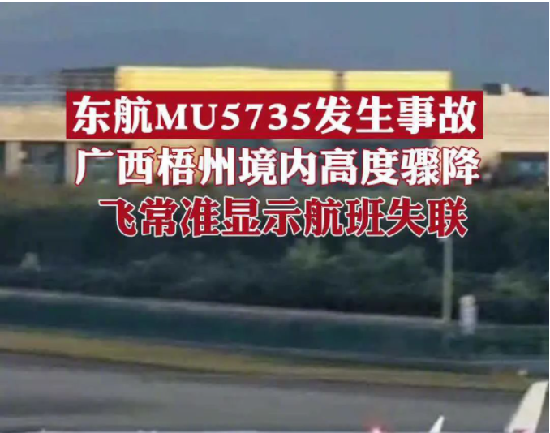
On March 21, 2022, a China Eastern Airlines Boeing 737 aircraft lost contact while performing the Kunming—Guangzhou flight mission over Wuzhou. It has now been confirmed that the plane crashed, with a total of 132 people on board (123 passengers and 9 crew members), and the casualties are unknown. The Civil Aviation Administration has activated its emergency response mechanism, and rescue teams have been dispatched to the scene.
This plane crash has tugged at the hearts of people across the country. No one wants to see such an accident, but once it happens, what compensation can the victims and their families receive?
Civil Aviation Law of the People's Republic of China
Article 124
If an incident occurs on a civil aircraft or during the process of boarding or disembarking a civil aircraft, resulting in personal injury or death of passengers, the carrier shall be liable; however, if the personal injury or death of the passenger is entirely caused by the passenger's own health condition, the carrier shall not be liable.
Article 125
If an incident occurs on a civil aircraft or during the process of passengers boarding or disembarking from a civil aircraft, resulting in the destruction, loss, or damage of passenger carry-on items, the carrier shall be liable. If an incident occurs during air transportation, resulting in the destruction, loss, or damage of passenger checked baggage, the carrier shall be liable.
The carrier (airline) shall bear compensation liability, including personal and property compensation. The "Regulations on the Limitation of Liability for Domestic Air Transport Carriers" set limits on the standards of compensation.

Regulations on the Limits of Carriers' Liability for Domestic Air Transportation
Article 3
Domestic air carriers (hereinafter referred to as carriers) shall be liable for compensation according to the actual damage within the limits of liability specified below, except as otherwise provided in the Civil Aviation Law:
(1) The maximum liability for compensation to each passenger is 400,000 RMB;
(2) The liability limit for compensation for each passenger's carry-on items is RMB 3,000;
(3) The liability limit for compensation for passengers' checked luggage and transported goods is 100 yuan per kilogram.
Article 5
If passengers personally purchase aviation passenger accident insurance from an insurance company, the payment of the insurance amount does not exempt or reduce the carrier's liability for compensation.

[1] The author's perspective
In fact, when we usually buy plane tickets, we often see 'aviation accident insurance.' Many people skip this insurance to save money and naturally think that if they don't purchase accident insurance, there won't be any compensation in the event of an accident during the journey. This is actually a mistaken idea. In our country, once a plane crashes, the compensation available to the victims and their families consists of two parts: first, the compensation provided by the carrier (airline); second, the compensation provided by the insurance company, which falls under aviation accident insurance. According to Article 5 of the aforementioned regulations, it can also be seen that the two are unrelated, so even if passengers have not purchased the corresponding insurance, they can still receive compensation from the airline.
So what exactly is the amount of compensation? First is personal compensation. According to Article 3 of the aforementioned "Regulations," the maximum personal compensation for each passenger is 400,000 RMB. However, in actual claims, factors such as the passenger’s income and age are often taken into consideration. As early as the 2010 Yichun air crash, each victim ultimately received 960,000 RMB in compensation, indicating that 400,000 RMB is not necessarily the maximum amount. Second is luggage compensation. Article 3 of the aforementioned "Regulations" also distinguishes luggage into two parts: carry-on and checked baggage, each corresponding to different compensation amounts.
It is reported that before this Eastern Airlines aircraft crash, China's civil aviation had maintained continuous safe flights for 138 consecutive months. Yesterday's news shocked the entire nation. According to relevant data, the crew was still trying to save the plane in its final moments, even though it did not reach its final destination. Danger and tomorrow are uncertain as to which will come first. What professionals can do is to check for potential hazards before travel, implement safety responsibilities, ensure that every flight can take off and land safely, and make sure every passenger arrives safely.



