

The "Sea Palace" Case: Settlement and Withdrawal of Lawsuit — The Ultimate Revelation of the "Sea Palace" Case (Serial 24)
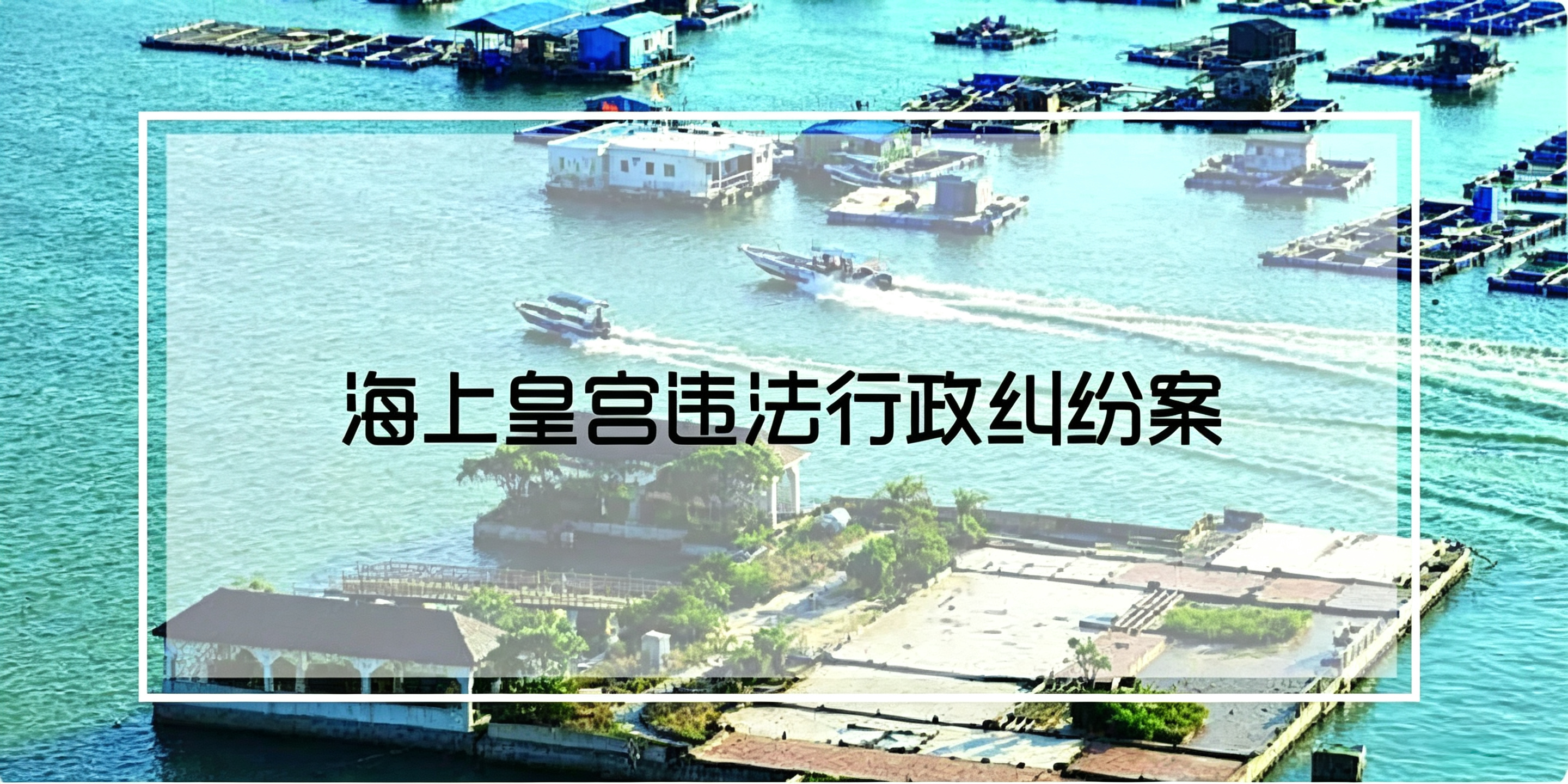
Part Two: A Lawyer's Chivalry — Legal Rescue of the "Sea Palace"
10. Settlement and Withdrawal of the Lawsuit
On December 30, 2011, the Dapeng New District of Shenzhen, which administers the Nan'ao Dongshan Bay area where the "Sea Palace" is located, was officially inaugurated. The "Sea Palace" case, which had dragged on for half a year, still had no verdict.
In May 2012, He Yongzhi, former Director of the Shenzhen Municipal Ocean Bureau, was transferred to serve as Director of the Dapeng New District Management Committee. At this time, in order to accommodate the innovative development of Dapeng New District, the Shenzhen Municipal Party Committee and Municipal Government decided to adjust the strategic positioning of Dapeng New District, changing it from a "world-class ecological coastal city" to a "world-class coastal eco-tourism resort." Meanwhile, the Dongshan Bay waters in Nan'ao were also planned as a high-end tourism area, and its marine functional zoning was naturally required, in accordance with the provisions of the "Sea Area Use Management Law," to be changed from an offshore aquaculture area to a marine leisure and entertainment functional zone. There would no longer be any legal obstacles for the "Marine Palace" to obtain a sea area use right certificate! With the progression of history and the changes in circumstances, should we marvel at Guo's foresight and creativity back then, praise the insightful views articulated by Attorney Zhiming during the court proceedings, or laugh at the paranoia and shortsightedness exhibited by the public and media at the time?
There was no suspense about what followed. Through coordination by the court and with the participation of the Shenzhen Municipal Government Ocean Bureau, the Longgang District Bureau of Economic Promotion, and the Dapeng New District Management Committee in mediation, a private settlement was ultimately reached with Guo: the "Maritime Imperial Palace" would no longer be demolished but would be permitted to seek healthy development in accordance with the law under a new management framework; Guo, in turn, withdrew the lawsuit and waived the right to claim compensation; all parties maintained a low-key and pragmatic approach to avoid attracting further public criticism.
On May 24, 2012, Shenzhen Haishang Jingying Entertainment Co., Ltd. entrusted Zhiming lawyers to draft a written application for withdrawal of the lawsuit on its behalf, formally applying to the court to withdraw three administrative litigation cases. The Longgang District People's Court issued three Administrative Rulings on the same day, granting the withdrawal of the lawsuits!


Ending the "Sea Palace" case through reconciliation and withdrawal of the lawsuit, a distinctly "Chinese-style" way of concluding administrative litigation, inevitably leaves one with a sense of anticlimax. Although we firmly believe that if the "Sea Palace" case had been concluded with a lawful judgment, it would have set a precedent for the administrative litigation system, established a benchmark for law-based government administration, and left a milestone for building a country governed by the rule of law, as entrusted agents, Zhiming lawyers must also respect the decision of the party, Mr. Guo, and can only reluctantly accept this imperfect outcome of administrative litigation, determined by a system where administrative power dominates and judicial power is weak.

However, the significant impact and implications of Attorney Zhi Ming's handling of the "Sea Palace" case stand in stark contrast to the low-key conclusion of the case. The paradox between grassroots innovation vitality and government regulation and legal norms, the positive interaction between media oversight and law-based administration, and the dialectical relationship between entrepreneurs' wealth-creating capabilities and social fairness and justice.

(To be continued)

